
BuddhistCatholicContemplativeEvangelicalGeneral ChristianHinduJewishLatter-day SaintMuslimNew VisionsProgressive Christian
Beliefs
- Buddhist
- Catholic
- Contemplative
- Evangelical
- General Christian
- Hindu
- Jewish
- Latter-day Saint
- More Voices
- Muslim
- New Visions
- Pagan
- Progressive Christian
Topics
- Religion News
- Food and Religion
- Sports and Religion
- Religious Art
- Religious Music and Entertainment
- Religious Events
- History and Religion
- Style and Religion
- Politics and Religion
- Women in Religion
- Recreation Outdoors and Religion
- Business Finance and Religion
- Careers Workplace and Religion
- Education and Religion
- Family Parenting and Religion
- Health Fitness and Religion
- Home and Religion
- Relationships and Religion
- Technology and Religion
- Travel and Religion
Columnists
- Buddhist Columnists
- Business Finance and Religion Columnists
- Careers Workplace and Religion Columnists
- Catholic Columnists
- Contemplative Columnists
- Education and Religion Columnists
- Evangelists Columnists
- Family Parenting and Religion Columnists
- General Christian Columnists
- Health Fitness and Religion Columnists
- Hindu Columnists
- History and Religion Columnists
- Home and Religion Columnists
- Jewish Columnists
- More Voices Columnists
- Latter Day Columnists
- Muslim Columnists
- New Visions Columnists
- Nonreligious Columnists
- Pagan Columnists
- Politics and Religion Columnists
- Progressive Columnists
- Recreation Outdoors and Religion Columnists
- Relationships and Religion Columnists
- Religion News Columnists
- Religious Art Columnists
- Religious Events Columnists
- Religious Music and Entertainment Columnists
- Sports and Religion Columnists
- Style and Religion Columnists
- Technology and Religion Columnists
- Travel and Religion Columnists
- Women in Religion Columnists
Resource Library
- 2026 Calendar
- Library of World Religions
- The 100 Most Holy Places on Earth
- Patheos Answers
- Podcasts
- Videos
- Faith Leaders Database
- Anglican Episcopalian
- Bahai
- Baptist
- Buddhism
- Christianity
- Confucianism
- Eastern Orthodoxy
- Hinduism
- Holiness and Pentecostal
- ISKCON
- Islam
- Judaism
- Lutheran
- Methodist
- The Church of Jesus Christ of Latter-day Saints
- New Age
- Paganism
- Presbytarian and Reformed
- Protestantism
- Religion Behind the Scenes
- Roman Catholic
- Scientology
- Shia Islam
- Sikhism
- Sufism
- Sunni Islam
- Taoism
- Zen
- See all religions
Research Tools
 Ad-Free & Subscriber Log-In Subscription Support
Ad-Free & Subscriber Log-In Subscription Support
Follow Patheos 

- Trending:
- Forgiveness
- |
- Marriage
- |
- Consciousness
- |
- Death Penalty
- |
- Election
- |
- Halloween
 Poets and Lunatics
-
Categories
- Home
- New Visions
- What To Do When You Are Unceremoniously Insulted
What To Do When You Are Unceremoniously Insulted
Last updated on: March 12, 2018 at 9:00 am by Wendy Murray
What To Do When You Are Unceremoniously Insulted 2018-03-10T17:11:00-05:00 Wendy Murray
Patheos Explore the world's faith through different perspectives on religion and spirituality! Patheos has the views of the prevalent religions and spiritualities of the world.
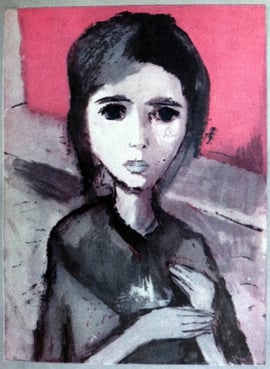
I am re-posting a piece I wrote almost five years ago, because, despite the passage of time, the painful experience of being insulted or affronted continues to crop up and there is no easy, nor (often) blameless way to navigate these difficult interludes.
The only revision I bring to these reflections is when, five years ago, I spoke of reconciliation as being “elusive” in the case of dealing with those who refuse to, or cannot, reckon with the truth. I have changed my stance on that determining instead that, in these instances, reconciliation is not elusive; it is impossible.
~ ~ ~
I when I was writing a Bible study guide for Hendrickson Publishers, it was a helpful and vexing exercise. It is difficult to assume the position of spiritual guide (being the author) when you are afflicted with uncertainties of your own and contending with common struggles that have been known to men and women throughout all time. Inevitably, I would be put to the test regarding whatever virtue I was exploring in that study by real-life bumps in the road. For example, on a day when I was writing about “Reconciliation,” I found myself on the receiving end of an unmistakable insult that affronted me. It doesn’t matter what the barb itself was. What matters is that it hurt and I was affronted, and this occurred while I was writing a Bible study guide on the topic of reconciliation. It is worth noting that the virtue I explored prior to reconciliation was “Forgiveness.” Either way, the exercise of these virtues demands power that arises from beyond human inclination.
In writing these guides I confronted a dilemma and I was attempting to guide the reader also to confront it: Is it possible to be reconciled when the offending party hasn’t a clue that they hurt you or; worse, when intended to hurt you and they don’t care? I am not going to be platitudinal about it. In the purview of my understanding of biblical virtue, the answer is — sometimes yes and other times, no.
Some people will never know the things they do that hurt other people. I include myself in that category. It cannot be helped that we are born who we are with certain features of our specific personality: some blessed, some wretched. It also cannot be helped if during one’s formative years emotional deficits or other troubles existed that distorted healthy soul formation, making for a lot of dysfunction all the way around. There is always collateral damage in the lives of people who have suffered in this way.
Positive thinkers will tell you that you can’t control any of that but you can control how you respond to these dysfunctions, both as they present themselves in your disposition as well as how they might be foisted upon you by someone else’s. This is true. But it isn’t easy, is it?
When it comes to people’s trespasses against you, as a Christian, I am not given the option to wallow in it. Maybe cry and put a pillow over my head. Then get up. There’s nothing to be done but find a way inside your own wounded soul to grow around it and move on.
Some grievances are heinous and soul-killing. Reconciliation is less hopeful in these cases. Bishop Desmond Tutu wrote in his book God Is Not a Christian that even the most monstrous perpetrator of a crime needs to be treated not as a “monster” or “demon,” but as a human who carries dignity: “Monsters have no moral responsibility,” he says. “Forgiveness is never cheap, never easy, but it is possible. Ultimately real reconciliation can happen only on the basis of truth.”
For those who cannot confront truth or will not confront it, true reconciliation cannot happen. In these cases it is best to pray for healing in your own soul and for the soul of the perpetrator and wait upon God to move and work in his time. As for the general, at times banal affronts that assault us regularly, establish your heart in an attitude of grace and turn your face toward light.
Previous Post

February 22, 2018
That Time Billy Graham Saved My Faith
Browse Our Archives
Select a Category Abortion Advent Aging Augustine Celtic Prayers Christmas Church Civic Duty Current Events & Issues Dante Depression Divorce Easter Faith Family Fiction Finances God's Love Government Health History Holiness Insanity Interviews Islam Jesus Jesus & Prayer Jesus and Women Jesus' Birth Jesus' Death Journalism Justice Lunatics Medication Mental Health Miracles Money Mothers Mothers and Sons Mystery Pastors Patheos Book Club Plymouth Colony Podcasts Pop Culture Reflections Religion Saint Francis Saints & Champions Sermons Suffering Uncategorized Weddings Woman Caught in Adultery Women Women's Spirituality Writers and Writing
Select a Month March 2018 February 2018 December 2017 November 2017 October 2017 September 2017 July 2017 June 2017 May 2017 April 2017 March 2017 May 2015 April 2015 February 2015 January 2015 October 2014 April 2014 February 2014 January 2014 December 2013 October 2013 August 2013 July 2013 June 2013 April 2013
Follow Us!
TAKE THE
Religious Wisdom Quiz
In the Parable of the Sower, what does the seed represent?
Select your answer to see how you score.
Judgment The Law Money The Word of God
Support this
Column


Related posts from Poets and Lunatics

That Time Billy Graham Saved My Faith

Remembering Mister Rogers and the Light He Left


Mary Rejoicing, Rachel Weeping
TRENDING AT PATHEOS New Visions

Did Prayer Cure His Cancer? Or Was It...
At 4 AM one morning, Joshua W. Brown’s wife awoke to a...

8 Ways a Near-Death Experience Rewires the Soul
Does Consciousness Survive Physical Death? After 50 Years of Research, Dr. Raymond...

Holy Longing: What Our Restlessness Is Telling Us
“One can find so many pains when the rain is falling.” -John...

What this is NOT about. This blog is definitely not about...

Who said the Israelites were God’s chosen? That’s right, they did. Who...

The Spirit World Is the Real World: God...
A Monk’s Wisdom on Body and Spirit I sit with Brother Martin...
view all New Visions blogs
Ad-Free & Subscriber Log-In Subscription Support
- About Us
- 2026 Calendar
- Videos
- Podcasts
- Library of World Religions
- Faith In Media Tracker
- Advertise With Us
- Write for Us
- Privacy Policy
- Terms of Service
- Do Not Sell My Data
- Contact Us
- Radiant Digital
- Manage Newsletter Subscriptions
- Unsubscribe From Notifications
- Sitemap
Copyright 2008-2026, Patheos. All rights reserved.
Subscription Support Ad-Free & Subscriber Log-In
Follow Patheos