
BuddhistCatholicContemplativeEvangelicalGeneral ChristianHinduJewishLatter-day SaintMuslimNew VisionsProgressive Christian
Beliefs
- Buddhist
- Catholic
- Contemplative
- Evangelical
- General Christian
- Hindu
- Jewish
- Latter-day Saint
- More Voices
- Muslim
- New Visions
- Pagan
- Progressive Christian
Topics
- Religion News
- Food and Religion
- Sports and Religion
- Religious Art
- Religious Music and Entertainment
- Religious Events
- History and Religion
- Style and Religion
- Politics and Religion
- Women in Religion
- Recreation Outdoors and Religion
- Business Finance and Religion
- Careers Workplace and Religion
- Education and Religion
- Family Parenting and Religion
- Health Fitness and Religion
- Home and Religion
- Relationships and Religion
- Technology and Religion
- Travel and Religion
Columnists
- Buddhist Columnists
- Business Finance and Religion Columnists
- Careers Workplace and Religion Columnists
- Catholic Columnists
- Contemplative Columnists
- Education and Religion Columnists
- Evangelists Columnists
- Family Parenting and Religion Columnists
- General Christian Columnists
- Health Fitness and Religion Columnists
- Hindu Columnists
- History and Religion Columnists
- Home and Religion Columnists
- Jewish Columnists
- More Voices Columnists
- Latter Day Columnists
- Muslim Columnists
- New Visions Columnists
- Nonreligious Columnists
- Pagan Columnists
- Politics and Religion Columnists
- Progressive Columnists
- Recreation Outdoors and Religion Columnists
- Relationships and Religion Columnists
- Religion News Columnists
- Religious Art Columnists
- Religious Events Columnists
- Religious Music and Entertainment Columnists
- Sports and Religion Columnists
- Style and Religion Columnists
- Technology and Religion Columnists
- Travel and Religion Columnists
- Women in Religion Columnists
Resource Library
- 2026 Calendar
- Library of World Religions
- The 100 Most Holy Places on Earth
- Patheos Answers
- Podcasts
- Videos
- Faith Leaders Database
- Anglican Episcopalian
- Bahai
- Baptist
- Buddhism
- Christianity
- Confucianism
- Eastern Orthodoxy
- Hinduism
- Holiness and Pentecostal
- ISKCON
- Islam
- Judaism
- Lutheran
- Methodist
- The Church of Jesus Christ of Latter-day Saints
- New Age
- Paganism
- Presbytarian and Reformed
- Protestantism
- Religion Behind the Scenes
- Roman Catholic
- Scientology
- Shia Islam
- Sikhism
- Sufism
- Sunni Islam
- Taoism
- Zen
- See all religions
Research Tools
 Ad-Free & Subscriber Log-In Subscription Support
Ad-Free & Subscriber Log-In Subscription Support
Follow Patheos 

- Trending:
- Forgiveness
- |
- Marriage
- |
- Consciousness
- |
- Death Penalty
- |
- Election
- |
- Halloween
 Poets and Lunatics
-
Categories
- Home
- New Visions
- Dietrich Bonhoeffer’s Lost Love
Dietrich Bonhoeffer’s Lost Love
Last updated on: February 5, 2014 at 3:56 pm by Wendy Murray
Dietrich Bonhoeffer’s Lost Love 2014-02-05T15:56:47-05:00 Wendy Murray
Patheos Explore the world's faith through different perspectives on religion and spirituality! Patheos has the views of the prevalent religions and spiritualities of the world.
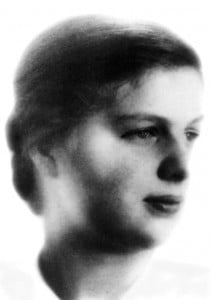
Maria von Wedemeyer
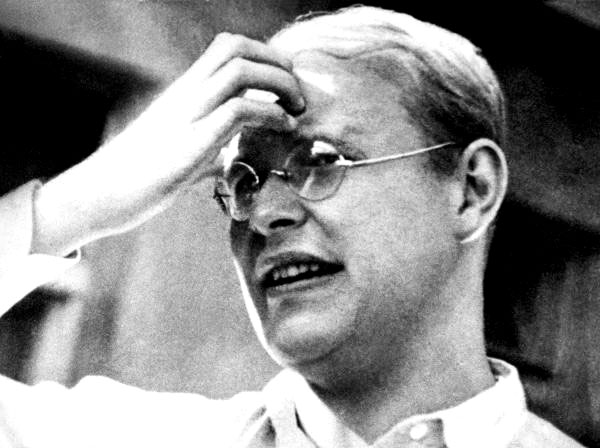
Dietrich Bonhoeffer
By Wendy Murray
Yesterday, February 4, what would have been Dietrich Bonhoeffer‘s 108 birthday. A Lutheran pastor and theologian, Bonhoeffer was executed by hanging, age 39, in a Nazi concentration camp in 1945. He and small-but-fierce contingent of devoted Protestants actively resisted the Nazi encroachment in both church and state. They founded the Confessing Church movement to mount active resistance to government-sponsored efforts to nazify German Protestantism. His writings have influenced subsequent generations who struggle with the role of Christian devotion in a hostile culture. The Cost of Discipleship, a modern classic, is widely known for Bonhoeffer’s haunting statement: “When Christ calls a man he bids him to come and die.”
He was engaged in January 1943, at age 36, to Maria von Wedemeyer only to be arrested by the Gestapo three months later in consequence of his involvement in plans to assassinate Adolf Hitler. Bonhoeffer was executed (April 1945) while imprisoned at Flossenbürg concentration camp only weeks before Hitler killed himself and the German surrender.
During the two short of years of his engagement to von Wedemeyer (and what ended up to be the last two years of his life, 1943 – 1945), the two exchanged letters that were amorous and wrenching. Published for the first time in 1995 as Love Letters From Cell 92, edited by Ruth-Alice von Bismarck and Ulrich Kabitz (Abingdon), this intimate correspondence reveals a side of Bonhoeffer that is generally not known. I reviewed the book for Christianity Today magazine when it was released. I include a portion below :
“Wait with me, I beg you! Let me embrace you long and tenderly, let me kiss you and love you and stroke the sorrow from your brow.” This is not an excerpt from a Harlequin romance but the impassioned longings of the champion of radical discipleship.
These sentiments—and more like them—present a new aspect of Bonhoeffer, showing him to be surprisingly amorous, but in a way altogether consistent with his theology of costly grace. His love for Maria was “costly” because Bonhoeffer was forced to relinquish it; it was “grace,” because after 37 years of heady bachelorhood, he tasted of the wellspring of romantic possibility. 
Maria von Wedemeyer has been duly acknowledged as the true love of the gifted German theologian. But before the publication of this volume, Bonhoeffer’s devotees had not been given such a glimpse of the force of this relationship and the passion this man felt, and then sublimated during his hard years in prison.
He loved her, longed for her, and she for him. The tenderness and optimism behind this collection of letters causes the reader to languish with them as week after week, into months, into years, the couple anticipates the time when they will sit together on the couch at Patzig (Maria’s family estate) and hold hands. The reader also knows the tragic ending to this tale, while the writers themselves do not. A constant theme echoes throughout: “Don’t get tired and depressed, my dearest Dietrich, it won’t be much longer now.”
Maria entrusted this collection of letters to her sister, Ruth-Alice von Bismarck, just prior to her death in 1977. For years before that, Maria would not allow the letters to be published. Eberhard Bethge, Bonhoeffer’s close friend and biographer, writes in the postscript: “I had resigned myself to never seeing this correspondence.”
It took the subsequent 15 years for von Bismarck to complete the task of sequentially collating the correspondence with the aid of Ulrich Kabitz, who added the necessary footnotes and historical data. Consolidating such fragmented, at times incomplete, material into a coherent narrative was no simple task. But, overall, it works: the reader is pulled into the drama and tedium that these two lovers experienced during their years of waiting and hoping.
A most refreshing aspects of the book is the marvelous picture it paints of Maria, a personality distinct and in many ways contradictory to Bonhoeffer’s. She took great interest in the minutiae of bourgeois trivialities—”I hate sideboards, and really decent cupboards are quite unobtainable”—while church missionary meetings bored her to tears. For that matter, she had little patience for theology: “Theology strikes me as an incomprehensible discipline. . . . I always get the feeling that it’s seeking an intellectual explanation for what is quite simply a question of faith.” (She adds at the end of that letter: “you mustn’t think I disapprove of your work.”) One is tempted to wonder how the champion of single-minded obedience could have fallen for a woman whose priorities seem so obtuse.
But the reader is stopped short. Woven into the narrative are glimpses of Maria that betray an extraordinary resolve, discipline, and effervescence. Within the course of only a few months in 1942, Maria lost both her father and her brother in the war. Still, she kept her spirits up for Bonhoeffer’s sake. For his first Christmas in prison, she brought a sizable Christmas tree for his cell, creating “great hilarity with the guards and Dietrich.” She tirelessly addressed Bonhoeffcr’s every conceivable want or need: “In front of me, lit by your candles,” he wrote to her, “stands the little Madonna you gave me. . . . Behind it arc the open texts with the praying hands’ [you gave me] . . . on their right, your photos lying open in the case you made for me. Just above them hangs your Advent wreath, and behind me on the edge of the bed I’ve laid out the gloves you made for me, the books you chose for me. . . . On my wrist is the watch [your] Father was wearing when he died, which you gave me, brought me, and strapped on my wrist yourself. You’re all around me, Maria.”
Over time, their correspondence became tortured. Hope faded. But a fellow prisoner recalled that Bonhoeffer “never tired of repeating that ‘no battle is lost until it has been given up for lost’.”
This book is about a love that was never to be fulfilled. Maria’s hand in marriage, like everything else in Bonhoeffer’s short life, remained just beyond his reach. Even so, he wrote to her: “Above all let us be careful not to feel sorry for ourselves; to do so would truly be a blasphemy on God, who means us well. For all our difficulties, let us say with Isaiah: ‘Do not destroy it, for there is blessing in it.’ “
Previous Post

January 20, 2014
MLK's Christian Call and Why It Matters
Next Post
April 2, 2014 C.S. Lewis on Suffering, Let's Do Lunch ~ a New Book
Browse Our Archives
Select a Category Abortion Advent Aging Augustine Celtic Prayers Christmas Church Civic Duty Current Events & Issues Dante Depression Divorce Easter Faith Family Fiction Finances God's Love Government Health History Holiness Insanity Interviews Islam Jesus Jesus & Prayer Jesus and Women Jesus' Birth Jesus' Death Journalism Justice Lunatics Medication Mental Health Miracles Money Mothers Mothers and Sons Mystery Pastors Patheos Book Club Plymouth Colony Podcasts Pop Culture Reflections Religion Saint Francis Saints & Champions Sermons Suffering Uncategorized Weddings Woman Caught in Adultery Women Women's Spirituality Writers and Writing
Select a Month March 2018 February 2018 December 2017 November 2017 October 2017 September 2017 July 2017 June 2017 May 2017 April 2017 March 2017 May 2015 April 2015 February 2015 January 2015 October 2014 April 2014 February 2014 January 2014 December 2013 October 2013 August 2013 July 2013 June 2013 April 2013
Follow Us!
TAKE THE
Religious Wisdom Quiz
Which prophet was told not to marry or have children as a sign?
Select your answer to see how you score.
Micah Jeremiah Isaiah Ezra
Support this
Column


Related posts from Poets and Lunatics

What To Do When You Are Unceremoniously Insulted

That Time Billy Graham Saved My Faith

Remembering Mister Rogers and the Light He Left

TRENDING AT PATHEOS New Visions

Did Prayer Cure His Cancer? Or Was It...
At 4 AM one morning, Joshua W. Brown’s wife awoke to a...

8 Ways a Near-Death Experience Rewires the Soul
Does Consciousness Survive Physical Death? After 50 Years of Research, Dr. Raymond...

Holy Longing: What Our Restlessness Is Telling Us
“One can find so many pains when the rain is falling.” -John...

What this is NOT about. This blog is definitely not about...

Who said the Israelites were God’s chosen? That’s right, they did. Who...

The Spirit World Is the Real World: God...
A Monk’s Wisdom on Body and Spirit I sit with Brother Martin...
view all New Visions blogs
Ad-Free & Subscriber Log-In Subscription Support
- About Us
- 2026 Calendar
- Videos
- Podcasts
- Library of World Religions
- Faith In Media Tracker
- Advertise With Us
- Write for Us
- Privacy Policy
- Terms of Service
- Do Not Sell My Data
- Contact Us
- Radiant Digital
- Manage Newsletter Subscriptions
- Unsubscribe From Notifications
- Sitemap
Copyright 2008-2026, Patheos. All rights reserved.
Subscription Support Ad-Free & Subscriber Log-In
Follow Patheos