
BuddhistCatholicContemplativeEvangelicalGeneral ChristianHinduJewishLatter-day SaintMuslimNew VisionsProgressive Christian
Beliefs
- Buddhist
- Catholic
- Contemplative
- Evangelical
- General Christian
- Hindu
- Jewish
- Latter-day Saint
- More Voices
- Muslim
- New Visions
- Pagan
- Progressive Christian
Topics
- Religion News
- Food and Religion
- Sports and Religion
- Religious Art
- Religious Music and Entertainment
- Religious Events
- History and Religion
- Style and Religion
- Politics and Religion
- Women in Religion
- Recreation Outdoors and Religion
- Business Finance and Religion
- Careers Workplace and Religion
- Education and Religion
- Family Parenting and Religion
- Health Fitness and Religion
- Home and Religion
- Relationships and Religion
- Technology and Religion
- Travel and Religion
Columnists
- Buddhist Columnists
- Business Finance and Religion Columnists
- Careers Workplace and Religion Columnists
- Catholic Columnists
- Contemplative Columnists
- Education and Religion Columnists
- Evangelists Columnists
- Family Parenting and Religion Columnists
- General Christian Columnists
- Health Fitness and Religion Columnists
- Hindu Columnists
- History and Religion Columnists
- Home and Religion Columnists
- Jewish Columnists
- More Voices Columnists
- Latter Day Columnists
- Muslim Columnists
- New Visions Columnists
- Nonreligious Columnists
- Pagan Columnists
- Politics and Religion Columnists
- Progressive Columnists
- Recreation Outdoors and Religion Columnists
- Relationships and Religion Columnists
- Religion News Columnists
- Religious Art Columnists
- Religious Events Columnists
- Religious Music and Entertainment Columnists
- Sports and Religion Columnists
- Style and Religion Columnists
- Technology and Religion Columnists
- Travel and Religion Columnists
- Women in Religion Columnists
Resource Library
- 2026 Calendar
- Library of World Religions
- The 100 Most Holy Places on Earth
- Patheos Answers
- Podcasts
- Videos
- Faith Leaders Database
- Anglican Episcopalian
- Bahai
- Baptist
- Buddhism
- Christianity
- Confucianism
- Eastern Orthodoxy
- Hinduism
- Holiness and Pentecostal
- ISKCON
- Islam
- Judaism
- Lutheran
- Methodist
- The Church of Jesus Christ of Latter-day Saints
- New Age
- Paganism
- Presbytarian and Reformed
- Protestantism
- Religion Behind the Scenes
- Roman Catholic
- Scientology
- Shia Islam
- Sikhism
- Sufism
- Sunni Islam
- Taoism
- Zen
- See all religions
Research Tools
 Ad-Free & Subscriber Log-In Subscription Support
Ad-Free & Subscriber Log-In Subscription Support
Follow Patheos 

- Trending:
- Forgiveness
- |
- Marriage
- |
- Consciousness
- |
- Death Penalty
- |
- Election
- |
- Halloween

- Home
- Latter-day Saint
- Relationships and Religion
- “I have killed my brother!”
“I have killed my brother!”
Last updated on: August 10, 2022 at 8:53 am by Margaret Blair Young
“I have killed my brother!” 2022-08-10T08:53:59-07:00 Margaret Blair Young
Patheos Explore the world's faith through different perspectives on religion and spirituality! Patheos has the views of the prevalent religions and spiritualities of the world.

The story of Joseph in Egypt has long been my favorite Bible story, but only recently did I become aware of modern people who imprisoned their siblings. One of these cases was in the DR-Congo, where I work with our organization. A brother, eager to claim property belonging to his sister, had her (Yvonne) jailed on trumped up charges. A jailer later confessed to Yvonne that he had been paid to kill her, but that he could not do it. While she was jailed, Yvonne was a fearless missionary. Another prisoner told her, “I wish I had met you earlier in my life. I will be executed tomorrow, so it is too late for me.” Her reply was, “But you will not be executed. You will be released.” And it happened exactly as she had said. Her common refrain was, “My God will justify me.” She was released after only a few weeks. The brother did succeed in stealing her home, and thereafter lived an epicurian life–until he dropped dead one day. Her response to his death was simply, “God will judge him, not I.”
In the apocryphal Book of Jasher, it is Simeon who sees Joseph approaching and says, “Behold, the man of dreams is coming to us this day. Let us kill him and cast him into one of the pits that are in the wilderness, and when his father shall seek him from us, we shall say an evil beast has devoured him” (V. 25). More details depict the rivalry between Simeon and Joseph, ending with Joseph being sold to Midianites and ultimately enslaved in Egypt. The King James Version does not mention Simeon’s particular involvement in the act, but refers only to “the brothers.” But the details from the Book of Jasher help us understand why Joseph–a powerful ruler in Egypt–chooses Simeon as his hostage to guarantee that his brothers (who don’t recognize him) return with the youngest, Benjamin. Simeon is kept in Egypt for at least fourteen months, and likely more.
When I work in the DR-Congo, I notice billboards everywhere with the word “Tribalisme” behind a big X. If the nation is to succeed, tribalism must end. It was ultimately tribalism which killed Patrice Lumumba, the man who wanted to unite all of Africa and to release the “Belgian Congo” from its European overlords. Though Belgium and the USA were intimately involved in the plans for Lumumba’s murder, the actual act was carried out by an enemy tribe of Lumumba’s tribe. Belgian officials provided the transport, but the bullets came from a Baluba firing squad. Modern tribalism perpetuates land disputes and wars. Images of the DRC tend to focus on violence and danger, though the vast majority of the country is peaceful and hopeful, though desperately poor. The poverty cannot be easily explained, but we know that a huge factor is the fact that tribal families shared wealth amongst themselves but not with others–especially if these tribal families had political power.
In the Church of Jesus Christ of Latter-day Saints, we believe that all of humanity existed as spiritual brothers and sisters before our mortal lives, and that we are to honor that brotherhood even when mortality introduces us to tribalism–familial, cultural, religious, political. The Book of Mormon is essentially the story of a family which breaks into tribes, feeding generations of tribes and sub-tribes with narratives seeking revenge for historical wrongs against them. The climactic chapter of the Book of Mormon is the appearance of the resurrected Savior to the descendants of these many tribes, who are charactized as “ites.” There are Nephites, Zoramites, Lamanites, etc. For a few hundred years after the savior’s appearance, the people live as a consecrated society, as described in 4th Nephi:
15 And it came to pass that there was no contention in the land, because of the love of God which did dwell in the hearts of the people.
17 There were no robbers, nor murderers, neither were there Lamanites, nor any manner of -ites; but they were in one, the children of Christ, and heirs to the kingdom of God.
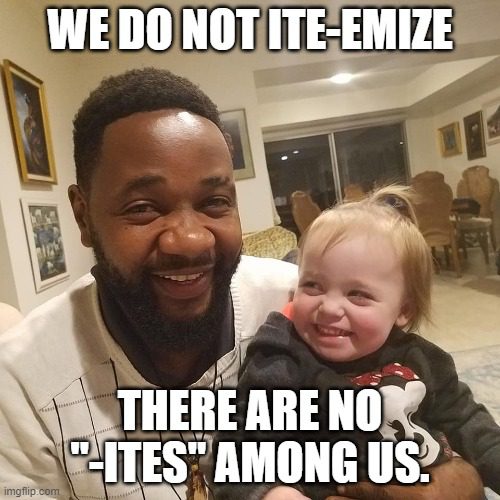
In another part of the Book of Mormon, a community converted to Christ follows its king’s invitation to bury their weapons of war at a tune when an enemy attack seems imminent. In the Book of Alma 24, we read the king’s words:
16 And now, my brethren, if our brethren seek to destroy us, behold, we will hide away our swords, yea, even we will bury them deep in the earth, that they may be kept bright, as a testimony that we have never used them, at the last day; and if our brethren destroy us, behold, we shall go to our God and shall be saved.
Though LDS history includes some tragically violent episodes, the preceding verses from the Book of Mormon illuminate the peaceable ideals of the religion. Tribalism might be hard-wired into our mortal psyches, but reconciliation and unity are our godly, eternal goals–and pre-conditions of progress.
The story of Joseph and Simeon (with insights I have included from the Book of Jasher) gives us a template for reconciliation. Simeon is made accountable for his part in selling his brother into slavery, and is “enslaved” in Egypt just as Joseph had been. He experiences the same helplessness which Joseph had known at age seventeen. But Simeon will also experience forgiveness and reconciliation.
I have taken the story of Joseph and Simeon as our next film project in the Democratic Republic of the Congo and enlarged the reconciliation portion between Joseph and Simeon. In my re-telling of the story, I have Joseph (renamed Zaphnath-Paaneah by the Pharoah, according to the scriptures) disguise himself as a servant and meet privately with his jailed brother, Simeon–taking him food, making conversation, and gradually giving him greater and greater freedom. Towards the end of the film, the servant (Joseph) insists on learning more about how Simeon’s brother was “lost.” Twenty-two years have passed since Simeon and his brothers betrayed Joseph.
SIMEON
Our father heaped his grief on Leah’s sons and his favor on Rachel’s.
JOSEPH (SERVANT)
Go on.
SIMEON
He gave Joseph a coat worth more than anything the rest of us could afford.
JOSEPH (SERVANT)
A coat. Joseph. That’s who I saw in my dream.
SIMEON
Perhaps you sensed it from my thoughts. From the secrets I didn’t speak.
JOSEPH (SERVANT)
The coat was made of fine fabric.
SIMEON
I don’t know what fabric it was made of. There were many pieces sewn together. I handled it. Reds and yellows and blues and purples. It was as though the inheritance of
every one of Leah’s sons had been spent on Joseph.
JOSEPH (SERVANT)
No wonder you felt–
SIMEON
He came to us that day, wearing that coat–
JOSEPH (SERVANT)
That day?
SIMEON
The last day he was with us.
JOSEPH (SERVANT)
Before you lost him?
(Simeon waits.)
SIMEON
We didn’t lose him. We sold him.
JOSEPH (SERVANT)
You did what? Who are you, Simeon?
SIMEON
I am–.
JOSEPH (SERVANT)
Will you shout your name into the wind now? Should I seek cover?
SIMEON
(looking down, humbled)
I don’t think I can shout. And my name has become small. Who am I? I am Israel’s son. I am still a man of the covenant.
JOSEPH (SERVANT)
Then God will be with you. God–
SIMEON
–has punished me? Now that you know my past, that’s what you’re thinking. That’s what Reuben said before letting the guards bind me like a goat.
JOSEPH (SERVANT)
But Reuben participated in what you did, no?
SIMEON
He was off tending flocks. He imagined that he’d rescue Joseph after he did his chores.
JOSEPH (SERVANT)
Redeem him from the ones you sold him to?
SIMEON
Rescue him from the pit.
JOSEPH (SERVANT)
You said–
SIMEON
We cast him into a pit before we sold him.
JOSEPH (SERVANT)
All of your brothers did this? You were together in it?
SIMEON
Not all of them.
JOSEPH (SERVANT)
Who did this great sin?
(Simeon hedges in shame.)
SIMEON
I did it. It was I. I held Joseph’s hands.
JOSEPH (SERVANT)
Show me how. Finish the story.
(Joseph presents his hands to Simeon, who clutches them.
Simeon’s grip becomes harder and harder as the two of them
talk.)
SIMEON
I looked into his eyes–
JOSEPH (SERVANT)
Yes.
SIMEON
There was no mercy in my heart.
JOSEPH (SERVANT)
But he goaded you. He wore the coat to tempt you.
(Simeon releases his grip and shakes his head.)
SIMEON
For years, I tried to blame him. But he was not to blame. I hardened my heart from the moment of his birth.
JOSEPH (SERVANT)
What would you say to Joseph? You can say it to me.
SIMEON
Why would I–.
JOSEPH (SERVANT)
Perhaps God will hear you. Don’t shout it, though. Whisper.
SIMEON
(drawing close to Joseph and whispering into his ear)
My heart was hard, without compassion. Immovable. I was jealous. My father loved Joseph beyond all.
JOSEPH (SERVANT)
And he–
SIMEON
I set my mind against him. I did not see him as my brother. And our father–I did not spare our father.
JOSEPH (SERVANT)
Jacob.
SIMEON
Israel was his new name.
JOSEPH (SERVANT)
You did not spare Israel.
SIMEON
That night, he asked why I was sad.
JOSEPH (SERVANT)
What did you say?
SIMEON
I said, I am pained in my liver.
JOSEPH (SERVANT)
He asked no more questions?
SIMEON
He caught me weeping the next day. He thought I was sad because Joseph was–lost. He didn’t know. I mourned more than all of my brothers.
JOSEPH (SERVANT)
More? Why?
SIMEON
Because I killed my own brother!
JOSEPH (SERVANT)
You don’t know if he died.
SIMEON
How could he have survived?
(Joseph presents his hands again, and Simeon, caught up in his
emotion, clutches them.)JOSEPH (SERVANT)
Close your eyes and imagine that my hands are his.
(Simeon does so, but with resistance.)
JOSEPH (SERVANT)
God can do anything, isn’t that what you believe? If the wind can magnify your voice into thunder, then God can take your words back through time, back to that moment,
back to your brother.
SIMEON
God won’t unravel time.
JOSEPH (SERVANT)
Believe.
SIMEON
(breaking down)
Joseph, forgive me. Dear God, forgive me! I did not know how deep my jealousy was planted. I would do anything to have that moment back, to undo–oh, my God! Oh, my
brother!
He sobs and begins to collapse. Joseph embraces him.
JOSEPH (SERVANT)
I will speak for Joseph.
SIMEON
You never knew him.
JOSEPH (SERVANT)
Let us pretend.
SIMEON
He was a beautiful boy. The look in his eyes! Pleading!
JOSEPH (SERVANT)
Did you hesitate?
SIMEON
Yes.
JOSEPH (SERVANT)
I thought so.
SIMEON
I am impulsive. I never hesitate for long.
JOSEPH (SERVANT)
But you wish you had.
SIMEON
Dear God, yes!
JOSEPH (SERVANT)
Let me be your brother.
{Simeon gains control of his emotions and looks at Servant Joseph.}
JOSEPH (SERVANT)
Simeon, forgive me. I tried to blame you without accepting my own complicity.
(As Joseph -servant- talks, the two kneel to each other.)
Father sent me to you in the field. He didn’t see me put on the coat. There were other coats I could’ve worn. I chose that one to remind you of how much he loved me.
SIMEON
Joseph.
JOSEPH (SERVANT)
You tried to please your father. You strained for his approval. I pleased him as easily as flowing water. I taunted you.
SIMEON
How do you know these things?
JOSEPH (SERVANT)
I am a man of dreams.
SIMEON
You are like him.
JOSEPH (SERVANT)
Can you forgive me?
SIMEON
For dreaming?
JOSEPH (SERVANT)
For everything I just said.
SIMEON
In a game?
JOSEPH (SERVANT)
Tell me you forgive me
SIMEON
I don’t want to play like this. It’s mockery.
JOSEPH (SERVANT)
Close your eyes and speak to the heavens. Say “I forgive you.”
(As Joseph speaks these next words, he is forgiving Simeon.)
JOSEPH (SERVANT)
I forgive you.
SIMEON
I forgive you.
JOSEPH (SERVANT)
Let the words go to God and to our
brothers. I must prepare for the
guests.
The word Reconciliation in any translation (including a silent one) is perhaps the most important in all gospel vocabulary. It is, as my father Robert Blair said, “a gift we can and must give to others. Ultimately it is a gift we can receive from our Father in Heaven, even being reconciled with him through the Atonement of Jesus Christ.”
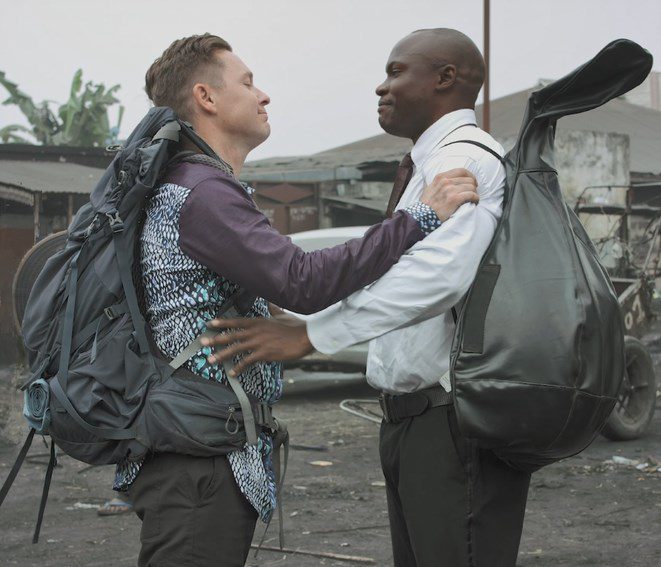
In our film “Companions”, the missionaries who have been adversaries, say goodbye, referring to each other as “my brother.”
We are already in development of “Joseph and Simeon” and will be in pre-production in October, with filming beginning in January 2023 in Mbuji Mayi, DR-Congo. We will use one of the Congo’s regional languages (Tshiluba) as the family language and French (the colonial language) rather than Egyptian. We will honor the actual story in having Joseph use an interpreter until the climactic moment when he reveals himself to his brothers.
Any questions may be directed here .
Relationships and Religion
Family, Parenting and Religion
family conflict in the scriptures
Previous Post

July 3, 2022
Michael Lyon's Quiet Life
Next Post

September 9, 2022 Deceased Grandparents--Avengers or Angels?
Browse Our Archives
Select a Category Ancestors family conflict in the scriptures race and religion Uncategorized
Select a Month August 2026 March 2026 January 2026 December 2025 November 2025 October 2025 September 2025 July 2025 April 2025 March 2025 January 2025 November 2024 May 2024 April 2024 November 2023 October 2023 September 2023 June 2023 September 2022 August 2022 July 2022 May 2022 April 2022 March 2022 January 2022 December 2021 October 2021 September 2021 July 2021 June 2021 October 2020 August 2020 July 2020 June 2020 March 2020 January 2020 December 2019 November 2019 October 2019 June 2019 January 2019 December 2018 November 2018 September 2018 August 2018 May 2018 March 2018 January 2018 November 2017 October 2017 August 2017 July 2017 June 2017 May 2017 March 2017 February 2017 November 2016 October 2016 August 2016 July 2016 June 2016 May 2016 April 2016 March 2016 February 2016 January 2016 November 2015 August 2015 July 2015 May 2015 April 2015 March 2015 February 2015 January 2015 December 2014 November 2014 October 2014 August 2014 July 2014 June 2014 May 2014 April 2014 March 2014 February 2014 January 2014 December 2013 November 2013 October 2013 September 2013 August 2013 July 2013 June 2013 May 2013 April 2013 March 2013 February 2013 January 2013 December 2012
Follow Us!
TAKE THE
Religious Wisdom Quiz
Which letter contains a hymn about Christ emptying Himself and being exalted?
Select your answer to see how you score.
Philippians Ephesians Titus Romans
Related posts from The Welcome Table

The Judge - How It Ended, Part 2

Church Ball and the Genesis Team
TRENDING AT PATHEOS Latter-day Saint

Did Prayer Cure His Cancer? Or Was It...
At 4 AM one morning, Joshua W. Brown’s wife awoke to a...

8 Ways a Near-Death Experience Rewires the Soul
Does Consciousness Survive Physical Death? After 50 Years of Research, Dr. Raymond...

Holy Longing: What Our Restlessness Is Telling Us
“One can find so many pains when the rain is falling.” -John...

What this is NOT about. This blog is definitely not about...

Who said the Israelites were God’s chosen? That’s right, they did. Who...

The Spirit World Is the Real World: God...
A Monk’s Wisdom on Body and Spirit I sit with Brother Martin...
view all Latter-day Saint blogs
Ad-Free & Subscriber Log-In Subscription Support
- About Us
- 2026 Calendar
- Videos
- Podcasts
- Library of World Religions
- Faith In Media Tracker
- Advertise With Us
- Write for Us
- Privacy Policy
- Terms of Service
- Do Not Sell My Data
- Contact Us
- Radiant Digital
- Manage Newsletter Subscriptions
- Unsubscribe From Notifications
- Sitemap
Copyright 2008-2026, Patheos. All rights reserved.
Subscription Support Ad-Free & Subscriber Log-In
Follow Patheos