
BuddhistCatholicContemplativeEvangelicalGeneral ChristianHinduJewishLatter-day SaintMuslimNew VisionsProgressive Christian
Beliefs
- Buddhist
- Catholic
- Contemplative
- Evangelical
- General Christian
- Hindu
- Jewish
- Latter-day Saint
- More Voices
- Muslim
- New Visions
- Pagan
- Progressive Christian
Topics
- Religion News
- Food and Religion
- Sports and Religion
- Religious Art
- Religious Music and Entertainment
- Religious Events
- History and Religion
- Style and Religion
- Politics and Religion
- Women in Religion
- Recreation Outdoors and Religion
- Business Finance and Religion
- Careers Workplace and Religion
- Education and Religion
- Family Parenting and Religion
- Health Fitness and Religion
- Home and Religion
- Relationships and Religion
- Technology and Religion
- Travel and Religion
Columnists
- Buddhist Columnists
- Business Finance and Religion Columnists
- Careers Workplace and Religion Columnists
- Catholic Columnists
- Contemplative Columnists
- Education and Religion Columnists
- Evangelists Columnists
- Family Parenting and Religion Columnists
- General Christian Columnists
- Health Fitness and Religion Columnists
- Hindu Columnists
- History and Religion Columnists
- Home and Religion Columnists
- Jewish Columnists
- More Voices Columnists
- Latter Day Columnists
- Muslim Columnists
- New Visions Columnists
- Nonreligious Columnists
- Pagan Columnists
- Politics and Religion Columnists
- Progressive Columnists
- Recreation Outdoors and Religion Columnists
- Relationships and Religion Columnists
- Religion News Columnists
- Religious Art Columnists
- Religious Events Columnists
- Religious Music and Entertainment Columnists
- Sports and Religion Columnists
- Style and Religion Columnists
- Technology and Religion Columnists
- Travel and Religion Columnists
- Women in Religion Columnists
Resource Library
- 2026 Calendar
- Library of World Religions
- The 100 Most Holy Places on Earth
- Patheos Answers
- Podcasts
- Videos
- Faith Leaders Database
- Anglican Episcopalian
- Bahai
- Baptist
- Buddhism
- Christianity
- Confucianism
- Eastern Orthodoxy
- Hinduism
- Holiness and Pentecostal
- ISKCON
- Islam
- Judaism
- Lutheran
- Methodist
- The Church of Jesus Christ of Latter-day Saints
- New Age
- Paganism
- Presbytarian and Reformed
- Protestantism
- Religion Behind the Scenes
- Roman Catholic
- Scientology
- Shia Islam
- Sikhism
- Sufism
- Sunni Islam
- Taoism
- Zen
- See all religions
Research Tools
 Ad-Free & Subscriber Log-In Subscription Support
Ad-Free & Subscriber Log-In Subscription Support
Follow Patheos 

- Trending:
- Forgiveness
- |
- Marriage
- |
- Consciousness
- |
- Death Penalty
- |
- Election
- |
- Halloween

- Home
- Latter-day Saint
- The Second Coming
The Second Coming
Last updated on: March 6, 2022 at 5:14 am by Margaret Blair Young
The Second Coming 2022-03-06T05:14:43-07:00 Margaret Blair Young
Patheos Explore the world's faith through different perspectives on religion and spirituality! Patheos has the views of the prevalent religions and spiritualities of the world.
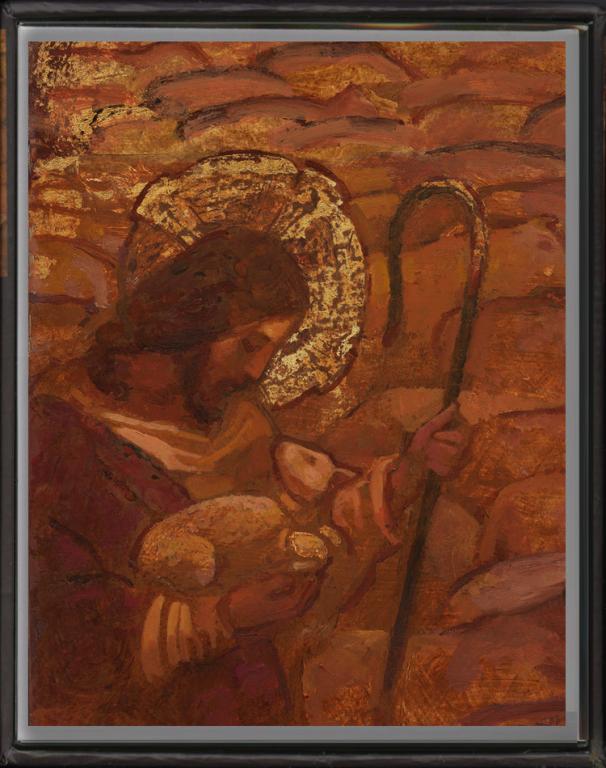
Art by J. Kirk Richards
Used with permission
Djemba and Marie weren’t speaking. They hadn’t spoken for a week, not since Djemba had yelled at her for taking too long to serve dinner. They had been married for four years, and had had a few of these spats, which usually faded away. Djemba would say something to Marie—it didn’t matter what—indicating that the time of coldness was over, and they would continue their lives until the next argument.
They were at the church, Djemba setting out the chairs for the leadership on the front row. He taped notices on all doors in French and English: “Masks are not required but are appreciated.” He was assigned to take temperatures. He took five before the stranger (unmasked) entered and presented his forehead for the scan. Temperature: normal. The stranger was clearly Muslim, wearing a white gown and a shiny, dark beard. He had salt and pepper hair, curled and knotted like lambs’ wool. It had clearly not known a comb for awhile. Djemba, on the other hand, had gotten a razor haircut the day before. He needed to set an example.
“We’re preparing for General Conference,” said Djemba to the stranger, and then, “This is a Christian meeting. Why are you here?”
The stranger raised his eyes to Djemba’s, who immediately had a vision. This was not surprising; Djemba had visions quite often. But he had never had a vision of his wife until this moment. He looked across the room at her (she was cleaning the large television screen, where various church authorities would be zoomed in to address the congregation), and saw her. Light from windows on each side of the church angled down to her gold headwrap and made a halo, which illuminated her face and showed her burnished cheekbones. She seemed to sense his gaze and looked back at him. Djemba’s own voice answered, though the words were strange: “I adore you, thou being of light.”
“You should sit up front,” said Djemba to the stranger, and promptly fainted. Two women knelt to help him, slapping his cheeks to wake him up. It was immediately effective. Dazed, he watched as the stranger moved up the aisle.
Other leaders, all in their suits and ties (and all with fresh haircuts), approached the first row. Nobody sat on the stand except those running the volume controls and the Zoom meeting itself—admitting people who were in the virtual waiting room. The only thing on the stand was the camera aimed at the pulpit from a tripod.
The stranger sat next to a little boy on the second row, whose father (Gui) was testing the microphone. The boy, dressed in jeans and a purple Utah Jazz t-shirt, played with the stranger’s hair and stroked his beard.
“Salt Lake City, can you hear me?” said Gui into the microphone.
The printed name of Elder Ebenezer Snow appeared on the television screen and was quickly replaced by the image of a dark-haired, white man in glasses.
“You’re on mute,” said Gui.
The white man moved his mouth.
“Can you unmute yourself?” said Gui.
The white man stared.
“Unmute.” Gui gestured to his ears.
“Oh, I was on mute,” said the white man. “Is this better?”
Gui gave a thumbs up.
“Testing,” said Elder Snow. “One, two, three, infinity.”
“Good,” said Gui.
He had learned English during his mission ten years ago and was called upon to translate and help with Zoom meetings whenever there was a conference. This was the first conference he had attended since his wife died four months ago. The baby she was expecting had died as well.
The stake president, Brother Abuja, took his seat on the first row as his wife and family entered the rear of the chapel. Zoom squares appeared with names and then live videos of area and general authorities, some Black, some white, some East Indian, and many from the Pacific islands.
The crowds were coming by the dozens now.
Gui twisted the microphone neck so that the mic faced the congregation. The camera was focused to the pulpit. Speakers would look into the camera to deliver their words, their backs to the audience.
Gui joined his son and sat next to the stranger, speaking in Tshiluba (the family language) now, “I hope my son didn’t bother you.” The stranger shook his head with an amused smile, and then gestured to the aisle, where choir members were approaching their seats in the center rows.
The stranger whispered to Gui in Tshiluba, “Nothing is ever lost.”
And then a woman in white, somehow hidden among the choir members in their red dresses or suits, separated herself from the group. A newborn baby was shawled to her back in bright green fabric. She joined Gui on the bench, leaning forward so her baby’s sleep would be undisturbed. She put her hand on Gui’s knee.
Gui snapped his head to her. He opened his mouth and then gasped. “It’s you.” He collapsed into himself, sobbing. The woman stroked his shaking shoulders as he dropped to his knees and buried his head in her lap. The little boy said, “Mamu!” and threw his arms around her neck.
Aside from the stranger and the little family, nobody heard these cries, however, because the choir had begun singing at the very instant that Gui burst into tears.
Redeemer of Israel
Our only delight
On whom for a blessing we call
Our shadow by day
And our pillar by night
Our King, our Deliv’rer, our all
We know he is coming
To gather his sheep…
The area president, Brother Ngandu from the United Congo, stood before the microphone, his face on the screen but his back to the audience.
“We welcome all of you here,” he said in French after the hymn ended. “Elder Snow is presiding from Salt Lake City.” The words were translated into English by a large woman on Zoom, but nobody there could hear the translation. Gui wasn’t at the controls to adjust the balance between French and English.
Djemba came forward and adjusted the controls. He then went to his wife—who was sitting by the side door– and embraced her.
“Good morning to everyone,” said Elder Snow from the screen. “We are meeting from all over the world. Our prophet will join us shortly from Jerusalem, but right now, we will hear testimonies from people in seven countries. Translations will be provided on your screens. We first invite Sister Nina Bazarskaya to speak to us about efforts in Ukraine to care for the people there.”
Sister Bazaraskaya’s image appeared on the screen after a second of static. Behind her were scenes of the last war in Ukraine—smoldering fires, bombed buildings. A strong woman with short, blonde hair and a muscular face, she was broadcasting from her apartment.
“I am thrilled to join you from this beautiful part of the world,” she said in Russian, with the translation printed in English, French and several other languages on-screen. “The dandelions and sunflowers have formed a glorious swath across the hills behind these sad scenes. Imagine it if you can’t see it.” She went on to describe the scenes of nature in Ukraine and then spoke about “beauty for ashes.”
A choir from Korea performed “How Firm a Foundation” next.
Then the stranger got up from the bench and approached the microphone.
“What’s happening in Africa?” said Elder Snow from the screen. He squinted.
“Can we get a translation?” said Sister Bazarskaya in English, and then typed in Chat: “Is he on mute?”
The stranger turned to face the congregation in Ngandajika, which meant that his back was facing the audience on zoom.
Elder Snow squinted again. “What’s happening in Africa?” he said.
“Translation please,” said another white man on Zoom.
Someone typed: “I can’t hear a thing. Who is this? Tell him to turn around and unmute.”
Nobody actually saw the stranger’s lips move, but each in that large room in Ngandanjika heard a familiar voice in their own language:
“The spirit of the Lord is upon me, for he has anointed me to give good news to the meek.”
Gui and his family knelt, and then everyone in the chapel went to their knees.
“Behold, the acceptable year of the LORD,” said the stranger to every heart.
Previous Post

January 26, 2022
On a Mission in the Democratic Republic of the Congo
Next Post
April 5, 2022 Ancestors, aka Zombies
Browse Our Archives
Select a Category Ancestors family conflict in the scriptures race and religion Uncategorized
Select a Month August 2026 March 2026 January 2026 December 2025 November 2025 October 2025 September 2025 July 2025 April 2025 March 2025 January 2025 November 2024 May 2024 April 2024 November 2023 October 2023 September 2023 June 2023 September 2022 August 2022 July 2022 May 2022 April 2022 March 2022 January 2022 December 2021 October 2021 September 2021 July 2021 June 2021 October 2020 August 2020 July 2020 June 2020 March 2020 January 2020 December 2019 November 2019 October 2019 June 2019 January 2019 December 2018 November 2018 September 2018 August 2018 May 2018 March 2018 January 2018 November 2017 October 2017 August 2017 July 2017 June 2017 May 2017 March 2017 February 2017 November 2016 October 2016 August 2016 July 2016 June 2016 May 2016 April 2016 March 2016 February 2016 January 2016 November 2015 August 2015 July 2015 May 2015 April 2015 March 2015 February 2015 January 2015 December 2014 November 2014 October 2014 August 2014 July 2014 June 2014 May 2014 April 2014 March 2014 February 2014 January 2014 December 2013 November 2013 October 2013 September 2013 August 2013 July 2013 June 2013 May 2013 April 2013 March 2013 February 2013 January 2013 December 2012
Follow Us!
TAKE THE
Religious Wisdom Quiz
What kind of bird brought Noah a sign of dry land?
Select your answer to see how you score.
A sparrow An eagle A raven A dove
Related posts from The Welcome Table

Endangered Albinos in the DR-Congo
The Exploited Mines of the Congo: How the...
My name is Albert Kashala Nzolo (Part 3)
TRENDING AT PATHEOS Latter-day Saint

Did Prayer Cure His Cancer? Or Was It...
At 4 AM one morning, Joshua W. Brown’s wife awoke to a...

8 Ways a Near-Death Experience Rewires the Soul
Does Consciousness Survive Physical Death? After 50 Years of Research, Dr. Raymond...

Holy Longing: What Our Restlessness Is Telling Us
“One can find so many pains when the rain is falling.” -John...

What this is NOT about. This blog is definitely not about...

Who said the Israelites were God’s chosen? That’s right, they did. Who...

The Spirit World Is the Real World: God...
A Monk’s Wisdom on Body and Spirit I sit with Brother Martin...
view all Latter-day Saint blogs
Ad-Free & Subscriber Log-In Subscription Support
- About Us
- 2026 Calendar
- Videos
- Podcasts
- Library of World Religions
- Faith In Media Tracker
- Advertise With Us
- Write for Us
- Privacy Policy
- Terms of Service
- Do Not Sell My Data
- Contact Us
- Radiant Digital
- Manage Newsletter Subscriptions
- Unsubscribe From Notifications
- Sitemap
Copyright 2008-2026, Patheos. All rights reserved.
Subscription Support Ad-Free & Subscriber Log-In
Follow Patheos