
BuddhistCatholicContemplativeEvangelicalGeneral ChristianHinduJewishLatter-day SaintMuslimNew VisionsProgressive Christian
Beliefs
- Buddhist
- Catholic
- Contemplative
- Evangelical
- General Christian
- Hindu
- Jewish
- Latter-day Saint
- More Voices
- Muslim
- New Visions
- Pagan
- Progressive Christian
Topics
- Religion News
- Food and Religion
- Sports and Religion
- Religious Art
- Religious Music and Entertainment
- Religious Events
- History and Religion
- Style and Religion
- Politics and Religion
- Women in Religion
- Recreation Outdoors and Religion
- Business Finance and Religion
- Careers Workplace and Religion
- Education and Religion
- Family Parenting and Religion
- Health Fitness and Religion
- Home and Religion
- Relationships and Religion
- Technology and Religion
- Travel and Religion
Columnists
- Buddhist Columnists
- Business Finance and Religion Columnists
- Careers Workplace and Religion Columnists
- Catholic Columnists
- Contemplative Columnists
- Education and Religion Columnists
- Evangelists Columnists
- Family Parenting and Religion Columnists
- General Christian Columnists
- Health Fitness and Religion Columnists
- Hindu Columnists
- History and Religion Columnists
- Home and Religion Columnists
- Jewish Columnists
- More Voices Columnists
- Latter Day Columnists
- Muslim Columnists
- New Visions Columnists
- Nonreligious Columnists
- Pagan Columnists
- Politics and Religion Columnists
- Progressive Columnists
- Recreation Outdoors and Religion Columnists
- Relationships and Religion Columnists
- Religion News Columnists
- Religious Art Columnists
- Religious Events Columnists
- Religious Music and Entertainment Columnists
- Sports and Religion Columnists
- Style and Religion Columnists
- Technology and Religion Columnists
- Travel and Religion Columnists
- Women in Religion Columnists
Resource Library
- 2026 Calendar
- Library of World Religions
- The 100 Most Holy Places on Earth
- Patheos Answers
- Podcasts
- Videos
- Faith Leaders Database
- Anglican Episcopalian
- Bahai
- Baptist
- Buddhism
- Christianity
- Confucianism
- Eastern Orthodoxy
- Hinduism
- Holiness and Pentecostal
- ISKCON
- Islam
- Judaism
- Lutheran
- Methodist
- The Church of Jesus Christ of Latter-day Saints
- New Age
- Paganism
- Presbytarian and Reformed
- Protestantism
- Religion Behind the Scenes
- Roman Catholic
- Scientology
- Shia Islam
- Sikhism
- Sufism
- Sunni Islam
- Taoism
- Zen
- See all religions
Research Tools
 Ad-Free & Subscriber Log-In Subscription Support
Ad-Free & Subscriber Log-In Subscription Support
Follow Patheos 

- Trending:
- Forgiveness
- |
- Marriage
- |
- Consciousness
- |
- Death Penalty
- |
- Election
- |
- Halloween

- Home
- Latter-day Saint
- Do you see my people as representatives of Satan?
Do you see my people as representatives of Satan?
Last updated on: July 13, 2020 at 1:41 pm by Margaret Blair Young
Do you see my people as representatives of Satan? 2020-07-13T13:41:14-07:00 Margaret Blair Young
Patheos Explore the world's faith through different perspectives on religion and spirituality! Patheos has the views of the prevalent religions and spiritualities of the world.
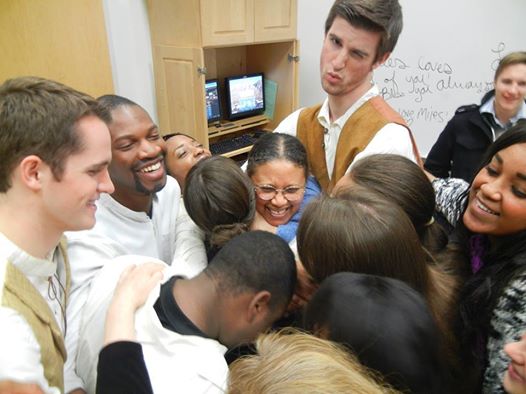
Cast members of _I Am Jane_ embrace.
In 2012, I was teaching LDS Institute in Spanish. Most of my students were from Mexico, but I had some from Chile, El Salvador, and Puerto Rico. I had attended summer training for Seminary and Institute teachers at BYU and had received the manual given to all instructors. It was November and I still had not opened it. I was more than halfway through the Doctrine and Covenants when I decided to see what was in the supplement. It was still shrink-wrapped.
I was preparing to teach section 76 of the Doctrine and Covenants. I confess that I did not actually read the supplement before typing my translations, but translated word to word. I did not finish translating the following paragraph, submitted by a BYU religion professor, when I realized what it was saying. I immediately called Darius Gray, my co-author, and reported what I had found. This is the quote, from Church president John Taylor, which the BYU professor included in his supplementary page:
And after the flood we are told that the curse that had been pronounced upon Cain was continued through Ham’s wife, as he had married a wife of that seed. And why did it pass through the flood? Because it was necessary that the devil should have a representation upon the earth as well as God; and that man should be a free agent to act for himself, and that all men might have the opportunity of receiving or rejecting the truth, and be governed by it or not according to their wishes and abide the result; and that those who would be able to associate with the Gods in the eternal worlds.
Did you catch it? This quote suggests that Blacks (perceived by John Taylor as the seed of Cain) were Satan’s representatives on earth.
As it happened, Darius already had an appointment with Elder Dallin Oaks to discuss race issues. He asked me to bring him the original of this page. As I recall, I drove to his place immediately.
At the appointment, Darius said, “Elder Oaks, do you consider me a representative of Satan?”
Elder Oaks said, “Of course not.”
“Do you consider my people to be representatives of Satan?”
“No,” he said.
“How would you feel,” said Darius, “if that were being taught in Seminary and Institute classes?”
“That would be appalling,” Elder Oaks said.
Darius handed him the paper with the quote.
I will not report what Elder Oaks said, only that the quote was immediately addressed and that there were consequences.
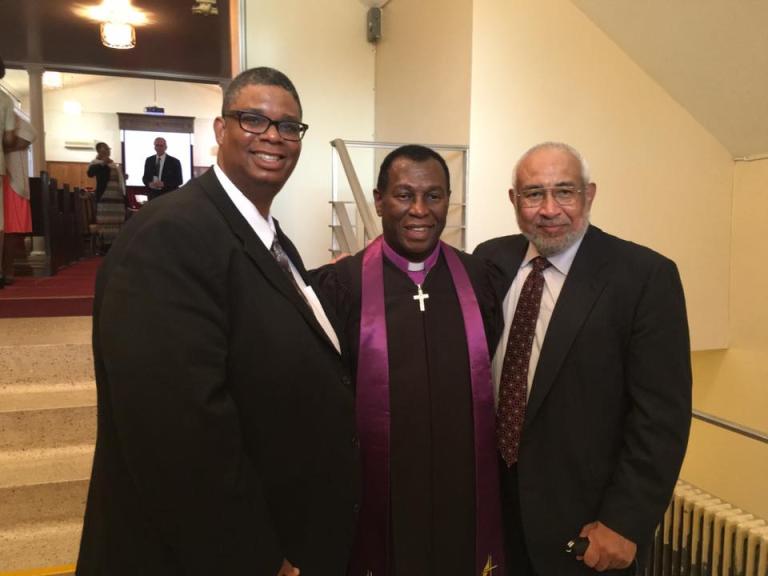
Elder Oaks was willing to listen to Darius and take action when he realized that we had a problem.
I also contacted the BYU professor (who would become quite famous the next year when he did an interview with The Washington Post and said racist things which the Church disavowed twice the next day.) When I told him that I was concerned about the quote and wanted to talk with him about it, his reply was, “I often have students who have questions, but they do not usually question our leaders.” He said he did not wish to meet with me.
Lessons:
Elder Oaks knew that Darius was a trustworthy mentor. I know that as well. He is my mentor-of-choice in race issues, the first I call when I see a problem. HE KNOWS what it’s like to be Black in America. I recognize that I do not, though I perpetually urge my empathetic imagination to go as far as it can.
The religion professor assumed that John Taylor was a trustworthy mentor. In this case, John Taylor was “spectacularly wrong,” as Elder Oaks once said about justifications for the priesthood restriction.
A few questions for anyone concerned about race issues:
Who are your trusted mentors? Are you relying on a single narrative or periodically challenging it?
Is your moral center well enough developed to recognize a mistake, even if your mentor said it?
Are you willing to learn more about the issue from other sources?
If the answer to the last question is NO, the conversation ends.
If it’s yes…
Well, I’ll continue the conversation in my next blog post.
I intend to talk about how Darius taught me to challenge the racism I did not initially recognize. I think he can be a good mentor for anyone reading this.

Previous Post

June 19, 2020
Greenwood--from The Last Mile of the Way (Young and Gray)
Next Post
July 14, 2020 Young and Gray #2: Writing Slavery
Browse Our Archives
Select a Category Ancestors family conflict in the scriptures race and religion Uncategorized
Select a Month August 2026 March 2026 January 2026 December 2025 November 2025 October 2025 September 2025 July 2025 April 2025 March 2025 January 2025 November 2024 May 2024 April 2024 November 2023 October 2023 September 2023 June 2023 September 2022 August 2022 July 2022 May 2022 April 2022 March 2022 January 2022 December 2021 October 2021 September 2021 July 2021 June 2021 October 2020 August 2020 July 2020 June 2020 March 2020 January 2020 December 2019 November 2019 October 2019 June 2019 January 2019 December 2018 November 2018 September 2018 August 2018 May 2018 March 2018 January 2018 November 2017 October 2017 August 2017 July 2017 June 2017 May 2017 March 2017 February 2017 November 2016 October 2016 August 2016 July 2016 June 2016 May 2016 April 2016 March 2016 February 2016 January 2016 November 2015 August 2015 July 2015 May 2015 April 2015 March 2015 February 2015 January 2015 December 2014 November 2014 October 2014 August 2014 July 2014 June 2014 May 2014 April 2014 March 2014 February 2014 January 2014 December 2013 November 2013 October 2013 September 2013 August 2013 July 2013 June 2013 May 2013 April 2013 March 2013 February 2013 January 2013 December 2012
Follow Us!
TAKE THE
Religious Wisdom Quiz
What does the Bible say about pride?
Select your answer to see how you score.
It is harmless It goes before a fall It always wins It is a virtue
Related posts from The Welcome Table



Church Ball and the Genesis Team

TRENDING AT PATHEOS Latter-day Saint

Did Prayer Cure His Cancer? Or Was It...
At 4 AM one morning, Joshua W. Brown’s wife awoke to a...

8 Ways a Near-Death Experience Rewires the Soul
Does Consciousness Survive Physical Death? After 50 Years of Research, Dr. Raymond...

Holy Longing: What Our Restlessness Is Telling Us
“One can find so many pains when the rain is falling.” -John...

What this is NOT about. This blog is definitely not about...

Who said the Israelites were God’s chosen? That’s right, they did. Who...

The Spirit World Is the Real World: God...
A Monk’s Wisdom on Body and Spirit I sit with Brother Martin...
view all Latter-day Saint blogs
Ad-Free & Subscriber Log-In Subscription Support
- About Us
- 2026 Calendar
- Videos
- Podcasts
- Library of World Religions
- Faith In Media Tracker
- Advertise With Us
- Write for Us
- Privacy Policy
- Terms of Service
- Do Not Sell My Data
- Contact Us
- Radiant Digital
- Manage Newsletter Subscriptions
- Unsubscribe From Notifications
- Sitemap
Copyright 2008-2026, Patheos. All rights reserved.
Subscription Support Ad-Free & Subscriber Log-In
Follow Patheos