
BuddhistCatholicContemplativeEvangelicalGeneral ChristianHinduJewishLatter-day SaintMuslimNew VisionsProgressive Christian
Beliefs
- Buddhist
- Catholic
- Contemplative
- Evangelical
- General Christian
- Hindu
- Jewish
- Latter-day Saint
- More Voices
- Muslim
- New Visions
- Pagan
- Progressive Christian
Topics
- Religion News
- Food and Religion
- Sports and Religion
- Religious Art
- Religious Music and Entertainment
- Religious Events
- History and Religion
- Style and Religion
- Politics and Religion
- Women in Religion
- Recreation Outdoors and Religion
- Business Finance and Religion
- Careers Workplace and Religion
- Education and Religion
- Family Parenting and Religion
- Health Fitness and Religion
- Home and Religion
- Relationships and Religion
- Technology and Religion
- Travel and Religion
Columnists
- Buddhist Columnists
- Business Finance and Religion Columnists
- Careers Workplace and Religion Columnists
- Catholic Columnists
- Contemplative Columnists
- Education and Religion Columnists
- Evangelists Columnists
- Family Parenting and Religion Columnists
- General Christian Columnists
- Health Fitness and Religion Columnists
- Hindu Columnists
- History and Religion Columnists
- Home and Religion Columnists
- Jewish Columnists
- More Voices Columnists
- Latter Day Columnists
- Muslim Columnists
- New Visions Columnists
- Nonreligious Columnists
- Pagan Columnists
- Politics and Religion Columnists
- Progressive Columnists
- Recreation Outdoors and Religion Columnists
- Relationships and Religion Columnists
- Religion News Columnists
- Religious Art Columnists
- Religious Events Columnists
- Religious Music and Entertainment Columnists
- Sports and Religion Columnists
- Style and Religion Columnists
- Technology and Religion Columnists
- Travel and Religion Columnists
- Women in Religion Columnists
Resource Library
- 2026 Calendar
- Library of World Religions
- The 100 Most Holy Places on Earth
- Patheos Answers
- Podcasts
- Videos
- Faith Leaders Database
- Anglican Episcopalian
- Bahai
- Baptist
- Buddhism
- Christianity
- Confucianism
- Eastern Orthodoxy
- Hinduism
- Holiness and Pentecostal
- ISKCON
- Islam
- Judaism
- Lutheran
- Methodist
- The Church of Jesus Christ of Latter-day Saints
- New Age
- Paganism
- Presbytarian and Reformed
- Protestantism
- Religion Behind the Scenes
- Roman Catholic
- Scientology
- Shia Islam
- Sikhism
- Sufism
- Sunni Islam
- Taoism
- Zen
- See all religions
Research Tools
 Ad-Free & Subscriber Log-In Subscription Support
Ad-Free & Subscriber Log-In Subscription Support
Follow Patheos 

- Trending:
- Forgiveness
- |
- Marriage
- |
- Consciousness
- |
- Death Penalty
- |
- Election
- |
- Halloween

- Home
- Latter-day Saint
- African Storybooks
African Storybooks
Last updated on: November 21, 2017 at 3:18 pm by Margaret Blair Young
African Storybooks 2017-11-21T15:18:45-07:00 Margaret Blair Young
Patheos Explore the world's faith through different perspectives on religion and spirituality! Patheos has the views of the prevalent religions and spiritualities of the world.
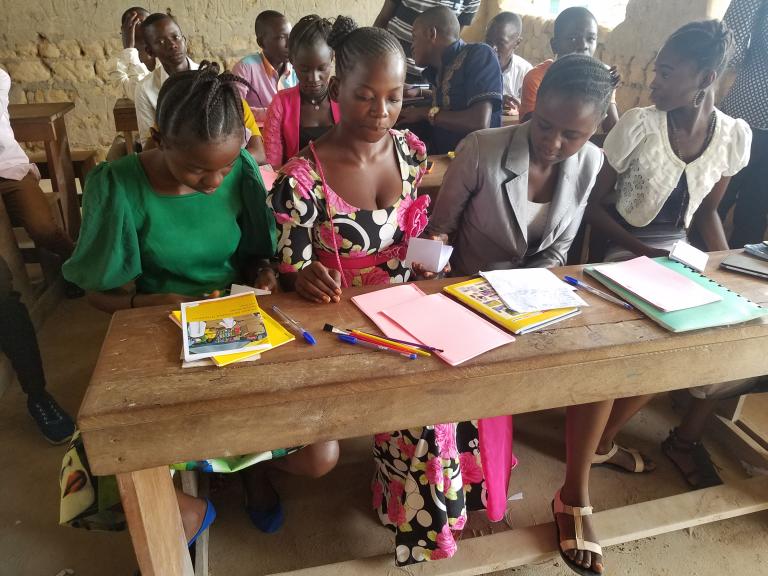 A couple of weeks ago, while I was in Lodja, Democratic Republic of Congo, I was invited to a huge family gathering in honor of a powerful man who had gone from Lodja to important positions in the country’s capital. There were at least one hundred people gathered to celebrate him and to greet me. They danced, shouted, trilled, and otherwise rejoiced. At one point, a little girl came forward with her plastic doll. The girl was a short-cropped beauty, dark and adorable. Her doll, however–a good-sized one typical of what an American girl might find under a Christmas tree–had blonde hair and blue eyes. She timidly pushed it towards me. This doll was a cultural connection, an “I have something that looks like you!” bridge. I smiled in recognition. Yes, that was an American doll, and the doll bore some resemblance to one of my grandchildren.
My role at that moment was to just be present, to enjoy the people. My presence in Africa, however, always suggests power simply because of the cultural dynamics. Though my American home is modest by American standards, my access to pretty much anything I want is unimaginable to those gathered around me in Lodja to celebrate one of their own. I would not even attempt to describe the Thanksgiving feast which awaited me after my long flight from the Congo to Utah, USA.
Likewise, Americans (myself included) do not “get” Africa. The image of the starving African is certainly drawn from reality, but the whole truth of what it means to be African–to have an ancestry which experienced kings, queens, chiefs, tribal wars, glory, slavery, and greatness, and now celebrates family with unfettered joy and swaying hips–that Africa is beyond comprehension. Any American who presumes to understand it is simply being arrogant. This is a lesson I learned from my linguist father as he became fluent in dialects in many countries, and which I continue to learn as I discuss philosophy with my husband. The “other” (meaning the other person, even a person as close as a brother or sister) is infinitely unknowable. This is even more true when there are cultural divides. Nonetheless, that unknowable “other” also calls us to responsibility. Within it, that mysterious face carries the command, as Levinas said, “Thou shalt not kill.” But the command goes deeper than that and into the New Testament directive:
Pure religion and undefiled before God and the Father is this, To visit the fatherless and widows in their affliction, and to keep himself unspotted from the world. (James 1:27)
Every face we encounter as we live out our mortal lives calls us to help. We will not be able to help more than a few of those we meet, but we are hard-wired for compassion, and in our most natural state, we will yearn to help at least those few. Approaching that responsibility must mean the complete surrender of presumption or prejudice.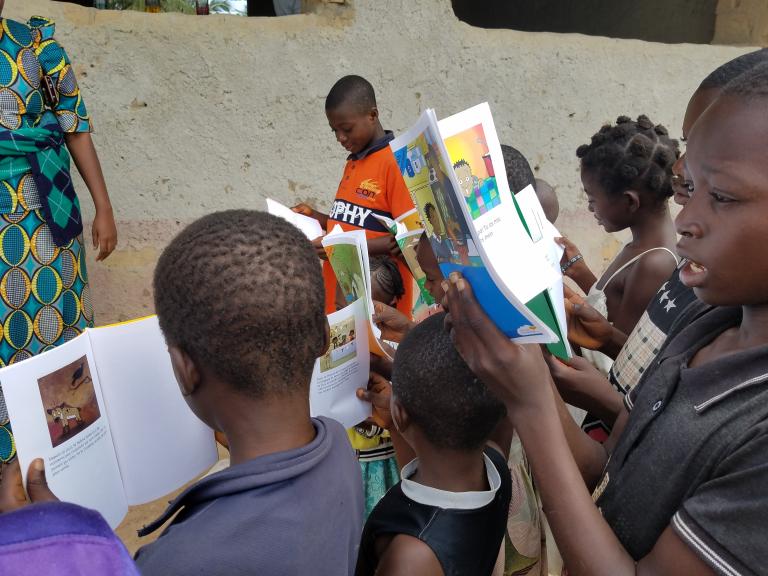
When I speak about literacy in the DR-Congo, some Americans suggest that Kindles would work great. Unlimited libraries on devices no larger than a notebook. It sounds easy and wonderful! Of course, these good-hearted souls don’t have a real sense of the starting point for our projects. You can’t have a Kindle unless you have the ability to charge it. And having books on hand won’t help anyone who can’t read.
In the “bush,” where many of the children I met live, there is no electricity. The sun governs the day. And in many parts, there are no schools. Even in places where schools exist, education is not free. It costs $12. USD a month for a family to educate their child–and the school is not always within walkable distance. Some choose not to do it, or simply cannot afford it.
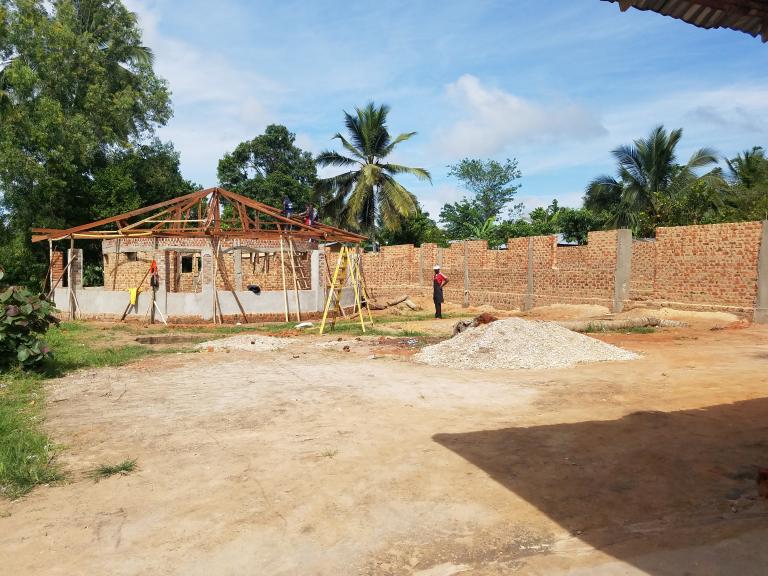 My efforts during my August trip to the DR-Congo were all about assessment. What do they have? What do they need? Where do we start?
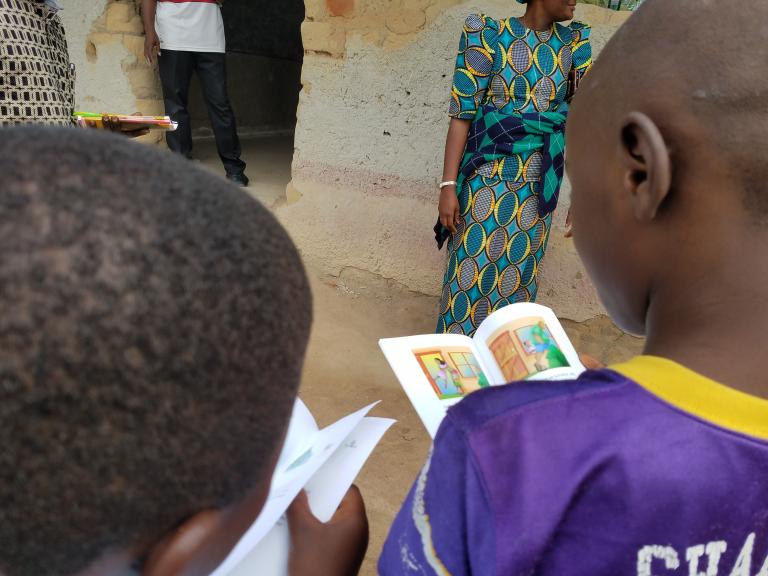
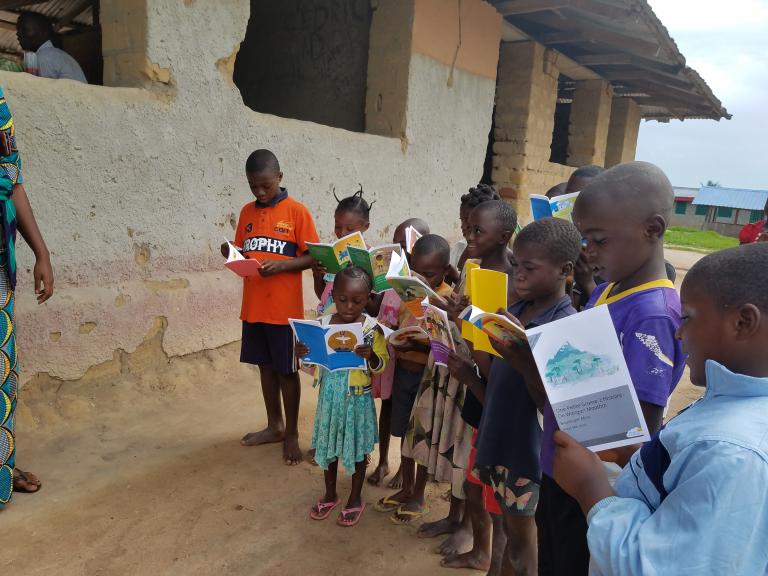
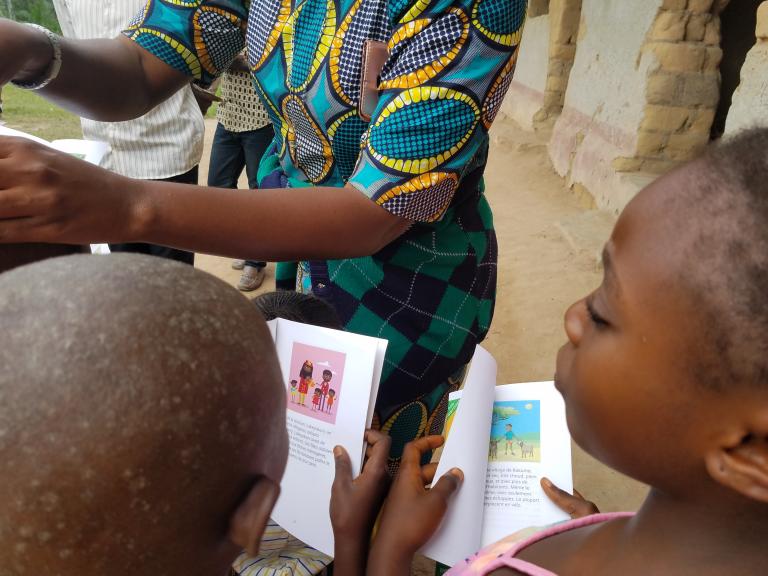
On my second day there during that August trip, I discovered the site African Storybooks. I was thrilled! The characters were African, and I could print the booklets in French. The children would be reading stories about people who looked like them and who knew the kind of life they lived! I had a printer with me, and printed about one hundred booklets, which were distributed to four schools in Kinshasa. As preparation for my November trip to do follow-up and to attend a film festival (we are also working with Bimpa Productions in Kinshasa to get cinema up and running in the country), I printed out 250 booklets and took them as flat-pages at the bottom of my largest suitcase.
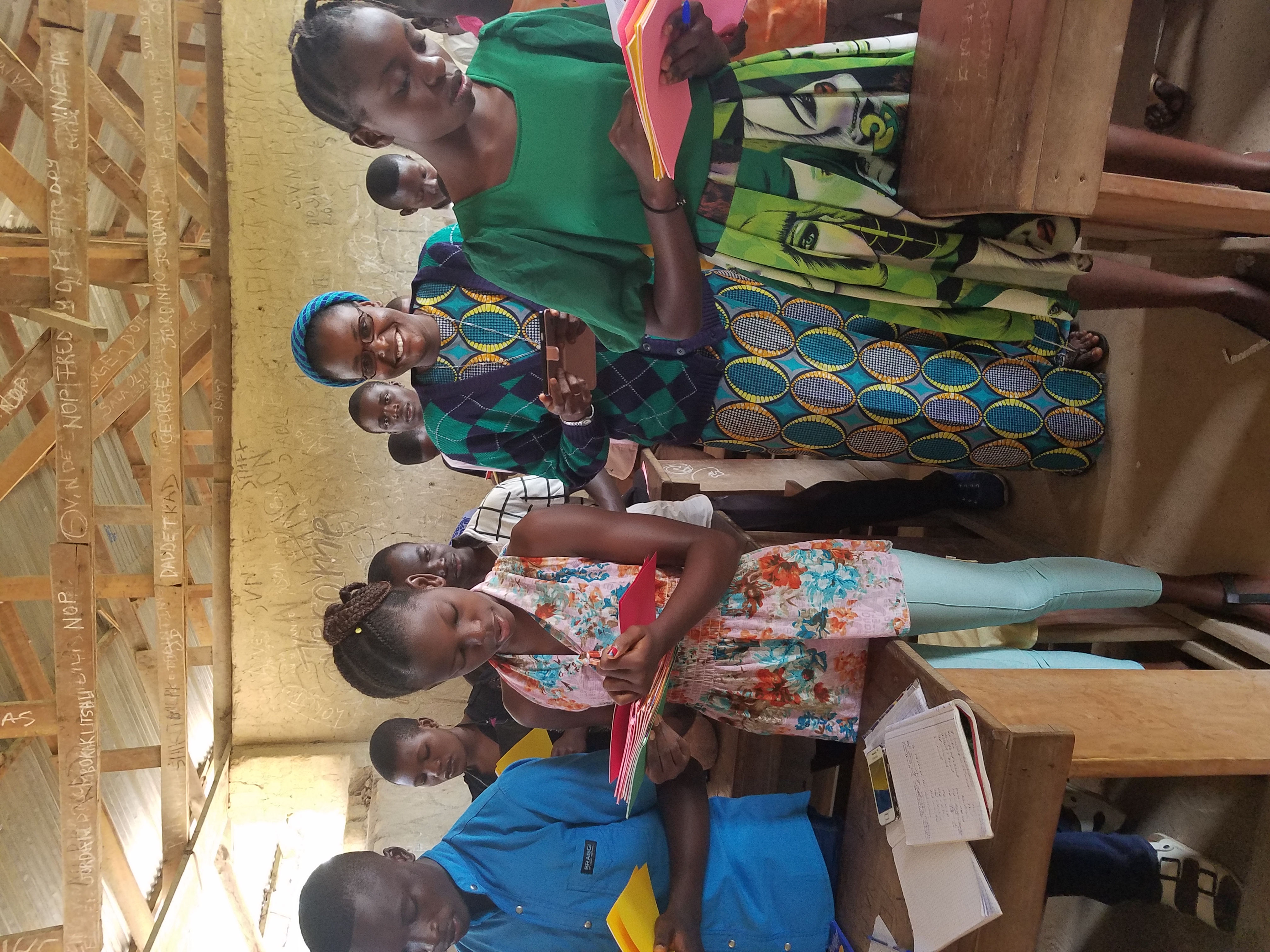
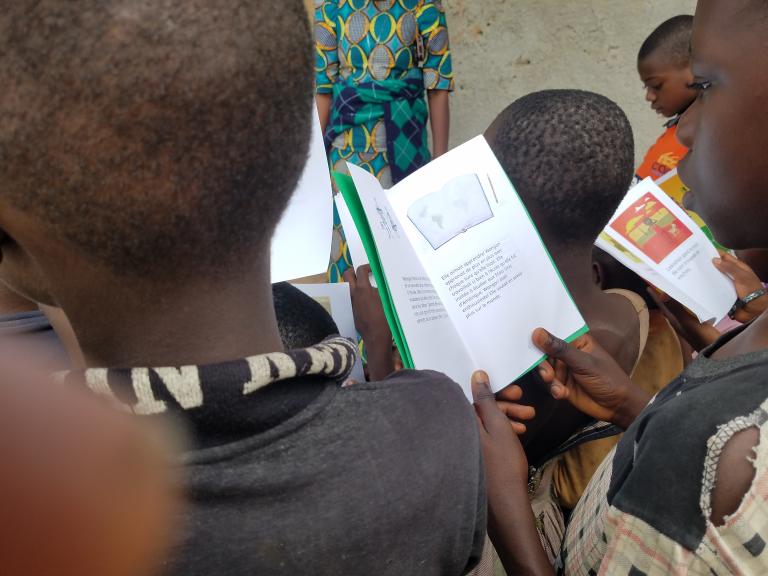 In Lodja, I began putting the books together, reinforcing them with folded construction paper. I worked with a Congolese scholar, On Okundji Ekanga Blaise Veron, who is also a Catholic priest. “Abbe Veron” gave up a lucrative professorship in France to return to his war-torn village and build hope. His main concern when I met him during the August trip was that the young people were in a moral vacuum with no plans for a good future–or even a sense that one was possible.
As one who teaches creative writing and tells students that they will never write well if they don’t read widely, I recognize the importance of books–and particularly fiction books, which push the imagination to inspire students to dream, to envision a future, to dare to explore possibilities beyond the obvious. I knew that these books could be the beginning of new dreams in the Congo, and of a future not yet imagined, but which will be. These books could be a huge part of restoring hope to a place disrupted by the chaos of war.
I looked especially for titles which told success stories. In the future, I plan on volunteering for African Storybooks in supplementing their archive with stories from the Congo, and with translations into some of the dialects there. The resource is vital.
The books use full color pictures, which mattered to me. My printing cost for 250 books was about $400. That money came from my husband’s and my personal funds, and was some of the best-spent money of our lives.
The look on the children’s faces when they perused these books which would now comprise their storybook library? Well, see for yourself.
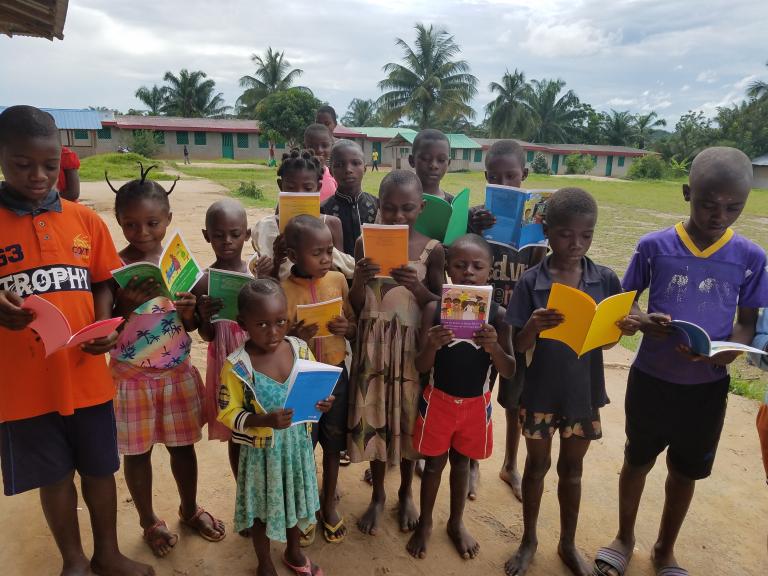
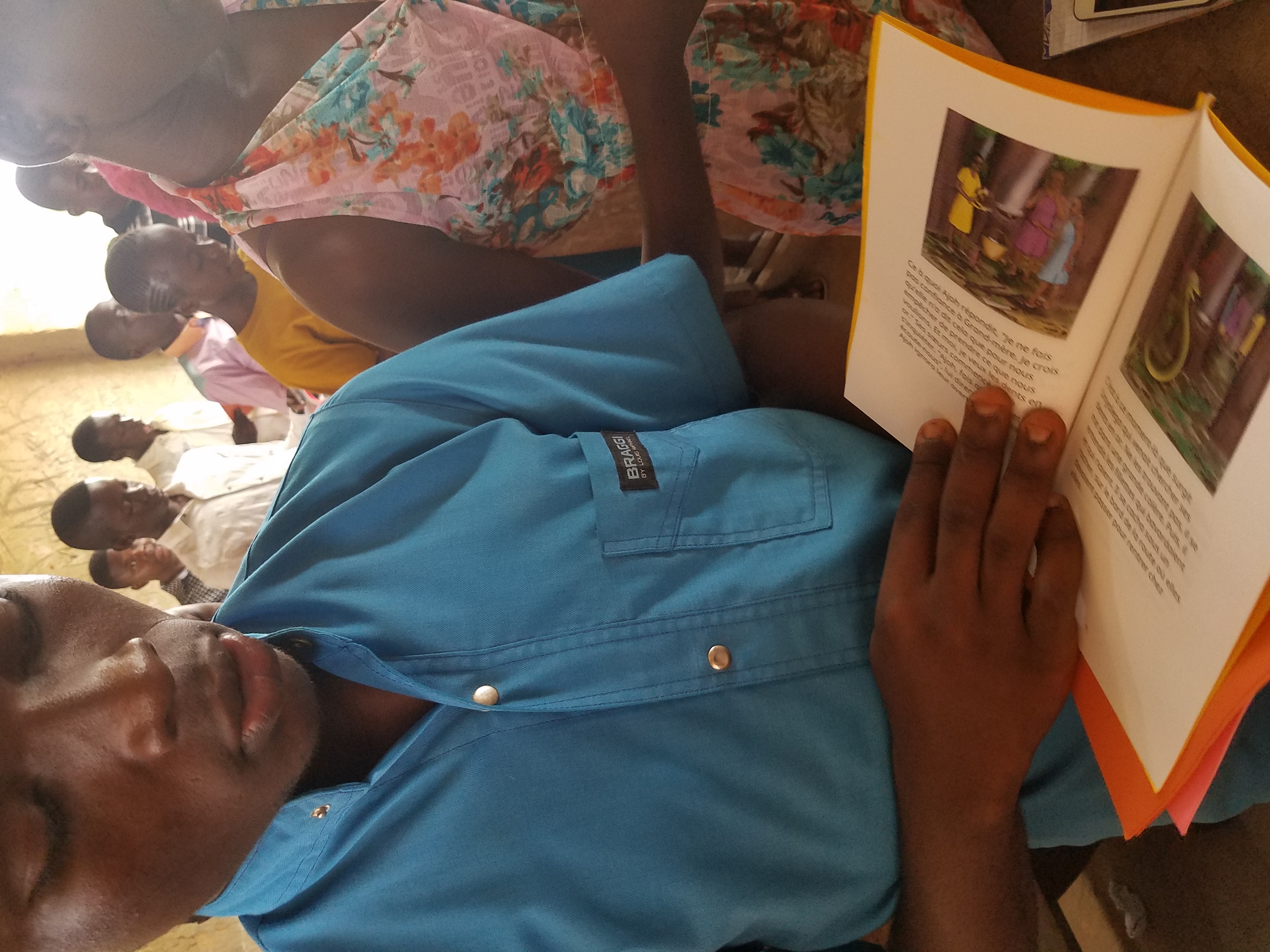
If you are interested in getting involved, contact me directly.
Previous Post

October 19, 2017
In Tribute: Douglas Heal Thayer (April 19, 1929-October 17, 2017)
Next Post
November 22, 2017 Food-color paint in the Congo
Browse Our Archives
Select a Category Ancestors family conflict in the scriptures race and religion Uncategorized
Select a Month August 2026 March 2026 January 2026 December 2025 November 2025 October 2025 September 2025 July 2025 April 2025 March 2025 January 2025 November 2024 May 2024 April 2024 November 2023 October 2023 September 2023 June 2023 September 2022 August 2022 July 2022 May 2022 April 2022 March 2022 January 2022 December 2021 October 2021 September 2021 July 2021 June 2021 October 2020 August 2020 July 2020 June 2020 March 2020 January 2020 December 2019 November 2019 October 2019 June 2019 January 2019 December 2018 November 2018 September 2018 August 2018 May 2018 March 2018 January 2018 November 2017 October 2017 August 2017 July 2017 June 2017 May 2017 March 2017 February 2017 November 2016 October 2016 August 2016 July 2016 June 2016 May 2016 April 2016 March 2016 February 2016 January 2016 November 2015 August 2015 July 2015 May 2015 April 2015 March 2015 February 2015 January 2015 December 2014 November 2014 October 2014 August 2014 July 2014 June 2014 May 2014 April 2014 March 2014 February 2014 January 2014 December 2013 November 2013 October 2013 September 2013 August 2013 July 2013 June 2013 May 2013 April 2013 March 2013 February 2013 January 2013 December 2012
Follow Us!
TAKE THE
Religious Wisdom Quiz
A shepherd leads his flock beside still waters and through the valley of death's shadow. What is this shepherd's identity?
Select your answer to see how you score.
The Apostles The Prophet David The Lord
Related posts from The Welcome Table
Questions for Any LDS Utah Judge (including Bishops)
Giving Machines: Easy as Buying a Candy Bar
TRENDING AT PATHEOS Latter-day Saint

Did Prayer Cure His Cancer? Or Was It...
At 4 AM one morning, Joshua W. Brown’s wife awoke to a...

8 Ways a Near-Death Experience Rewires the Soul
Does Consciousness Survive Physical Death? After 50 Years of Research, Dr. Raymond...

Holy Longing: What Our Restlessness Is Telling Us
“One can find so many pains when the rain is falling.” -John...

What this is NOT about. This blog is definitely not about...

Who said the Israelites were God’s chosen? That’s right, they did. Who...

The Spirit World Is the Real World: God...
A Monk’s Wisdom on Body and Spirit I sit with Brother Martin...
view all Latter-day Saint blogs
Ad-Free & Subscriber Log-In Subscription Support
- About Us
- 2026 Calendar
- Videos
- Podcasts
- Library of World Religions
- Faith In Media Tracker
- Advertise With Us
- Write for Us
- Privacy Policy
- Terms of Service
- Do Not Sell My Data
- Contact Us
- Radiant Digital
- Manage Newsletter Subscriptions
- Unsubscribe From Notifications
- Sitemap
Copyright 2008-2026, Patheos. All rights reserved.
Subscription Support Ad-Free & Subscriber Log-In
Follow Patheos