
BuddhistCatholicContemplativeEvangelicalGeneral ChristianHinduJewishLatter-day SaintMuslimNew VisionsProgressive Christian
Beliefs
- Buddhist
- Catholic
- Contemplative
- Evangelical
- General Christian
- Hindu
- Jewish
- Latter-day Saint
- More Voices
- Muslim
- New Visions
- Pagan
- Progressive Christian
Topics
- Religion News
- Food and Religion
- Sports and Religion
- Religious Art
- Religious Music and Entertainment
- Religious Events
- History and Religion
- Style and Religion
- Politics and Religion
- Women in Religion
- Recreation Outdoors and Religion
- Business Finance and Religion
- Careers Workplace and Religion
- Education and Religion
- Family Parenting and Religion
- Health Fitness and Religion
- Home and Religion
- Relationships and Religion
- Technology and Religion
- Travel and Religion
Columnists
- Buddhist Columnists
- Business Finance and Religion Columnists
- Careers Workplace and Religion Columnists
- Catholic Columnists
- Contemplative Columnists
- Education and Religion Columnists
- Evangelists Columnists
- Family Parenting and Religion Columnists
- General Christian Columnists
- Health Fitness and Religion Columnists
- Hindu Columnists
- History and Religion Columnists
- Home and Religion Columnists
- Jewish Columnists
- More Voices Columnists
- Latter Day Columnists
- Muslim Columnists
- New Visions Columnists
- Nonreligious Columnists
- Pagan Columnists
- Politics and Religion Columnists
- Progressive Columnists
- Recreation Outdoors and Religion Columnists
- Relationships and Religion Columnists
- Religion News Columnists
- Religious Art Columnists
- Religious Events Columnists
- Religious Music and Entertainment Columnists
- Sports and Religion Columnists
- Style and Religion Columnists
- Technology and Religion Columnists
- Travel and Religion Columnists
- Women in Religion Columnists
Resource Library
- 2026 Calendar
- Library of World Religions
- The 100 Most Holy Places on Earth
- Patheos Answers
- Podcasts
- Videos
- Faith Leaders Database
- Anglican Episcopalian
- Bahai
- Baptist
- Buddhism
- Christianity
- Confucianism
- Eastern Orthodoxy
- Hinduism
- Holiness and Pentecostal
- ISKCON
- Islam
- Judaism
- Lutheran
- Methodist
- The Church of Jesus Christ of Latter-day Saints
- New Age
- Paganism
- Presbytarian and Reformed
- Protestantism
- Religion Behind the Scenes
- Roman Catholic
- Scientology
- Shia Islam
- Sikhism
- Sufism
- Sunni Islam
- Taoism
- Zen
- See all religions
Research Tools
 Ad-Free & Subscriber Log-In Subscription Support
Ad-Free & Subscriber Log-In Subscription Support
Follow Patheos 

- Trending:
- Forgiveness
- |
- Marriage
- |
- Consciousness
- |
- Death Penalty
- |
- Election
- |
- Halloween

- Home
- Latter-day Saint
- A Priest and a Mormon Walk Down a Road…
A Priest and a Mormon Walk Down a Road…
Last updated on: August 24, 2017 at 9:01 am by Margaret Blair Young
A Priest and a Mormon Walk Down a Road… 2017-08-24T09:01:18-07:00 Margaret Blair Young
Patheos Explore the world's faith through different perspectives on religion and spirituality! Patheos has the views of the prevalent religions and spiritualities of the world.
 And the priest says:
“We’re in a moral vacuum.”
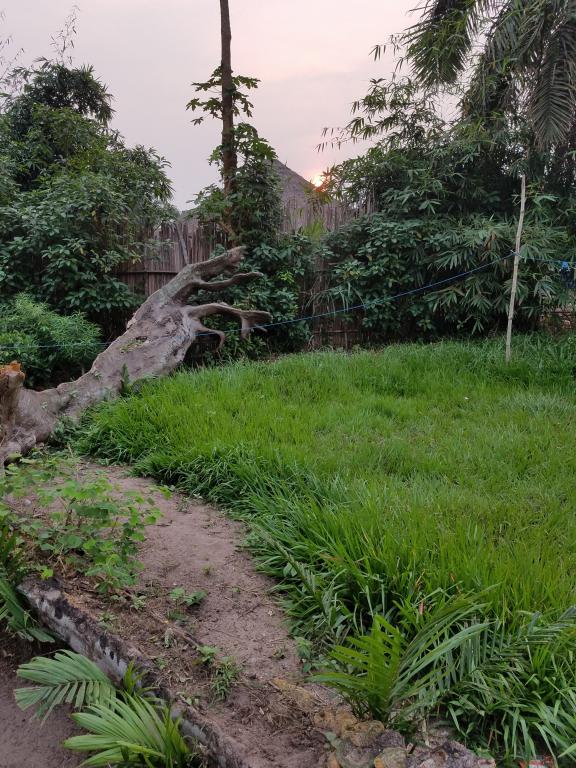
The place is Lodja, Democratic Republic of Congo. There are no paved roads and few cars. People walk or take motorcycles or bicycles to get from one place to another. Banana trees, papaya trees, avocado trees, mango trees abound, and the pineapples are twice the size of anything I’ve seen in the USA. The priest is Abbe Veron Okavo, a strong Congolese man who seems sometimes burdened and at other times so full of joy that he can’t resist dancing.
“The youth lack vision,” he says. “They demand money, but they don’t work.”
“That’s a problem everywhere,“ I answer.
We come to a home where several women leap from their work to greet the priest. He introduces me, and I say the Tetala phrase he has taught me: “Moy-oh.” Hello.
After we leave, Abbe Veron tells me that the shy one is an orphan. Her parents died of CIDA. He arranged for her education. I will later learn that he has taken in hundreds of orphans and provided for their education. I don’t know how many, but I’m told—by others, and particularly by the orphans themselves—that the number is beyond what I might imagine.
He tells me about the horrors of the “Congo War” when refugees, militia, or makeshift armies from Rwanda and Uganda invaded all the big cities in Kasai Oriental, including Lodja. Members of “Those who kill in groups” terrorists invaded and plundered homes, killed thousands, raped the women. “You will see my sister’s house,” he says. “They took that over.” The war lasted from 1998-2000. 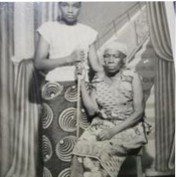
He tells me about the atrocities, and I walk silently, absorbing it as much as I can. I have already learned that silence is a recognized language in Lodja, so there’s no awkwardness.
In my elementary French, I manage to communicate my question: “Those boys who committed such horrors—are they ever able to become human again?”
He doesn’t answer for awhile, and then shakes his head. “Those who have gone that far? Those ones? I haven’t seen much change.”
His sister’s home sits before a field of grass, where a few goats graze and wild chickens peck at the earth. The sister is queenly, dressed (as am I) in a black, orange and green caftan. Her arms open wide and we greet each other with the traditional three kisses—right cheek, left cheek, right cheek. It turns out that we both are named Margaret. She is older than I by less than a year.
Abbe Veron and I eat fufu, rice, greens, and fresh papaya. I continue contemplating the long road I have walked with this righteous man, and the stories I have heard.
“You’re a priest,” I say. “I know that confession is a personal thing, and that you take it seriously. If someone who had done such horrifying things were to confess them to you, what would you say?”
Now he is silent.
“Confession,” he says, “is about mercy. Some who confess have been holding onto secrets for years. My job is to tell them about God’s mercy, to comfort them, to help them move beyond their secrets.” It’s all about claiming the future.
Later, Abbe Veron takes me to the big project: the university. This is his solution to the horrors of the past and the indolence of the present. It will include dormitories for those who live far away. The seven offices will have computers. There will be fifty classrooms, as well as a large auditorium for plays and presentations.
This is where the generation whose parents lost family and hope will re-cast the future. This is where Abbe Veron Okavu will teach the fundamentals of morality which were so brutally betrayed and uprooted during the war years.
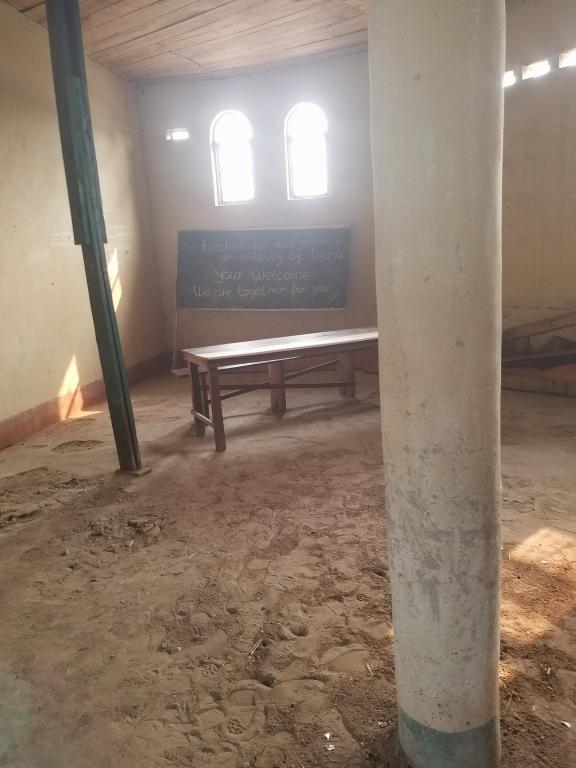
University classroom, Lodja
(End of part 1)
Previous Post

August 7, 2017
My name is Albert Kashala Nzolo (Part 3)
Next Post
August 20, 2017 My Name is Aselu Celestine Luabeya
Browse Our Archives
Select a Category Ancestors family conflict in the scriptures race and religion Uncategorized
Select a Month August 2026 March 2026 January 2026 December 2025 November 2025 October 2025 September 2025 July 2025 April 2025 March 2025 January 2025 November 2024 May 2024 April 2024 November 2023 October 2023 September 2023 June 2023 September 2022 August 2022 July 2022 May 2022 April 2022 March 2022 January 2022 December 2021 October 2021 September 2021 July 2021 June 2021 October 2020 August 2020 July 2020 June 2020 March 2020 January 2020 December 2019 November 2019 October 2019 June 2019 January 2019 December 2018 November 2018 September 2018 August 2018 May 2018 March 2018 January 2018 November 2017 October 2017 August 2017 July 2017 June 2017 May 2017 March 2017 February 2017 November 2016 October 2016 August 2016 July 2016 June 2016 May 2016 April 2016 March 2016 February 2016 January 2016 November 2015 August 2015 July 2015 May 2015 April 2015 March 2015 February 2015 January 2015 December 2014 November 2014 October 2014 August 2014 July 2014 June 2014 May 2014 April 2014 March 2014 February 2014 January 2014 December 2013 November 2013 October 2013 September 2013 August 2013 July 2013 June 2013 May 2013 April 2013 March 2013 February 2013 January 2013 December 2012
Follow Us!
TAKE THE
Religious Wisdom Quiz
What does "Jireh" mean in Hebrew?
Select your answer to see how you score.
Provider Redeemer Savior Protector
Related posts from The Welcome Table


Church Ball and the Genesis Team
TRENDING AT PATHEOS Latter-day Saint

Did Prayer Cure His Cancer? Or Was It...
At 4 AM one morning, Joshua W. Brown’s wife awoke to a...

8 Ways a Near-Death Experience Rewires the Soul
Does Consciousness Survive Physical Death? After 50 Years of Research, Dr. Raymond...

Holy Longing: What Our Restlessness Is Telling Us
“One can find so many pains when the rain is falling.” -John...

What this is NOT about. This blog is definitely not about...

Who said the Israelites were God’s chosen? That’s right, they did. Who...

The Spirit World Is the Real World: God...
A Monk’s Wisdom on Body and Spirit I sit with Brother Martin...
view all Latter-day Saint blogs
Ad-Free & Subscriber Log-In Subscription Support
- About Us
- 2026 Calendar
- Videos
- Podcasts
- Library of World Religions
- Faith In Media Tracker
- Advertise With Us
- Write for Us
- Privacy Policy
- Terms of Service
- Do Not Sell My Data
- Contact Us
- Radiant Digital
- Manage Newsletter Subscriptions
- Unsubscribe From Notifications
- Sitemap
Copyright 2008-2026, Patheos. All rights reserved.
Subscription Support Ad-Free & Subscriber Log-In
Follow Patheos