
BuddhistCatholicContemplativeEvangelicalGeneral ChristianHinduJewishLatter-day SaintMuslimNew VisionsProgressive Christian
Beliefs
- Buddhist
- Catholic
- Contemplative
- Evangelical
- General Christian
- Hindu
- Jewish
- Latter-day Saint
- More Voices
- Muslim
- New Visions
- Pagan
- Progressive Christian
Topics
- Religion News
- Food and Religion
- Sports and Religion
- Religious Art
- Religious Music and Entertainment
- Religious Events
- History and Religion
- Style and Religion
- Politics and Religion
- Women in Religion
- Recreation Outdoors and Religion
- Business Finance and Religion
- Careers Workplace and Religion
- Education and Religion
- Family Parenting and Religion
- Health Fitness and Religion
- Home and Religion
- Relationships and Religion
- Technology and Religion
- Travel and Religion
Columnists
- Buddhist Columnists
- Business Finance and Religion Columnists
- Careers Workplace and Religion Columnists
- Catholic Columnists
- Contemplative Columnists
- Education and Religion Columnists
- Evangelists Columnists
- Family Parenting and Religion Columnists
- General Christian Columnists
- Health Fitness and Religion Columnists
- Hindu Columnists
- History and Religion Columnists
- Home and Religion Columnists
- Jewish Columnists
- More Voices Columnists
- Latter Day Columnists
- Muslim Columnists
- New Visions Columnists
- Nonreligious Columnists
- Pagan Columnists
- Politics and Religion Columnists
- Progressive Columnists
- Recreation Outdoors and Religion Columnists
- Relationships and Religion Columnists
- Religion News Columnists
- Religious Art Columnists
- Religious Events Columnists
- Religious Music and Entertainment Columnists
- Sports and Religion Columnists
- Style and Religion Columnists
- Technology and Religion Columnists
- Travel and Religion Columnists
- Women in Religion Columnists
Resource Library
- 2026 Calendar
- Library of World Religions
- The 100 Most Holy Places on Earth
- Patheos Answers
- Podcasts
- Videos
- Faith Leaders Database
- Anglican Episcopalian
- Bahai
- Baptist
- Buddhism
- Christianity
- Confucianism
- Eastern Orthodoxy
- Hinduism
- Holiness and Pentecostal
- ISKCON
- Islam
- Judaism
- Lutheran
- Methodist
- The Church of Jesus Christ of Latter-day Saints
- New Age
- Paganism
- Presbytarian and Reformed
- Protestantism
- Religion Behind the Scenes
- Roman Catholic
- Scientology
- Shia Islam
- Sikhism
- Sufism
- Sunni Islam
- Taoism
- Zen
- See all religions
Research Tools
 Ad-Free & Subscriber Log-In Subscription Support
Follow Patheos 

- Trending:
- Advent
- |
- Forgiveness
- |
- Thanksgiving
- |
- Election
- |
- Seasonal Holidays
- |
- Marriage

- Home
- Latter-day Saint
- Race and Mormonism–2016 Edition (the less coy version)
Race and Mormonism–2016 Edition (the less coy version)
Last updated on: July 2, 2016 at 8:03 am by Margaret Blair Young
Race and Mormonism–2016 Edition (the less coy version) 2016-07-02T08:03:05-07:00 Margaret Blair Young
Patheos Explore the world's faith through different perspectives on religion and spirituality! Patheos has the views of the prevalent religions and spiritualities of the world.

I won’t be coy. I am disturbed by the upcoming Doctrinal Mastery (New Testament) manual for Mormon youth. This is a sample of what disturbs me. The teacher is asked to divide her students into groups and to discuss the principles behind various church practices. Questions 2 and 4 elicit a response justifying the long abandoned priesthood restriction. In fact, the manual writers are fishing for an explanation which is indefensible. (See note below.)
Youth are given a list of the following practices as if they were of equal importance:
- _____ 2. Under the law of Moses, only men of the tribe of Levi were ordained to the Aaronic priesthood.
- _____ 3. Before 1896, monthly fast and testimony meetings were held on Thursdays rather than Sundays.
- _____ 4. From the mid 1800s until 1978, men of black African descent were not ordained to the priesthood.
Holding meetings on Thursday rather than Sunday? Not terribly important. Restricting priesthood to one supposed lineage? Terribly important. Consequential beyond what most realize.
We have been down that road. I know the road, I know where it led, I know all of its detours and dead ends. I will not go back to it and I am convinced that we as a church have been divinely invited to leave it behind.
The road we have left:
As a fourteen-year-old, I encountered blatant racism from my seminary teacher. It was 1969. When I complained about his using the “N” word, he responded with a firm statement that blacks were actually inferior, which was why they couldn’t be ordained to the priesthood, and that I, a little kid in Provo, had never worked with “ni–ers.” He had. I was naive, he said. He used the “N” word multiple times in his response, as though it were a slap.
As it turned out, I instinctively knew more than he did in that particular issue. I had not been culturally indoctrinated into racism, and my heart recognized hatred. How sad that this man had a Church policy to back up his prejudice! Indeed, any of the generation raised during Jim Crow years in America could find comfort in the restriction, because their culture taught segregation and oppression in its symbols, its organizations, its literature, and its education. In 1969, the whole nation was changing, repenting of its flaws, striving to live out its own ideals.
I was born in 1955–the year when Emmett Till was murdered and when Rosa Parks refused to give up her seat–and would live through the Civil Rights movement and would retain my discomfort with the priesthood restriction. I would read about it and eventually, I would write about black LDS pioneers with Darius Gray. We would lay some groundwork (I like to think) for the race essay, and we would rejoice in this particular paragraph:
Today, the Church disavows the theories advanced in the past that black skin is a sign of divine disfavor or curse, or that it reflects unrighteous actions in a premortal life; that mixed-race marriages are a sin; or that blacks or people of any other race or ethnicity are inferior in any way to anyone else. Church leaders today unequivocally condemn all racism, past and present, in any form.
We who cared deeply about the issue were gratified that the sentence “we do not know why” was nowhere in the essay. Previously, leaders and teachers had been nervous about suggesting that God was not involved in the priesthood restriction, and the words “We do not know why the policy existed” left room for speculation and self-justification. In other words, they left a comfort zone.
The End of the Road
 It’s instructive to follow the Conference talks of President Kimball, under whose direction the priesthood restriction was lifted. Surely he could not have predicted that his love for Native Americans would prepare an even greater and more global love once he became the Prophet. In his Conference talk in 1954, he said this:
The Lord would have eliminated bigotry and class distinction. He talked to the Samaritan woman at the well (John 4:4-7), healed the centurion’s kin (Matt. 8:5-13), and blessed the child of the Canaanitish woman (Matt. 15:22-28). And though he personally came to the “lost sheep of the house of Israel” (Matt. 10:5-6); Matt. 15:24) and sent his Apostles first to them rather than to the Samaritans and other Gentiles, yet he later sent Paul to bring the gospel to the Gentiles and revealed to Peter that the gospel was for all. The prejudices were in Peter, and it took a vision from heaven to help him to cast off his bias. The voice had commanded: “Rise, Peter; kill, and eat,” when the vessel descended from the heaven containing all manner of beasts, reptiles and fowls. Punctilious Peter expressed his lifelong prejudices and habits in saying, “Not so, Lord; for I have never eaten any thing that is common or unclean.” Then the heavenly voice made clear that the program was for all. “What God hath cleansed,” it said, “that call not thou common.” Peter’s long-sustained prejudices gave way finally under the power of the thrice repeated command. When the devout Gentile Cornelius immediately thereafter appealed to him for the gospel, the full meaning of the vision burst upon Peter and he exclaimed, “God hath shewed me that I should not call any man common or unclean” (see Acts 10:11-28).
That talk was delivered only six weeks before the announcement of Brown V. the Board of Education. The issue was coming to the forefront. In only twenty-four years, President Kimball would lead the Quorum of the Twelve in prayer, asking to understand the will of the Lord regarding the priesthood restriction.
In April 1978, just two months before the “priesthood revelation,” President Kimball said this in General Conference:
There are many nations where we have not been able to get in, to get visas, or get passports; and it is very important. If we are to fulfill the responsibility given to us by the Lord on the Mount of Olives to go into all the world and preach the gospel to every creature, then we will need to open the doors to these nations.
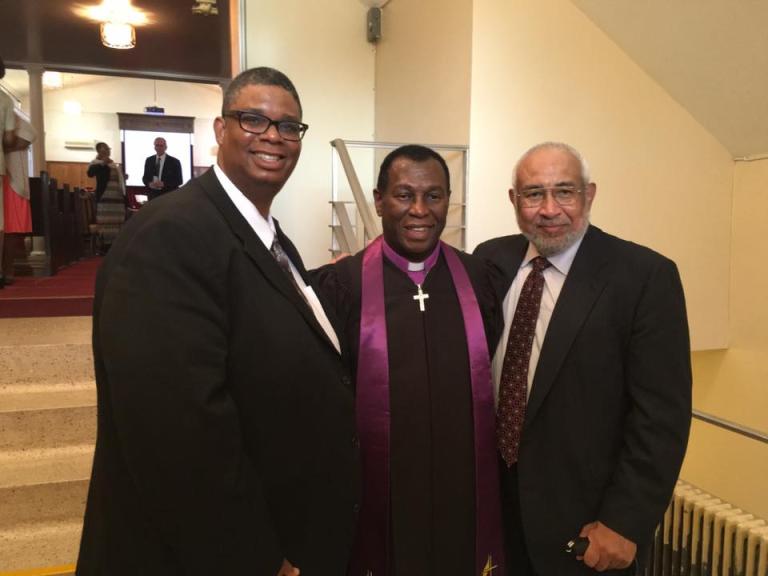 Work in Africa must have been on President Kimball’s mind, as the priesthood ban was already being studied and discussed. We who listened to his words in April could not have imagined what would happen in June. After June 8, 1978, there were no restrictions on missionary work except those presented by demographics. Surely President Kimball hoped that there would be no more restrictions on the hearts of Latter-day Saints. Indeed, we know from his son that he himself wrestled with the racism which had surrounded him throughout his life. Edward Kimball quotes his father in his seminal article: “I had a great deal to fight . . . myself, largely, because I had grown up with this thought that Negroes should not have the priesthood and I was prepared to go all the rest of my life until my death and fight for it and defend it as it was.” As Edward Kimball says,
In a sense, the past prophets of the Church stood arrayed against this decision. The wisdom of the dead often seems loftier than the word of an imperfect living spokesman. Spencer wanted more than anything to have his fellow servants share with him a witness of the Lord’s will. Camilla noted that in their prayers together, where he had always asked for “inspiration” or “guidance,” he began to plead for “revelation.” She also noticed that he read the scriptures even more intently than usual during that spring.
Prejudice is not overcome by a policy change, though. Just ask George Wallace, who blocked a university auditorium door against the entry of two black students after integration became a reality. What the law did not overcome, true religion did, as Wallace returned to his Baptist roots and sought forgiveness from those he had wronged–including the two students whose entry he had blocked. In January of this year, Wallace’s daughter, Peggy Wallace Kennedy, talked about her memorial walk across the Edmund Pettis Bridge, alongside her father’s former foe, Representative John Lewis. Ms. Kennedy said of Lewis, “He has taught me a great deal about reconciliation and love and how that can heal the human heart.” A generation after Governor Wallace’s naive insistence on “segregation forever!,” his daughter shed a redemptive light on his legacy.
The Road We’re On Now
We are now nearly four decades beyond the “priesthood revelation.” I am sixty-one years old. I have children and grandchildren who have received priesthood blessings from black men, and who have participated in tributes to Jane Manning James, and who live in the the bloom of diversity. Because of the questions I asked back in 1969, my heart turned not to disparaging the Church–which has shed an abundance of miracles into my life–but to the work of telling forgotten stories about black Mormons. That was one of my offerings to the healing of the racial divide–which healing must include ALL who are devoted to the future of the nation, the world, and all religions. American children now learn about Martin Luther King, Jr. along with Abraham Lincoln; about Harriet Tubman along with Betsy Ross. For Mormons, the race essay has undercut all prior justifications and invited us to “lengthen our stride” moving forward.
Was Brigham Young acting as a prophet when he instigated the priesthood restriction? No. His rationale was the “Curse of Cain” and the Church has disavowed that nasty myth which was so loved during slave times. The essay goes a full step beyond questioning a church president’s inspiration. It is on the level of repudiating the Adam/God theory, which was also once presumed to be inspired. President Kimball said in 1976: “We warn you against the dissemination of doctrines which are not according to the Scriptures and which are alleged to have been taught by some of the General Authorities of past generations. Such, for instance, is the Adam-God theory. We denounce that theory and hope that everyone will be cautioned against this and other kinds of false doctrine.”
Was the statement from the First Presidency in 1949, declaring that the policy had been the will of the Lord from the time of Joseph Smith, accurate? No. The men who thought they knew the history simply did not, and assumed that the restriction was of God and dated back to Joseph Smith’s time. This shows yet again how vital our brotherhood, our mutual support is. The race essay was a collaborative effort of scholars and Church leaders. The leaders fully understand that they didn’t understand everything, and humbly sought guidance “even by study and also by faith.” Those who worked on the essay did so in an attitude of devotion and with a desire for the Church to flourish without further impediment. The priesthood revelation itself was the culmination of a huge collaborative effort. President Kimball had read Lester Bush’s article in Dialogue, according to his grandson, and had marked it up in his distinctive style. Prior to the June 1st, he had asked all members of the Quorum of the Twelve to study the issue before meeting in the temple. This was the path. It was not hasty. It was not done in response to any threat to Church finances. It was not done to become more current. President Kimball led the effort and requested that all come prepared to petition the Lord from a position of greater knowledge than what they had previously had. The divine response was unfettered–likely because the apostles were prepared to hear it, even if it challenged what they had previously not only believed but taught.
The race essay is a brave course correction, and aligns the Church more fully with scriptural teachings. Of course, people would actually have to read it in order for it to be effective. That hasn’t happened yet, except by about ten per cent of Mormons. Nevertheless, all of us were invited to take a huge step the day the essay was published. Ultimately, its publication suggested to every reader that THEY had a responsibility to examine their hearts. Were they seeking self-justification by dwelling on past words or wounds, or were they willing to grow?
Temptations to Make A U-Turn
 Sadly, we continue to see the promulgation of past justifications for the restriction, such as what I showed above. I wonder if those returning to now disavowed ideas have any notion of how pervasive and consequential the restriction was. Some might be picturing slaves when they speak of the policy, who presumably lacked the education to understand the priesthood. Should slaves hold the priesthood? How could they honor it? (It is actually an absurd question. The priesthood, as understood in the LDS Church, functions only on principles of righteousness.) Some might think that those in Africa were so bound up in tribal wars that they could not be honorable priests. Even if that were the case, priesthood restriction would not be the answer. Missionaries go only to lands which have been opened to missionary work, and usually dedicated.
In truth, the restriction was worldwide. It was not a restriction on sharecroppers in South Carolina, nor on kings in Kenya. As people in Scandinavia searched their genealogy (at a time when ancestral links were far more limited than they are today), they sometimes found African ancestry. A few Mormon men, after learning that they carried at least “one drop” in their veins, were told that they had to give up their priesthood. At other times, they were told to keep their lineage a secret. In Central and South America, the nuances of pigment labeled large populations as “mulattoes” or “Negroes.” In South Africa and elsewhere, the required lineage search for baptismal candidates was cancelled by President David O. McKay as he saw how fraught with problems it was. President McKay went around the world opening up various populations to priesthood possibilities, and the African continent was just off the horizon. Now, in 2016, we recognize that ALL of us have more than “one drop” of African blood. Our DNA bears witness.
Perhaps the most common justification given is the reminder that only Levites were ordained to the priesthood in the Old Testament. Jane Manning James answers that in one of her letters seeking her endowment in 1884: “Inasmuch as this if the fullness of time, and in Abraham all nations may be blessed, is there no blessing for me?” That is not so much a question as it is a reminder. The atonement is infinite. The restoration is now.
Pressing Forward with Steadfast Faith in Christ
Let talk of past assumptions end. No one should be asked by a Sunday School or Seminary teacher to justify the restriction now that we have moved into the full and still challenging implications of its end. We have further light, further knowledge, deeper love and a charge to “expand our borders forever” (Moroni 10:32). Is there even a second to look back and pirouette around the issue again? Are our own sins beckoning our return to the dance of ashes when we should be “pressing forward” to the Tree of Life?
Let President Kimball’s words–at a time when he was already investigating the restriction–move us forward.
Doesn’t it motivate you to lengthen your stride and quicken your pace as you do your part in the great sanctifying work of the kingdom? It does me. It causes me to rejoice over the many opportunities for service and sacrifice afforded me and my family as we seek to do our part in establishing Zion.
That’s the call. As for me and my house, we are answering it without looking back.
NOTE: From FAIR Mormon:
Myth #3: The best example to explain blacks not having the priesthood comes from the Levites. The Levites were able to hold the priesthood, while others were not. This shows how God restricts people of certain lineages from receiving the priesthood just like he did with blacks.
While it may be true that Levites could hold the priesthood while others could not, it has little to do with this issue. The ancient practice where only one group is able to exercise the priesthood and work in the temple has little in common with modern times when everyone is able to hold the priesthood except for one group. Repeating this claim as an explanation doesn’t provide adequate support for the argument, and the claim completely falls apart when we recognize that Joseph Smith, Parley P. Pratt, William Smith, and Orson Hyde all ordained blacks to the priesthood in the 1830s and 1840s. The explanation is not helpful and can be hurtful.
Next Post

July 11, 2016 Prejudice--thou Ugly!
Browse Our Archives
Select a Category Ancestors family conflict in the scriptures race and religion Uncategorized
Select a Month August 2026 March 2026 January 2026 December 2025 November 2025 October 2025 September 2025 July 2025 April 2025 March 2025 January 2025 November 2024 May 2024 April 2024 November 2023 October 2023 September 2023 June 2023 September 2022 August 2022 July 2022 May 2022 April 2022 March 2022 January 2022 December 2021 October 2021 September 2021 July 2021 June 2021 October 2020 August 2020 July 2020 June 2020 March 2020 January 2020 December 2019 November 2019 October 2019 June 2019 January 2019 December 2018 November 2018 September 2018 August 2018 May 2018 March 2018 January 2018 November 2017 October 2017 August 2017 July 2017 June 2017 May 2017 March 2017 February 2017 November 2016 October 2016 August 2016 July 2016 June 2016 May 2016 April 2016 March 2016 February 2016 January 2016 November 2015 August 2015 July 2015 May 2015 April 2015 March 2015 February 2015 January 2015 December 2014 November 2014 October 2014 August 2014 July 2014 June 2014 May 2014 April 2014 March 2014 February 2014 January 2014 December 2013 November 2013 October 2013 September 2013 August 2013 July 2013 June 2013 May 2013 April 2013 March 2013 February 2013 January 2013 December 2012
Follow Us!
TAKE THE
Religious Wisdom Quiz
What did Jesus do for Lazarus in Bethany?
Select your answer to see how you score.
Raised him from the dead Fed him Turned him invisible Healed his blindness
Related posts from The Welcome Table
My Independent Wish List for LDS Missionaries
On a Mission in the Democratic Republic of...

TRENDING AT PATHEOS Latter-day Saint

Did Prayer Cure His Cancer? Or Was It...
At 4 AM one morning, Joshua W. Brown’s wife awoke to a...

8 Ways a Near-Death Experience Rewires the Soul
Does Consciousness Survive Physical Death? After 50 Years of Research, Dr. Raymond...

Holy Longing: What Our Restlessness Is Telling Us
“One can find so many pains when the rain is falling.” -John...

What this is NOT about. This blog is definitely not about...

Who said the Israelites were God’s chosen? That’s right, they did. Who...

The Spirit World Is the Real World: God...
A Monk’s Wisdom on Body and Spirit I sit with Brother Martin...
view all Latter-day Saint blogs
Ad-Free & Subscriber Log-In Subscription Support
- About Us
- 2026 Calendar
- Videos
- Podcasts
- Library of World Religions
- Faith In Media Tracker
- Advertise With Us
- Write for Us
- Privacy Policy
- Terms of Service
- Do Not Sell My Data
- Contact Us
- Radiant Digital
- Manage Newsletter Subscriptions
- Unsubscribe From Notifications
- Sitemap
Copyright 2008-2026, Patheos, part of the Radiant Digital network of media brands. All rights reserved.
Subscription Support Ad-Free & Subscriber Log-In
Follow Patheos