
BuddhistCatholicContemplativeEvangelicalGeneral ChristianHinduJewishLatter-day SaintMuslimNew VisionsProgressive Christian
Beliefs
- Buddhist
- Catholic
- Contemplative
- Evangelical
- General Christian
- Hindu
- Jewish
- Latter-day Saint
- More Voices
- Muslim
- New Visions
- Pagan
- Progressive Christian
Topics
- Religion News
- Food and Religion
- Sports and Religion
- Religious Art
- Religious Music and Entertainment
- Religious Events
- History and Religion
- Style and Religion
- Politics and Religion
- Women in Religion
- Recreation Outdoors and Religion
- Business Finance and Religion
- Careers Workplace and Religion
- Education and Religion
- Family Parenting and Religion
- Health Fitness and Religion
- Home and Religion
- Relationships and Religion
- Technology and Religion
- Travel and Religion
Columnists
- Buddhist Columnists
- Business Finance and Religion Columnists
- Careers Workplace and Religion Columnists
- Catholic Columnists
- Contemplative Columnists
- Education and Religion Columnists
- Evangelists Columnists
- Family Parenting and Religion Columnists
- General Christian Columnists
- Health Fitness and Religion Columnists
- Hindu Columnists
- History and Religion Columnists
- Home and Religion Columnists
- Jewish Columnists
- More Voices Columnists
- Latter Day Columnists
- Muslim Columnists
- New Visions Columnists
- Nonreligious Columnists
- Pagan Columnists
- Politics and Religion Columnists
- Progressive Columnists
- Recreation Outdoors and Religion Columnists
- Relationships and Religion Columnists
- Religion News Columnists
- Religious Art Columnists
- Religious Events Columnists
- Religious Music and Entertainment Columnists
- Sports and Religion Columnists
- Style and Religion Columnists
- Technology and Religion Columnists
- Travel and Religion Columnists
- Women in Religion Columnists
Resource Library
- 2026 Calendar
- Library of World Religions
- The 100 Most Holy Places on Earth
- Patheos Answers
- Podcasts
- Videos
- Faith Leaders Database
- Anglican Episcopalian
- Bahai
- Baptist
- Buddhism
- Christianity
- Confucianism
- Eastern Orthodoxy
- Hinduism
- Holiness and Pentecostal
- ISKCON
- Islam
- Judaism
- Lutheran
- Methodist
- The Church of Jesus Christ of Latter-day Saints
- New Age
- Paganism
- Presbytarian and Reformed
- Protestantism
- Religion Behind the Scenes
- Roman Catholic
- Scientology
- Shia Islam
- Sikhism
- Sufism
- Sunni Islam
- Taoism
- Zen
- See all religions
Research Tools
 Ad-Free & Subscriber Log-In Subscription Support
Ad-Free & Subscriber Log-In Subscription Support
Follow Patheos 

- Trending:
- Forgiveness
- |
- Marriage
- |
- Consciousness
- |
- Death Penalty
- |
- Election
- |
- Halloween

- Home
- Latter-day Saint
- Robert Wallace Blair Obituary, Part 2
Robert Wallace Blair Obituary, Part 2
Last updated on: February 24, 2016 at 3:08 pm by Margaret Blair Young
Robert Wallace Blair Obituary, Part 2 2016-02-24T15:08:30-07:00 Margaret Blair Young
Patheos Explore the world's faith through different perspectives on religion and spirituality! Patheos has the views of the prevalent religions and spiritualities of the world.
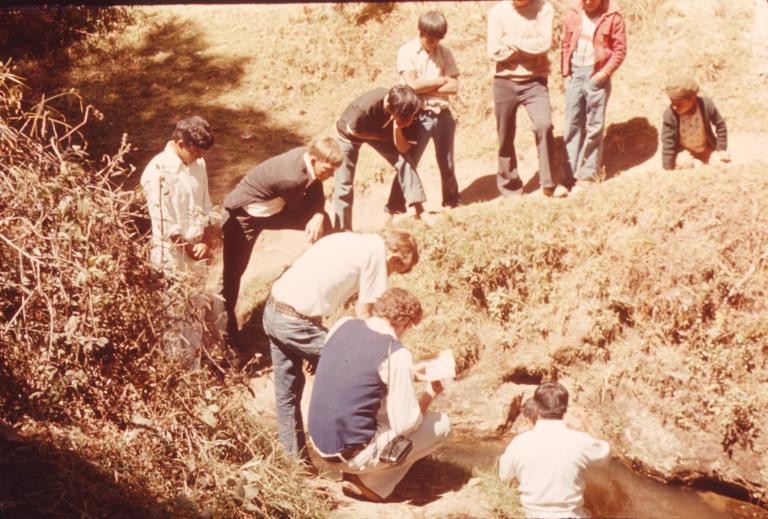
The title for Robert Blair’s PhD dissertation could compete in “Most Impressive.” The title was Yucatec Maya Noun and Verb Morpho-Syntax. He himself forgot the title in his later years, and said, “What on earth does that mean?” when his daughter reminded him of it.
Robert got his BA at BYU in English. He did not realize it at the time, but he was already headed into linguistics when he pursued his MA—again in English, but with a twist. He compared the translations of several Bible verses. By the time he was ready to pursue his PhD, there were few universities with Linguistics programs. He chose Indiana University. Though he was already fluent in Russian and Finnish, he was not yet fluent in Spanish. He took his mother, a Spanish teacher, and two of his brothers-in-law (Joe and Dee Groberg) to Mexico, where he began learning not only Spanish but Yucatec Maya. As was typical of Robert, he found modest lodging at a little restaurant, and the group rented an empty house—on condition from the landlord that they attend Mass every night. Mass was recorded, Latin, and the teenage Groberg boys found it almost intolerably boring. Nonetheless, they abided by the condition.
Marguerite Blair, Robert’s mother, was a proper woman and stayed in better lodgings. She observed once to Robert that the Indians in that area didn’t really know how to speak Spanish. They referred to bread as “pam” rather than “pan.” Robert gently corrected her. “No, Mom. It IS ‘pam’ to them, so that’s their word. We are here to learn from them, not to teach them.”
During that trip, Robert met the Mayan people who would later help him develop his understanding of their language’s grammar. The group of gringos stayed in Piste and later in Xocampeche, near Merida. Five years later, as he was completing his dissertation, Robert took his family—including the three oldest of his five children, and two of his wife’s siblings, Elizabeth and Lewis Groberg. The Blair children slept in hammocks and interacted with the natives in Xocampeche.
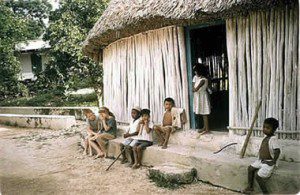
Robert referred to those Mayans who helped him understand the structure of the language as his “beloved teachers.” His focus soon turned from the grammatical details of the Mayan dialect to stories, often from the Bible, which his teachers would re-tell using their own cultural details. When Robert worked with his friend Manuel Tum, the two of them invented a version of the Prodigal Son (Luke 15). In the Mayan version, the prodigal had long hair after his years away from home. In Yucatec Mayan culture, long hair on a man is a sign of extreme poverty or depravity. Robert further dramatized the story with his own story-telling abilities. The scriptures say that when the son was “still a great way off, his father saw him and had compassion, and ran and fell on his neck and kissed him.” In Robert’s version (in which the son had a name), the story evolved:
Now Johnny came within sight of his father’s house. His father was standing on a hill from where he could look down on the road. Every day he had stood there, hoping to see if by chance his lost son might be coming up the road. And that day, as always, he was there hoping and praying. Suddenly he saw the figure of a young man approaching. His heart jumped. The boy’s clothes weren’t recognizable. They were tattered and dirty. The boy was limping. His hair was long and disheveled. But the father recognized his son, and his heart filled with compassion. Johnny had come home! He ran joyously to meet his son and threw himself on his neck and kissed him. “Johnny, my son, you’ve come back!”
Robert returned to the story many times as he taught a variety of languages. He kept the sentences short and simple. It was not just a story but an avenue to a new world. He would repeat particular phrases over and over. “The boy”; “the father”; “his son”; “my son”; “I have sinned”; “I know”; “house”; “road”; “lost”; “his heart”. By the end, the audience would have a small vocabulary in the new language.

Robert received his PhD in 1963, but was not present for the convocation. He wore his IU robes only when essential (such as when he was receiving an award), and referred to them as “a monkey suit.” Fifty years later, however, his granddaughter, Kaila Lifferth, received her Master’s degree from Indiana University, and did wear hers, though with attitude.

By the end of his life, Robert had, with some of his students, written grammars of languages which previously had no written grammars, particularly Mayan dialects: Cakchiquel, Mam, and Maya. His protegee, John Robertson, spoke of the excitement he felt when working on these projects:
What I learned from him on our first trip to Guatemala doing field work in Patzicia was the very foundation of all my professional work since. While there, I couldn’t sleep at night, not because I was uncomfortable on the hardwood floor of the chapel, but because my mind was on fire—thinking about, analyzing the structure of the Cakchiquel verbal complex. So many things remained unresolved that couldn’t wait for morning so I could find answers from our Cakchiquel consultant. At the time, I thought if this is linguistics, I’m going to be paid for my new-found hobby.
Soon, BYU established the Linguistics program, with Robert Blair as the founding chair.
His methods were unique. He tried to approximate the original language learning process all children go through. He invented games, and he told stories. Indeed, Robert Blair braided his gift for story telling into his gift for linguistics.
A few months before his death, he said to his children, “I focused too much on my career. I was not as present for you—or your mother–as I should have been. I spent too much time in my office. But I did do one thing. I told you stories.”
His children knew that whenever their father would repeat a story, he would add details to involve his listeners. His ultimate purpose was to find stories which would appeal to everyone in the world, and bring any who would participate in these story-based language learning quests into a common, human experience. When invited to give a devotional at BYU shortly before his retirement, he chose to tell stories. His theme was reconciliation. Indeed, that was the theme of his life. Reconcile differences. Bring people together. Find common ground. Forgive. Learn. Become one.
Robert was shocked in the final decade of his life to realize that he had developed a prejudice against Muslims, based on the acts of a few radicals. In response to what he considered a grave sin–reducing a people to the misdeeds of a few–he researched the languages which members of the Taliban spoke. He simply announced one day, “I am going to learn Pashto.”
And he did.
Previous Post

February 20, 2016
Obituary for Robert Wallace Blair - Part I
Next Post
February 24, 2016 Obituary for Robert Blair - Part 3: The Baltics
Browse Our Archives
Select a Category Ancestors family conflict in the scriptures race and religion Uncategorized
Select a Month August 2026 March 2026 January 2026 December 2025 November 2025 October 2025 September 2025 July 2025 April 2025 March 2025 January 2025 November 2024 May 2024 April 2024 November 2023 October 2023 September 2023 June 2023 September 2022 August 2022 July 2022 May 2022 April 2022 March 2022 January 2022 December 2021 October 2021 September 2021 July 2021 June 2021 October 2020 August 2020 July 2020 June 2020 March 2020 January 2020 December 2019 November 2019 October 2019 June 2019 January 2019 December 2018 November 2018 September 2018 August 2018 May 2018 March 2018 January 2018 November 2017 October 2017 August 2017 July 2017 June 2017 May 2017 March 2017 February 2017 November 2016 October 2016 August 2016 July 2016 June 2016 May 2016 April 2016 March 2016 February 2016 January 2016 November 2015 August 2015 July 2015 May 2015 April 2015 March 2015 February 2015 January 2015 December 2014 November 2014 October 2014 August 2014 July 2014 June 2014 May 2014 April 2014 March 2014 February 2014 January 2014 December 2013 November 2013 October 2013 September 2013 August 2013 July 2013 June 2013 May 2013 April 2013 March 2013 February 2013 January 2013 December 2012
Follow Us!
TAKE THE
Religious Wisdom Quiz
True or False: Joshua made the sun stand still over Gibeon to give Israel more time to defeat their enemies.
Select your answer to see how you score.
TRUE FALSE
Related posts from The Welcome Table


Church Ball and the Genesis Team
TRENDING AT PATHEOS Latter-day Saint

Did Prayer Cure His Cancer? Or Was It...
At 4 AM one morning, Joshua W. Brown’s wife awoke to a...

8 Ways a Near-Death Experience Rewires the Soul
Does Consciousness Survive Physical Death? After 50 Years of Research, Dr. Raymond...

Holy Longing: What Our Restlessness Is Telling Us
“One can find so many pains when the rain is falling.” -John...

What this is NOT about. This blog is definitely not about...

Who said the Israelites were God’s chosen? That’s right, they did. Who...

The Spirit World Is the Real World: God...
A Monk’s Wisdom on Body and Spirit I sit with Brother Martin...
view all Latter-day Saint blogs
Ad-Free & Subscriber Log-In Subscription Support
- About Us
- 2026 Calendar
- Videos
- Podcasts
- Library of World Religions
- Faith In Media Tracker
- Advertise With Us
- Write for Us
- Privacy Policy
- Terms of Service
- Do Not Sell My Data
- Contact Us
- Radiant Digital
- Manage Newsletter Subscriptions
- Unsubscribe From Notifications
- Sitemap
Copyright 2008-2026, Patheos. All rights reserved.
Subscription Support Ad-Free & Subscriber Log-In
Follow Patheos