
BuddhistCatholicContemplativeEvangelicalGeneral ChristianHinduJewishLatter-day SaintMuslimNew VisionsProgressive Christian
Beliefs
- Buddhist
- Catholic
- Contemplative
- Evangelical
- General Christian
- Hindu
- Jewish
- Latter-day Saint
- More Voices
- Muslim
- New Visions
- Pagan
- Progressive Christian
Topics
- Religion News
- Food and Religion
- Sports and Religion
- Religious Art
- Religious Music and Entertainment
- Religious Events
- History and Religion
- Style and Religion
- Politics and Religion
- Women in Religion
- Recreation Outdoors and Religion
- Business Finance and Religion
- Careers Workplace and Religion
- Education and Religion
- Family Parenting and Religion
- Health Fitness and Religion
- Home and Religion
- Relationships and Religion
- Technology and Religion
- Travel and Religion
Columnists
- Buddhist Columnists
- Business Finance and Religion Columnists
- Careers Workplace and Religion Columnists
- Catholic Columnists
- Contemplative Columnists
- Education and Religion Columnists
- Evangelists Columnists
- Family Parenting and Religion Columnists
- General Christian Columnists
- Health Fitness and Religion Columnists
- Hindu Columnists
- History and Religion Columnists
- Home and Religion Columnists
- Jewish Columnists
- More Voices Columnists
- Latter Day Columnists
- Muslim Columnists
- New Visions Columnists
- Nonreligious Columnists
- Pagan Columnists
- Politics and Religion Columnists
- Progressive Columnists
- Recreation Outdoors and Religion Columnists
- Relationships and Religion Columnists
- Religion News Columnists
- Religious Art Columnists
- Religious Events Columnists
- Religious Music and Entertainment Columnists
- Sports and Religion Columnists
- Style and Religion Columnists
- Technology and Religion Columnists
- Travel and Religion Columnists
- Women in Religion Columnists
Resource Library
- 2026 Calendar
- Library of World Religions
- The 100 Most Holy Places on Earth
- Patheos Answers
- Podcasts
- Videos
- Faith Leaders Database
- Anglican Episcopalian
- Bahai
- Baptist
- Buddhism
- Christianity
- Confucianism
- Eastern Orthodoxy
- Hinduism
- Holiness and Pentecostal
- ISKCON
- Islam
- Judaism
- Lutheran
- Methodist
- The Church of Jesus Christ of Latter-day Saints
- New Age
- Paganism
- Presbytarian and Reformed
- Protestantism
- Religion Behind the Scenes
- Roman Catholic
- Scientology
- Shia Islam
- Sikhism
- Sufism
- Sunni Islam
- Taoism
- Zen
- See all religions
Research Tools
 Ad-Free & Subscriber Log-In Subscription Support
Ad-Free & Subscriber Log-In Subscription Support
Follow Patheos 

- Trending:
- Forgiveness
- |
- Marriage
- |
- Consciousness
- |
- Death Penalty
- |
- Election
- |
- Halloween

- Home
- Latter-day Saint
- Dayenu! (It would have been enough!)
Dayenu! (It would have been enough!)
Last updated on: December 8, 2013 at 10:06 pm by Margaret Blair Young
Dayenu! (It would have been enough!) 2013-12-08T22:06:47-07:00 Margaret Blair Young
Patheos Explore the world's faith through different perspectives on religion and spirituality! Patheos has the views of the prevalent religions and spiritualities of the world.
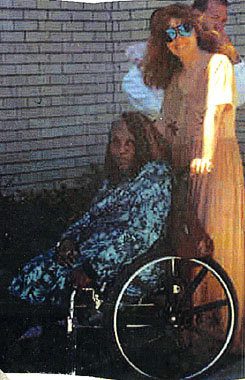
Susie Mae Young Thomas and Me
(During some Passover celebrations, Jews drop bits of wine on a napkin, citing each plague which G-d caused to come upon the Egyptians and saying, “Dayenu!”, or “it would have been enough with only that!”)
In 1998, when I was beginning to learn about black pioneers, Susie Mae Thomas started coming to my ward, though she didn’t live in my boundaries. In retrospect, her presence was a miracle for me. Though she couldn’t speak because of a stroke, she was my first guide into the race issues and history I would learn, and my first teacher about the strength and soul of a black woman.
For me personally, Dayenu! It would have been enough if I had only met Susie and received no greater blessing. She, who had lost two sons, understood me in a way nobody else did when my own sons were becoming lost in other ways.
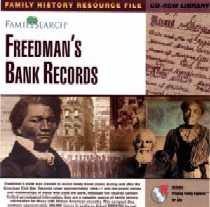
At that time, we had “Official Declaration 2”, which stated that “all worthy males” could be ordained to the priesthood. The actual message was that men of African descent, who had been restricted from priesthood since 1852 were no longer restricted, and that men and women of African descent could participate in temple ordinances. That became particularly significant as I was with Susie in the temple when she was endowed–and that I saw the man who would be my co-author, Darius Gray, there as well. I had met him two days before that temple session, and our partnership was already beginning. We ended up writing three books about black history, making three documentaries, and flying all over the nation to do presentations on the things we were learning, as well as on genealogy, since Darius had (with Marie Taylor) headed the Freedman Bank Project, an eleven year work that provided digitized names of all freed slaves who had put their money in the bank. They identified themselves by their family relationships, and so many ex-slave depositors gave four generations of names.
Dayenu. It would have been enough if Darius and Marie had produced this “Rosetta stone of African American genealogy” and no further blessings had been granted.
I had learned all of the folklore surrounding the priesthood restriction, and had been instructed by racists who didn’t recognize that taint on their souls. Any questions we had about the priesthood restriction were answered with, “The declaration speaks for itself.” But it didn’t say much, and the awful speculations continued, suggesting absurdities like lineage curses and pre-mortal neutrality of spirits who would take on black bodies. I always sensed that these supposals were false. I dropped out of seminary after my seminary teacher declared that the priesthood restriction was in place because “N–ers” were inferior.
Soon after I met Darius, he had a revelatory experience teaching him what he calls “Not a curse but a calling” detailed (a little) here.
Dayenu. It would have been enough if Darius had received those insights and shared them with me and with others, and no other blessings had come.
In 2006, Darius corresponded with President Hinckley about his concerns for Latter-day Saints of African descent, who were facing the false assumptions promulgated by the idea that no more would be said about the priesthood restriction or its removal, so all that had been said–almost all of it ugly–was still in the conversation. President Hinckley made a marvelous statement at the next conference, April 2006:
I remind you that no man who makes disparaging remarks concerning those of another race can consider himself a true disciple of Christ. Nor can he consider himself to be in harmony with the teachings of the Church of Christ. How can any man holding the Melchizedek Priesthood arrogantly assume that he is eligible for the priesthood whereas another who lives a righteous life but whose skin is of a different color is ineligible?
Darius left me a voicemail message in a tearful voice: “He did it. President Hinckley spoke directly to the issue.”
Dayenu. It would have been enough for us to receive those words and no other blessing.
In 2008, Darius Gray and I released our documentary, after showing it to many in the Church Office Building. It included an account of an apology from President Hinckley to Pastor Cecil Murray (shown in the trailer here). Our books had already been released. We were able to contribute scholarly articles to journals and encyclopedias, and were often invited to speak to inter-denominational crowds.

In 2011, the Church put out a statement in response to a BYU religion professor, who was citing the old supports for the restriction. After stating outright that the professor did not represent the church’s position, the statement said: “For a time in the Church there was a restriction on the priesthood for male members of African descent. It is not known precisely why, how, or when this restriction began in the Church…The Church is not bound by speculation or opinions given with limited understanding. We condemn racism, including any and all past racism by individuals both inside and outside the Church.”
It seemed to suggest that God instituted the restriction for unknowable reasons, but it was nonetheless the closest thing we had to a repudiation. Dayenu!
Almost a year to the day after that statement, a new preamble was added to “Official Declaration 2”–the “priesthood revelation”:
The Book of Mormon teaches that “all are alike unto God,” including “black and white, bond and free, male and female” (2 Nephi 26:33). Throughout the history of the Church, people of every race and ethnicity in many countries have been baptized and have lived as faithful members of the Church. During Joseph Smith’s lifetime, a few black male members of the Church were ordained to the priesthood. Early in its history, Church leaders stopped conferring the priesthood on black males of African descent. Church records offer no clear insights into the origins of this practice. Church leaders believed that a revelation from God was needed to alter this practice and prayerfully sought guidance. The revelation came to Church President Spencer W. Kimball and was affirmed to other Church leaders in the Salt Lake Temple on June 1, 1978. The revelation removed all restrictions with regard to race that once applied to the priesthood.
The progress was monumental. Dayenu!
And yet I was painfully aware that many would not count themselves as needing repentance for racism since they didn’t use the “n” word. The idea of God’s timetable was prominent, suggesting that God’s method of keeping a particular schedule would prevent some of His children from receiving the priesthood. (Generally, the work of spreading the gospel goes demographically, as nations’ laws permit missionary work and as the people in those nations become prepared. The idea that the priesthood restriction was God’s modus operandi for maintaining a timetable implies not just a nation but a lineage, and maintains the anachronistic idea of an ancestral curse.) And the “curse of Cain” continued to appear–even in discussions among young Mormons.
And then this, on Friday December 6, 2013, in the midst of Nelson Mandela’s funeral plans. The statement appears on LDS.org .
I have listed events but not even a tenth of the miracles I’ve seen over the past sixteen years as I’ve witnessed a wave of understanding cresting, and have been introduced to team members of all complexions and throughout the world, each devoted to bringing all of us into unity in Christ. Perhaps someday I’ll try to make a list of the miracles. The statement released on Friday is miraculous to me, given what I’ve perceived as missing from previous statements.
It contextualizes the priesthood restriction within the cultural prejudices of its time, implying that it was culture, not God, which set the restriction.
It addresses legal slavery in Utah, which many today are unaware of, and shows it in contrast to Joseph Smith’s views.
It thoroughly repudiates the “curse of Cain” idea, as well as other speculations.
It addresses the gradual rescinding of the restriction in various dark-skinned communities, and alludes to the complexities of restricting priesthood from a particular lineage in a world where many if not most are of “mixed blood.”
There are no statements of “we don’t know why the restriction was put into place.”
There is a strong affirmation that excluding one race of people from any of Christ’s blessings is counter to Christ’s basic teachings. “The Church proclaims that redemption through Jesus Christ is available to the entire human family on the conditions God has prescribed. It affirms that God is ‘no respecter of persons’ and emphatically declares that anyone who is righteous—regardless of race—is favored of Him.”
Dayenu! As we realize that all good things come to us by grace, and that we ourselves may be instruments of grace, each small, good thing must be seen as a miracle, to be celebrated. If our filter is shadowed by cynicism or impatience, we might miss the joy intended for us–just around the next bend.
True, there is not a direct apology in the new statement. I will express my own. I have written it in the afterward to the updated version of the book Darius and I wrote titled The Last Mile of the Way.
As we tell the stories of these remarkable Latter-day Saints—and now re-tell them with more information—we stand in awe at their faith, and bow in sorrow at how badly we served them. The descendants of these black pioneers left the religion their predecessors valued so deeply, though a few independently converted to Mormonism without realizing that the legacy of the early black members was in their own bloodlines.
We continue to be inspired by the subjects of these books, and we long for the day when we are truly our brothers’ and sisters’ keepers, serving wherever we can and using our talents without exclusion or classism to glorify our Lord.
As we Mormons extricate ourselves from the tangle of teachings which justified racism, we may indeed become the singular group which models the abandonment of prejudice, and we may invite study by scholars researching how any religion or any society turns itself towards a new and more enlightened position; how it re-trains its community and transcends its past.
Hosanna. Praise be to Him who made the lights to shine.
Previous Post

December 7, 2013
Darius Gray: Atlas with the Flu
Next Post
December 12, 2013 The Story I told Him, Part 4
Browse Our Archives
Select a Category Ancestors family conflict in the scriptures race and religion Uncategorized
Select a Month August 2026 March 2026 January 2026 December 2025 November 2025 October 2025 September 2025 July 2025 April 2025 March 2025 January 2025 November 2024 May 2024 April 2024 November 2023 October 2023 September 2023 June 2023 September 2022 August 2022 July 2022 May 2022 April 2022 March 2022 January 2022 December 2021 October 2021 September 2021 July 2021 June 2021 October 2020 August 2020 July 2020 June 2020 March 2020 January 2020 December 2019 November 2019 October 2019 June 2019 January 2019 December 2018 November 2018 September 2018 August 2018 May 2018 March 2018 January 2018 November 2017 October 2017 August 2017 July 2017 June 2017 May 2017 March 2017 February 2017 November 2016 October 2016 August 2016 July 2016 June 2016 May 2016 April 2016 March 2016 February 2016 January 2016 November 2015 August 2015 July 2015 May 2015 April 2015 March 2015 February 2015 January 2015 December 2014 November 2014 October 2014 August 2014 July 2014 June 2014 May 2014 April 2014 March 2014 February 2014 January 2014 December 2013 November 2013 October 2013 September 2013 August 2013 July 2013 June 2013 May 2013 April 2013 March 2013 February 2013 January 2013 December 2012
Follow Us!
TAKE THE
Religious Wisdom Quiz
What holiday celebrates Jesus rising from the dead?
Select your answer to see how you score.
Pentecost Passover Christmas Easter
Related posts from The Welcome Table
Salvador: The Truth behind the Fiction, Part 3
Jane Manning James: Her Life Story in Her...
TRENDING AT PATHEOS Latter-day Saint

Did Prayer Cure His Cancer? Or Was It...
At 4 AM one morning, Joshua W. Brown’s wife awoke to a...

8 Ways a Near-Death Experience Rewires the Soul
Does Consciousness Survive Physical Death? After 50 Years of Research, Dr. Raymond...

Holy Longing: What Our Restlessness Is Telling Us
“One can find so many pains when the rain is falling.” -John...

What this is NOT about. This blog is definitely not about...

Who said the Israelites were God’s chosen? That’s right, they did. Who...

The Spirit World Is the Real World: God...
A Monk’s Wisdom on Body and Spirit I sit with Brother Martin...
view all Latter-day Saint blogs
Ad-Free & Subscriber Log-In Subscription Support
- About Us
- 2026 Calendar
- Videos
- Podcasts
- Library of World Religions
- Faith In Media Tracker
- Advertise With Us
- Write for Us
- Privacy Policy
- Terms of Service
- Do Not Sell My Data
- Contact Us
- Radiant Digital
- Manage Newsletter Subscriptions
- Unsubscribe From Notifications
- Sitemap
Copyright 2008-2026, Patheos. All rights reserved.
Subscription Support Ad-Free & Subscriber Log-In
Follow Patheos