
BuddhistCatholicContemplativeEvangelicalGeneral ChristianHinduJewishLatter-day SaintMuslimNew VisionsProgressive Christian
Beliefs
- Buddhist
- Catholic
- Contemplative
- Evangelical
- General Christian
- Hindu
- Jewish
- Latter-day Saint
- More Voices
- Muslim
- New Visions
- Pagan
- Progressive Christian
Topics
- Religion News
- Food and Religion
- Sports and Religion
- Religious Art
- Religious Music and Entertainment
- Religious Events
- History and Religion
- Style and Religion
- Politics and Religion
- Women in Religion
- Recreation Outdoors and Religion
- Business Finance and Religion
- Careers Workplace and Religion
- Education and Religion
- Family Parenting and Religion
- Health Fitness and Religion
- Home and Religion
- Relationships and Religion
- Technology and Religion
- Travel and Religion
Columnists
- Buddhist Columnists
- Business Finance and Religion Columnists
- Careers Workplace and Religion Columnists
- Catholic Columnists
- Contemplative Columnists
- Education and Religion Columnists
- Evangelists Columnists
- Family Parenting and Religion Columnists
- General Christian Columnists
- Health Fitness and Religion Columnists
- Hindu Columnists
- History and Religion Columnists
- Home and Religion Columnists
- Jewish Columnists
- More Voices Columnists
- Latter Day Columnists
- Muslim Columnists
- New Visions Columnists
- Nonreligious Columnists
- Pagan Columnists
- Politics and Religion Columnists
- Progressive Columnists
- Recreation Outdoors and Religion Columnists
- Relationships and Religion Columnists
- Religion News Columnists
- Religious Art Columnists
- Religious Events Columnists
- Religious Music and Entertainment Columnists
- Sports and Religion Columnists
- Style and Religion Columnists
- Technology and Religion Columnists
- Travel and Religion Columnists
- Women in Religion Columnists
Resource Library
- 2026 Calendar
- Library of World Religions
- The 100 Most Holy Places on Earth
- Patheos Answers
- Podcasts
- Videos
- Faith Leaders Database
- Anglican Episcopalian
- Bahai
- Baptist
- Buddhism
- Christianity
- Confucianism
- Eastern Orthodoxy
- Hinduism
- Holiness and Pentecostal
- ISKCON
- Islam
- Judaism
- Lutheran
- Methodist
- The Church of Jesus Christ of Latter-day Saints
- New Age
- Paganism
- Presbytarian and Reformed
- Protestantism
- Religion Behind the Scenes
- Roman Catholic
- Scientology
- Shia Islam
- Sikhism
- Sufism
- Sunni Islam
- Taoism
- Zen
- See all religions
Research Tools
 Ad-Free & Subscriber Log-In Subscription Support
Ad-Free & Subscriber Log-In Subscription Support
Follow Patheos 

- Trending:
- Forgiveness
- |
- Marriage
- |
- Consciousness
- |
- Death Penalty
- |
- Election
- |
- Halloween

- Home
- Latter-day Saint
- CAVES, CLOISTERS, AND TEMPLES (Part 2)
CAVES, CLOISTERS, AND TEMPLES (Part 2)
Last updated on: November 13, 2013 at 10:03 am by Margaret Blair Young
CAVES, CLOISTERS, AND TEMPLES (Part 2) 2013-11-13T10:03:43-07:00 Margaret Blair Young
Patheos Explore the world's faith through different perspectives on religion and spirituality! Patheos has the views of the prevalent religions and spiritualities of the world.
(Part I of this series is here.)
Cloisters
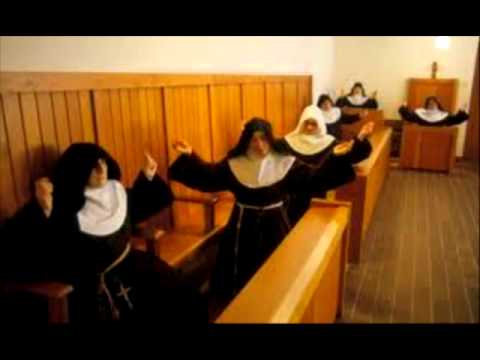
When my friend Robinlee and I visited the Old Mission in Santa Barbara, California, we happened on two statues–one of St. Francis of Assisi and the other of St. Clare. Most Christians are familiar with St. Francis’s life and words. We sing his poem, “All Creatures of our God and King”, which celebrates nature as God’s grand cathedral. St. Francis and his chaste friend, Clare, began new orders for monks and nuns on Palm Sunday in the year 1212. A 1973 film called Brother Sun, Sister Moon depicted St. Francis’s bold choices in defying the wealthy Catholic church and beginning a life of poverty. The core of the film is depicted here.
As Robinlee and I were looking at the statues, a docent told us that there was an order of cloistered Poor Saint Clares in a nearby church. “We never see them,” she said, “but they sing during the 7:00 a.m. Mass. They sound like angels. Sometimes, we try to count the voices. We don’t know how many there are.”
We decided then to attend Mass the next morning.
It was a simple chapel, with that angelic singing wafting from behind an opaque black veil as we walked through the doors. The priest entered and spoke. He addressed the Poor Clares with “Good morning,” and they responded in kind. He told the news of the day–about the Pope going into “dangerous” neighborhoods and stepping inside homes to share a cup of water with the residents. The priest commended the Pope’s courage in visiting places where gang violence ruled the streets. I wondered if these nuns had any idea of what “gang violence” meant in 2013. Had any of them escaped such a life for the peace and prayers of the cloister?
Mass was performed, and the priest served the Eucharist to the nuns, who remained beyond sight. Again, we all sang hymns of praise. Their invisibility made them seem other-worldly.
The website for the Poor Clares of Santa Barbara includes a link for applications. One might wonder why any woman would choose to be so isolated from the world. We think of Hamlet’s words to Ophelia–“Get thee to a nunnery” as a sign of his disapproval of her sexual possibilities, or of Guinevere’s choice to become a nun as strict penance for her adultery with Sir Lancelot. Her isolated life will be redemptive, and she will part with all signs of worldliness–specifically (as in Camelot) with her hair.
The tradition of cutting the postulate’s hair continues in various orders of nuns, including the Poor Clares.
As the Poor Clares sing, it is not hard to imagine spending at least a day with them, praying, singing, meditating, forgetting anything with neon lights or Facebook apps.
Amy Cunningham wrote of these nuns in the Washingtonian in 1983, describing their day thus:
The lives of these women are segmented by bells, little friendly bells that prod them from one prayerful activity to the next. At 12:30 AM . . . Sister Paul, the sacristan, rings a hand-held bell as she walks down the hallway past the individual bedrooms, or cells, rousing her fellow sisters from their sleep for Martins—the early-morning prayer. These cells are six by eight feet in dimension, so small that Fairfax County refuses to classify them as bedrooms; they’re officially “closets.”
“We live in a sixteen-closet boarding room house,” says Mother Miriam. But each nun finds space for a writing desk, desk chair and bed frame for one single-sized straw mattress.
Once Sister Paul’s bell for Matins has tolled, the nuns have ten minutes to get downstairs and into their choir stalls for this first part of the Catholic Church’s seven canonical hours, called the Divine Office. It is considered a breach of discipline to hurry, so the sisters move swiftly but not summarily, and not without continual reflection. “We train ourselves not to have a natural kind of response to something like waking,” says Sister Clare. Every movement, including the changing of the veil—from a short one for sleeping to a longer one for chapel—is an act of praise and is accompanied by a special prayer. The nuns symbolically renew their vows as they tighten their white rope belts. The cord gathers the nigh habit at the waist and is knotted in four places. Each knot represents an investiture vow: obedience, poverty, chastity, and enclosure.
I find the description of the “short veil” and the “long veil” fascinating, especially given my own familiarity with the short veils which LDS women wear in the temple, and the long veil we are introduced to at the end of the endowment. And is not the vow of “enclosure” (keeping exclusively within the sacred space) like the Law of Consecration? Howard W. Hunter urged Mormons to “establish the temple of the Lord as the great symbol of [our] membership and the supernal setting for their most sacred covenants.” Our garments remind us of our promises, and we might consider that we renew our own covenants as we put on fresh garments, just as the nuns “renew their vows” through tightening their belts.
Each religion should give us insights about what we have in common, and should teach us more about our own faith, even inspire us to more meaningful worship. The vow of enclosure and the dark veil which the nun wears after being presented as a bride of Christ suggest a holy life, lived apart from temporal distractions.
In October of this year, the Pope made a remarkable statement about the Poor Clares and any other cloistered Catholic nuns:
When a cloistered nun consecrates her life to the Lord, a transformation occurs that we do not usually understand. Normally we assume that this nun becomes isolated, along with the Absolute, alone with God; it is an ascetic, penitent life. But this is not the path of a Catholic or indeed Christian cloistered nun. The path always passes via Jesus Christ. Jesus is the centre of your life, of your penance, of your community life, of your prayer, and also of the universality of prayer. . .Because the Word became flesh, God became flesh for us, and this gives you a great, human, beautiful and mature holiness, the holiness of a mother. And this is what the Church wants you to be: mothers. . .[t]o give life. When you pray, for example, for priests, for seminarians, you have a maternal role towards them; you help them to become good shepherds for the People of God. Cloistered nuns are called upon to have great humanity, a humanity like that of the Mother Church; to be human, to understand all aspects of life, to be able to understand human problems, to know how to forgive and to pray to the Lord for others.
What a fascinating notion–that single, chaste women are endowed with “the holiness of a mother” giving spiritual sustenance to Catholic leaders and to anyone else they pray for. They are the shepherds’ spiritual nurturers; they are the power behind the Catholic priesthood.
My fiction-writing mind did enjoy itself as Mass was performed and the nuns sang. I imagined who might be in the congregation. An aged mother listening for her daughter’s voice? A gang banger trying to hear the singular sound of his former girlfriend, who transmuted terror into love when she chose to get her to a nunnery? How might these unseen women redeem those whose voices they heard on the other side of the curtain, and whose voices joined theirs in the air? Shepherds and angels. Mary and Gabriel.
Did any of these nuns choose to leave the cloister after a few enclosed years? What would they seek outside the walls and gardens? Would the sound of bells forever remind them of their prayers and their hymns? Would they be able to bear the pain of the violent streets like this remarkable Pope who enters homes of the impoverished for a sip of water?
As a mother, the wife of a pastor (shepherd, bishop), I think of the synergistic power my husband and I share as we continue to raise our children–who we don’t see very often, since our youngest is twenty-two. They know we’re here, though. They will remember things from our enclosed home: the scripture on my kitchen wall that says “Choose ye this day whom ye will serve, but as for me and my house, we will serve the Lord”; the songs we sang in earlier years, like “A Child’s Prayer”; the smells of Christmas pine and apple betty; the nightly gatherings for family prayer; the annual father’s blessings. Our children continue to choose, but more and more they find themselves turning again towards the innocence and holiness of home, even though they are or will be making their own homes separate from the one they knew in their childhoods.
I have sat in the temple as my oldest daughter wore her bridal finery–but covered with ceremonial clothing symbolizing that she and my son-in-law were ordering their lives after God’s ways (in other words, participating in the ORDER or ORDINANCE of marriage). There was no music, and only a room full of quiet guests. Bride and groom sat on a couch until they were invited to come forward together to receive and to accept one another as husband and wife with all that the union implied. Several hours after the marriage, my daughter wore her wedding gown and carried her flowers for a dazzling reception. It was precisely opposite to the order of the nun’s investiture–a lovely word that refers to a robing, and in Mormonism, to the endowment. (The Spanish for “endowment” is “investidura.”) The woman who will devote her life to Christ as His bride comes appareled in bridal regalia, and is then robed in simple ceremonial clothing. Reverence fills the room. (A fascinating view of the nun’s investiture is found here . It lasts ten minutes.)
I also thought of my father, who has been remembering his long-dead parents and sister as his own time on earth wanes. We Blair children, all of us with our own families now, gather at our parents’ home every Sunday and sing hymns. Dad particularly loves John Cardinal Newman’s “Lead Kindly Light.” These lyrics are particularly poignant now:
So long thy pow’r hath blest me, sure it still
Will lead me on
O’er moor and fen, o’er crag and torrent, till
The night is gone.
And with the morn those angel faces smile,
Which I have loved long since, and lost awhile!
He has been separated from his first family for forty years. He said today that he wondered what death would feel like. It was not the first time he has pondered the subject. I didn’t answer. But this is what I think it will be for him.
I suppose there will be a tunnel, because so many near-death experiences mention it. I prefer to think that it will be like the opaque veil which hid the nuns from our sight. A hand will part the veil, and a voice will invite him in. He will recognize the voice as his mother’s, but it will be a young voice. It will be the voice that called him to dinner so many times. He will hear his sister, Carolyn, singing his favorite hymn with a few changes: “Fear not, I am with thee/ O be not dismayed/ For He is thy God/ and will still give thee aid/ He’ll strengthen thee, Help thee/and cause thee to stand/upheld by His righteous, omnipotent hand.
My father will stand without pain and take the hand that is stretched out for his. He will hear the voice he has not heard since his eighteenth year–his own father’s: “Is Bobby home?”
He will be allowed to choose. There is so much unfinished business! The Chinese course. Untold stories from his childhood. Struggling grandchildren who need his wisdom.
“Well, Bobby,” his mother will say, “are you coming in?”
“You can leave it behind, Son,” his father will say. “It’s not as important as you think. Others will continue everything you began.”
Then my aunt Carolyn, my dad’s only sibling, will rush forward with her so-familiar enthusiasm, grab him around the neck, and say, “Oh for Heaven’s sake, what’s taking you so long? Come in!”
He’ll grant himself one look at the glorious world receding behind him, fading like a dream. He’ll say simply, “Yes.”
Previous Post

November 1, 2013
Making Room for Difficult Mormons and their Friends
Next Post
November 14, 2013 A beautiful blog post
Browse Our Archives
Select a Category Ancestors family conflict in the scriptures race and religion Uncategorized
Select a Month August 2026 March 2026 January 2026 December 2025 November 2025 October 2025 September 2025 July 2025 April 2025 March 2025 January 2025 November 2024 May 2024 April 2024 November 2023 October 2023 September 2023 June 2023 September 2022 August 2022 July 2022 May 2022 April 2022 March 2022 January 2022 December 2021 October 2021 September 2021 July 2021 June 2021 October 2020 August 2020 July 2020 June 2020 March 2020 January 2020 December 2019 November 2019 October 2019 June 2019 January 2019 December 2018 November 2018 September 2018 August 2018 May 2018 March 2018 January 2018 November 2017 October 2017 August 2017 July 2017 June 2017 May 2017 March 2017 February 2017 November 2016 October 2016 August 2016 July 2016 June 2016 May 2016 April 2016 March 2016 February 2016 January 2016 November 2015 August 2015 July 2015 May 2015 April 2015 March 2015 February 2015 January 2015 December 2014 November 2014 October 2014 August 2014 July 2014 June 2014 May 2014 April 2014 March 2014 February 2014 January 2014 December 2013 November 2013 October 2013 September 2013 August 2013 July 2013 June 2013 May 2013 April 2013 March 2013 February 2013 January 2013 December 2012
Follow Us!
TAKE THE
Religious Wisdom Quiz
In the Parable of the Good Samaritan, who is the true neighbor?
Select your answer to see how you score.
The robber The Levite The priest The Samaritan
Related posts from The Welcome Table


On the Eve of my Father's Death

Reconciliation: My Presidential Address to the Association for...
TRENDING AT PATHEOS Latter-day Saint

Did Prayer Cure His Cancer? Or Was It...
At 4 AM one morning, Joshua W. Brown’s wife awoke to a...

8 Ways a Near-Death Experience Rewires the Soul
Does Consciousness Survive Physical Death? After 50 Years of Research, Dr. Raymond...

Holy Longing: What Our Restlessness Is Telling Us
“One can find so many pains when the rain is falling.” -John...

What this is NOT about. This blog is definitely not about...

Who said the Israelites were God’s chosen? That’s right, they did. Who...

The Spirit World Is the Real World: God...
A Monk’s Wisdom on Body and Spirit I sit with Brother Martin...
view all Latter-day Saint blogs
Ad-Free & Subscriber Log-In Subscription Support
- About Us
- 2026 Calendar
- Videos
- Podcasts
- Library of World Religions
- Faith In Media Tracker
- Advertise With Us
- Write for Us
- Privacy Policy
- Terms of Service
- Do Not Sell My Data
- Contact Us
- Radiant Digital
- Manage Newsletter Subscriptions
- Unsubscribe From Notifications
- Sitemap
Copyright 2008-2026, Patheos. All rights reserved.
Subscription Support Ad-Free & Subscriber Log-In
Follow Patheos