
BuddhistCatholicContemplativeEvangelicalGeneral ChristianHinduJewishLatter-day SaintMuslimNew VisionsProgressive Christian
Beliefs
- Buddhist
- Catholic
- Contemplative
- Evangelical
- General Christian
- Hindu
- Jewish
- Latter-day Saint
- More Voices
- Muslim
- New Visions
- Pagan
- Progressive Christian
Topics
- Religion News
- Food and Religion
- Sports and Religion
- Religious Art
- Religious Music and Entertainment
- Religious Events
- History and Religion
- Style and Religion
- Politics and Religion
- Women in Religion
- Recreation Outdoors and Religion
- Business Finance and Religion
- Careers Workplace and Religion
- Education and Religion
- Family Parenting and Religion
- Health Fitness and Religion
- Home and Religion
- Relationships and Religion
- Technology and Religion
- Travel and Religion
Columnists
- Buddhist Columnists
- Business Finance and Religion Columnists
- Careers Workplace and Religion Columnists
- Catholic Columnists
- Contemplative Columnists
- Education and Religion Columnists
- Evangelists Columnists
- Family Parenting and Religion Columnists
- General Christian Columnists
- Health Fitness and Religion Columnists
- Hindu Columnists
- History and Religion Columnists
- Home and Religion Columnists
- Jewish Columnists
- More Voices Columnists
- Latter Day Columnists
- Muslim Columnists
- New Visions Columnists
- Nonreligious Columnists
- Pagan Columnists
- Politics and Religion Columnists
- Progressive Columnists
- Recreation Outdoors and Religion Columnists
- Relationships and Religion Columnists
- Religion News Columnists
- Religious Art Columnists
- Religious Events Columnists
- Religious Music and Entertainment Columnists
- Sports and Religion Columnists
- Style and Religion Columnists
- Technology and Religion Columnists
- Travel and Religion Columnists
- Women in Religion Columnists
Resource Library
- 2026 Calendar
- Library of World Religions
- The 100 Most Holy Places on Earth
- Patheos Answers
- Podcasts
- Videos
- Faith Leaders Database
- Anglican Episcopalian
- Bahai
- Baptist
- Buddhism
- Christianity
- Confucianism
- Eastern Orthodoxy
- Hinduism
- Holiness and Pentecostal
- ISKCON
- Islam
- Judaism
- Lutheran
- Methodist
- The Church of Jesus Christ of Latter-day Saints
- New Age
- Paganism
- Presbytarian and Reformed
- Protestantism
- Religion Behind the Scenes
- Roman Catholic
- Scientology
- Shia Islam
- Sikhism
- Sufism
- Sunni Islam
- Taoism
- Zen
- See all religions
Research Tools
 Ad-Free & Subscriber Log-In Subscription Support
Ad-Free & Subscriber Log-In Subscription Support
Follow Patheos 

- Trending:
- Forgiveness
- |
- Marriage
- |
- Consciousness
- |
- Death Penalty
- |
- Election
- |
- Halloween

- Home
- Latter-day Saint
- I Broke Down at the Veil
I Broke Down at the Veil
Last updated on: March 27, 2013 at 2:26 pm by Margaret Blair Young
I Broke Down at the Veil 2013-03-27T14:26:33-07:00 Margaret Blair Young
Patheos Explore the world's faith through different perspectives on religion and spirituality! Patheos has the views of the prevalent religions and spiritualities of the world.
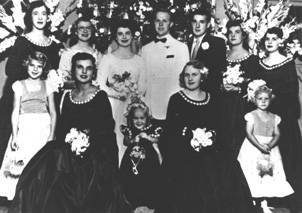 In this post, I’m going to include something I wrote for By Common Consent in November, when my father made his last trip to the temple to be with my niece, Amber, his granddaughter, who was being endowed. It was miraculous that Dad was able to attend. Another niece of mine, Kristen, will be endowed on Friday, but we will not get the miracle this time. Dad is not up to it.
We talked last night, Dad and I, for a couple of hours. That was remarkable, because he is usually too tired for much conversation. We reminisced about many things, most of them having happened in other countries–Guatemala, Russia, China. My life as a Blair has been international. When I reminded him that Kristen would be endowed on Friday, he said, “I won’t be able to go.” I told him I knew that, and reminded him that he had been there for Amber. He said, “I broke down at the veil. I haven’t done that in fifty years.” “I’ve broken down at the veil too, Dad,” I said. “When Buffy (my best friend) died and I went to the temple instead of her viewing, I heard messages of resurrection, and I wept.”
We have had six years of bonus time with Dad. Six years on dialysis. We know we’re living the last moments now, which makes them precious and even sacred.
This is what I wrote when Dad made his last trip to the temple:
When I tended my father at dialysis a few weeks ago, he tried to tell me something and was stopped by tears. Finally he managed, “I get to go to the temple on Friday.” He was going to attend my niece’s endowment. She will leave for her mission in January.
This would hardly seem tear-worthy, unless you understand that my father has been on dialysis for 5 ½ years, and has been weakened by the gradual failure of all his organs. He is in a wheelchair, and sleeps much of the time.
Six months ago, my parents’ stake president dropped by their place to give them temple recommend interviews. Dad is rarely strong enough to get to church, so the president had come to him. I thought it was a lovely gesture, but didn’t imagine the recommend would ever be used. Still, it was a good for my dad to report to his stake president where he stood in his faith, like a last testimony to be witnessed and signed.
Not long after that, I was talking to Dad about my calling as an ordinance worker, and an experience I had had with a patron in initiatory. I had gone to get her and found her with her head in her hands. I thought she might feel faint or ill, and asked her if she was all right. Our conversation was in Spanish, since she was from Mexico. She said, “I was praying.” I nodded, and then surprised myself by saying, “Many come here to pray for themselves or for a family member. I’ve come to pray for my son sometimes.” She brightened. “I am praying for my son.” At that moment, we were sisters, mothers who had a glimpse into each other’s lives. She gave me a few details, and I let her know I had been through similar things with my children. After I did my ordinance work, I kissed her on the forehead.
When I reported this to Dad (who is the reason I speak Spanish; he took me to Guatemala three times), he said, “I wish I could do initiatory.” I asked if we couldn’t arrange to have him do just one name. My brothers could help with the wheelchair. Dad shook his head. “I’m too weak.”
But this—my niece’s endowment—he had chosen to attend, knowing that he might not get through the entire session. He was also concerned he might impose. How would he do anything from his wheelchair? I assured him that we work with patrons in wheelchairs all the time. “We’ve got it covered, Dad,” I said.
He went, made it through the whole session, and saw my beautiful niece enter the Celestial Room into the arms of not only her family, but also of her 5th grade teacher, a temple worker. In the fifth grade, my niece had life-threatening seizures, and this teacher was always on the alert. Surgery solved the problem, and she is seizure free now–free to drive, free to go on a mission.
Yesterday, as I attended prayer meeting in the temple, the matron said, “Smile at your sisters. You never know what burdens they are bringing here.” Indeed. So often, I have seen couples holding each other and weeping in the Celestial Room, or single patrons clearly in prayer, tears streaking their cheeks. We don’t ask what’s wrong. They have not come to hold conversation with temple workers, but with God. We can provide kleenex, though.
I did a “room follow,” which means that I attended an endowment session as a helper. Room followers are really there to be sure that nobody feels conspicuous or incompetent. We help as needed. I’ve always believed we symbolize angels who are present to help anyone who might be confused about where they are, where they need to go next, or what they’re supposed to do.
This session was unusual for me. I recognized a man who I knew from another setting, and who I knew had a troubled past. He had even spent time in prison. There he was, in white. I’m sure he appreciated the endowment and the focus on redemption better than most, just as my father appreciated being in the temple one more time, when he had thought that his weakness would keep him away. (And there might be yet another visit, as my nephew is being married in the temple in two weeks.)
I thought of this patron, emancipated from his weaknesses and the consequent spiritual (and physical) prison; imagined the contrast between him in the prison jumpsuit and him in white. I have been in court a few times, and have seen inmates brought in from the jail, all in orange jumpsuits and with manacled hands. I recalled a note from a friend:
Our son went to jail a few years ago. My husband and I went over to see him. On the way over, I thought, “I can’t do this. I can’t see my son behind bars.” Gently, the following words from the third verse of “How Firm a Foundation” came in my thoughts:
“Fear not, I am with thee, oh, be not dismayed, for I am thy God and will still give thee aid. I’ll strengthen thee, help thee, and cause thee to stand, upheld by my righteous omnipotent hand…”
That same verse had moved me years ago when one of my children was struggling and I felt helpless. I was playing the organ in my ward and reading the words as the congregation sang. I started crying and could barely read the notes. Fortunately, it was the closing song, so I was able to wipe my eyes before anyone could see the tears.
That song is also my father’s favorite. Many of us, his children and our families, spend Sunday evenings with him and sing hymns. When we sing this one, he insists on the final verse, and I often request the sixth:
E’en down to old age, all my people shall prove My sov’reign, eternal, unchangeable love; And then, when gray hair shall their temples adorn, Like lambs shall they still, like lambs shall they still, Like lambs shall they still in my bosom be borne.
The soul that on Jesus hath leaned for repose I will not, I cannot, desert to his foes; That soul, though all hell should endeavor to shake, I’ll never, no never, I’ll never, no never, I’ll never, no never, no never forsake!
I know it won’t be long before my father is dressed one last time in his temple robes, for burial. He has not become a wealthy man, and it has never mattered. (In fact, we Blairs tend to go for third world countries, not three-car garages.) He has become a citizen of the world, fluent in more languages than he would want me to say, and willing to bring anyone of any ethnicity into his heart. He is faithful in everything. I consider him a man of God who is finishing a glorious life.
I likewise trust that the patron who I know from somewhere else will continue to come to the temple. He hungers and thirsts after righteousness, for he has known the kind of starvation and thirst many of us never comprehend.
Out of the corner of my eye, I watched him proceed to the veil. I know he realized that he belonged in the Celestial Room. It was made for people like him.
Previous Post

March 3, 2013
Official Declaration 2 PLUS
Next Post
April 1, 2013 A Public Confession to my Bishop
Browse Our Archives
Select a Category Ancestors family conflict in the scriptures race and religion Uncategorized
Select a Month August 2026 March 2026 January 2026 December 2025 November 2025 October 2025 September 2025 July 2025 April 2025 March 2025 January 2025 November 2024 May 2024 April 2024 November 2023 October 2023 September 2023 June 2023 September 2022 August 2022 July 2022 May 2022 April 2022 March 2022 January 2022 December 2021 October 2021 September 2021 July 2021 June 2021 October 2020 August 2020 July 2020 June 2020 March 2020 January 2020 December 2019 November 2019 October 2019 June 2019 January 2019 December 2018 November 2018 September 2018 August 2018 May 2018 March 2018 January 2018 November 2017 October 2017 August 2017 July 2017 June 2017 May 2017 March 2017 February 2017 November 2016 October 2016 August 2016 July 2016 June 2016 May 2016 April 2016 March 2016 February 2016 January 2016 November 2015 August 2015 July 2015 May 2015 April 2015 March 2015 February 2015 January 2015 December 2014 November 2014 October 2014 August 2014 July 2014 June 2014 May 2014 April 2014 March 2014 February 2014 January 2014 December 2013 November 2013 October 2013 September 2013 August 2013 July 2013 June 2013 May 2013 April 2013 March 2013 February 2013 January 2013 December 2012
Follow Us!
TAKE THE
Religious Wisdom Quiz
Who took Jesus’ body and placed it in a tomb?
Select your answer to see how you score.
Peter John Joseph of Arimathea Nicodemus
Related posts from The Welcome Table

On the Eve of my Father's Death

Reconciliation: My Presidential Address to the Association for...

TRENDING AT PATHEOS Latter-day Saint

Did Prayer Cure His Cancer? Or Was It...
At 4 AM one morning, Joshua W. Brown’s wife awoke to a...

8 Ways a Near-Death Experience Rewires the Soul
Does Consciousness Survive Physical Death? After 50 Years of Research, Dr. Raymond...

Holy Longing: What Our Restlessness Is Telling Us
“One can find so many pains when the rain is falling.” -John...

What this is NOT about. This blog is definitely not about...

Who said the Israelites were God’s chosen? That’s right, they did. Who...

The Spirit World Is the Real World: God...
A Monk’s Wisdom on Body and Spirit I sit with Brother Martin...
view all Latter-day Saint blogs
Ad-Free & Subscriber Log-In Subscription Support
- About Us
- 2026 Calendar
- Videos
- Podcasts
- Library of World Religions
- Faith In Media Tracker
- Advertise With Us
- Write for Us
- Privacy Policy
- Terms of Service
- Do Not Sell My Data
- Contact Us
- Radiant Digital
- Manage Newsletter Subscriptions
- Unsubscribe From Notifications
- Sitemap
Copyright 2008-2026, Patheos. All rights reserved.
Subscription Support Ad-Free & Subscriber Log-In
Follow Patheos