
BuddhistCatholicContemplativeEvangelicalGeneral ChristianHinduJewishLatter-day SaintMuslimNew VisionsProgressive Christian
Beliefs
- Buddhist
- Catholic
- Contemplative
- Evangelical
- General Christian
- Hindu
- Jewish
- Latter-day Saint
- More Voices
- Muslim
- New Visions
- Pagan
- Progressive Christian
Topics
- Religion News
- Food and Religion
- Sports and Religion
- Religious Art
- Religious Music and Entertainment
- Religious Events
- History and Religion
- Style and Religion
- Politics and Religion
- Women in Religion
- Recreation Outdoors and Religion
- Business Finance and Religion
- Careers Workplace and Religion
- Education and Religion
- Family Parenting and Religion
- Health Fitness and Religion
- Home and Religion
- Relationships and Religion
- Technology and Religion
- Travel and Religion
Columnists
- Buddhist Columnists
- Business Finance and Religion Columnists
- Careers Workplace and Religion Columnists
- Catholic Columnists
- Contemplative Columnists
- Education and Religion Columnists
- Evangelists Columnists
- Family Parenting and Religion Columnists
- General Christian Columnists
- Health Fitness and Religion Columnists
- Hindu Columnists
- History and Religion Columnists
- Home and Religion Columnists
- Jewish Columnists
- More Voices Columnists
- Latter Day Columnists
- Muslim Columnists
- New Visions Columnists
- Nonreligious Columnists
- Pagan Columnists
- Politics and Religion Columnists
- Progressive Columnists
- Recreation Outdoors and Religion Columnists
- Relationships and Religion Columnists
- Religion News Columnists
- Religious Art Columnists
- Religious Events Columnists
- Religious Music and Entertainment Columnists
- Sports and Religion Columnists
- Style and Religion Columnists
- Technology and Religion Columnists
- Travel and Religion Columnists
- Women in Religion Columnists
Resource Library
- 2026 Calendar
- Library of World Religions
- The 100 Most Holy Places on Earth
- Patheos Answers
- Podcasts
- Videos
- Faith Leaders Database
- Anglican Episcopalian
- Bahai
- Baptist
- Buddhism
- Christianity
- Confucianism
- Eastern Orthodoxy
- Hinduism
- Holiness and Pentecostal
- ISKCON
- Islam
- Judaism
- Lutheran
- Methodist
- The Church of Jesus Christ of Latter-day Saints
- New Age
- Paganism
- Presbytarian and Reformed
- Protestantism
- Religion Behind the Scenes
- Roman Catholic
- Scientology
- Shia Islam
- Sikhism
- Sufism
- Sunni Islam
- Taoism
- Zen
- See all religions
Research Tools
 Ad-Free & Subscriber Log-In Subscription Support
Ad-Free & Subscriber Log-In Subscription Support
Follow Patheos 

- Trending:
- Forgiveness
- |
- Marriage
- |
- Consciousness
- |
- Death Penalty
- |
- Election
- |
- Halloween
 Wayward Woman
- Home
- Nonreligious
- Philosophy of the Body
Philosophy of the Body
Last updated on: September 11, 2021 at 12:43 pm by Melinda Robinson
Philosophy of the Body 2021-09-11T12:43:53-05:00 Melinda Robinson
Patheos Explore the world's faith through different perspectives on religion and spirituality! Patheos has the views of the prevalent religions and spiritualities of the world.
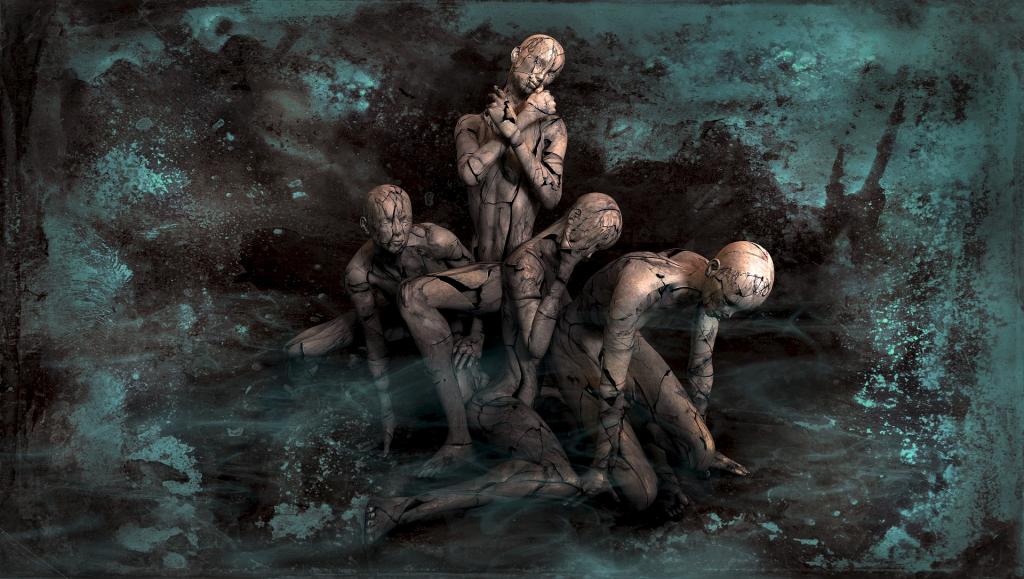
I’ve decided that, in the interests of actually posting to my blog more than once a month, I’m going to include some of my reflections on various philosophers that I’m reading for class. In this case, Leanne Betasamosake Simpson, a Nishnaabeg philosopher who writes about embodied epistemologies and indigenous knowledge practices. One of the things that really strikes me, reading her work, is that postcolonial and feminist epistemologies are often treated as a marginal concern (I’ll let you guess how many guys are signed up for my “Philosophy and Feminism” course) that is only interesting if you are queer, a woman, or a member of a visible minority. This seriously impoverishes the intellectual palette of “mainstream” thinkers — a fact that is really hitting me at the moment because I’m also, simultaneously, doing a core philosophy course in metaphysics and epistemology.
Anyway, this will connect back to my general project of engaging with patriarchal religious structures because of course it will. Or, rather, because as Simpson observes: “My body and my life are part of my research, and I use this knowledge to critique and analyze.”
Ideological Superimposition
This statement is true of any thinker. The difference between many mainstream philosophers and thinkers like Simpson is not that the former are more objective, less invested in the personal, but rather that the former are either less self-aware or less forthcoming about the ways in which their lived experience shapes their philosophy. There is a kind of will to disembodiment that arises from the perceived need to universalize our own experience which causes many thinkers to elide the embodied and autobiographical matrices of their analysis. The “Western” tradition generally encourages us to present our thinking as a universal ideal, something that can be transposed and reproduced in the mind of another without reference to my particularity or theirs. This means necessarily omitting certain critical aspects of my truth, forcing the reader to assume a strategic posture towards my claims.
Several possibilities emerge from this dynamic. The reader may find herself able to easily map my ideas unto her experience, producing a sense of recognition and reinforcing the illusion of universalizability: that which can be “universalized” is that which I am able to integrate successfully with my own life and experience and this is “truth”; that which cannot be “universalized,” i.e. cannot be rendered compatible with my own life and experience, is “error” or even “bullshit” depending on the degree of incompatibility. The reader may struggle to map my ideas onto his experience and therefore adopt a critical stance. The reader may struggle to map my ideas onto their experience but feel in some way compelled to conform their experience to mine, thus altering, reinterpreting, overwriting or even violating their own embodied knowledge in order to map my experience over top of it. They may recognize similarities between their own experience and my ideals, but reject both their own experience and mine in favour of some third normative system that they are already subscribed to. The reader may find my ideas threatening and adopt a hostile stance. Or they may assume a mixed posture that includes elements of any of these approaches.
It becomes necessary, in any case, for the reader to attempt to reconstruct an embodied, experiential framework in which my ideas can be situated. If this work is easy, my ideas are likely to be welcomed. If it is onerous, my work will be approached either as a challenge or a threat. If it is impossible (or if the reader, for whatever reason, does not want to do it) then my ideas will be rejected.
The Universal Erection
The omission of autobiographical acknowledgement increases the risk that some observation which is true for me will be imposed (either self-imposed or imposed from without) on another person when it is false for them. An obvious-to-me example would be the way in which sexual temptation is represented in the Christian tradition: only after many years of reading, studying, and internalizing the narratives put forth by various writers from Augustine to John Paul II did I finally come to understand that certain circumlocutions referred to involuntary erections and that many passages which did not even include these oblique references were predicated on the male experience of sexual arousal.
By representing the interior, psychological and somatic experience of the particular male writer as if it were a universal fact of human nature, these writers imposed on me an abstracted model of sexuality that tacitly referred to the experience of having not only a penis but also a set of neurological structures and behaviours generally associated with having a penis. When this sort of abstracted knowledge, removed from its context and superimposed onto another, different and perhaps incompatible context, is enforced using the methodologies of power and authority the result is a form of intellectual, and ultimately existential, violence which alienates the subject from her own body and experience and thus from the matrices of her own truth. This is a colonization of the interior space of the individual.
My suspicion is that this colonization is undertaken, deliberately or not, in order to extract value from the bodies that become subject to these foreign ideals. Certainly that is a common pattern. In my own case, the church was able to obtain reproductive, emotional, domestic, intellectual and economic labour by imposing on me the “truth” that women’s true fulfillment and greatest happiness lies in submission to male authority (either of husband, priesthood or male godhead.)
The male experience of a woman being “fulfilled” (in the sense of fulfilling the purposes which he imagines for her) and of being “good” (in the sense of “good for him”) when her life is oriented towards the joyful and uncomplaining production of value for him and his peers produces the normative ideal framework for woman’s “happiness” and the actual embodied reality of suffering and unhappiness experienced by the woman is explained by some interior fault in her. Naturally, this “fault” invites further intervention and serves to further undermine her own competency and authority over herself. The external, incompatible foreign ideal is “truth,” therefore her embodied and lived truth must be invalid.
A Brief Aside In Case I Still Have Any Conservative Readers
I think that this experience is more readily accessible to groups whose experience hasn’t traditionally been represented within the dominant discourse, but probably almost everyone has had the experience of coming up against some normative claim or other that is just not true for them. An example that might be more readily accessible to conservative-minded men might be the assumptions often made by communist intellectuals about the nature of labour. I know that when I was a bright young leftie I took it absolutely for granted that everyone felt the way I feel about “mindless,” repetitive work. The only reasonable explanation I could see why anyone worked in a factory, or a warehouse, or drove a truck, was that someone else was crushing the labour out of them like a grape in a press.
I’m now living with a truck driver who has a philosophy degree. For him, the advantage of his job is that it is repetitive, doesn’t involve making a lot of decisions or doing much thinking, requires a certain degree of competency and qualification, and requires minimal interaction with other people. Instead of wanting work that engages his creative and intellectual faculties, he wants work that leaves him free to think about whatever he wants to think about. My sixteen year old felt similarly about working in the warehouse at the local foodbank over the summer, sorting cans of beans and tuna by best-before date.
The point here is not that labour is never dehumanizing, coerced or tedious, but rather that my younger self made assumptions about the nature of labour and the nature of work that were based on my own experience of being an artsy intellectual with ADD. The result was that I universalized a series of propositions that are true for me, but not true for everyone. Although I didn’t have any authority at the time that would have enabled me to impose my ideas on others, I can certainly see how the same kind of dynamic might drive tensions between social activists and the working class, or professional union reps and the workers they represent.
Imperfect Perfections
Regardless of what a person’s context is, that context produces the experiences that form the bedrock of truth. We produce truths, not merely in the sense that we construct them, advance them, or propagate them discursively, but also in the sense that we produce the truths of our own lives through the process of living. Since truth itself flows out of human thinking and human thinking flows out of human being, the ground of truth is ultimately the embodied reality of the human (both our individuality and our collectivity.) Truth may act on the body, but truth does not produce the body. It is the body that produces experience and thought which give rise to truth.
This means that disembodied, universalized truth claims do not descend upon us from on high, providing an ideal model that allows us to perfect our messy and complicated realities. Abstract claims are not more perfect than concrete realities of existence — they are just less complete. The elegance and simplicity of the universal ideal is a product of stripping away and eliminating large swathes of inconvenient truth. It’s kind of like an abstract painting in which colour, style, subject matter, brushwork, composition, theme and form have all been simplified down to a single, laser-perfect black dot in the midst of a white field. There’s a certain attraction to that kind of austere, uncluttered singularity. But at the same time, it’s clear that such a painting has sacrificed its ability to represent the world in favour of clarity and elegance.
Almost nobody would actually want to live in a white field where the only possible object of contemplation was one perfect black sphere.
It works in a painting because we enter the world of the painting briefly, always still anchored to the outside world with all of its sensations and complexities, and we remain there only for as long as it holds our attention. An abstract philosophy or an ideal, however, makes a consistent and relentless demand on the conditions of our existence. We must always seek, at all times, with all of our effort and attention, to achieve the ideal or else we must construe our failure to do so as a fault, an imperfect, a hypocrisy.
The ideal, which is derived from embodied existence and which represents only a small part of the fullness of embodied existence, becomes a scalpel which we apply to our interiority. We become plastic surgeons of the soul, cutting into ourselves and our realities in order to produce a likeness of an abstracted humanity that has never existed, could never exist, and which is necessarily less than any of the particular, real human beings that it only partially represents. Or, in cases where intellectual or ideological violence, compulsion and coercion are exercised on the person, we lie down and submit, willingly or unwillingly, to someone else’s scalpel in order to be remade as an acceptable likeness of the abstract, truncated ideal that they wish us to be.
Image provided courtesy of Stefan Keller from Pixabay
Previous Post

August 22, 2021
The Hate that Calls Itself Love pt 3: Reproductive Coercion
Browse Our Archives
Select a Category Abuse Catholicism Current Events Faith Feminism Philosophy Spirituality Uncategorized
Select a Month September 2021 August 2021 July 2021 June 2021 March 2021 February 2021 July 2020 May 2020 April 2020 March 2020 February 2020
Follow Us!
TAKE THE
Religious Wisdom Quiz
My beloved is mine and I am his; he browses among these flowers. What flowers represent purity and beauty?
Select your answer to see how you score.
Roses Wildflowers Crocus Lilies
Related posts from Wayward Woman

The Hatred that Calls Itself Love pt II:...

Conservatives are Blaming the Left for Atlanta Killings....

The Hatred that Calls Itself Love: On Homophobia...

There is No Faith Which Can't Be Lost
TRENDING AT PATHEOS Nonreligious

The Parable Of The Sower And The Word...
One of Christ’s most famous parables is that of the sower who...

Rejecting Doom: Christian Hope And Human Action
Christianity is a religion of hope. We are to have hope and...

Why I Choose the Eucharist Over the Sermon
Choose the Eucharist, Not the Sermon What are we supposed to get...

5 Design Elements Found in Spiritually Rooted Homes
Putting Spirituality Into Home Decor Our homes are more than our living...

Credo: A Story of God Told with the...
About 10 years ago, I began to imagine a personal "Credo" that...

The Anatomy of Divine Revelation in Catholic Thought
The claim that God has made Himself known to human beings is...
view all Nonreligious blogs
Ad-Free & Subscriber Log-In Subscription Support
- About Us
- 2026 Calendar
- Videos
- Podcasts
- Library of World Religions
- Faith In Media Tracker
- Advertise With Us
- Write for Us
- Privacy Policy
- Terms of Service
- Do Not Sell My Data
- Contact Us
- Radiant Digital
- Manage Newsletter Subscriptions
- Unsubscribe From Notifications
- Sitemap
Copyright 2008-2026, Patheos. All rights reserved.
Subscription Support Ad-Free & Subscriber Log-In
Follow Patheos