
BuddhistCatholicContemplativeEvangelicalGeneral ChristianHinduJewishLatter-day SaintMuslimNew VisionsProgressive Christian
Beliefs
- Buddhist
- Catholic
- Contemplative
- Evangelical
- General Christian
- Hindu
- Jewish
- Latter-day Saint
- More Voices
- Muslim
- New Visions
- Pagan
- Progressive Christian
Topics
- Religion News
- Food and Religion
- Sports and Religion
- Religious Art
- Religious Music and Entertainment
- Religious Events
- History and Religion
- Style and Religion
- Politics and Religion
- Women in Religion
- Recreation Outdoors and Religion
- Business Finance and Religion
- Careers Workplace and Religion
- Education and Religion
- Family Parenting and Religion
- Health Fitness and Religion
- Home and Religion
- Relationships and Religion
- Technology and Religion
- Travel and Religion
Columnists
- Buddhist Columnists
- Business Finance and Religion Columnists
- Careers Workplace and Religion Columnists
- Catholic Columnists
- Contemplative Columnists
- Education and Religion Columnists
- Evangelists Columnists
- Family Parenting and Religion Columnists
- General Christian Columnists
- Health Fitness and Religion Columnists
- Hindu Columnists
- History and Religion Columnists
- Home and Religion Columnists
- Jewish Columnists
- More Voices Columnists
- Latter Day Columnists
- Muslim Columnists
- New Visions Columnists
- Nonreligious Columnists
- Pagan Columnists
- Politics and Religion Columnists
- Progressive Columnists
- Recreation Outdoors and Religion Columnists
- Relationships and Religion Columnists
- Religion News Columnists
- Religious Art Columnists
- Religious Events Columnists
- Religious Music and Entertainment Columnists
- Sports and Religion Columnists
- Style and Religion Columnists
- Technology and Religion Columnists
- Travel and Religion Columnists
- Women in Religion Columnists
Resource Library
- 2026 Calendar
- Library of World Religions
- The 100 Most Holy Places on Earth
- Patheos Answers
- Podcasts
- Videos
- Faith Leaders Database
- Anglican Episcopalian
- Bahai
- Baptist
- Buddhism
- Christianity
- Confucianism
- Eastern Orthodoxy
- Hinduism
- Holiness and Pentecostal
- ISKCON
- Islam
- Judaism
- Lutheran
- Methodist
- The Church of Jesus Christ of Latter-day Saints
- New Age
- Paganism
- Presbytarian and Reformed
- Protestantism
- Religion Behind the Scenes
- Roman Catholic
- Scientology
- Shia Islam
- Sikhism
- Sufism
- Sunni Islam
- Taoism
- Zen
- See all religions
Research Tools
 Ad-Free & Subscriber Log-In Subscription Support
Ad-Free & Subscriber Log-In Subscription Support
Follow Patheos 

- Trending:
- Forgiveness
- |
- Marriage
- |
- Consciousness
- |
- Death Penalty
- |
- Election
- |
- Halloween
 Wayward Woman
- Home
- Nonreligious
- The Crime of Being Human
The Crime of Being Human
Last updated on: July 23, 2021 at 11:25 am by Melinda Robinson
The Crime of Being Human 2021-07-23T11:25:49-05:00 Melinda Robinson
Patheos Explore the world's faith through different perspectives on religion and spirituality! Patheos has the views of the prevalent religions and spiritualities of the world.
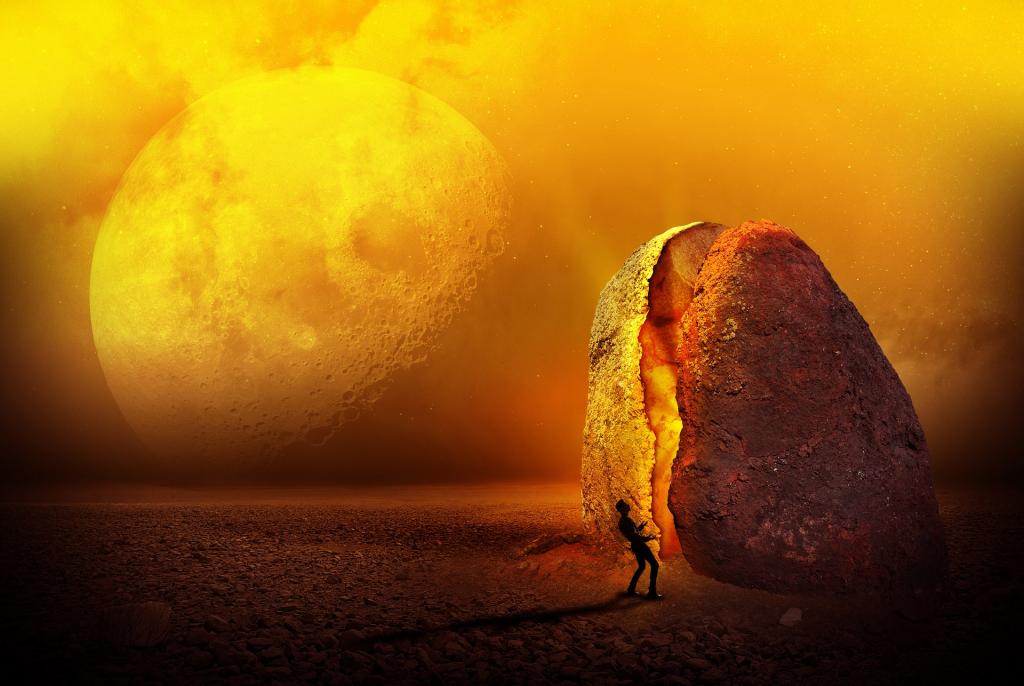
I was 18 years old when I converted to Catholicism. It is, I think, a common age for conversion: you’re on the cusp of adulthood, you think that you want nothing more than to be free to make your own choices and live your own life, but at the same time you don’t really have the first clue how to do that. On some level you crave structure, certainties, rules that you can follow in order to avoid making a mess of your life. Religion offers that.
That’s not the whole story, though. I had been an atheist for most of my teenage years, but it was never an easy atheism. I wanted the world to be full of wonders. I wanted to be a part of some great narrative. I wanted magic and miracles. When I wasn’t busy trying to understand Kant and Sartre, or arguing about the existence of God with my Christian friends, I was out in the woods communing with chthonic tree spirits or pouring libations from blood-red chalices into a fire on the beach. I loved, read and wrote poetry and I interpreted my world through a poetic lens; it seemed natural to me that events should be significant and that the world should be populated by symbols.
Catholicism promised to resolve the tension between my rational and my mystical self. There was a long philosophical and theological tradition that promised to reconcile the claims of faith with the demands of reason. There was a tremendous amount to learn, and most of it was challenging and novel. At the same time, there were haunting hymns in Latin, clouds of incense, a bloody chalice and a chilling mystery at the heart of it all.
Impossible Futures
It’s interesting, looking back. It’s said that there is a God-shaped hole in every human heart. I now think it’s more accurate to say that every human being experiences wonder, curiosity, sadness, confusion, disorientation, longing, desire. We all have things that we want deeply and that we don’t, or can’t, have. God is a broad concept, and established religions tend to be complex and varied enough to be able to offer whatever any particular person is craving. No matter what shape the “hole in your heart” happens to be, God is a sort of soothing golden liquid that can be poured in to fill it perfectly.
This is not necessarily a bad thing. Humans are finite beings who are capable of contemplating the infinite. We have certain insatiable desires: our curiosity, desire to be loved, need for safety, thirst for justice. We are able to obtain these desires in limited, finite ways but we can never have enough. These insatiable longings are what motivate us to keep growing, developing and improving as individuals and as a species even when our immediate survival needs are met. Arguably, the capacity to project ourselves towards open-ended goals is one of the reasons why we’ve been so successful.
But it comes with a drawback. If we pursue impossible goals, we risk holding ourselves to an impossible standard. We are able to picture a world better than any world that we can actually build; we can imagine ourselves being better than we are capable of being in real life. The pie in the sky can motivate us to climb higher than we would if we had more modest aspirations, but it can also cause us to despair. Keeping our eye on the prize means that we’re often focused more on the insurmountable distance between our reality and our ideals than on the actual progress that we’ve made.
One of the critical functions of spirituality is to help us reconcile this tension. Different systems take different approaches, but most require sustained interior effort coupled with some variant on the virtue of humility. On the one hand, the bar is kept high, on the other, the practitioner is supposed to come to terms with their own limitations.
In a healthy spiritual practice, the result is balance, realism and acceptance. You maintain your desire to grow and improve, but you learn to be compassionate with yourself. You continue to work for a just and fair society, but you relinquish your anger and judgement against the rest of the human race.
But there is another way that things can go.
God Shaped Hell-Hole
While there are unquestionably advantages to organized religion (community support, traditional wisdom, collective action), there are also risks. Religious leaders have the opportunity to help their followers attain spiritual peace, but they also have the opportunity to take advantage of people’s desire for self-betterment.
I don’t know much about how this plays out in other religions, but in Christianity it emerges in the tension between two opposed God-concepts. On the one hand, there is a God who represents all of the infinite aspirations that human beings can never live up to. This God inevitably judges all of humanity and damns the lot of us to hell. We can never live up to the expectations of this God because this God is a projection of all of the perfections that we strive for and cannot achieve.
On the other hand, there is God-made-man, a human God who is subject to weakness and pain and bodily death. This God fully understands the limitations of the human condition, and is filled with compassion for our weakness. This God promises to forgive us for being limited, finite and imperfect — and by receiving his forgiveness we are supposed to move towards humble self-acceptance.
Christianity renders these two Gods as one and the same (the formula here is not merely Trinitarian — God the father is sometimes represented as tender-hearted and merciful, God the son is sometimes represented with swords coming out of his mouth). In doing so, it maintains a dualistic structure. The ideal is not compromised or challenged: it remains as infinite and unobtainable as it ever was. The real therefore remains in a state of condemnation. However, we are promised that Christ has sacrificed himself as a perfect offering in order to make up the infinite difference between the two. As a result, our limited and imperfect selves will one day be made perfect and our impossible aspirations will be realized by supernatural, and superhuman, intervention.
The problem is that because the condemnation is not lifted, it can still be invoked as a means of exercising control. While there are variants of Christianity that find ways around this problem, both Catholicism and many forms of Evangelicalism use the threat of Hell to obtain obedience and compliance from the faithful. Instead of healthy self-acceptance, they offer a model of infinite guilt, infinite debt, and infinite mercy. Which means that although you aren’t expected to be perfect, you are expected to view your incapacity for perfection as a “sin” brought about by human disobedience. To the extent that you are disobedient to God (in the form of the men who claim the authority to communicate God’s commands to us mortals), you summon up the spectre of infinite punishment.
The fact that humans are constitutionally incapable of perfection by virtue of being finite beings who exist in a world with finite resources has no place in this scheme. Instead, we are told that we were once perfect and that we are capable of being perfected again — provided we submit ourselves to the authority of those who God has appointed to oversee this work. Naturally, there are always Very Good Reasons why the men chosen by God to counsel us in perfection are not actually perfect themselves, and in some cases are not even particularly good.
Imperfect Tense
When imperfect men claim the authority of the perfect, the result is always, necessarily, imbalance. In some cases, the imbalance comes on the side of laxity: people who are not really trying all that hard to live up to their ideals are reassured that Christ has already paid their debt and that they can rely on God’s mercy. There’s a tendency for this kind of mercy to be applied most readily to people who have power, influence or money with which to purchase God’s indulgence from his earthly representatives. In other cases, the imbalance is on the side of rigor: people are pushed beyond their abilities and are then blamed for failing to do the impossible. This approach is more likely to be taken with people who have little to offer except their ceaseless effort to do whatever their leaders demand of them.
The system is appealing, especially to the young and the idealistic, because it doesn’t demand the difficult spiritual labour of confronting and accepting your own limitations. Even the counsel to humility is provisional: you have to be humble, now, in this world in order to obtain the promised perfections of the next. Yes, sin is behovely, but you only have to endure it for a time. After that, all of your infinite aspirations will come true by magic.
The cost, however, is steep — and the more trusting and idealistic you are when you join, the more you are likely to lose. It’s not even that the “men of God” are necessarily trying to take advantage. Sure, some of them are obviously narcissists and Machievellians. But many of them are just ordinary, finite, imperfect human beings trying to do good, but suffering from exactly the same kind of blind spots and biases that we all suffer from. But by giving authority to their biases and blind spots, we suppress our own wisdom, our own instincts, our own authority over our own lives. We magnify their imperfections, sometimes sacrificing our own virtues in order to do so.
The result is as it is in any tragedy: a loss of innocence, the death of something irretrievable, and a kind of grim enlightenment. The girl who converted to Catholicism gave a great deal of herself trying to buy the mercy of God from men who demanded her body and her life in return for their sacraments. Much of that I will never get back.
I have, however, gained something: I know now that I am dust, to dust I will return. So is the Pope. So is Buddha. So is Jesus. Stardust. Fairy dust, maybe. But dust, coalescing for a brief and beautiful instant in an infinite, unfathomable universe, striving towards the stars and never making it further than the moon. But making it, sometimes, to the moon.
Image by Comfreak from Pixabay
Previous Post

June 25, 2021
Non Nostra Maxima Culpa: The Catholic Church and the Residential Schools
Next Post
August 22, 2021 The Hate that Calls Itself Love pt 3: Reproductive Coercion
Browse Our Archives
Select a Category Abuse Catholicism Current Events Faith Feminism Philosophy Spirituality Uncategorized
Select a Month September 2021 August 2021 July 2021 June 2021 March 2021 February 2021 July 2020 May 2020 April 2020 March 2020 February 2020
Follow Us!
TAKE THE
Religious Wisdom Quiz
Which prophet stood watch on a rampart to hear from God?
Select your answer to see how you score.
Joel Ezekiel Habakkuk Amos
Related posts from Wayward Woman

The Hate that Calls Itself Love pt 3:...
The Hatred that Calls Itself Love pt II:...
There is No Faith Which Can't Be Lost
TRENDING AT PATHEOS Nonreligious

Creation, Preservation, and Teleology in Catholic Theology
As I write this, it is very early Monday morning. Like millions...

The Parable Of The Sower And The Word...
One of Christ’s most famous parables is that of the sower who...

Rejecting Doom: Christian Hope And Human Action
Christianity is a religion of hope. We are to have hope and...

Why I Choose the Eucharist Over the Sermon
Choose the Eucharist, Not the Sermon What are we supposed to get...

5 Design Elements Found in Spiritually Rooted Homes
Putting Spirituality Into Home Decor Our homes are more than our living...

Credo: A Story of God Told with the...
About 10 years ago, I began to imagine a personal "Credo" that...
view all Nonreligious blogs
Ad-Free & Subscriber Log-In Subscription Support
- About Us
- 2026 Calendar
- Videos
- Podcasts
- Library of World Religions
- Faith In Media Tracker
- Advertise With Us
- Write for Us
- Privacy Policy
- Terms of Service
- Do Not Sell My Data
- Contact Us
- Radiant Digital
- Manage Newsletter Subscriptions
- Unsubscribe From Notifications
- Sitemap
Copyright 2008-2026, Patheos. All rights reserved.
Subscription Support Ad-Free & Subscriber Log-In
Follow Patheos