
BuddhistCatholicContemplativeEvangelicalGeneral ChristianHinduJewishLatter-day SaintMuslimNew VisionsProgressive Christian
Beliefs
- Buddhist
- Catholic
- Contemplative
- Evangelical
- General Christian
- Hindu
- Jewish
- Latter-day Saint
- More Voices
- Muslim
- New Visions
- Pagan
- Progressive Christian
Topics
- Religion News
- Food and Religion
- Sports and Religion
- Religious Art
- Religious Music and Entertainment
- Religious Events
- History and Religion
- Style and Religion
- Politics and Religion
- Women in Religion
- Recreation Outdoors and Religion
- Business Finance and Religion
- Careers Workplace and Religion
- Education and Religion
- Family Parenting and Religion
- Health Fitness and Religion
- Home and Religion
- Relationships and Religion
- Technology and Religion
- Travel and Religion
Columnists
- Buddhist Columnists
- Business Finance and Religion Columnists
- Careers Workplace and Religion Columnists
- Catholic Columnists
- Contemplative Columnists
- Education and Religion Columnists
- Evangelists Columnists
- Family Parenting and Religion Columnists
- General Christian Columnists
- Health Fitness and Religion Columnists
- Hindu Columnists
- History and Religion Columnists
- Home and Religion Columnists
- Jewish Columnists
- More Voices Columnists
- Latter Day Columnists
- Muslim Columnists
- New Visions Columnists
- Nonreligious Columnists
- Pagan Columnists
- Politics and Religion Columnists
- Progressive Columnists
- Recreation Outdoors and Religion Columnists
- Relationships and Religion Columnists
- Religion News Columnists
- Religious Art Columnists
- Religious Events Columnists
- Religious Music and Entertainment Columnists
- Sports and Religion Columnists
- Style and Religion Columnists
- Technology and Religion Columnists
- Travel and Religion Columnists
- Women in Religion Columnists
Resource Library
- 2026 Calendar
- Library of World Religions
- The 100 Most Holy Places on Earth
- Patheos Answers
- Podcasts
- Videos
- Faith Leaders Database
- Anglican Episcopalian
- Bahai
- Baptist
- Buddhism
- Christianity
- Confucianism
- Eastern Orthodoxy
- Hinduism
- Holiness and Pentecostal
- ISKCON
- Islam
- Judaism
- Lutheran
- Methodist
- The Church of Jesus Christ of Latter-day Saints
- New Age
- Paganism
- Presbytarian and Reformed
- Protestantism
- Religion Behind the Scenes
- Roman Catholic
- Scientology
- Shia Islam
- Sikhism
- Sufism
- Sunni Islam
- Taoism
- Zen
- See all religions
Research Tools
 Ad-Free & Subscriber Log-In Subscription Support
Ad-Free & Subscriber Log-In Subscription Support
Follow Patheos 

- Trending:
- Forgiveness
- |
- Marriage
- |
- Consciousness
- |
- Death Penalty
- |
- Election
- |
- Halloween
 Wayward Woman
- Home
- Nonreligious
- The Hatred that Calls Itself Love pt II: History
The Hatred that Calls Itself Love pt II: History
Last updated on: June 9, 2021 at 12:48 pm by Melinda Robinson
The Hatred that Calls Itself Love pt II: History 2021-06-09T12:48:10-05:00 Melinda Robinson
Patheos Explore the world's faith through different perspectives on religion and spirituality! Patheos has the views of the prevalent religions and spiritualities of the world.
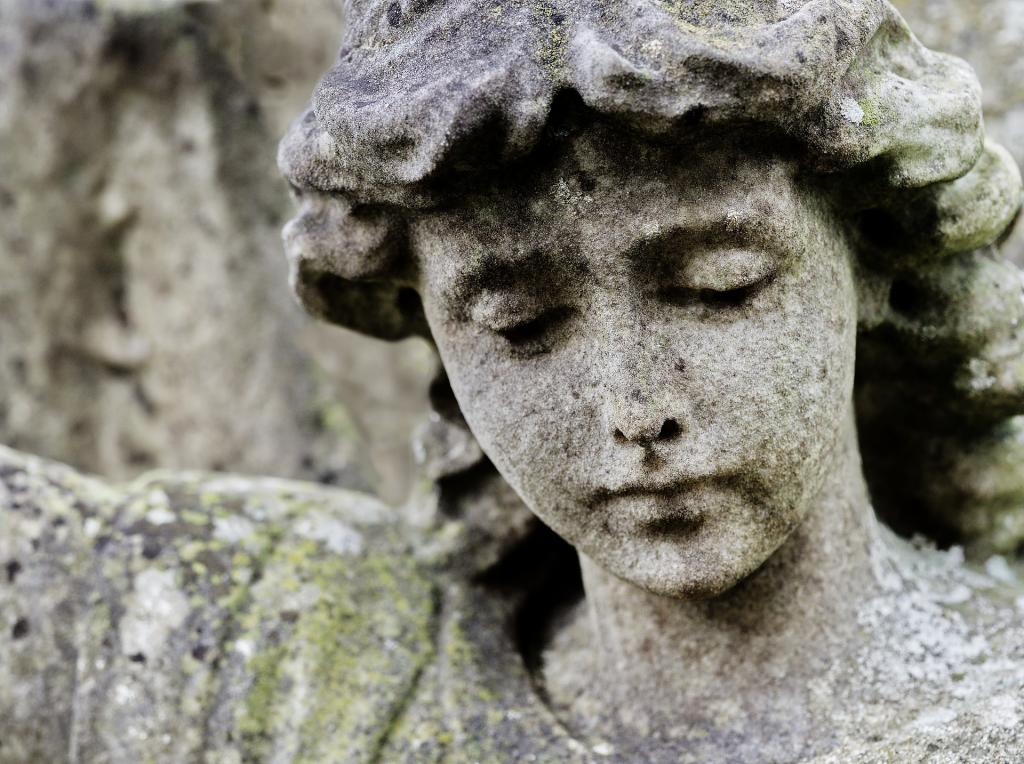
I’ve been putting off the second half of my piece on why the Church’s sexual teaching is harmful, particularly to women, largely because I got mired down in worrying that I don’t know the history well enough. There are primary documents I haven’t read — or that I read years ago. There are entire chapters of Foucault’s History of Sexuality that I haven’t finished. There’s my complete inability to read more than a few pages of Augustine without falling asleep.
But ultimately, the problems with the teaching do not lie buried in the deep past. There are antecedents, sure. There were reasons why the teaching might have seemed to make sense 1600 years ago. But the fact is, when we try to work out why the teaching emerged from antiquity in its present form we are always going to be constructing a narrative out of the finite group of texts that were selected throughout the centuries for deliberate preservation, plus a few scraps here and there that survived by accident.
Most notably, we tend to have relatively little first-hand primary source material from the perspective of women or from Christians who opposed the dominant Nicene branch of Christianity. In cases where women’s writings are preserved, they are generally fragmentary or they have been selected because they exemplified the ideals of the male clergy. The writings of “heretics” are often extant only in selected quotations or paraphrases in works written to refute them.
In any case, even if we put aside my personal deficits, we are still left with the fact that any statement about complex historical discourses is necessarily conjectural, and that we are always working with massive blindspots as an inevitable part of the process by which texts and artifacts are preserved. In other words, there is no amount of research that would ever make me feel that I could speak with confident authority on these matters, so I’m just going to go ahead and write as if this is a blog post and not a doctoral thesis.
The Spilling of Seed
Those caveats in place, we can say with confidence that ancient writers and thinkers were influenced by the scientific and medical beliefs of their time, and that nobody living in the centuries following the death of Christ really understood how human reproduction functions. It was commonly believed that the male made a greater contribution to the reproductive process than the female and that the transmission of spiritual qualities came from him — the woman merely providing sustenance and material. Some theories claimed that both male and female “seed” were required, though the male seed was of course considered superior. Others postulated that everything necessary for life was already present in the sperm and that the womb was basically a field where the male seed could take root and grow.
Many of the ancient theories also postulated that the source of sperm was a process by which the man’s vital principle was concentrated and expended. The same substance that provided a man with vigor, courage and good health was present in ejaculate in a special way, and the creation of this precious fluid was costly to the body that generated it. Theorists did not agree about whether it was an exhaustible resource that, once squandered, could never be recovered, or whether it was renewable. Either way, deliberate sperm retention was seen as a means of increasing your vigor and vitality. We know that even today many spiritual and occult systems propose that you can gain spiritual power by abstaining from sex, and it seems likely that this belief originates in antiquity.
Why does this matter? Well, it provides part of the context for the teaching that arose in the early church and in the first monastic movements. Today, we laugh along with Monty Python’s “Every Sperm is Sacred,” but in the fourth century nobody had any notion that a single ejaculation might contain up to a billion sperm. They didn’t know that sperm are generated regardless of whether a man is sexually active, and that if they are not ejaculated they die. Nor did they understand that the testicles create gametes with great efficiency and that the process is neither perilous nor costly. They had no idea that the benefits some men report upon undertaking a course of continence are mediated by hormones and neurotransmitters, and that persist for a fairly brief duration.
In some cases, as in John Chrystom, contraception was even seen as worse as than murder because the “unformed” fetus was killed before it even had a chance to form. I’m not sure whether Chrysostom would have seen masturbation or barrier methods as equivalent, or whether then, as now, Catholic thinkers believed that oral contraception causes embryonic abortion — the killing of an already conceived child. In any case, the fact that any ejaculation that could not lead to procreation was seen as gravely sinful suggests that ejaculate itself was seen as having a sort of “right” to a receptive womb.
Her Body is Not Her Own
A second important factor in the discourse is the lack of bodily autonomy for sexually active women. Women in the early church were allowed a kind of autonomy that was, at least in practice, often denied to Roman women: they were allowed to categorically refuse to get married. A virgin could secure the right to refuse sex by transferring rights over her body to Jesus. In some cases, this would have left the woman with a great deal of control over her own life and affairs; in others, clerics standing in persona Christi were present and eager to assume control in his name.
For married women, however, bodily autonomy was permitted precisely once: upon marriage, a woman made a permanent and irrevocable decision to give her body over to a man who would then have the right to demand the “marriage debt” from her. In theory, this was a reciprocal obligation (the man did not have a right to refuse his wife), but the fact is that we have numerous accounts of wives desperate to dedicate themselves to “chastity” in marriage (i.e. to escape the obligation to have sex with their husbands), whereas complaints from women about husbands who won’t “render the debt” almost always involve cases of impotence. Regardless of whether the recorded cases represent an actual historical pattern (which is likely), the cost to women was much higher than the cost to men: it was women who had to suffer the burdens of repeated pregnancy, and women who risked death in childbirth.
The combination of a prohibition on abstinence, unless the husband consented, plus a prohibition on any form of birth control (the Church prohibited the rhythm method until the mid 20th Century) or abortion, meant that married women were not permitted to exercise any kind of control over their reproductive capacities. Once a girl (often in her teens, often under pressure from her caregivers) said “I do,” any attempt to secure bodily autonomy became gravely sinful.
It must be noted that these prohibitions did not simply reinforce a system of oppressive duties already existing for women in Roman society. In Rome, the use of contraceptive and abortifacient potions was common, and in those occasional instances where individual emperors decided to prohibit them, enforcement would have been practically impossible. Women in the empire were also legally permitted to secure divorces. Christian sexual teaching saught to restrict women’s options, and, in addition to legal penalties, added the threat of eternal torture to the list of consequences a woman might face if she dared try to limit her pregnancies.
Internalizing Misogyny
Now, we have to be cautious in interpreting these facts. Most of the extant texts are written by celibate men. Many of them appear to have been playing a game of holy one-up-manship — trying to outdo one another in their rejection of “the flesh.” When the celibate classes claimed a higher place for themselves in heaven, how seriously did lay people take that? To what extent were the married woman of late antiquity internalizing the shame that the theologians attached to attached to sex when even procreative sex between spouses, although licit, was seen as tainted by sin and concupiscence? Was the average Christian couple even aware of these extra-biblical prohibitions?
Although it’s difficult to answer these questions for the 4th century, by the time we get to the Middle Ages, we have significant documentary evidence showing the effects of internalized misogyny, and especially internalized beliefs about sexual sin, from women writers themselves. Heloise, Margery Kempe, Julian of Norwich, Catherine of Sienna, Hildegard of Bingen and others provide us with women’s own perspective on chastity, virginity and sexuality. The range of opinion is still restricted: a woman’s chance of being published, and of having her works preserved, in this period are still strongly bound to certain types of performative holiness that often involve an obsession with suffering and sexual sin.
Still, while it remains impossible to speak with any accuracy about the interior sexual ethics of the average medieval peasant, we can see that the women whose perspective we are able to access seem to have taken cultural messages about purity and the sinfulness of woman to heart. Even though Heloise and Hildegard are outliers in many ways (Heloise writes openly about preferring fornication to marriage, and Hildegard seems not to have gotten the memo about being a lowly and feeble female), it remains clear that they are expressing themselves in a context where the sinfulness of women’s sexuality is more or less a given.
Next time, we’ll fast-forward to the present, and talk about the persistence of these attitudes in the modern Church — and why the lip-service that modern popes have paid to feminism does not do nearly enough to abrogate the harm.
Image by Andrew Martin from Pixabay
Next Post

June 22, 2021 Is Religion Evil?
Browse Our Archives
Select a Category Abuse Catholicism Current Events Faith Feminism Philosophy Spirituality Uncategorized
Select a Month September 2021 August 2021 July 2021 June 2021 March 2021 February 2021 July 2020 May 2020 April 2020 March 2020 February 2020
Follow Us!
TAKE THE
Religious Wisdom Quiz
How many books does the Old Testament have?
Select your answer to see how you score.
39 51 50 41
Related posts from Wayward Woman



Conservatives are Blaming the Left for Atlanta Killings....
TRENDING AT PATHEOS Nonreligious

The Parable Of The Sower And The Word...
One of Christ’s most famous parables is that of the sower who...

Rejecting Doom: Christian Hope And Human Action
Christianity is a religion of hope. We are to have hope and...

Why I Choose the Eucharist Over the Sermon
Choose the Eucharist, Not the Sermon What are we supposed to get...

5 Design Elements Found in Spiritually Rooted Homes
Putting Spirituality Into Home Decor Our homes are more than our living...

Credo: A Story of God Told with the...
About 10 years ago, I began to imagine a personal "Credo" that...

The Anatomy of Divine Revelation in Catholic Thought
The claim that God has made Himself known to human beings is...
view all Nonreligious blogs
Ad-Free & Subscriber Log-In Subscription Support
- About Us
- 2026 Calendar
- Videos
- Podcasts
- Library of World Religions
- Faith In Media Tracker
- Advertise With Us
- Write for Us
- Privacy Policy
- Terms of Service
- Do Not Sell My Data
- Contact Us
- Radiant Digital
- Manage Newsletter Subscriptions
- Unsubscribe From Notifications
- Sitemap
Copyright 2008-2026, Patheos. All rights reserved.
Subscription Support Ad-Free & Subscriber Log-In
Follow Patheos