
BuddhistCatholicContemplativeEvangelicalGeneral ChristianHinduJewishLatter-day SaintMuslimNew VisionsProgressive Christian
Beliefs
- Buddhist
- Catholic
- Contemplative
- Evangelical
- General Christian
- Hindu
- Jewish
- Latter-day Saint
- More Voices
- Muslim
- New Visions
- Pagan
- Progressive Christian
Topics
- Religion News
- Food and Religion
- Sports and Religion
- Religious Art
- Religious Music and Entertainment
- Religious Events
- History and Religion
- Style and Religion
- Politics and Religion
- Women in Religion
- Recreation Outdoors and Religion
- Business Finance and Religion
- Careers Workplace and Religion
- Education and Religion
- Family Parenting and Religion
- Health Fitness and Religion
- Home and Religion
- Relationships and Religion
- Technology and Religion
- Travel and Religion
Columnists
- Buddhist Columnists
- Business Finance and Religion Columnists
- Careers Workplace and Religion Columnists
- Catholic Columnists
- Contemplative Columnists
- Education and Religion Columnists
- Evangelists Columnists
- Family Parenting and Religion Columnists
- General Christian Columnists
- Health Fitness and Religion Columnists
- Hindu Columnists
- History and Religion Columnists
- Home and Religion Columnists
- Jewish Columnists
- More Voices Columnists
- Latter Day Columnists
- Muslim Columnists
- New Visions Columnists
- Nonreligious Columnists
- Pagan Columnists
- Politics and Religion Columnists
- Progressive Columnists
- Recreation Outdoors and Religion Columnists
- Relationships and Religion Columnists
- Religion News Columnists
- Religious Art Columnists
- Religious Events Columnists
- Religious Music and Entertainment Columnists
- Sports and Religion Columnists
- Style and Religion Columnists
- Technology and Religion Columnists
- Travel and Religion Columnists
- Women in Religion Columnists
Resource Library
- 2026 Calendar
- Library of World Religions
- The 100 Most Holy Places on Earth
- Patheos Answers
- Podcasts
- Videos
- Faith Leaders Database
- Anglican Episcopalian
- Bahai
- Baptist
- Buddhism
- Christianity
- Confucianism
- Eastern Orthodoxy
- Hinduism
- Holiness and Pentecostal
- ISKCON
- Islam
- Judaism
- Lutheran
- Methodist
- The Church of Jesus Christ of Latter-day Saints
- New Age
- Paganism
- Presbytarian and Reformed
- Protestantism
- Religion Behind the Scenes
- Roman Catholic
- Scientology
- Shia Islam
- Sikhism
- Sufism
- Sunni Islam
- Taoism
- Zen
- See all religions
Research Tools
 Ad-Free & Subscriber Log-In Subscription Support
Ad-Free & Subscriber Log-In Subscription Support
Follow Patheos 

- Trending:
- Forgiveness
- |
- Marriage
- |
- Consciousness
- |
- Death Penalty
- |
- Election
- |
- Halloween
 Wayward Woman
- Home
- Nonreligious
- My Integrity is Not Located in My Vagina
My Integrity is Not Located in My Vagina
Last updated on: February 19, 2021 at 4:03 pm by Melinda Robinson
My Integrity is Not Located in My Vagina 2021-02-19T16:03:08-05:00 Melinda Robinson
Patheos Explore the world's faith through different perspectives on religion and spirituality! Patheos has the views of the prevalent religions and spiritualities of the world.

One of the creepier aspects of being a Catholic were the recurrent, often impassioned reflections of adult men on the state of an adolescent girl’s hymen.
The girl in question was usually Mary. Going back to very early in the Roman church, you find a continual current of fascination with the question of how, exactly, the virgin mother was able to give birth without losing that precious, intact membrane which confirmed her virginity. Theories varied in their details, and most of them were about as probable as a virgin becoming a mother in the first place. Jesus was supposed to have passed through her like light through a window. There was no blood. No pain. And most importantly: No. Tearing.
A Matter of Integrity
This lovely gem of an article on the subject appears on EWTN’s website. The author, William Most, is deeply concerned to make sure that modern Catholics are not led astray on this important point. He cites two different theologians who have suggested that maybe Mary in fact gave birth in a much more ordinary way, as real women do. This error, he feels, requires correction.
Fr. Most quotes the Lateran Council of 649 teaching that if anyone denies that Mary “without loss of integrity brought Him [Jesus] forth, and after His birth preserved her virginity inviolate, let him be condemned.”
I want to draw attention here to a couple of word choices: “integrity” and “inviolate.” My issue is not with the words people used in the 7th Century, but with the decision of a very modern grown man with the authority of Roman Catholic priesthood behind him, to highlight and reproduce these judgements in modern English for a contemporary audience.
There is no way that this man is so ignorant of common contemporary usage that he could possibly be unaware of how an ordinary person is going to understand these words. The very fact that he is offended by the idea of Mary giving birth in an ordinary, physical, human female way reveals a set of deeply misogynist prejudices. At bottom, he thinks that it would be beneath Mary’s dignity, that a broken hymen equals a diminished woman — one whose “integrity” has been “violated.” The unspoken, but ineluctable conclusion must be that every woman who has had sex and given birth has lost something of her integrity in the process.
It isn’t an irrelevant issue. Nor are the Catholics who get obsessed about such things nearly so careful about distinguishing between physical “integrity” and spiritual “integrity” as they pretend they are if you call them on it. The entire reason that anyone cares about Mary’s “physical” integrity is that an intact hymen is seen as a spiritual sign, a veil, like the temple veil, which protects the sacred inner mysteries of the womb. The female body is a temple, and its holy of holies is contained in her reproductive organs.
Dying to Be Pure
As recently as 2018 Pope Francis beatified a young Slovak girl for dying in defensum castitatis. For those of you who do not read Latin, and aren’t familiar with the bizarre intricacies of Catholic sexual hang-ups, this is a form of “martyrdom” where a girl resists being raped to the point of being killed by her attacker. The Latin means that she has died “in defense of purity.” The implication is that a woman’s chastity (usually understood in Catholicism as a virtue) can somehow be damaged by sexual assault.
This happened two years ago, and it was done by a pontiff who has been regarded by most people as more open to feminism than most of his predecessors.
As a Catholic woman, I remember being in discussions about this with Catholic men. I was once informed that being raped was “the worst thing that could possibly happen to me.” Worse than being killed, or having one of my children killed. Being raped would violate my dignity and the dignity of my marriage in a way that mere death would not. I remember wrestling with that in my conscience, trying to make sense of it. Surely, if someone put a gun to my child’s head and told me to lie down, my child’s life would be my first concern. The thought that this would somehow compromise my morals, that it would be a sin, haunted and distressed me.
It has much more deeply haunted and distressed many Catholic women who actually have been sexually assaulted. Although Catholic authorities have stated (usually deep in Vatican documents that people don’t read) that a rape victim is not guilty of sin, the Church continues to promote a cult of physical virginity.
In the story of Maria Goretti, for example, one of her biographers stresses that “rather than take part in one single act of sin — an act for which she could have got absolution in five minutes in her next confession — she let herself be literally hacked to death.” A sin, I stress, for which she, a victim of childhood sexual abuse, could be “absolved.” With attitudes like this, one wonders how the Church ever ended up in the centre of a pedophilia scandal…. But I digress.
Technically the teaching of the Church is that a rape victim does not sin. And yet these stories are told again and again and again. When Catholic women point out that it is harmful to insinuate that a victim dies to avoid sinning, there is an inevitable chorus of Catholic men lined up to defend “tradition.” That is, the traditional belief that a woman (or more often a girl) who resist rape to the point of death dies defending her own virtue.*
Mulieris Indignitatem
There is nothing innocent or accidental about any of this. It gets to the heart of what Catholics mean when they claim (as they so often do) that they, and they alone, truly defend and uphold the dignity of woman against the evil, corrupting force of the secular world.
This claim sounded appealing to me at first, when I converted to Catholicism. After all, I could see that women were frequently exploited and objectified in secular culture, and that it wasn’t uncommon to find “male feminists” who were actually bullies and predators. Yet the longer I was in the Church, the more confused I became.
You see, I had this silly idea that my dignity involved my ontology as a person. That to treat someone with dignity, you have to treat them as if they are a full person, an equal. The person who is thrust out, excluded, socially devalued, subjugated and disempowered is not being treated with dignity. Even if you create an idealized statue of someone, place it in a position of high honour and bestow every worthy title upon it — if you treat the actual person as if their beliefs, opinions, experiences and needs are unimportant, you deny their dignity. The statue and the high-sounding words are just salt in the wound.
The longer I remained in the Catholic Church the more I realized that this is the consistent modus operandi of Church leadership in regards to women. Mary is put on a pedestal, women who die defending their “virtue” are venerated, and motherhood is spoken of in glowing terms. And yet, when decisions are being made about how women must perform their femininity, how they must use their female bodies, and conduct their most intimate affairs, women are never allowed in the room.
The source of Catholic gaslighting about the “dignity of woman” lies in the fact that at bottom, women within Catholicism are not quite persons in the same way that men are. They are a different “complementary” type of person. They have a unique dignity and a unique vocation. A unique dignity which just happens to be expressed most fully in how they use their sexual organs.
This is why a rapist can undermine a woman’s “virtue.” Because her virtue is not something that exists inside of her, in her thoughts, and her feelings, and her intentions. Her value is a function of whether she is a pristine, undisturbed field just waiting for a man to put his plough to her. A virgin is a woman who has reserved this value from any man, holding it in reserve for God. An intact hymen is the tamper-proof seal which vouchsafes the objective value of the goods.
Catholic attempts to deny this, to minimize or obscure the obvious valuations being made by traditional Catholic writers and traditional Catholic values, are either delusional or they are a form of gaslighting. The only sense, the only way, in which the institutional Church particularly stands up for the dignity of women is in the area of sexuality. Their concern for women’s “dignity” is centered on a concern for women’s chastity.
When it comes to the rights that women want for ourselves, the Church is invariably either obstructive or it lags far behind most secular institutions. From the right the right to vote to the right to work outside of the home, the right to leave abusive marriages to the right to effective contraception, the Church has been the first to take a stand against women’s empowerment, and the last to yield when the battle is lost.
Could it be that this is in part because the Church’s understanding of what a woman is, and what her dignity involves, is built on thousands of years during which are identities, our virtue, our worth, and our integrity were consistently reduced to the state of our hymens?
* I could give a link on this, but I refuse to give oxygen to the kind of publications that print this kind of tripe. You’ll have to trust me: I was a Catholic writer for over a decade. These attitudes are distressingly widespread. Like, to the point where I encountered yet another instance of it in between drafting this blog post and editing it.
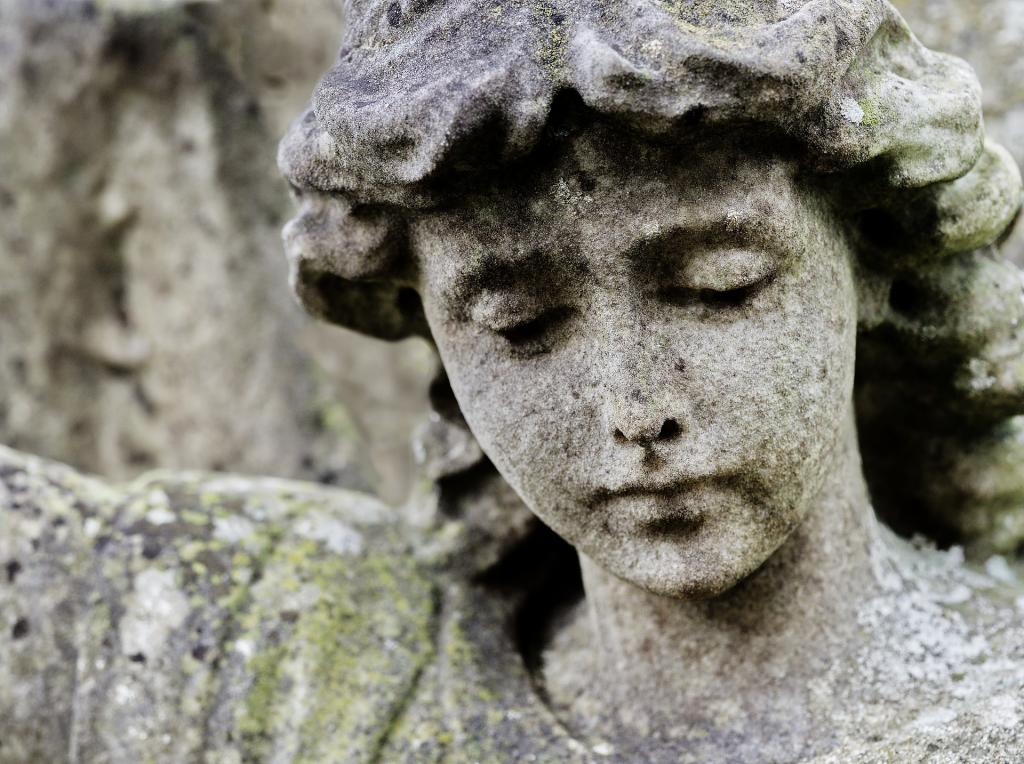
Image by Sue Krebs from Pixabay
Previous Post

July 16, 2020
How To Talk About Domestic Violence from the Pulpit
Next Post
February 28, 2021 The Embrace of Truth: How Dogma Frustrates the Love of Wisdom
Browse Our Archives
Select a Category Abuse Catholicism Current Events Faith Feminism Philosophy Spirituality Uncategorized
Select a Month September 2021 August 2021 July 2021 June 2021 March 2021 February 2021 July 2020 May 2020 April 2020 March 2020 February 2020
Follow Us!
TAKE THE
Religious Wisdom Quiz
How many books does the Old Testament have?
Select your answer to see how you score.
39 51 50 41
Related posts from Wayward Woman
The Hatred that Calls Itself Love pt II:...

Conservatives are Blaming the Left for Atlanta Killings....

The Hatred that Calls Itself Love: On Homophobia...
TRENDING AT PATHEOS Nonreligious

The Parable Of The Sower And The Word...
One of Christ’s most famous parables is that of the sower who...

Rejecting Doom: Christian Hope And Human Action
Christianity is a religion of hope. We are to have hope and...

Why I Choose the Eucharist Over the Sermon
Choose the Eucharist, Not the Sermon What are we supposed to get...

5 Design Elements Found in Spiritually Rooted Homes
Putting Spirituality Into Home Decor Our homes are more than our living...

Credo: A Story of God Told with the...
About 10 years ago, I began to imagine a personal "Credo" that...

The Anatomy of Divine Revelation in Catholic Thought
The claim that God has made Himself known to human beings is...
view all Nonreligious blogs
Ad-Free & Subscriber Log-In Subscription Support
- About Us
- 2026 Calendar
- Videos
- Podcasts
- Library of World Religions
- Faith In Media Tracker
- Advertise With Us
- Write for Us
- Privacy Policy
- Terms of Service
- Do Not Sell My Data
- Contact Us
- Radiant Digital
- Manage Newsletter Subscriptions
- Unsubscribe From Notifications
- Sitemap
Copyright 2008-2026, Patheos. All rights reserved.
Subscription Support Ad-Free & Subscriber Log-In
Follow Patheos