
BuddhistCatholicContemplativeEvangelicalGeneral ChristianHinduJewishLatter-day SaintMuslimNew VisionsProgressive Christian
Beliefs
- Buddhist
- Catholic
- Contemplative
- Evangelical
- General Christian
- Hindu
- Jewish
- Latter-day Saint
- More Voices
- Muslim
- New Visions
- Pagan
- Progressive Christian
Topics
- Religion News
- Food and Religion
- Sports and Religion
- Religious Art
- Religious Music and Entertainment
- Religious Events
- History and Religion
- Style and Religion
- Politics and Religion
- Women in Religion
- Recreation Outdoors and Religion
- Business Finance and Religion
- Careers Workplace and Religion
- Education and Religion
- Family Parenting and Religion
- Health Fitness and Religion
- Home and Religion
- Relationships and Religion
- Technology and Religion
- Travel and Religion
Columnists
- Buddhist Columnists
- Business Finance and Religion Columnists
- Careers Workplace and Religion Columnists
- Catholic Columnists
- Contemplative Columnists
- Education and Religion Columnists
- Evangelists Columnists
- Family Parenting and Religion Columnists
- General Christian Columnists
- Health Fitness and Religion Columnists
- Hindu Columnists
- History and Religion Columnists
- Home and Religion Columnists
- Jewish Columnists
- More Voices Columnists
- Latter Day Columnists
- Muslim Columnists
- New Visions Columnists
- Nonreligious Columnists
- Pagan Columnists
- Politics and Religion Columnists
- Progressive Columnists
- Recreation Outdoors and Religion Columnists
- Relationships and Religion Columnists
- Religion News Columnists
- Religious Art Columnists
- Religious Events Columnists
- Religious Music and Entertainment Columnists
- Sports and Religion Columnists
- Style and Religion Columnists
- Technology and Religion Columnists
- Travel and Religion Columnists
- Women in Religion Columnists
Resource Library
- 2026 Calendar
- Library of World Religions
- The 100 Most Holy Places on Earth
- Patheos Answers
- Podcasts
- Videos
- Faith Leaders Database
- Anglican Episcopalian
- Bahai
- Baptist
- Buddhism
- Christianity
- Confucianism
- Eastern Orthodoxy
- Hinduism
- Holiness and Pentecostal
- ISKCON
- Islam
- Judaism
- Lutheran
- Methodist
- The Church of Jesus Christ of Latter-day Saints
- New Age
- Paganism
- Presbytarian and Reformed
- Protestantism
- Religion Behind the Scenes
- Roman Catholic
- Scientology
- Shia Islam
- Sikhism
- Sufism
- Sunni Islam
- Taoism
- Zen
- See all religions
Research Tools
 Ad-Free & Subscriber Log-In Subscription Support
Ad-Free & Subscriber Log-In Subscription Support
Follow Patheos 

- Trending:
- Forgiveness
- |
- Marriage
- |
- Consciousness
- |
- Death Penalty
- |
- Election
- |
- Halloween
 Way Station in the Wilderness
- Home
- Catholic
- Book Review: Glorious Weakness
Book Review: Glorious Weakness
Last updated on: April 2, 2019 at 9:29 pm by Kristy Burmeister
Book Review: Glorious Weakness 2019-04-02T21:29:30-04:00 Kristy Burmeister
Patheos Explore the world's faith through different perspectives on religion and spirituality! Patheos has the views of the prevalent religions and spiritualities of the world.
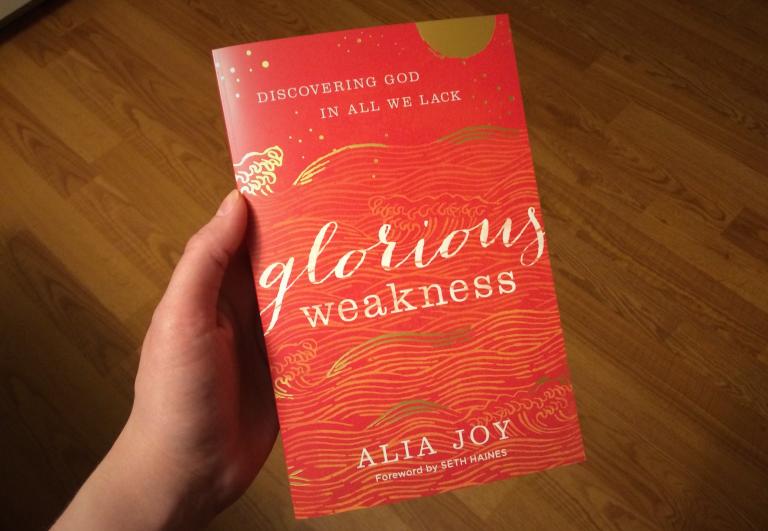
Alia Joy’s Glorious Weakness: Discovering God in All We Lack is an antidote to glossy, sickly sweet, pray-yourself-up-by-your-bootstraps books.
There aren’t many Christian books I feel comfortable recommending, especially Christian books that touch on weakness, loss, mental and physical illness, or poverty. Most of these books are full of prosperity gospel promises that if we just have enough faith, we’ll have the comfortable life God wants for us, which of course, ignores the fact that Christians are never promised a comfortable life.
I read through this book more slowly than I expected. I kept pausing to marvel at how Alia Joy so clearly gets it. She “gets it” because she’s lived it. In this book, she describes her miscarriage, sexual abuse, the loss of her father, her treatment for leukemia, financial struggles, and physical and mental illnesses.
Toward the end of the book she mentions feeling like an impostor among writers with more credentials behind their names. She writes of her self-doubt:
“I am an overweight, mentally-ill high-school dropout, well acquainted with financial hardship and lack, who writes her feelings on the internet and sometimes struggles with suicidal ideation. I can’t even remember to put the laundry from the washer into the dryer without having to rerun it a few times. How could I possibly have anything to contribute?” -Alia Joy
I would answer, “In a culture that views weakness, poverty, and need as something to be ashamed of, you have everything to contribute. You are exactly who the church should be listening to.”
There were many times I read Alia’s words and saw my own life reflected back to me. That’s an unusual experience for someone who didn’t grow up middle-class and doesn’t have any impressive credentials either. I rarely see someone like myself in these types of Christian books.
We talk about poverty as if it’s something to be ashamed of. We’re not supposed to talk about our SNAP benefits or putting our kids on the free lunch program. We’re not supposed to talk about how stressful it is when we’re living paycheck to paycheck, and we’re terrified the car will break down because we don’t have the money to fix it, and if we don’t fix it, we can’t get to work. Being poor is seen as a moral failure, so we cover it up and pretend everything is fine so nobody judges us. So we don’t make anyone who has more than they need uncomfortable with our not-enough.
Alia presents us with a different view of poverty. It’s not something to be ashamed of and cover up.
“What happens when our pastor is poverty? What happens when we are discipled by our lack instead of disciplined for it?” -Alia Joy
Some of us lead more comfortable, safer lives than others. That’s a fact. When Christians don’t recognize that fact, we can do real damage. One of the most striking stories from Glorious Weakness is when Alia wrote about her mother attending a women’s Bible study group. When asked why her family had returned from the mission field, she shared they had returned because of Alia’s leukemia diagnosis. She shared her broken heart over having to abandon her dream of being a missionary, and uprooting her family’s life while dealing with her daughter’s very serious illness. She spoke about being practically homeless while the family was in Holland for Alia’s treatment and how hard it was for her son to deal with all that the family was going through. She shared about her family’s financial struggles and how her mother now had Alzheimer’s.
A woman in the group spoke up after she finished:
“‘I know just what you mean,’ a woman chimed in after my mom shared. ‘I had a flat tire on the freeway last week and it was so stressful waiting for a tow.’ My mom’s eyes dropped to her lap. There were no more words to be said. It was as though all my mother’s battered soul was just passed by, and so she learned not to speak up in groups. She learned not to share our stories because no one understood.” -Alia Joy
I know this woman. I think we all know this woman. The woman (or man) who thinks a minor inconvenience is comparable to sitting beside your child’s hospital bed. The person who doesn’t understand what it is to suffer, and in their lack of understanding, causes harm to people who do understand.
We don’t want to sit with people in their pain. We want to throw out some quick comment about how “we all have it bad” or offer some simple advice so they’ll “get better” and we don’t have to listen to their reality anymore. We don’t honor suffering and weakness.
“Are we people who bear one another’s burdens well? Or do we spend most of our time trying to convince them that it couldn’t possibly be that heavy or that they don’t have that much further to carry it?” –Alia Joy
I’m impressed with what Alia Joy has accomplished with Glorious Weakness. When I read Christian books, I’m usually frowning and shaking my head at how ignorant the author is. This time, I was nodding along as I read.
We need more voices like Alia Joy’s. We need more books like this.
This is a book that shows people who love God, but haven’t had a comfortable time, they aren’t alone. And they don’t have to pretend everything is great when it’s not. We might be sitting in a pit, but God is in the pit with us.
This is a book that challenges those living safe, comfortable lives to not turn away from need–whether their own or their neighbor’s. That it’s not shameful to be weak or poor or ill.
Our weakness can be a gift.

Photo provided by Alia Joy
Alia Joy is a speaker and writer who weaves beauty through even the most broken stories. Her raw vulnerability and unique perspective make her a trusted voice writing about mental and physical illness, abuse, race, body image, poverty, and hope. She lives in Oregon with her family, where weakness and glory converge daily. Her blog, AliaJoy.com, centers on her reliance on Christ, and offers insight into her life, family, and faith journey.
You can follow Alia Joy on Facebook, Twitter, and Instagram.
Previous Post

March 30, 2019
Choosing a Confirmation Name
Next Post

April 12, 2019 Wolves and Ghosts at Confession
Browse Our Archives
Select a Category Bible Book Review Catholicism Christianity Church Trauma Current Events Feminism Politics Poverty Racism Sacred Forms Saints Sexualized Violence Suffering Writing
Select a Month February 2020 January 2020 December 2019 October 2019 June 2019 May 2019 April 2019 March 2019 February 2019 January 2019 December 2018 November 2018 October 2018 September 2018 August 2018 July 2018
Follow Us!
TAKE THE
Religious Wisdom Quiz
Where was Paul when he had a vision of a man from Macedonia pleading for help?
Select your answer to see how you score.
Corinth Athens Philippi Troas
Related posts from Way Station in the Wilderness

Online Christian Communities: An Interview with 4 Leaders
Review: The #MeToo Reckoning by Ruth Everhart
Sacred Forms: The Postpartum Body
TRENDING AT PATHEOS Catholic

Creation, Preservation, and Teleology in Catholic Theology
As I write this, it is very early Monday morning. Like millions...

The Parable Of The Sower And The Word...
One of Christ’s most famous parables is that of the sower who...

Rejecting Doom: Christian Hope And Human Action
Christianity is a religion of hope. We are to have hope and...

Why I Choose the Eucharist Over the Sermon
Choose the Eucharist, Not the Sermon What are we supposed to get...

5 Design Elements Found in Spiritually Rooted Homes
Putting Spirituality Into Home Decor Our homes are more than our living...

Credo: A Story of God Told with the...
About 10 years ago, I began to imagine a personal "Credo" that...
view all Catholic blogs
Ad-Free & Subscriber Log-In Subscription Support
- About Us
- 2026 Calendar
- Videos
- Podcasts
- Library of World Religions
- Faith In Media Tracker
- Advertise With Us
- Write for Us
- Privacy Policy
- Terms of Service
- Do Not Sell My Data
- Contact Us
- Radiant Digital
- Manage Newsletter Subscriptions
- Unsubscribe From Notifications
- Sitemap
Copyright 2008-2026, Patheos. All rights reserved.
Subscription Support Ad-Free & Subscriber Log-In
Follow Patheos