
BuddhistCatholicContemplativeEvangelicalGeneral ChristianHinduJewishLatter-day SaintMuslimNew VisionsProgressive Christian
Beliefs
- Buddhist
- Catholic
- Contemplative
- Evangelical
- General Christian
- Hindu
- Jewish
- Latter-day Saint
- More Voices
- Muslim
- New Visions
- Pagan
- Progressive Christian
Topics
- Religion News
- Food and Religion
- Sports and Religion
- Religious Art
- Religious Music and Entertainment
- Religious Events
- History and Religion
- Style and Religion
- Politics and Religion
- Women in Religion
- Recreation Outdoors and Religion
- Business Finance and Religion
- Careers Workplace and Religion
- Education and Religion
- Family Parenting and Religion
- Health Fitness and Religion
- Home and Religion
- Relationships and Religion
- Technology and Religion
- Travel and Religion
Columnists
- Buddhist Columnists
- Business Finance and Religion Columnists
- Careers Workplace and Religion Columnists
- Catholic Columnists
- Contemplative Columnists
- Education and Religion Columnists
- Evangelists Columnists
- Family Parenting and Religion Columnists
- General Christian Columnists
- Health Fitness and Religion Columnists
- Hindu Columnists
- History and Religion Columnists
- Home and Religion Columnists
- Jewish Columnists
- More Voices Columnists
- Latter Day Columnists
- Muslim Columnists
- New Visions Columnists
- Nonreligious Columnists
- Pagan Columnists
- Politics and Religion Columnists
- Progressive Columnists
- Recreation Outdoors and Religion Columnists
- Relationships and Religion Columnists
- Religion News Columnists
- Religious Art Columnists
- Religious Events Columnists
- Religious Music and Entertainment Columnists
- Sports and Religion Columnists
- Style and Religion Columnists
- Technology and Religion Columnists
- Travel and Religion Columnists
- Women in Religion Columnists
Resource Library
- 2026 Calendar
- Library of World Religions
- The 100 Most Holy Places on Earth
- Patheos Answers
- Podcasts
- Videos
- Faith Leaders Database
- Anglican Episcopalian
- Bahai
- Baptist
- Buddhism
- Christianity
- Confucianism
- Eastern Orthodoxy
- Hinduism
- Holiness and Pentecostal
- ISKCON
- Islam
- Judaism
- Lutheran
- Methodist
- The Church of Jesus Christ of Latter-day Saints
- New Age
- Paganism
- Presbytarian and Reformed
- Protestantism
- Religion Behind the Scenes
- Roman Catholic
- Scientology
- Shia Islam
- Sikhism
- Sufism
- Sunni Islam
- Taoism
- Zen
- See all religions
Research Tools
 Ad-Free & Subscriber Log-In Subscription Support
Ad-Free & Subscriber Log-In Subscription Support
Follow Patheos 

- Trending:
- Forgiveness
- |
- Marriage
- |
- Consciousness
- |
- Death Penalty
- |
- Election
- |
- Halloween
 Way Station in the Wilderness
- Home
- Catholic
- Sacred Forms Series: An Introduction
Sacred Forms Series: An Introduction
Last updated on: November 28, 2018 at 7:01 am by Kristy Burmeister
Sacred Forms Series: An Introduction 2018-11-27T12:55:42-05:00 Kristy Burmeister
Patheos Explore the world's faith through different perspectives on religion and spirituality! Patheos has the views of the prevalent religions and spiritualities of the world.
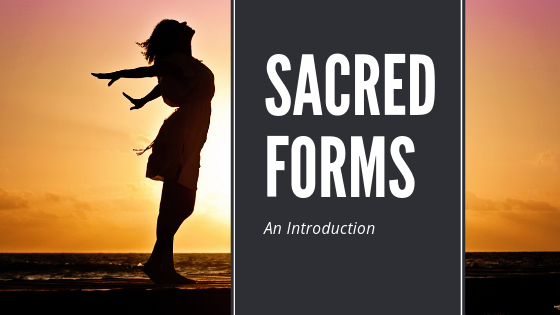
I’m consistently surprised by just how little Christians tend to know about sex or the female body. For two things we usually obsess over, you’d think we’d understand both better.
Many of us grew up in homes where talking openly about our bodies was considered crude or sinful, so we shy away from it. But it’s neither. We’re created in the image of God. How can talking about our bodies in a way that honors them be sinful?
I can’t count the number of conversations I’ve been involved with about sexual assault or premarital sex or NFP where grown adults, who claim to know all about it, reveal they don’t even understand the basics of female anatomy. That’s a problem.
To show I understand, let me share a personal story with you:
When I was fourteen, I knew all about menstruation. My mother had already talked to me about it, so I knew you could get pregnant after you started getting your period, and I knew women got their periods once a month.
We’d also watched an educational video at school in junior high. That video is permanently etched into my brain because you don’t forget seeing a mother make pancakes in the shape of a uterus while explaining menstruation to her daughter. While I was fairly sheltered (we weren’t allowed to say things like “butt” in my house), I was more educated than some of the kids I knew.
I decided to read through the entire Bible that year. I was in Leviticus when a verse really stumped me. Leviticus 20:18 said men couldn’t “lie with” a woman who was on her period, but that didn’t make any sense to me.
For some reason, I’d gotten it into my head that a woman could only get pregnant while she was on her period.
I couldn’t figure out why would God make a rule preventing women from getting pregnant. The best I could figure was it didn’t count if you accidentally had sex with a woman on her period, so every child was conceived through accidental sex during a woman’s period. I chalked it up to God coming up with a form of natural birth control, with only rare conceptions when a woman unexpectedly started her period in the middle of marital relations. That way women weren’t constantly pregnant. “Go forth and multiply, but, like, not too much.” (My mental leaps there probably say a lot about how I’ve always viewed God as the protector of the vulnerable.)
Obviously, I was seriously wrong about how women get pregnant.
Somewhere in that talk with my mother, in all those pamphlets I’d read at school, in that educational video, and even in health class, nobody had ever explained that ovulation happens before menstruation. I’d thought it all happened on the same day. I learned the truth by reading Seventeen magazine in the school library.
I’ve run into teenagers who think you can’t get pregnant the first time you have sex. Who think you definitely get pregnant every time you have sex. Who don’t even understand how you get pregnant at all.
I’ve run into adults who are just as ignorant. Men who think every woman in the world has the exact same menstrual cycle. (I guess we all start bleeding at the full moon, like werewolves, but with better hair.) Men who think women can somehow lock down their bodies to prevent being raped. Women who don’t know it’s normal not to bleed the first time you have sex.
We’ve got a lot of people running around with bad information, and some of these people are making decisions that affect the rest of us. The least we can do is make sure we have our facts straight.
I’m going to do my part. I’m starting a weekly series here on sex and women’s bodies. I’m not a doctor, but I do have a vagina and the ability to do research without blushing.
We’ll explore anatomy, intercourse, menstruation, pregnancy, morality, abuse, and myths.
And vaginas. You’re going to be reading a lot about vaginas, so practice getting comfortable with the word.
Which brings me back to what I want to address in this introductory post. Talking about our bodies isn’t crude or sinful. I understand why some people are deeply uncomfortable with conversations about genitalia. We’ve been taught vaginas are dirty and dangerous.
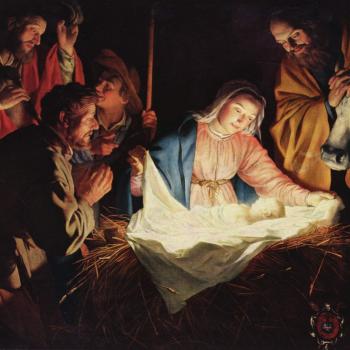
As Catholics, we venerate saints who had all the same female body parts women today have. Most of our female saints had periods. Mary had a vagina, and she used it to deliver Jesus to us. Vaginas are sacred, y’all. Why should we be afraid of women’s bodies when God himself grew within a woman’s body?
As I was brainstorming ideas for this series, Jessica Mesman Griffith wrote a post for Sick Pilgrim that I loved. She talks about that feeling of being grotesque women so often experience, and then reflects on Mary and our sameness.
“Meditating on these images of Mary not just as maiden or mother but as woman, I find myself less grotesque. I can imagine my body as other than a site of pain, shame, or even mystery or titillation.” –Jessica Mesman Griffith
Female bodies have been thrown into the villain role. Forces of evil often attack women through our bodies. We’re taught to be ashamed of having breasts or having periods. We’re denied access to information about how our bodies work. When men come along and objectify our bodies, the blame shifts to us.
Let’s change that.
I know what it’s like to bust through all those mental blocks that are telling you it’s not Christlike to talk about these things. We have to remember talking about sex isn’t the same as encouraging lust. There’s nothing erotic about discussing anatomy and how our bodies function. I believe having a better understanding of anatomy and sex can actually help us resist temptation. We can learn to talk about the human body in ways that don’t exploit our brothers and sisters, but allows us to honor one another instead.
It’s important for us to expand our vocabularies to include the names of our body parts. How I can feel comfortable discussing an issue with my doctor if I can’t even bring myself to say the word “vagina?” How can a child tell an adult about their sexual abuse when they’ve been shamed into never using the word “penis?” These aren’t bad words and they’re not bad body parts either.
Our bodies aren’t dirty or bad. Our bodies are weird and beautiful and awkward and miraculous.
If you’re a woman, I hope you love yourself enough to learn more about your body. Even if you never have sex, you still need to know how your body functions.
If you’re a man, I hope you love women enough to honor them by learning more about their bodies. I especially hope this would be true of any man who is a husband, father, or is in a leadership position. You men can do a lot to influence our cultural views of women in positive ways, and that starts with educating yourselves.
I look forward to exploring our sacred bodies with you.
Previous Post
November 26, 2018
Understanding Sex Abuse: An Interview with Cyndie Randall, MA, LLPC
Next Post

December 3, 2018 Desperately Seeking Bethlehem: Advent and Seasonal Depression
Browse Our Archives
Select a Category Bible Book Review Catholicism Christianity Church Trauma Current Events Feminism Politics Poverty Racism Sacred Forms Saints Sexualized Violence Suffering Writing
Select a Month February 2020 January 2020 December 2019 October 2019 June 2019 May 2019 April 2019 March 2019 February 2019 January 2019 December 2018 November 2018 October 2018 September 2018 August 2018 July 2018
Follow Us!
TAKE THE
Religious Wisdom Quiz
What kind of animal did Jesus ride into Jerusalem?
Select your answer to see how you score.
Ox Camel Horse Donkey
Related posts from Way Station in the Wilderness

Online Christian Communities: An Interview with 4 Leaders
Review: The #MeToo Reckoning by Ruth Everhart
Sacred Forms: The Postpartum Body
TRENDING AT PATHEOS Catholic

Rejecting Doom: Christian Hope And Human Action
Christianity is a religion of hope. We are to have hope and...

It’s What Comes From Within Which Matters
One of the most difficult things for us to understand is why...

Why I Choose the Eucharist Over the Sermon
Choose the Eucharist, Not the Sermon What are we supposed to get...

5 Design Elements Found in Spiritually Rooted Homes
Putting Spirituality Into Home Decor Our homes are more than our living...

Credo: A Story of God Told with the...
About 10 years ago, I began to imagine a personal "Credo" that...

The Anatomy of Divine Revelation in Catholic Thought
The claim that God has made Himself known to human beings is...
view all Catholic blogs
Ad-Free & Subscriber Log-In Subscription Support
- About Us
- 2026 Calendar
- Videos
- Podcasts
- Library of World Religions
- Faith In Media Tracker
- Advertise With Us
- Write for Us
- Privacy Policy
- Terms of Service
- Do Not Sell My Data
- Contact Us
- Radiant Digital
- Manage Newsletter Subscriptions
- Unsubscribe From Notifications
- Sitemap
Copyright 2008-2026, Patheos. All rights reserved.
Subscription Support Ad-Free & Subscriber Log-In
Follow Patheos