
BuddhistCatholicContemplativeEvangelicalGeneral ChristianHinduJewishLatter-day SaintMuslimNew VisionsProgressive Christian
Beliefs
- Buddhist
- Catholic
- Contemplative
- Evangelical
- General Christian
- Hindu
- Jewish
- Latter-day Saint
- More Voices
- Muslim
- New Visions
- Pagan
- Progressive Christian
Topics
- Religion News
- Food and Religion
- Sports and Religion
- Religious Art
- Religious Music and Entertainment
- Religious Events
- History and Religion
- Style and Religion
- Politics and Religion
- Women in Religion
- Recreation Outdoors and Religion
- Business Finance and Religion
- Careers Workplace and Religion
- Education and Religion
- Family Parenting and Religion
- Health Fitness and Religion
- Home and Religion
- Relationships and Religion
- Technology and Religion
- Travel and Religion
Columnists
- Buddhist Columnists
- Business Finance and Religion Columnists
- Careers Workplace and Religion Columnists
- Catholic Columnists
- Contemplative Columnists
- Education and Religion Columnists
- Evangelists Columnists
- Family Parenting and Religion Columnists
- General Christian Columnists
- Health Fitness and Religion Columnists
- Hindu Columnists
- History and Religion Columnists
- Home and Religion Columnists
- Jewish Columnists
- More Voices Columnists
- Latter Day Columnists
- Muslim Columnists
- New Visions Columnists
- Nonreligious Columnists
- Pagan Columnists
- Politics and Religion Columnists
- Progressive Columnists
- Recreation Outdoors and Religion Columnists
- Relationships and Religion Columnists
- Religion News Columnists
- Religious Art Columnists
- Religious Events Columnists
- Religious Music and Entertainment Columnists
- Sports and Religion Columnists
- Style and Religion Columnists
- Technology and Religion Columnists
- Travel and Religion Columnists
- Women in Religion Columnists
Resource Library
- 2026 Calendar
- Library of World Religions
- The 100 Most Holy Places on Earth
- Patheos Answers
- Podcasts
- Videos
- Faith Leaders Database
- Anglican Episcopalian
- Bahai
- Baptist
- Buddhism
- Christianity
- Confucianism
- Eastern Orthodoxy
- Hinduism
- Holiness and Pentecostal
- ISKCON
- Islam
- Judaism
- Lutheran
- Methodist
- The Church of Jesus Christ of Latter-day Saints
- New Age
- Paganism
- Presbytarian and Reformed
- Protestantism
- Religion Behind the Scenes
- Roman Catholic
- Scientology
- Shia Islam
- Sikhism
- Sufism
- Sunni Islam
- Taoism
- Zen
- See all religions
Research Tools
 Ad-Free & Subscriber Log-In Subscription Support
Follow Patheos 

- Trending:
- Advent
- |
- Forgiveness
- |
- Thanksgiving
- |
- Election
- |
- Seasonal Holidays
- |
- Marriage
 Way Station in the Wilderness
- Home
- Catholic
- 5 Ways You Might Be Enabling Abuse in the Church
5 Ways You Might Be Enabling Abuse in the Church
Last updated on: August 2, 2018 at 6:28 pm by Kristy Burmeister
5 Ways You Might Be Enabling Abuse in the Church 2018-08-02T18:28:55-04:00 Kristy Burmeister
Patheos Explore the world's faith through different perspectives on religion and spirituality! Patheos has the views of the prevalent religions and spiritualities of the world.

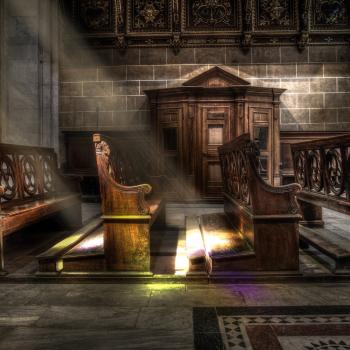
Credit: Pixabay
When we look at an abuse case, it’s easy to make the mistake of believing there are only two parties involved: the predator and the victim.
But there’s a third party who is often present: the bystander.
We put most of the burden of stopping predators onto the shoulders of their victims. We demand an already vulnerable person report their abuse and go through that grueling (and often spiritually and psychological damaging) process with very little hope of a positive outcome.
Sometimes it all seems hopeless, but there are plenty of things bystanders can do to create an environment where abusers can’t hide.
If you’re doing any of these things, I encourage you to reflect on what sort of impact those actions have.
Do you pretend abuse doesn’t happen or couldn’t happen in your church?
Abuse can happen in any church. Catholic, Lutheran, Baptist, Mennonite… It doesn’t matter. We all have abuse in our churches that goes unchallenged. We all have enablers who aren’t committing the abuse, but are the reason it’s allowed to go on.
Here’s the thing: Everyone knows. Everyone knows we have an abuse problem. People already (rightly) have concerns about trusting us. It’s not helpful to pretend it isn’t going on.
We might think we’re protecting the reputation of a religious community we love. Really, we’re just signaling to everyone out there that we don’t take abuse seriously.
“If you are abused in my church, oh well, because I’ll ignore it.”
A few years ago, I was looking into going back to church after steering clear of Christians for about ten years. As a survivor of a church and a Christian college that enabled abusive behaviors, it was seriously stressful. I couldn’t walk into a church building without asking myself, “What if it happens here too? What if all churches are full of enablers?”
The first Sunday I visited an ELCA church, I hung around after service for coffee and a group of women surrounded me. We did the typical get-to-know-you introductions, and then they started telling me everything that was wrong with their church, right down to the “old bitty” who chased off the teenage drummer because he wore a hat in the sanctuary.
It may sound strange, but that’s what kept me walking through their door until I moved. I can’t trust a church who puts on a fake smile and pretends it doesn’t have some dirt under the pews. But I can trust a church that’s willing to warn me about the dangers I might face.
We need to set realistic expectations. We don’t need to pretend to be a safe place if we aren’t. Right now, we aren’t. That doesn’t mean nobody should come. I mean, I’m here, right? What it means is we need to be honest because honesty goes a long way toward keeping people safe.
The reality is, there are predators inside the walls. We need to warn people about that and do everything we can to keep them safe while we work toward making the church a place that actually is safe.
Do you focus on physical purity too much?
I always have to get this out of the way before talking about purity culture. There’s nothing wrong with chastity. I’m not advocating for premarital sex.
Now that I’ve said that, Christian purity culture is mostly garbage. (Fight me IRL. Except don’t because I’m a pacifist and my nose is already a little crooked.)
If we’re focusing on physical purity (virginity) too much, what sort of a message does that sent to victims of sexual abuse?
When you tell someone they’re “damaged goods” or have less value as a future spouse just because they’ve had sex outside of marriage, how do you think that makes a rape victim feel? Do you think he or she might be less likely to report their sexual assault so they won’t carry around the stigma of not being a virgin anymore? (The answer is yes. I’ve heard plenty of those stories from survivors.)
If we’re squeamish about naming body parts and how they function, how is a victim supposed to report their abuse? They don’t have the vocabulary for it or they’re too embarrassed to talk about it.
Talking openly about our bodies doesn’t lead to wild sex parties. It leads to people feeling comfortable with their bodies. It leads to less shame and fewer opportunities for abusers to take advantage of someone’s ignorance or embarrassment.
Do you make it dangerous for victims to come forward?
If you’ve spoken about abuse in the church, what have you said? Have you spoken about victims as if they’re threatening the church by coming forward? That they might undermine the authority of the church and lead people away?
Are you wording your statements to sound like you view victims as more of a threat than predators?
Do you pick apart a victim’s story when you aren’t part of the official investigation?
Do you gossip about the victim? (Let me be clear: Outing abusers is not gossip. Sharing information about the victim that has nothing to do with the abuse case is gossip.)
It’s easy to say things that make it harder for victims to feel safe coming forward. We have to be especially careful when talking about these cases. We can’t send signals (even unintentionally) that would make a victim less likely to come forward.
Do you focus on extending forgiveness and help to the predator while ignoring their victim?
Christians love a good redemption story. It validates us. If someone could go around doing awful things, then repent and change their lives, that means we’ve been getting it right this whole time.
But we have to face it. A sexual predator is very unlikely to truly repent and change their ways. Just because it’s possible doesn’t make it probable.
When we rally around a predator and offer them forgiveness (which isn’t ours to offer if he hasn’t abused us), we think we’re doing the Christian thing.
When we pop off with, “We’re all sinners,” or, “The church is a hospital for the sick,” we’re minimizing the abuse. We want to be forgiven for all the things we’ve done, so we rush to offer that same forgiveness to predators. In some cases, it’s more about us feeling better about our own sins than it is about what the predator has done.
While we’re surrounding the predator, what are we doing for the victim?
It’s often easier to support the predator instead of the victim. The predator, who has already demonstrated he can’t be trusted, knows all the right things to say. He wants us to forgive him, which doesn’t just let him off the hook. It lets us off the hook too. Because if we believe he’s changed, we don’t have to do anything.
On the other hand, the victim’s very presence demands we make uncomfortable, difficult decisions.
Are we supporting the predator because we truly believe he’s changed, or are we supporting the predator because we don’t want to change?
Do you immediately jump to “forgiveness” when a victim comes forward?
When a victim comes forward, it’s inappropriate to demand forgiveness from them. Leave some room for the Holy Spirit to work, y’all.
Forgiveness is wonderful, but it’s not really forgiveness if it’s coerced. And that’s what we usually do. We pressure victims into forgiveness.
Forgiveness is a process that can’t be rushed. It’s much healthier for a victim to go through their process of healing at their own rate, without anyone from the outside trying to speed them through.
It’s OK for a victim to be angry. It can even be good. Often, we’ve had to bottle our emotions up to survive and that’s unhealthy. That expression of anger that you see as such a threat isn’t a threat at all. It’s a balm.
Some of us need to experience that anger before we can move to the next step. That doesn’t mean we sit around and punch walls all day. It doesn’t mean that we live with bitterness the rest of our lives. It means we are finally allowing ourselves the room to express those emotions.
(If you have an issue with people expressing their emotions, take it up with Mr. Rogers.)
In my experience, the most damaging reacts I received were from people who dismissed my pain by telling me I needed to forgive.
I was never able to do that until I ran across a group of Christians who didn’t tell me to forgive. They told me I had a right to be angry. Some of them even got angry on my behalf. And it was that “permission to feel” from other Christians that allowed me to finally work through the anger so I could get to a point where I could forgive.
We know we’re supposed to forgive others. You aren’t giving anyone new information when you say that. If you really want to help someone through that process (instead of just wanting to prove you’re The Very Best Christian), then sit with a victim in their anger and tell them it’s normal to feel that way. There’s nothing sinful about being angry in the face of injustice.
It’s tempting to feel powerless in the face of so much abuse, but that doesn’t mean we have no power.
Leadership needs to step up and deal with this, but I’m not in that type of position.
I’m not a decision-maker within the church, but I can make decisions that influence the culture. I believe we must change parts of our culture to end abuse. I can influence the culture of the church from where I’m at. I can support victims and do whatever I can to make it safer for future victims to come forward.
I’m responsible for the way I react to abuse. I have a responsibility not to become an enabler.
Previous Post

July 30, 2018
Reflection on Bl. Stanley Rother and Bl. Solanus Casey
Next Post

August 6, 2018 Touched by an Electric Razor
Browse Our Archives
Select a Category Bible Book Review Catholicism Christianity Church Trauma Current Events Feminism Politics Poverty Racism Sacred Forms Saints Sexualized Violence Suffering Writing
Select a Month February 2020 January 2020 December 2019 October 2019 June 2019 May 2019 April 2019 March 2019 February 2019 January 2019 December 2018 November 2018 October 2018 September 2018 August 2018 July 2018
Follow Us!
TAKE THE
Religious Wisdom Quiz
What does the name "Israel" mean?
Select your answer to see how you score.
Mountain of God The Lord provides He struggles with God Father of a multitude
Related posts from Way Station in the Wilderness


Online Christian Communities: An Interview with 4 Leaders
Review: The #MeToo Reckoning by Ruth Everhart

Sacred Forms: The Postpartum Body
TRENDING AT PATHEOS Catholic

How Discretion Guides Us Away From Extremes
Prudence is an important virtue for all of us. While we should...

Bad Survey Questions Distort Eucharistic Theology
It seems to be the newest thing: someone conducts a bad survey...

If Baptism Washes Away Sin, Why Do Catholics...
The seven sacraments stand as the foundation of Catholic ecclesial life. The...

The Power of Setting a Good Example
Remember last August when the Chicago White Sox hosted a "Pope Hat...

A Catholic Critique of Biblical Unitarianism
If the statistics are to be believed, Unitarianism is rising worldwide. Although...

How Grandma Tourism Helps Grandparents Live Their Vocation
Grandma, The New Travel Influencer What started as a nostalgia-inspired social media...
view all Catholic blogs
Ad-Free & Subscriber Log-In Subscription Support
- About Us
- 2026 Calendar
- Videos
- Podcasts
- Library of World Religions
- Faith In Media Tracker
- Advertise With Us
- Write for Us
- Privacy Policy
- Terms of Service
- Do Not Sell My Data
- Contact Us
- Radiant Digital
- Manage Newsletter Subscriptions
- Unsubscribe From Notifications
- Sitemap
Copyright 2008-2026, Patheos, part of the Radiant Digital network of media brands. All rights reserved.
Subscription Support Ad-Free & Subscriber Log-In
Follow Patheos