
BuddhistCatholicContemplativeEvangelicalGeneral ChristianHinduJewishLatter-day SaintMuslimNew VisionsProgressive Christian
Beliefs
- Buddhist
- Catholic
- Contemplative
- Evangelical
- General Christian
- Hindu
- Jewish
- Latter-day Saint
- More Voices
- Muslim
- New Visions
- Pagan
- Progressive Christian
Topics
- Religion News
- Food and Religion
- Sports and Religion
- Religious Art
- Religious Music and Entertainment
- Religious Events
- History and Religion
- Style and Religion
- Politics and Religion
- Women in Religion
- Recreation Outdoors and Religion
- Business Finance and Religion
- Careers Workplace and Religion
- Education and Religion
- Family Parenting and Religion
- Health Fitness and Religion
- Home and Religion
- Relationships and Religion
- Technology and Religion
- Travel and Religion
Columnists
- Buddhist Columnists
- Business Finance and Religion Columnists
- Careers Workplace and Religion Columnists
- Catholic Columnists
- Contemplative Columnists
- Education and Religion Columnists
- Evangelists Columnists
- Family Parenting and Religion Columnists
- General Christian Columnists
- Health Fitness and Religion Columnists
- Hindu Columnists
- History and Religion Columnists
- Home and Religion Columnists
- Jewish Columnists
- More Voices Columnists
- Latter Day Columnists
- Muslim Columnists
- New Visions Columnists
- Nonreligious Columnists
- Pagan Columnists
- Politics and Religion Columnists
- Progressive Columnists
- Recreation Outdoors and Religion Columnists
- Relationships and Religion Columnists
- Religion News Columnists
- Religious Art Columnists
- Religious Events Columnists
- Religious Music and Entertainment Columnists
- Sports and Religion Columnists
- Style and Religion Columnists
- Technology and Religion Columnists
- Travel and Religion Columnists
- Women in Religion Columnists
Resource Library
- 2026 Calendar
- Library of World Religions
- The 100 Most Holy Places on Earth
- Patheos Answers
- Podcasts
- Videos
- Faith Leaders Database
- Anglican Episcopalian
- Bahai
- Baptist
- Buddhism
- Christianity
- Confucianism
- Eastern Orthodoxy
- Hinduism
- Holiness and Pentecostal
- ISKCON
- Islam
- Judaism
- Lutheran
- Methodist
- The Church of Jesus Christ of Latter-day Saints
- New Age
- Paganism
- Presbytarian and Reformed
- Protestantism
- Religion Behind the Scenes
- Roman Catholic
- Scientology
- Shia Islam
- Sikhism
- Sufism
- Sunni Islam
- Taoism
- Zen
- See all religions
Research Tools
 Ad-Free & Subscriber Log-In Subscription Support
Follow Patheos 

- Trending:
- Advent
- |
- Forgiveness
- |
- Thanksgiving
- |
- Election
- |
- Seasonal Holidays
- |
- Marriage
 Way Station in the Wilderness
- Home
- Catholic
- PTSD and the Church: When Religion is a Trigger
PTSD and the Church: When Religion is a Trigger
Last updated on: August 17, 2018 at 4:50 pm by Kristy Burmeister
PTSD and the Church: When Religion is a Trigger 2018-08-17T16:50:37-04:00 Kristy Burmeister
Patheos Explore the world's faith through different perspectives on religion and spirituality! Patheos has the views of the prevalent religions and spiritualities of the world.
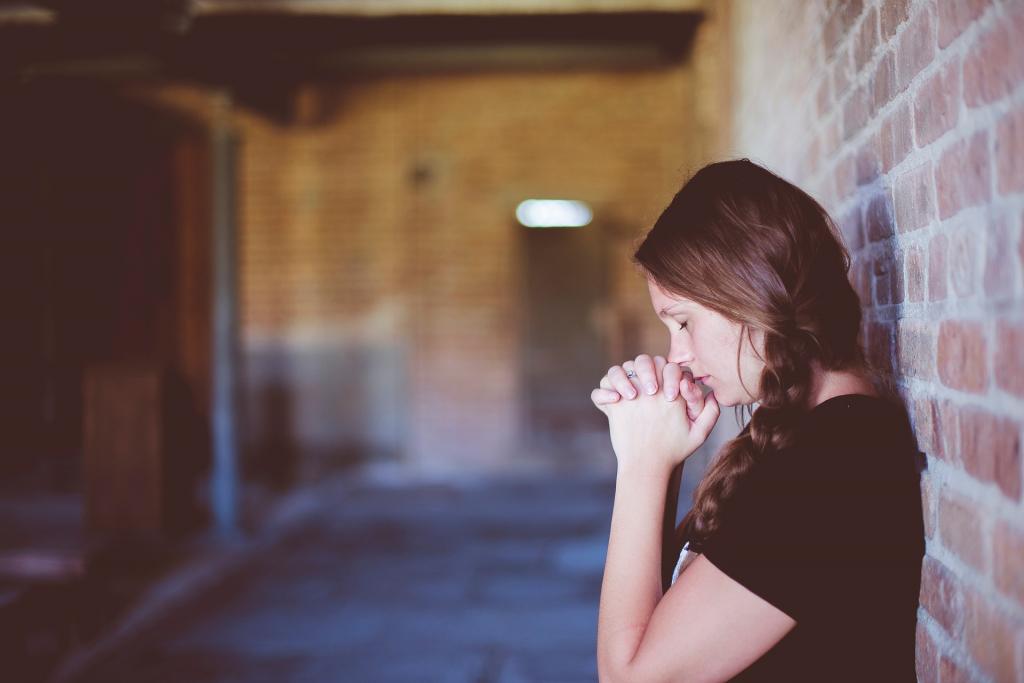
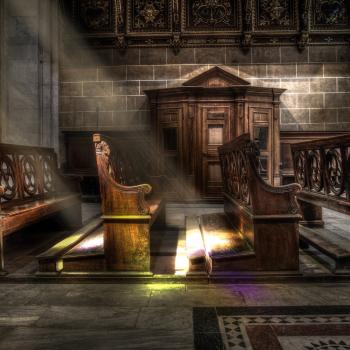
Image credit: Pixabay
I used to think I was the only person who experienced panic attacks inside church buildings. It doesn’t happen often, but I have been known to get to the parking lot, immediately pull a U-Turn and nope on out because all the sudden I can’t catch my breath.
When I started sharing my challenges a few years ago, I heard from people with the same problem. Something terrible had happened to them in the church, and now their brains were firing off warning sirens when they tried to connect to their spiritual home again.
Most people understand Post-Traumatic Stress Disorder (PTSD) on some level, though we usually associate it with combat veterans. People are sometimes surprised to hear anyone who has lived through a traumatic event could have PTSD.
A lot of people have been traumatized within our churches. We haven’t even scratched the surface on that yet.
Not everyone who experiences trauma develops PTSD, but plenty do. So, how do we support them?
We start with trying to understand how PTSD and religion might interact for our brother or sister.
When we’re in the middle of a traumatic event, our body automatically kicks in with our fight/flight/freeze response. Our heart is racing. Our breathing is shallow. Our adrenaline is pumping. We have no control over any of it. We might tell our heart, “Slow down!” and think it really hard, but we have no way of actually forcing our heart to slow down on command like that.
When someone who has PTSD talks about being “triggered,” they mean they’re experiencing that uncontrollable fight/flight/freeze response because part of their brain has interpreted some stimulus around them as meaning their life is in danger. This isn’t something that is consciously done.
I have a lot of trees around my house. In the fall, acorns hit my roof. I know the sounds I’m hearing is acorns. I know I’m perfectly safe inside my house. But when an acorn falls on the roof, I startle and my heart starts racing. My higher brain hasn’t even had a second to process the noise and realize it’s a stupid acorn before my instincts have kicked in. That’s how a PTSD trigger works. You can know, without a doubt, that you are safe, but part of your unconscious brain is sending out signals that tell your body you are in a life-or-death situation. You can’t just tell your adrenal glands to knock it off and expect them to obey you.
To be clear, “trigger” doesn’t mean offended, upset, angry, or irritated. That definition is a complete misuse of the word “trigger.” Misusing that word makes it harder for people with PTSD to talk about their symptoms.
The other thing that’s important to understand is these uncontrollable responses can be unpredictable. Sometimes a person with PTSD can identify likely triggers, but not always. In a church setting, the goal isn’t to remove all PTSD triggers (which would be impossible) but to be supportive when our brothers or sisters are struggling with the response those triggers can bring out.
What could that support look like?
Let’s look at a scenario:
As a teenager, a man was abused by an adult male authority figure who justified the abuse with religion. This adult had a favorite hymn he was known for singing loudly in their church.
This boy grew up and is now attending a different church, far away from his abuser.
One Sunday, he finds himself stuck in the middle of a pew while everyone opens their hymnals and begins singing that song his predator loved. The song surrounds him. His heart races. His palms get sweaty. He feels like he’s going to throw up or pass out.
He knows he’s having a panic attack. He’s found the best way of handling those is to find a quiet place to sit for a while until it passes. But he’ll have to get the people around him to move before he can exit the pew.
When he taps the woman to his left on the shoulder and says, “Excuse me,” she could respond in a few different ways.
A) She could roll her eyes and ignore him because she loves this song and he’s interrupting her favorite part of the hymn.
B ) She could refuse to move, glare at him for being disruptive, and snap out, “Just wait for us to finish the song.”
C) She could move out of his way and let him pass.
D) She could look at him, notice his agitation, and let him pass. Later, after Mass is over, she could ask if he’s OK.
She chooses the last option. She lets the man pass. He returns to his seat after a while, though he still seems a little unsettled.
While everyone is gathering their jackets and purses, she turns to him and asks if everything is OK.
He tells her, “I’m OK. That song just gets to me.”
This woman knows what PTSD is, and she notices the man’s reaction seems like a panic attack. Maybe he’s a veteran and that song reminded him of something he experienced in combat. Maybe he’s an abuse survivor and that song had something to do with the abuse. Maybe he was in a nearly fatal car accident and that song was playing on a CD when he crashed.
She doesn’t know why that song triggered his response, but that’s not important right now. She knows the most important thing right now is to make sure this man feels supported within the church.
“I’m so sorry,” she says, “There’s nothing wrong with ducking out for a bit when you need to.”
She says, “I’m so sorry,” not as an admission of guilt or wrong-doing on her part, but as a show of compassion and understanding. She then tells him his actions were acceptable so that he doesn’t feel ashamed of doing what is healthiest for him in that situation.
She has validated him and shown him that he can attend here without being judged, and it took less than five minutes.
Would this man be more likely to come back next Sunday when she behaves this way or if she had rolled her eyes or shot a harsh comment his way? Basic, easy-to-accomplish, kindness goes a long way.
When someone looks like they’re struggling, we shouldn’t assume they’re trying to be disruptive. From what I’ve heard from people who have PTSD symptoms within religious spaces, they’re desperately trying not to be disruptive. They don’t want you to notice them because, well, it’s embarrassing and hard to explain. And even when we do explain, more often than not, we’re met with ridicule, judgment, and cruel comments from people who don’t understand trauma or PTSD.
Some people will get defensive here. They’re thinking, “It’s not my job to be that person’s therapist. They should get some help on their own.”
That’s not what I’m saying at all. I’d actually encourage you not to try to take on the role of therapist. Well-meaning people can do serious harm while trying to take on that role when they aren’t equipped for it.
But I do want to address therapy. Some people respond well to therapy and see an improvement with their PTSD symptoms. Other people don’t respond as well or at all. That doesn’t mean those people didn’t try to make therapy work. There are so many different types of trauma and we all respond differently to those traumatic events. What works for one person won’t work for everyone.
Also, a person could be in therapy, and making progress with that, but still be struggling with PTSD triggers. We don’t get over our trauma overnight. It takes time. So that man who had to leave during the hymn might currently be in therapy.
You shouldn’t try to play therapist, but you should support people who are struggling with religious PTSD in your church.
We can sit here and condemn abuse in abstract terms, but that’s meaningless if we aren’t willing to embrace victims of abuse within our churches. If people who have been traumatized in our churches are brave enough to walk through our doors, we shouldn’t treat them as an inconvenience.
They aren’t a burden. They’re Christ.
Previous Post
August 15, 2018
Ears to Hear: Pennsylvania Grand Jury Report
Next Post
August 20, 2018 The World's Largest Crucifix: When We Need God to be Big
Browse Our Archives
Select a Category Bible Book Review Catholicism Christianity Church Trauma Current Events Feminism Politics Poverty Racism Sacred Forms Saints Sexualized Violence Suffering Writing
Select a Month February 2020 January 2020 December 2019 October 2019 June 2019 May 2019 April 2019 March 2019 February 2019 January 2019 December 2018 November 2018 October 2018 September 2018 August 2018 July 2018
Follow Us!
TAKE THE
Religious Wisdom Quiz
Who said, "Give us this day our daily bread"?
Select your answer to see how you score.
Isaiah David Paul Jesus
Related posts from Way Station in the Wilderness

Online Christian Communities: An Interview with 4 Leaders
Review: The #MeToo Reckoning by Ruth Everhart

Sacred Forms: The Postpartum Body
TRENDING AT PATHEOS Catholic

The Kingdom Of God In Ordinary Life And...
The kingdom of God is all around us; it is in us...

How Discretion Guides Us Away From Extremes
Prudence is an important virtue for all of us. While we should...

If Baptism Washes Away Sin, Why Do Catholics...
The seven sacraments stand as the foundation of Catholic ecclesial life. The...

The Power of Setting a Good Example
Remember last August when the Chicago White Sox hosted a "Pope Hat...

A Catholic Critique of Biblical Unitarianism
If the statistics are to be believed, Unitarianism is rising worldwide. Although...

How Grandma Tourism Helps Grandparents Live Their Vocation
Grandma, The New Travel Influencer What started as a nostalgia-inspired social media...
view all Catholic blogs
Ad-Free & Subscriber Log-In Subscription Support
- About Us
- 2026 Calendar
- Videos
- Podcasts
- Library of World Religions
- Faith In Media Tracker
- Advertise With Us
- Write for Us
- Privacy Policy
- Terms of Service
- Do Not Sell My Data
- Contact Us
- Radiant Digital
- Manage Newsletter Subscriptions
- Unsubscribe From Notifications
- Sitemap
Copyright 2008-2026, Patheos, part of the Radiant Digital network of media brands. All rights reserved.
Subscription Support Ad-Free & Subscriber Log-In
Follow Patheos