
BuddhistCatholicContemplativeEvangelicalGeneral ChristianHinduJewishLatter-day SaintMuslimNew VisionsProgressive Christian
Beliefs
- Buddhist
- Catholic
- Contemplative
- Evangelical
- General Christian
- Hindu
- Jewish
- Latter-day Saint
- More Voices
- Muslim
- New Visions
- Pagan
- Progressive Christian
Topics
- Religion News
- Food and Religion
- Sports and Religion
- Religious Art
- Religious Music and Entertainment
- Religious Events
- History and Religion
- Style and Religion
- Politics and Religion
- Women in Religion
- Recreation Outdoors and Religion
- Business Finance and Religion
- Careers Workplace and Religion
- Education and Religion
- Family Parenting and Religion
- Health Fitness and Religion
- Home and Religion
- Relationships and Religion
- Technology and Religion
- Travel and Religion
Columnists
- Buddhist Columnists
- Business Finance and Religion Columnists
- Careers Workplace and Religion Columnists
- Catholic Columnists
- Contemplative Columnists
- Education and Religion Columnists
- Evangelists Columnists
- Family Parenting and Religion Columnists
- General Christian Columnists
- Health Fitness and Religion Columnists
- Hindu Columnists
- History and Religion Columnists
- Home and Religion Columnists
- Jewish Columnists
- More Voices Columnists
- Latter Day Columnists
- Muslim Columnists
- New Visions Columnists
- Nonreligious Columnists
- Pagan Columnists
- Politics and Religion Columnists
- Progressive Columnists
- Recreation Outdoors and Religion Columnists
- Relationships and Religion Columnists
- Religion News Columnists
- Religious Art Columnists
- Religious Events Columnists
- Religious Music and Entertainment Columnists
- Sports and Religion Columnists
- Style and Religion Columnists
- Technology and Religion Columnists
- Travel and Religion Columnists
- Women in Religion Columnists
Resource Library
- 2026 Calendar
- Library of World Religions
- The 100 Most Holy Places on Earth
- Patheos Answers
- Podcasts
- Videos
- Faith Leaders Database
- Anglican Episcopalian
- Bahai
- Baptist
- Buddhism
- Christianity
- Confucianism
- Eastern Orthodoxy
- Hinduism
- Holiness and Pentecostal
- ISKCON
- Islam
- Judaism
- Lutheran
- Methodist
- The Church of Jesus Christ of Latter-day Saints
- New Age
- Paganism
- Presbytarian and Reformed
- Protestantism
- Religion Behind the Scenes
- Roman Catholic
- Scientology
- Shia Islam
- Sikhism
- Sufism
- Sunni Islam
- Taoism
- Zen
- See all religions
Research Tools
 Ad-Free & Subscriber Log-In Subscription Support
Ad-Free & Subscriber Log-In Subscription Support
Follow Patheos 

- Trending:
- Forgiveness
- |
- Marriage
- |
- Consciousness
- |
- Death Penalty
- |
- Election
- |
- Halloween
 Way Station in the Wilderness
- Home
- Catholic
- The Power of the Laity to Support Victims
The Power of the Laity to Support Victims
Last updated on: August 9, 2018 at 4:46 pm by Kristy Burmeister
The Power of the Laity to Support Victims 2018-08-09T16:46:49-04:00 Kristy Burmeister
Patheos Explore the world's faith through different perspectives on religion and spirituality! Patheos has the views of the prevalent religions and spiritualities of the world.
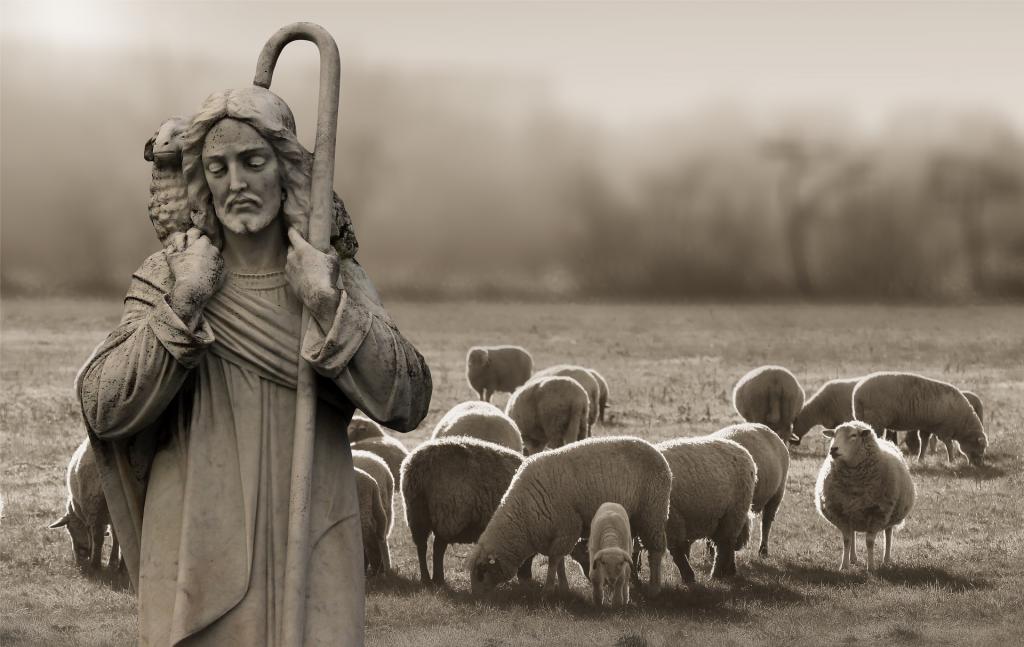
Image credit: Pixabay
What has been will be again,
what has been done will be done again;
there is nothing new under the sun. – Ecclesiastes 1:9
I was eighteen the first time I faced a predator inside the church. He was old enough to be my father, and everyone in our church knew he had problems.
When I didn’t give him the attention he wanted, he started stalking me. He terrorized my family for months, breaking into our home, starting a fire, and leaving death threats.
But this post isn’t about him. This post is about why I left the church.
Even when I was younger, and much more sheltered, I knew sometimes wolves got to the sheep. That wasn’t world-shattering news. People do evil things sometimes. That’s how the world is.
But I didn’t know how often shepherds let the wolves wander freely, eating as many sheep as they like.
I could understand how one man would do evil things.
I couldn’t wrap my mind around our church’s reaction, though.
The church council wanted to handle it all internally. As an adult, I understand that was so they could protect their good name in the community and with the regional conference.
But they didn’t handle it at all. What they really wanted was for me to stay quiet because that was easier. This man wasn’t asked to leave the church. He wasn’t held accountable in any way.
Men in leadership roles—men I looked up to and learned from—protected the man who was threatening to murder me for not fulfilling his fantasies.
And then there were all the people sitting in the pews. People who knew about what was happening, and could have put pressure on the church, but did nothing.
When people say, “I was hurt by the church,” we usually jump to assumptions about people in leadership roles. But the church is more than her leaders. We’re all the church.
If a victim steps forward in your local community, what will you do?
Will you stay silent, praying for it all to go away so you don’t have to deal with it? So you won’t have to have those hard conversations with your friends? So you won’t have to look at your leaders in a different light or question them if they aren’t handling the accusations properly? So you won’t have to stand up for the victim and risk making people uncomfortable or angry?
Will you turn your back on someone who has been hurt within the church? Because when we all turn away, they’re right to say the church turned its back on them, not the other way around.
I know what it feels like to be abandoned by your church. I know what it’s like to have your love and trust betrayed like that. When you can’t trust the people who taught you everything you know about God, where does that leave you? If they were wrong about this, what else were they wrong about?
It’s a mistake to think the only problem we’re facing is the problem of predators who sneak in. It’s not just a matter of outing all the abusers. There’s a reason churches are such safe havens for them.
It’s not just a problem in hierarchical church structures either. I experienced this in a Mennonite church, which is just about as opposite as you can get from Catholicism. Over the past few weeks, I’ve seen stories come out of several different corners of the Christian world, and we’ve just scratched the surface.
It’s a systemic problem within all churches and the laity isn’t off the hook for that. You don’t have to stand up front to have influence. We have power to cause real harm.
My spiritual journey would have looked much different if I’d had the support of my church members. If even five people had stood up in that church and publicly said, “What you’re doing is wrong. We’re with her,” things could have been different.
That predator would have still been around, but I wouldn’t have been alone.
I’ve caught some grief during those long years when I refused to attend any church. I compared myself to the lost sheep once, and some Christians I was having a discussion with got super angry about it. I reminded them Jesus cared about the lost sheep. He said the shepherd would leave the 99 sheep to go after the lost one.
They thought that sounded like an irresponsible shepherd. “What about the 99 sheep? Who will keep them safe?”
Maybe stop hanging out with wolves, if that’s your concern.
Instead of shaming that person who walks away, we need to protect them and support them so they never have to walk away for their own safety.
Wolves can be tricky. I get it. Of course evil is going to try to get inside the church. Why are we surprised by that? It’s a good strategy.
Being tricked by someone who does evil doesn’t make you a bad person. That man didn’t just fool my church. Up until the time he started stalking me, he’d fooled me too. I never considered him dangerous before that. We need to set aside our pride and admit that these predators trick us sometimes. They’re usually experts at it.
We need to admit when we’ve been deceived by them instead of holding onto this pride that tells us we’d recognize evil when we saw it. Often, we don’t. That pride can paralyze us from taking action that would protect vulnerable people in our religious communities.
We can fight this evil in so many ways. We aren’t helpless just because we aren’t in official positions of power.
We fight evil when we support victims. We fight evil when we hold predators accountable. We fight evil when we don’t pressure victims to “forgive and forget,” but stand with them while they grieve and process their pain. We fight evil when we say, “I believe you,” and “That never should have happened to you,” and, “I’m so sorry.”
We fight evil when we stand up in public and say, “This is wrong,” especially if it costs us something.
We feed evil when we’re silent. When we shame victims. When we allow cover-ups to go unchallenged. When we drive victims out of our churches to maintain the status quo.
This is going to be a long battle. If we’re committed to it, we might be risking some of our relationships with people who aren’t willing to do what’s right.
But hasn’t that always been the risk of following Jesus?
This is too important for anyone to be sitting on the sidelines. We all have our roles to play and our sides to choose. Do we side with evil because it requires less of us? Or do we side with Jesus and those who are suffering in his church?
Previous Post

August 6, 2018
Touched by an Electric Razor
Next Post

August 13, 2018 Suffering in the Multiverse
Browse Our Archives
Select a Category Bible Book Review Catholicism Christianity Church Trauma Current Events Feminism Politics Poverty Racism Sacred Forms Saints Sexualized Violence Suffering Writing
Select a Month February 2020 January 2020 December 2019 October 2019 June 2019 May 2019 April 2019 March 2019 February 2019 January 2019 December 2018 November 2018 October 2018 September 2018 August 2018 July 2018
Follow Us!
TAKE THE
Religious Wisdom Quiz
Who was the last king of Judah before the Babylonian exile?
Select your answer to see how you score.
Zedekiah Josiah Hezekiah Jehoiakim
Related posts from Way Station in the Wilderness

Online Christian Communities: An Interview with 4 Leaders
Review: The #MeToo Reckoning by Ruth Everhart
Sacred Forms: The Postpartum Body
TRENDING AT PATHEOS Catholic

Rejecting Doom: Christian Hope And Human Action
Christianity is a religion of hope. We are to have hope and...

It’s What Comes From Within Which Matters
One of the most difficult things for us to understand is why...

Why I Choose the Eucharist Over the Sermon
Choose the Eucharist, Not the Sermon What are we supposed to get...

5 Design Elements Found in Spiritually Rooted Homes
Putting Spirituality Into Home Decor Our homes are more than our living...

Credo: A Story of God Told with the...
About 10 years ago, I began to imagine a personal "Credo" that...

The Anatomy of Divine Revelation in Catholic Thought
The claim that God has made Himself known to human beings is...
view all Catholic blogs
Ad-Free & Subscriber Log-In Subscription Support
- About Us
- 2026 Calendar
- Videos
- Podcasts
- Library of World Religions
- Faith In Media Tracker
- Advertise With Us
- Write for Us
- Privacy Policy
- Terms of Service
- Do Not Sell My Data
- Contact Us
- Radiant Digital
- Manage Newsletter Subscriptions
- Unsubscribe From Notifications
- Sitemap
Copyright 2008-2026, Patheos. All rights reserved.
Subscription Support Ad-Free & Subscriber Log-In
Follow Patheos