
BuddhistCatholicContemplativeEvangelicalGeneral ChristianHinduJewishLatter-day SaintMuslimNew VisionsProgressive Christian
Beliefs
- Buddhist
- Catholic
- Contemplative
- Evangelical
- General Christian
- Hindu
- Jewish
- Latter-day Saint
- More Voices
- Muslim
- New Visions
- Pagan
- Progressive Christian
Topics
- Religion News
- Food and Religion
- Sports and Religion
- Religious Art
- Religious Music and Entertainment
- Religious Events
- History and Religion
- Style and Religion
- Politics and Religion
- Women in Religion
- Recreation Outdoors and Religion
- Business Finance and Religion
- Careers Workplace and Religion
- Education and Religion
- Family Parenting and Religion
- Health Fitness and Religion
- Home and Religion
- Relationships and Religion
- Technology and Religion
- Travel and Religion
Columnists
- Buddhist Columnists
- Business Finance and Religion Columnists
- Careers Workplace and Religion Columnists
- Catholic Columnists
- Contemplative Columnists
- Education and Religion Columnists
- Evangelists Columnists
- Family Parenting and Religion Columnists
- General Christian Columnists
- Health Fitness and Religion Columnists
- Hindu Columnists
- History and Religion Columnists
- Home and Religion Columnists
- Jewish Columnists
- More Voices Columnists
- Latter Day Columnists
- Muslim Columnists
- New Visions Columnists
- Nonreligious Columnists
- Pagan Columnists
- Politics and Religion Columnists
- Progressive Columnists
- Recreation Outdoors and Religion Columnists
- Relationships and Religion Columnists
- Religion News Columnists
- Religious Art Columnists
- Religious Events Columnists
- Religious Music and Entertainment Columnists
- Sports and Religion Columnists
- Style and Religion Columnists
- Technology and Religion Columnists
- Travel and Religion Columnists
- Women in Religion Columnists
Resource Library
- 2026 Calendar
- Library of World Religions
- The 100 Most Holy Places on Earth
- Patheos Answers
- Podcasts
- Videos
- Faith Leaders Database
- Anglican Episcopalian
- Bahai
- Baptist
- Buddhism
- Christianity
- Confucianism
- Eastern Orthodoxy
- Hinduism
- Holiness and Pentecostal
- ISKCON
- Islam
- Judaism
- Lutheran
- Methodist
- The Church of Jesus Christ of Latter-day Saints
- New Age
- Paganism
- Presbytarian and Reformed
- Protestantism
- Religion Behind the Scenes
- Roman Catholic
- Scientology
- Shia Islam
- Sikhism
- Sufism
- Sunni Islam
- Taoism
- Zen
- See all religions
Research Tools
 Ad-Free & Subscriber Log-In Subscription Support
Ad-Free & Subscriber Log-In Subscription Support
Follow Patheos 

- Trending:
- Forgiveness
- |
- Marriage
- |
- Consciousness
- |
- Death Penalty
- |
- Election
- |
- Halloween

- Home
- Religious Music & Entertainment
- ‘The Omen’ Works. ‘The First Omen’ Fails. Here’s Why.
‘The Omen’ Works. ‘The First Omen’ Fails. Here’s Why.
Last updated on: April 26, 2024 at 9:41 am by Paul Asay
‘The Omen’ Works. ‘The First Omen’ Fails. Here’s Why. 2024-04-26T09:41:25-06:00 Paul Asay
Patheos Explore the world's faith through different perspectives on religion and spirituality! Patheos has the views of the prevalent religions and spiritualities of the world.
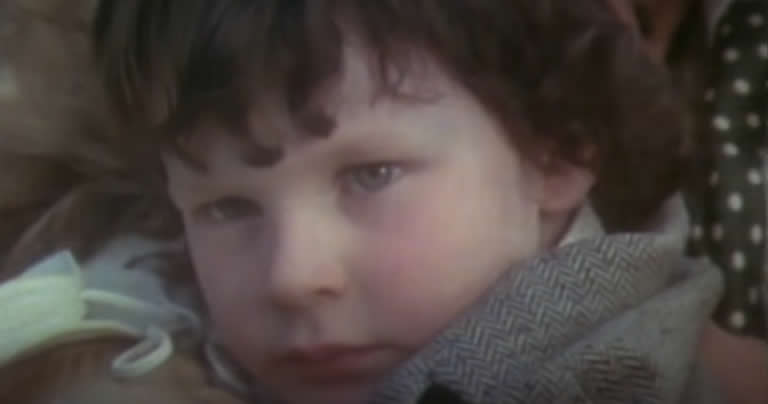
Harvey Spencer Stephens from The Omen, screen shot from the 20th Century Studios trailer
When The First Omen crawled into theaters this month, it arguably scared up more press than people. Perhaps it could’ve learned a thing or two from its nearly 50-year-old forebear.
Critics have been kind to The First Omen (giving it an 81% freshness rating on Rotten Tomatoes), and it earned a level of notoriety for a disturbing birthing sequence that nearly garnered it an NC-17 rating. But despite the praise and some fine performances (especially from Nell Tiger Free, who plays a well-meaning novitiate), it’s not done particularly well at the box office.
Since its April 5 release, The First Omen has earned just $18.2 million in North America—less than any other film in the Omen franchise. And while it’ll surely collect a little more cash in the weeks to come, the new fright flick won’t come within screaming distance of the $60 million the original Omen earned in 1976—the equivalent, incidentally, of around $330 million today.
Why did The Omen click with audiences in 1976, whereas The First Omen faltered? Let’s look at the original and see.
From The Omen, screen shot from the 20th Century Studios trailer
The Story
The First Omen is intended to be a direct prequel to the original film—one wherein we see the conception and birth of Damien, the franchise’s evil antichrist, circa 1971.
The First Omen requires some tortured storytelling to line up with the original. But the finale of the new movie does serve as a bridge to The Omen. We’re even introduced, via dossier, to *The Omen’*s main character, Robert Thorn—complete with a picture of the actor who played him (Gregory Peck). And at the end of the film, we see some deviant Catholic clergy plot to replace Robert’s newly born (and newly murdered) son with Damien.
Jumping into The Omen proper, we meet Robert as he grieves over his lost son. A priest and a nun essentially offer the hearbroken Robert a replacement baby—one whose mother died in childbirth. Robert’s wife, they promise, never even needs to know that the child is not hers. A grateful Robert—knowing Katherine would be devastated about losing her baby—accepts the boy and the lie that goes along with it.
Most of The Omen takes place five years later—fittingly, in 1976. Robert Thorn is the U.S. Ambassador to Great Britain, and he lives in a cavernous house with his beautiful wife, Katherine (Lee Remick) and that cute, rascally, now five-year-old son (played by Harvey Spencer Stephens).
Too good to be true? You bet it is. Damien’s nanny hangs herself. A replacement nanny mysteriously arrives—along with a fairly terrifying Rottweiler. Robert’s soon accosted by a priest who encourages him, repeatedly, to start taking Christianity seriously.
“You must take communion,” he says. “Drink the blood of Christ and eat His flesh. Only if He is within you can you defeat the son of the devil.”
“I … see,” Robert tells him, shortly before kicking the priest out of his office.
But as the movie draws on, Robert does see. As Robert’s joy is taken from him, bit by agonizing bit, and after uncovering the body of a jackal where Damien’s dead mother should be (a discovery that The First Omen unconvincingly strained to explain), the ambassador slowly comes to a horrific suspicion: His kid just might be the antichrist.
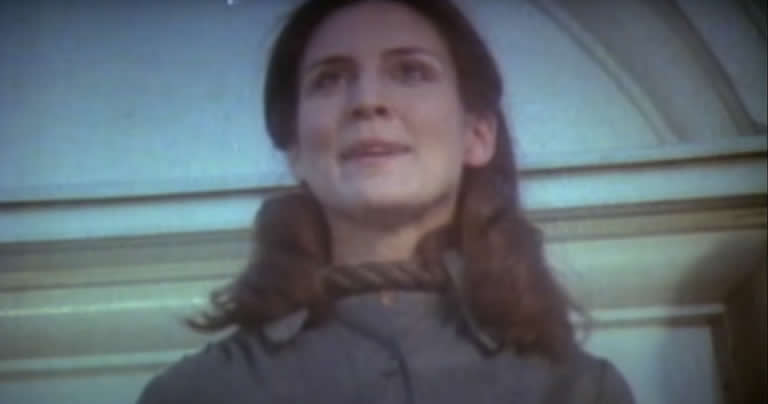
Holly Palance from The Omen, screen shot from the 20th Century Studios trailer
The Chills
The Omen comes with a ton of disturbing undercurrents—not the least of which pokes at one of humanity’s most important and most revered relationships: That of a mother and a child.
Listen, children are fantastic. But even the best can also feel like little demons at times. When they’re banging on pot lids for two hours straight or shouting not-very-loving words at you for suggesting they eat a carrot, we might wonder whether someone switched our child with an alien doppelganger.
The Omen plays on those fears with creepy dexterity: Katherine begins to feel there’s something very, very wrong with Damien—joining a whole host of moms who, perhaps secretly, harbored those same fears. But in Katherine’s case, she’s absolutely right.
Good horror stories are predicated not on what you do see, but on what you don’t. Jaws slides unseen in the water. An alien hides in the bowels of the Nostromo in Alien. In The Omen, it’s the story itself that lurks in the shadows. The mechanizations are cloaked, the truth is hidden. No, its characters say, that’s preposterous! But then the truth comes out of hiding and we’re forced to ask a terrible question: What to do about it.
The First Omen has some nice, atmospheric moments of unease. It, too, keeps plenty of secrets hidden in the shadows. But all too often, it resorts to jump scares and gross-out moments that aren’t just unnecessary, but rob the film of some of its potential.
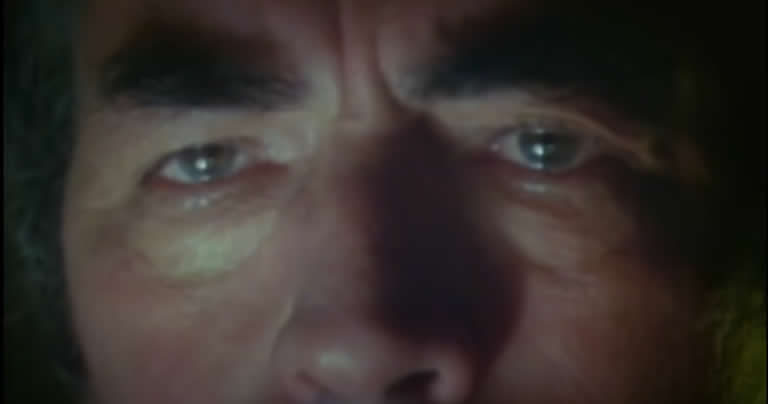
Gregory Peck from The Omen, screen shot from the 20th Century Studios trailer
The Timing
The Omen was not universally embraced upon release. But it landed during a time in which the cinematic soil seemed particularly receptive to this seed.
The tumultuous 1960s and early 1970s were still quite fresh in the minds of Americans, when some wondered whether this great nation was teetering on the edge of anarchy. The world itself seemed to be growing ever more chaotic.
Clearly, the promise that technology would save all our problems—a mindset embraced throughout the 1950s—had long since disintegrated. Social unrest reminded people of both the nation’s persistent inequality and its fragility. Political scandals culminating in Watergate undercut faith in some of our most respected institutions. And the flower children who claimed the answers could be found in love, peace, music and drugs? That proved to be, somewhat literally, a pipe dream.
Is it possible that we’d lost our way? Many asked. That we’d been turning to false hopes and away from God? Was it possible that this had been foretold long ago?
Author Hal Lindsey had dropped his bestselling The Late Great Planet Earth into that counterculture maelstrom in 1970, and the book was still going strong years later. The book introduced millions of Americans to dispensational eschatology—or, in other words, a very literal reading of the Bible’s most prophetic books, especially that of Revelation. In an age when a lot of Americans believed that the world might be going to you-know-where in a handbasket, Lindsey essentially said, “You don’t know how right you are.”
Our own age is no less confusing and unsettling as 1976 was. But it’s a more secular one, too—something that the makers of The First Omen leaned into perhaps a bit too much.
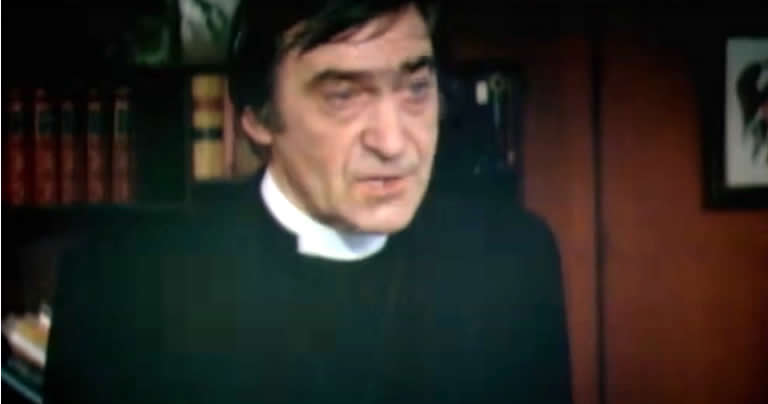
Patrick Troughton from The Omen, screen shot from the 20th Century Studios trailer
Spiritual Hope
The Omen embraces dispensationalist themes throughout, mixing biblical prophecies with scriptwriter David Seltzer’s own inventions (most prominently a poem that includes the lines, “When the Jews return to Zion and a comet rips the sky and the Holy Roman Empire rises, then you and I must die”).
That’s not exactly a poem you’d stitch on a pillow. And The Omen is hardly a happy-go-lucky film. But those dispensationalist themes (which went from a pretty fringe idea even within Christianity and into the mainstream), unpacked in the wake of such a fractious time, came with a curious undercurrent of hope: In a chaotic, seemingly senseless world, at least a few entities knew what was going on.
And that, I think, helped The Omen succeed—both aesthetically and commercially. It understood that there were forces outside our own understanding at work here. And while the devil was the most obvious player, God’s own servants are there in the movie, too. The supernatural has power—from the priest’s pleas that Robert become a Christian to Damien’s own terror of church.
And as such, Robert’s own discovery of faith—under, admittedly, great and horrific pressure—might serve as a metaphor for perhaps our own secular comfort, which helps the movie still feel surprisingly relevant.
Robert is smart and powerful. He has what would appear to be an idyllic home life. When Robert asks wife Katherine if she’d tell him if something was wrong, she says, “What could be wrong with our child, Robert? We’re beautiful people, aren’t we?”
But something is wrong. And to right it, Robert slowly comes to understand that his wealth and power and intellect won’t do. He needs to look beyond his own strength.
But even though The First Omen is also a supernatural horror film—one where Satan’s reality is presented as a terrible fact—the film leans not into God, but into humanity.

Sonia Braga from The First Omen, screen shot courtesy the 20th Century Studios trailer
The Problem
Sure, Margaret, the movie’s central character, loves God, and she loves the Catholic Church—so much so that she’s looking forward to becoming a nun. And the film pays lip service to good believers everywhere. “There are two churches,” someone tells her. “One follows God. And the other follows something else.”
But The First Omen focuses almost solely on that something-else church, which uses fear as a means to control its flock. Prayer is shown as completely ineffective. The enemy isn’t so much Satan here as the corrupt church itself … and we see precious little evidence of any part of the church that isn’t corrupted.
The makers of The First Omen seemed remarkably uninterested in exploring spiritual themes. Tim Smith, the movie’s co-writer and executive producer, says as much.
“I think the Catholic Church wielded a different kind of power and influence,” he told Variety, “so we used this film as an opportunity to speak to institutions in power and how they respond to fear, how they cling to that power under threat, about the dangers of ideology, about patriarchal institutions, to turn a mirror to the horrors of our time. We were using religious horror as a means of tapping into other fears that resonated with us.”
It’s illustrative that, in a climactic scene, a priest asks Margaret if she can hear God’s voice inside her. No, she tells him. I can only hear my own.
In our increasingly secular culture, that message is hardly surprising. But it does feel out of place in a supernatural horror film, where signs and prophecies and literal demons are everywhere.
If the Omen franchise means a true return to form, it can’t just pay homage to the original’s aesthetics or mimic its most famous scenes: It needs to understand that, in this supernatural series, human strength and understanding isn’t the answer: It’s part of the problem.
Previous Post

March 1, 2024
'Dune: Part Two' Asks Explosive Questions About Religion
Next Post

May 13, 2024 ‘We Grown Now’ Explores, Beautifully, a Childlike Faith
Recent Comments
""The Children of the Night. What Music They Make" - obviously you're not a newcomer ..."
Sinners Is a Great Movie With ..."
"I really enjoyed this article, thanks!"
Seven Movies That Powerfully Confront Racism
"*Messiah"
‘Dune: Part Two’ Asks Explosive Questions ..."
"An interesting play on words is Muad’Dib the desert mouse vs. Mahdi, one name of ..."
‘Dune: Part Two’ Asks Explosive Questions ..."
Browse Our Archives
Select a Category books celebrities Editor's Choice games movies music news sports superheroes television Uncategorized
Select a Month May 2026 April 2026 March 2026 December 2025 October 2025 July 2025 June 2025 May 2025 February 2025 January 2025 December 2024 July 2024 June 2024 May 2024 April 2024 March 2024 February 2024 January 2024 December 2023 September 2023 March 2023 February 2023 December 2022 November 2022 October 2022 September 2022 August 2022 July 2022 June 2022 May 2022 April 2022 March 2022 February 2022 December 2021 October 2021 August 2021 July 2021 June 2021 May 2021 April 2021 March 2021 October 2020 August 2020 July 2020 June 2020 May 2020 April 2020 March 2020 February 2020 January 2020 December 2019 November 2019 October 2019 September 2019 August 2019 July 2019 June 2019 May 2019 April 2019 March 2019 February 2019 January 2019 December 2018 November 2018 October 2018 September 2018 August 2018 July 2018 June 2018 May 2018 April 2018 March 2018 February 2018 January 2018 December 2017 November 2017 October 2017 September 2017 August 2017 July 2017 June 2017 May 2017 April 2017 March 2017 February 2017 January 2017 December 2016 November 2016 October 2016 September 2016 August 2016 July 2016 June 2016 May 2016 April 2016 March 2016 February 2016 January 2016 December 2015 November 2015 October 2015 September 2015 August 2015 July 2015 June 2015 May 2015 April 2015 March 2015 February 2015 January 2015 December 2014 November 2014 October 2014 September 2014
Follow Us!
TAKE THE
Religious Wisdom Quiz
Who were Isaac and Rebekah's twin sons?
Select your answer to see how you score.
Esau and Jacob Joseph and Benjamin Simeon and Levi Cain and Abel
Books by This Author Books by Paul Asay
Related posts from Watching God

Finding Forgiveness in the Great Horror Film ‘Hokum’

What makes a hero? These 7 Cinematic Characters...

Finding God's Grace in ‘Project Hail Mary’

Watching God’s Top 10 Movies of 2025
TRENDING AT PATHEOS Religious Music & Entertainment

"Les Diabolique" and Transgression
Alongside something like Arrival, Vertigo, or Charade, Les Diaboliques is a...

"The Plague Dogs" and Mortality
So, flashback to the late 70s, early 80s. Walt Disney Studios is...

With the recent and highly successful release of Christopher Nolan’s epic film,...

"L'avventura" and Human Weakness
Today's piece is going to be a little different for a few...

I first want to apologize for not posting or writing anything. I'm...

I've engaged in the multi-year project of reading through the Church Fathers,...
view all Religious Music & Entertainment blogs
What Are Your Thoughts?leave a comment
Ad-Free & Subscriber Log-In Subscription Support
- About Us
- 2026 Calendar
- Videos
- Podcasts
- Library of World Religions
- Faith In Media Tracker
- Advertise With Us
- Write for Us
- Privacy Policy
- Terms of Service
- Do Not Sell My Data
- Contact Us
- Radiant Digital
- Manage Newsletter Subscriptions
- Unsubscribe From Notifications
- Sitemap
Copyright 2008-2026, Patheos. All rights reserved.
Subscription Support Ad-Free & Subscriber Log-In
Follow Patheos