
BuddhistCatholicContemplativeEvangelicalGeneral ChristianHinduJewishLatter-day SaintMuslimNew VisionsProgressive Christian
Beliefs
- Buddhist
- Catholic
- Contemplative
- Evangelical
- General Christian
- Hindu
- Jewish
- Latter-day Saint
- More Voices
- Muslim
- New Visions
- Pagan
- Progressive Christian
Topics
- Religion News
- Food and Religion
- Sports and Religion
- Religious Art
- Religious Music and Entertainment
- Religious Events
- History and Religion
- Style and Religion
- Politics and Religion
- Women in Religion
- Recreation Outdoors and Religion
- Business Finance and Religion
- Careers Workplace and Religion
- Education and Religion
- Family Parenting and Religion
- Health Fitness and Religion
- Home and Religion
- Relationships and Religion
- Technology and Religion
- Travel and Religion
Columnists
- Buddhist Columnists
- Business Finance and Religion Columnists
- Careers Workplace and Religion Columnists
- Catholic Columnists
- Contemplative Columnists
- Education and Religion Columnists
- Evangelists Columnists
- Family Parenting and Religion Columnists
- General Christian Columnists
- Health Fitness and Religion Columnists
- Hindu Columnists
- History and Religion Columnists
- Home and Religion Columnists
- Jewish Columnists
- More Voices Columnists
- Latter Day Columnists
- Muslim Columnists
- New Visions Columnists
- Nonreligious Columnists
- Pagan Columnists
- Politics and Religion Columnists
- Progressive Columnists
- Recreation Outdoors and Religion Columnists
- Relationships and Religion Columnists
- Religion News Columnists
- Religious Art Columnists
- Religious Events Columnists
- Religious Music and Entertainment Columnists
- Sports and Religion Columnists
- Style and Religion Columnists
- Technology and Religion Columnists
- Travel and Religion Columnists
- Women in Religion Columnists
Resource Library
- 2026 Calendar
- Library of World Religions
- The 100 Most Holy Places on Earth
- Patheos Answers
- Podcasts
- Videos
- Faith Leaders Database
- Anglican Episcopalian
- Bahai
- Baptist
- Buddhism
- Christianity
- Confucianism
- Eastern Orthodoxy
- Hinduism
- Holiness and Pentecostal
- ISKCON
- Islam
- Judaism
- Lutheran
- Methodist
- The Church of Jesus Christ of Latter-day Saints
- New Age
- Paganism
- Presbytarian and Reformed
- Protestantism
- Religion Behind the Scenes
- Roman Catholic
- Scientology
- Shia Islam
- Sikhism
- Sufism
- Sunni Islam
- Taoism
- Zen
- See all religions
Research Tools
 Ad-Free & Subscriber Log-In Subscription Support
Ad-Free & Subscriber Log-In Subscription Support
Follow Patheos 

- Trending:
- Forgiveness
- |
- Marriage
- |
- Consciousness
- |
- Death Penalty
- |
- Election
- |
- Halloween

- Home
- Religious Music & Entertainment
- Black Adam Holds Plenty of Power—and Some Original Sin
Black Adam Holds Plenty of Power—and Some Original Sin
Last updated on: October 24, 2022 at 10:32 am by Paul Asay
Black Adam Holds Plenty of Power—and Some Original Sin 2022-10-24T10:32:32-06:00 Paul Asay
Patheos Explore the world's faith through different perspectives on religion and spirituality! Patheos has the views of the prevalent religions and spiritualities of the world.
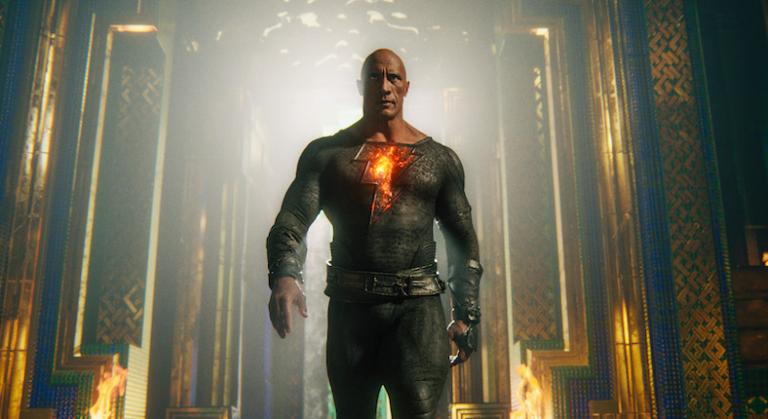
Dwayne Johnson as Black Adam in New Line Cinema’s action adventure “Black Adam,” a Warner Bros. Pictures release.
Is Black Adam a good guy or a bad guy?
The answer? Yes. And while that both/and answer manifests itself in a less-than-perfect movie, it comes with an interesting spiritual wrinkle.
In the movie, Black Adam (played by perennial good guy Dwayne Johnson) hails from the ancient (and fictional) civilization of Kahndaq, which had its heyday around 5,000 years ago. He was known as Teth-Adam back then. And like the hero we know of as Shaza, he drew his powers from the mysterious Council of Wizards. By speaking the word “Shazam,” Teth-Adam was able to snag the abilities of six ancient gods and heroes and use them as his own.
But alas, Teth-Adam wasn’t exactly the best person to hold all those powers. Oh, sure, he took care of that ancient era’s dastardly evildoer. But he also destroyed a good chunk of Kahndaq while he was at it. So the wizards chucked him in prison, where he stayed for several millennia before archaeologist Adrianna Tomaz let him out.
Teth-Adam’s barely out of jail for five seconds before he starts killing people. Again, they’re bad people, but still. He’s not exactly a picture of restraint. His sudden appearance draws the interest of the Justice Society: The team (made up of Hawkman, Cyclone, Atom Smasher and Doctor Fate) flies on over to try and get Teth-Adam back in jail or something.
Two problems with that plan, though: First, Black Adam is seriously powerful—perhaps more powerful than the combined efforts of the Justice Society. Second, there’s another evildoer at work. And that evildoer is hoping to claim something called the Crown of Sabbaq, which invests its wearer with the power of six very strong demons.
Obviously, with all these gods and demons in the mix, Black Adam has plenty of spiritual stuff to muddle through from the get-go. But a lot of that is pretty superficial (which fits this rather superficial muddle of a movie). You can read more about that spirituality, and what I thought of the movie itself, here. But in this space, I wanted to move in a slightly different direction.
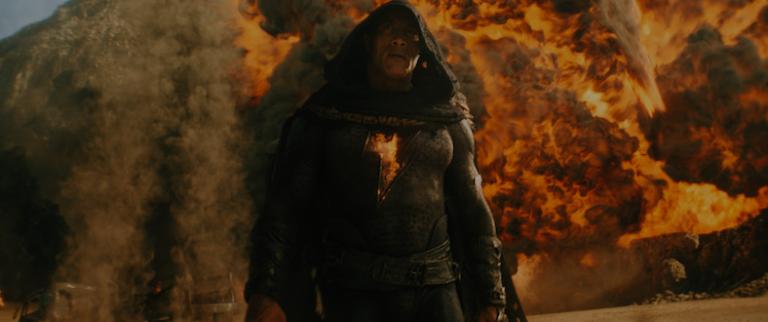
Dwayne Johnson as Black Adam in New Line Cinema’s action adventure “Black Adam,” a Warner Bros. Pictures release.
No Walk in the Garden (of Eden)
The original DC comics character was unquestionably a bad dude. Created in 1945, he faced off against Captain Marvel (later renamed Shazam to avoid conflict with a certain Marvel superhero) and his extended family many time.
But why the name Black Adam?
Johnson talked about the name with Vanity Fair, telling the publication that “The Black in Black Adam refers to his soul.”
But for me, the Adam part of the name is pretty significant, too.
The name “Adam” is associated with two things in biblical Hebrew: The earth (as in the literal ground we walk on, called Adamah in Hebrew) and Man. The word “adam” is used to refer to humankind in the first chapter of Genesis, for instance, then switches to the individual man “Adam” in chapter two. And that link between earth and man seems fitting, given that God created Adam “of dust from the ground and breathed into his nostrils the breath of life” (Genesis 2:7).
But we know that that first Adam also went awry. He was tempted, ate a bit of fruit that he shouldn’t have. He rebelled. Thus God’s creation fell, and things have never been right since then.
Paul spent a lot of time talking about Adam, especially when he wrote the first letter to the Corinthians. He trotted out this first man and compared him to Jesus, whom Paul called the “last Adam.” And he especially emphasized Adam’s earthy beginnings, again contrasting them with Jesus’ spiritual underpinnings. From 1 Corinthians 15, verses 42 through 49:
What is sown is perishable; what is raised is imperishable. It is sown in dishonor; it is raised in glory. It is sown in weakness; it is raised in power. It is sown a natural body; it is raised a spiritual body. If there is a natural body, there is also a spiritual body. Thus it is written, “The first man Adam became a living being”; the last Adam became a life-giving spirit. But it is not the spiritual that is first but the natural, and then the spiritual. The first man was from the earth, a man of dust; the second man is from heaven. As was the man of dust, so also are those who are of the dust, and as is the man of heaven, so also are those who are of heaven. Just as we have borne the image of the man of dust, we shall also bear the image of the man of heaven.
Adam, the original, was given a chance to live a full, glorious, eternal life if he just used God’s gifts wisely; if he followed God’s design. Instead, he was twisted by sin, and thus we were all twisted. It took a Second Adam to give us a chance to straighten back out again.
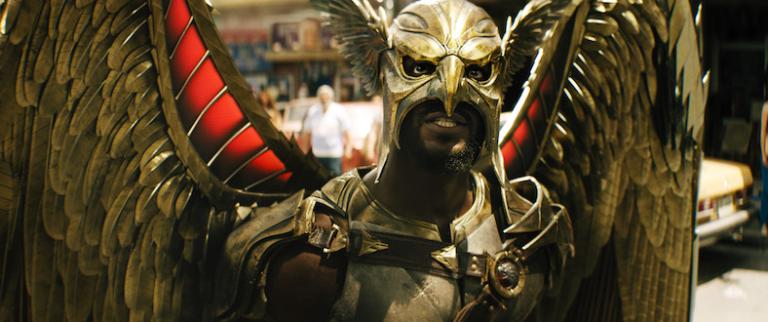
Aldis Hodge as Hawkman in New Line Cinema’s action adventure “Black Adam,” a Warner Bros. Pictures release.
A Sinful Superhuman
Black Adam also was “the first Adam” in the DC universe (though, in the movie, that is itself a little misleading), predating the guy who we know as Shazam by thousands of years. He, like the biblical Adam, was entrusted with power and glory. He, like the original Adam, was also given freedom to choose how to use that power.
And Teth-Adam chose pretty poorly. He, too, was pulled by temptation—not forbidden knowledge (as were the Bible’s original couple), but rage and vengeance. And while we can understand in the movie’s context why Teth-Adam would’ve been so bent on revenge, that’s sort of the way of sin, isn’t it? We’re called to curb our own desires to follow a higher path.
That’s something that, in the movie, Hawkman brings up again and again.
“Heroes don’t kill people!” he tells Teth-Adam.
“Well, I do,” Teth-Adam says.
Teth-Adam tells us that he “kneels before no one.” That’s pretty significant. Christians believe we must kneel. We must submit. Our whole journey is predicated on sublimating our own whims and desires to those of God Himself. He, not we, is master. But Black Adam recognizes no master but himself. That, of course, is the definition of spiritual rebellion.
Black Adam is a bad guy. But he’s also a good guy, too. At times, he understands he shouldn’t have ever been given this power. He understands that he’s no hero. Not really. He’s told that his choices are what make him: He can choose to go a better direction, if he wanted to.
It’s a nice little echo of the theme of 2019’s Shazam!. The title character, like Teth-Adam, is tempted. But Shazam finds a higher calling. Black Adam? He’s a sinner, like Shazam, and like all of us. But unlike Shazam, he’s unwilling to let go of his own way, to become a real hero. Sometimes he makes the right choice, but it’s more based on what he wants to do. He’s unwilling to kneel. To follow that higher calling.
And that’s what separates Black Adam from Shazam. What separates him from being a true hero. What separates him, I’d argue, from God.
Previous Post

September 25, 2022
The Media Doesn't Understand Religion. And That’s Bad for All of Us
Next Post

November 2, 2022 Finding Pain, Purpose and Prayer in Till
Browse Our Archives
Select a Category books celebrities Editor's Choice games movies music news sports superheroes television Uncategorized
Select a Month May 2026 April 2026 March 2026 December 2025 October 2025 July 2025 June 2025 May 2025 February 2025 January 2025 December 2024 July 2024 June 2024 May 2024 April 2024 March 2024 February 2024 January 2024 December 2023 September 2023 March 2023 February 2023 December 2022 November 2022 October 2022 September 2022 August 2022 July 2022 June 2022 May 2022 April 2022 March 2022 February 2022 December 2021 October 2021 August 2021 July 2021 June 2021 May 2021 April 2021 March 2021 October 2020 August 2020 July 2020 June 2020 May 2020 April 2020 March 2020 February 2020 January 2020 December 2019 November 2019 October 2019 September 2019 August 2019 July 2019 June 2019 May 2019 April 2019 March 2019 February 2019 January 2019 December 2018 November 2018 October 2018 September 2018 August 2018 July 2018 June 2018 May 2018 April 2018 March 2018 February 2018 January 2018 December 2017 November 2017 October 2017 September 2017 August 2017 July 2017 June 2017 May 2017 April 2017 March 2017 February 2017 January 2017 December 2016 November 2016 October 2016 September 2016 August 2016 July 2016 June 2016 May 2016 April 2016 March 2016 February 2016 January 2016 December 2015 November 2015 October 2015 September 2015 August 2015 July 2015 June 2015 May 2015 April 2015 March 2015 February 2015 January 2015 December 2014 November 2014 October 2014 September 2014
Follow Us!
TAKE THE
Religious Wisdom Quiz
What language was most of the Old Testament originally written in?
Select your answer to see how you score.
Greek Aramaic Latin Hebrew
Books by This Author Books by Paul Asay
Related posts from Watching God

Finding Forgiveness in the Great Horror Film ‘Hokum’

What makes a hero? These 7 Cinematic Characters...

Finding God's Grace in ‘Project Hail Mary’

Watching God’s Top 10 Movies of 2025
TRENDING AT PATHEOS Religious Music & Entertainment

"Les Diabolique" and Transgression
Alongside something like Arrival, Vertigo, or Charade, Les Diaboliques is a...

"The Plague Dogs" and Mortality
So, flashback to the late 70s, early 80s. Walt Disney Studios is...

With the recent and highly successful release of Christopher Nolan’s epic film,...

"L'avventura" and Human Weakness
Today's piece is going to be a little different for a few...

I first want to apologize for not posting or writing anything. I'm...

I've engaged in the multi-year project of reading through the Church Fathers,...
view all Religious Music & Entertainment blogs
Ad-Free & Subscriber Log-In Subscription Support
- About Us
- 2026 Calendar
- Videos
- Podcasts
- Library of World Religions
- Faith In Media Tracker
- Advertise With Us
- Write for Us
- Privacy Policy
- Terms of Service
- Do Not Sell My Data
- Contact Us
- Radiant Digital
- Manage Newsletter Subscriptions
- Unsubscribe From Notifications
- Sitemap
Copyright 2008-2026, Patheos. All rights reserved.
Subscription Support Ad-Free & Subscriber Log-In
Follow Patheos