
BuddhistCatholicContemplativeEvangelicalGeneral ChristianHinduJewishLatter-day SaintMuslimNew VisionsProgressive Christian
Beliefs
- Buddhist
- Catholic
- Contemplative
- Evangelical
- General Christian
- Hindu
- Jewish
- Latter-day Saint
- More Voices
- Muslim
- New Visions
- Pagan
- Progressive Christian
Topics
- Religion News
- Food and Religion
- Sports and Religion
- Religious Art
- Religious Music and Entertainment
- Religious Events
- History and Religion
- Style and Religion
- Politics and Religion
- Women in Religion
- Recreation Outdoors and Religion
- Business Finance and Religion
- Careers Workplace and Religion
- Education and Religion
- Family Parenting and Religion
- Health Fitness and Religion
- Home and Religion
- Relationships and Religion
- Technology and Religion
- Travel and Religion
Columnists
- Buddhist Columnists
- Business Finance and Religion Columnists
- Careers Workplace and Religion Columnists
- Catholic Columnists
- Contemplative Columnists
- Education and Religion Columnists
- Evangelists Columnists
- Family Parenting and Religion Columnists
- General Christian Columnists
- Health Fitness and Religion Columnists
- Hindu Columnists
- History and Religion Columnists
- Home and Religion Columnists
- Jewish Columnists
- More Voices Columnists
- Latter Day Columnists
- Muslim Columnists
- New Visions Columnists
- Nonreligious Columnists
- Pagan Columnists
- Politics and Religion Columnists
- Progressive Columnists
- Recreation Outdoors and Religion Columnists
- Relationships and Religion Columnists
- Religion News Columnists
- Religious Art Columnists
- Religious Events Columnists
- Religious Music and Entertainment Columnists
- Sports and Religion Columnists
- Style and Religion Columnists
- Technology and Religion Columnists
- Travel and Religion Columnists
- Women in Religion Columnists
Resource Library
- 2026 Calendar
- Library of World Religions
- The 100 Most Holy Places on Earth
- Patheos Answers
- Podcasts
- Videos
- Faith Leaders Database
- Anglican Episcopalian
- Bahai
- Baptist
- Buddhism
- Christianity
- Confucianism
- Eastern Orthodoxy
- Hinduism
- Holiness and Pentecostal
- ISKCON
- Islam
- Judaism
- Lutheran
- Methodist
- The Church of Jesus Christ of Latter-day Saints
- New Age
- Paganism
- Presbytarian and Reformed
- Protestantism
- Religion Behind the Scenes
- Roman Catholic
- Scientology
- Shia Islam
- Sikhism
- Sufism
- Sunni Islam
- Taoism
- Zen
- See all religions
Research Tools
 Ad-Free & Subscriber Log-In Subscription Support
Ad-Free & Subscriber Log-In Subscription Support
Follow Patheos 

- Trending:
- Forgiveness
- |
- Marriage
- |
- Consciousness
- |
- Death Penalty
- |
- Election
- |
- Halloween

- Home
- Religious Music & Entertainment
- The Terrible Truth of Beautiful Boy
The Terrible Truth of Beautiful Boy
Last updated on: October 25, 2018 at 1:54 pm by Paul Asay
The Terrible Truth of Beautiful Boy 2018-10-25T13:54:15-06:00 Paul Asay
Patheos Explore the world's faith through different perspectives on religion and spirituality! Patheos has the views of the prevalent religions and spiritualities of the world.
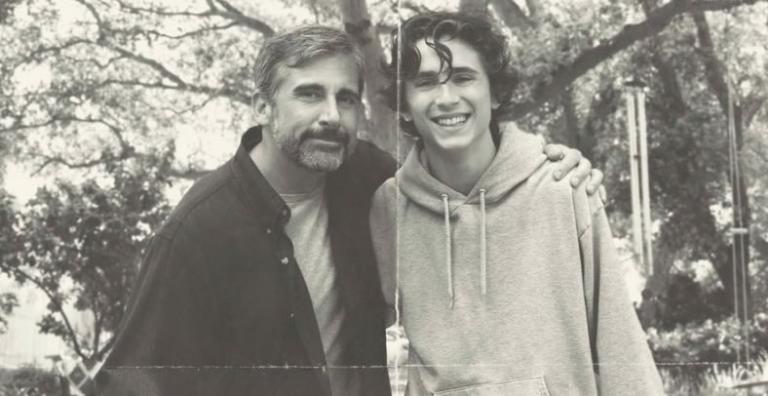
Steve Carell and Timothée Chalamet in press materials for Beautiful Boy, courtesy Amazon Studios
“I need to find a way to fill this big, black hole in me.”
Nic Sheff (Timothée Chalamet) says this in Beautiful Boy, speaking in a meeting to family, friends and fellow addicts. He’s talking about his own addictions, especially to crystal meth. “I felt complete,” he says of the aftermath of taking the drug. “I’ve been chasing that high ever since.” He talks about how grateful he is to be off the drug now, how much his parents and friends have supported him. “I want them to be proud of me,” he says. And he means it.
But still, that swirling hole lurks.
There’s so much I could write about Beautiful Boy. It moved me—wrenched me, really—in unexpected ways. But now, weeks after I saw it, my thoughts return to that big, black hole.
Movie awards season is still pretty young yet. Lots of Oscar hopefuls have yet to show up. But of those that I’ve seen, many make reference to that hole, and our overwhelming craving to fill it.
Jackson Maine (Bradley Cooper), the doomed singer from A Star is Born, felt that hole. He hoped to fill the vacuum inside him with his love for Ally (Lady Gaga). But it wasn’t enough; he turned to alcohol and drugs, and in time they consumed him.
You get the feeling that maybe First Man’s Neil Armstrong (Ryan Gosling) had a hole deep inside him, too—one left by the death of his little girl, Karen. He turned that hole into an obsessive drive to work: Each step to the moon he took seemed a step away from his family.
And then there’s Toller (Ethan Hawke), the tormented priest who lost a son to war in First Reformed. He pushes on, giving what comfort he can. But he’s sick, both physically and emotionally. The hole gnaws at his insides, killing him a bit at a time. He pours alcohol into the hole as if it was a swimming pool. But the more he pours the more it leaks, and we sense in the end he’s not looking for something to fill it, but for it to swallow him. To make him the hole. To surrender to its all-encompassing, all-voiding vacuum.
We see that same impulse in movies, in life. The desire to have that hole filled eventually morphs into a desire to be emptied.
When I first heard Nic talk of that “big, black hole,” my mind flashed to the words of 17th century mathematician and philosopher Blaise Pascal:
What else does this craving, and this helplessness, proclaim but that there was once in man a true happiness, of which all that now remains is the empty print and trace?
This he tries in vain to fill with everything around him, seeking in things that are not there the help he cannot find in those that are, though none can help, since this infinite abyss can be filled only with an infinite and immutable object; in other words by God himself.
The empty print, Pascal writes. A residue that left behind evidence of something better.
Nic said that the crystal meth made him feel complete. I wonder how much of our self-made struggles in this life are our straining efforts to find a sense of completeness. We look for it in relationships and work and escapes of all sorts. Maybe sometimes it drives us to greatness. Sometimes it pulls us down. But most often, I think, it simply lives with us—the gnawing knowledge that we’re missing something.
I used to think that Pascal meant that God would fill that space in us now—that finding Him would make us feel whole. And perhaps that happens to some extent. Studies show that those who believe in God report a greater sense of happiness and mission.
So when Christians, like me, still feel that sense of incompleteness in our lives—we feel evidence of that gnawing hole—we may sometimes wonder whether we’re Christian enough. Whether we’re doing something wrong.
And yet Pascal speaks of “true happiness” in past tense. We were once whole. Now, in this fallen world, we’re not. We can’t expect to be wholly healed here. Not now. But someday.
And until then?
None of the movies I’ve mentioned explicitly point to God as a source of solace. But they do point to something close to His heart: love. All of our characters come closer to their own narrative salvation—to a greater sense of completeness—through its promise. Love of companion, love of spouse, love of child, love of father. And sometimes, in context, it feels like it’s enough. And sometimes, it’s not.
In Beautiful Boy, We know Nic’s dad, David (Steve Carell), loves his son. He does everything he can to save his boy. His beautiful, beautiful boy. Sometimes, we see David and Nic say just one word to each other: “Everything.” It was a tradition that began when Nic really was a boy. David tells his son that his love for him is bigger than everything—that Nic means more to David than everything else the world has or ever will.
But even that love is not enough to fill that hole. Not by itself.
That’s the hard reality of Beautiful Boy—the acknowledgement that perhaps Nic—perhaps all of us—will never know what it feels to be truly complete. We can’t bring that sense of completion to anyone else, no matter how much we love them. We are finite beings, filled with our own brittle flaws. And we’ve got our own holes to deal with.
But we live on, hopefully. We find happiness and purpose in our sense of incompletion. And perhaps we can take solace even in that hole. Pascal’s empty print and trace speaks to an ultimate truth. A home. A place where we can rest in our Father’s hand, seeing not just His fingerprints, but feeling his fingers, holding us close and warm.
Finally, we will be complete.
Previous Post

October 19, 2018
Halloween's Michael Myers Is Not Just a Killer: He's a Demon.
Browse Our Archives
Select a Category books celebrities Editor's Choice games movies music news sports superheroes television Uncategorized
Select a Month May 2026 April 2026 March 2026 December 2025 October 2025 July 2025 June 2025 May 2025 February 2025 January 2025 December 2024 July 2024 June 2024 May 2024 April 2024 March 2024 February 2024 January 2024 December 2023 September 2023 March 2023 February 2023 December 2022 November 2022 October 2022 September 2022 August 2022 July 2022 June 2022 May 2022 April 2022 March 2022 February 2022 December 2021 October 2021 August 2021 July 2021 June 2021 May 2021 April 2021 March 2021 October 2020 August 2020 July 2020 June 2020 May 2020 April 2020 March 2020 February 2020 January 2020 December 2019 November 2019 October 2019 September 2019 August 2019 July 2019 June 2019 May 2019 April 2019 March 2019 February 2019 January 2019 December 2018 November 2018 October 2018 September 2018 August 2018 July 2018 June 2018 May 2018 April 2018 March 2018 February 2018 January 2018 December 2017 November 2017 October 2017 September 2017 August 2017 July 2017 June 2017 May 2017 April 2017 March 2017 February 2017 January 2017 December 2016 November 2016 October 2016 September 2016 August 2016 July 2016 June 2016 May 2016 April 2016 March 2016 February 2016 January 2016 December 2015 November 2015 October 2015 September 2015 August 2015 July 2015 June 2015 May 2015 April 2015 March 2015 February 2015 January 2015 December 2014 November 2014 October 2014 September 2014
Follow Us!
TAKE THE
Religious Wisdom Quiz
Who was the only daughter of Jacob mentioned by name in Genesis?
Select your answer to see how you score.
Dinah Judith Sarah Rahab
Books by This Author Books by Paul Asay
Related posts from Watching God

Finding Forgiveness in the Great Horror Film ‘Hokum’

What makes a hero? These 7 Cinematic Characters...

Finding God's Grace in ‘Project Hail Mary’

Watching God’s Top 10 Movies of 2025
TRENDING AT PATHEOS Religious Music & Entertainment

"Les Diabolique" and Transgression
Alongside something like Arrival, Vertigo, or Charade, Les Diaboliques is a...

"The Plague Dogs" and Mortality
So, flashback to the late 70s, early 80s. Walt Disney Studios is...

With the recent and highly successful release of Christopher Nolan’s epic film,...

"L'avventura" and Human Weakness
Today's piece is going to be a little different for a few...

I first want to apologize for not posting or writing anything. I'm...

I've engaged in the multi-year project of reading through the Church Fathers,...
view all Religious Music & Entertainment blogs
Ad-Free & Subscriber Log-In Subscription Support
- About Us
- 2026 Calendar
- Videos
- Podcasts
- Library of World Religions
- Faith In Media Tracker
- Advertise With Us
- Write for Us
- Privacy Policy
- Terms of Service
- Do Not Sell My Data
- Contact Us
- Radiant Digital
- Manage Newsletter Subscriptions
- Unsubscribe From Notifications
- Sitemap
Copyright 2008-2026, Patheos. All rights reserved.
Subscription Support Ad-Free & Subscriber Log-In
Follow Patheos