
BuddhistCatholicContemplativeEvangelicalGeneral ChristianHinduJewishLatter-day SaintMuslimNew VisionsProgressive Christian
Beliefs
- Buddhist
- Catholic
- Contemplative
- Evangelical
- General Christian
- Hindu
- Jewish
- Latter-day Saint
- More Voices
- Muslim
- New Visions
- Pagan
- Progressive Christian
Topics
- Religion News
- Food and Religion
- Sports and Religion
- Religious Art
- Religious Music and Entertainment
- Religious Events
- History and Religion
- Style and Religion
- Politics and Religion
- Women in Religion
- Recreation Outdoors and Religion
- Business Finance and Religion
- Careers Workplace and Religion
- Education and Religion
- Family Parenting and Religion
- Health Fitness and Religion
- Home and Religion
- Relationships and Religion
- Technology and Religion
- Travel and Religion
Columnists
- Buddhist Columnists
- Business Finance and Religion Columnists
- Careers Workplace and Religion Columnists
- Catholic Columnists
- Contemplative Columnists
- Education and Religion Columnists
- Evangelists Columnists
- Family Parenting and Religion Columnists
- General Christian Columnists
- Health Fitness and Religion Columnists
- Hindu Columnists
- History and Religion Columnists
- Home and Religion Columnists
- Jewish Columnists
- More Voices Columnists
- Latter Day Columnists
- Muslim Columnists
- New Visions Columnists
- Nonreligious Columnists
- Pagan Columnists
- Politics and Religion Columnists
- Progressive Columnists
- Recreation Outdoors and Religion Columnists
- Relationships and Religion Columnists
- Religion News Columnists
- Religious Art Columnists
- Religious Events Columnists
- Religious Music and Entertainment Columnists
- Sports and Religion Columnists
- Style and Religion Columnists
- Technology and Religion Columnists
- Travel and Religion Columnists
- Women in Religion Columnists
Resource Library
- 2026 Calendar
- Library of World Religions
- The 100 Most Holy Places on Earth
- Patheos Answers
- Podcasts
- Videos
- Faith Leaders Database
- Anglican Episcopalian
- Bahai
- Baptist
- Buddhism
- Christianity
- Confucianism
- Eastern Orthodoxy
- Hinduism
- Holiness and Pentecostal
- ISKCON
- Islam
- Judaism
- Lutheran
- Methodist
- The Church of Jesus Christ of Latter-day Saints
- New Age
- Paganism
- Presbytarian and Reformed
- Protestantism
- Religion Behind the Scenes
- Roman Catholic
- Scientology
- Shia Islam
- Sikhism
- Sufism
- Sunni Islam
- Taoism
- Zen
- See all religions
Research Tools
 Ad-Free & Subscriber Log-In Subscription Support
Ad-Free & Subscriber Log-In Subscription Support
Follow Patheos 

- Trending:
- Forgiveness
- |
- Marriage
- |
- Consciousness
- |
- Death Penalty
- |
- Election
- |
- Halloween

- Home
- Religious Music & Entertainment
- Why Captain America: Civil War Works (And Why Batman v Superman Didn’t)
Why Captain America: Civil War Works (And Why Batman v Superman Didn’t)
Last updated on: May 6, 2016 at 3:18 pm by Paul Asay
Why Captain America: Civil War Works (And Why Batman v Superman Didn’t) 2016-05-06T15:18:31-06:00 Paul Asay
Patheos Explore the world's faith through different perspectives on religion and spirituality! Patheos has the views of the prevalent religions and spiritualities of the world.

From Captain America: Civil War, photo from Disney trailer
Captain America: The Civil War might just be Disney/Marvel’s best superhero movie yet. It’s fun. It’s gritty. It’s heartfelt. And most importantly, the movie’s creators know their characters, never trying to make them less than who or what they are.
Are you listening, DC?
It’s interesting that Civil War and Warner Bros. Batman v Superman: Dawn of Justice were released in the very same year given how similar they are. Both feature iconic superheroes punching each other. Both acknowledge that there’s a cost in constantly saving the world—that not even the most powerful people in the world can prevent tragic collateral damage. And both hinge on a critical question: Should these living WMDs submit to some governmental oversight?
But only one of these movies really succeeds as top-notch entertainment. After seeing Civil War fly, I think I understand better why Batman v Superman never quite got off the ground. And it all comes down to why these heroes—ostensibly all on the same side—are fighting each other.
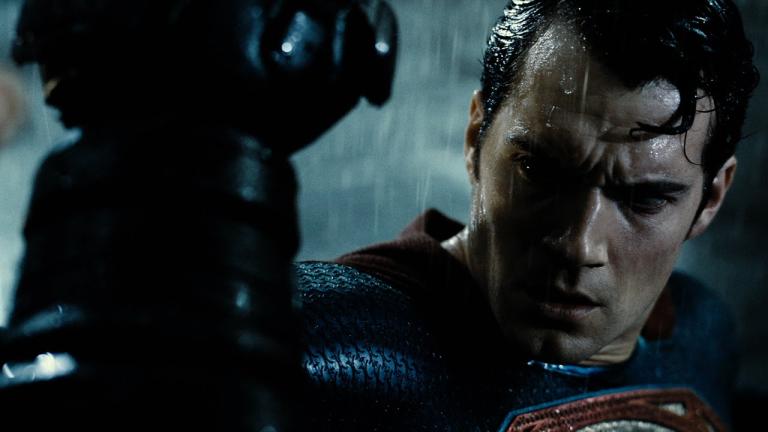
From Batman v Superman: Dawn of Justice. Photo courtesy Warner Bros.
In Batman v Superman, director Zack Snyder introduces us to his vision of The Dark Knight—a aging, grizzled vet of way too many shady showdowns to count. This Batman, taking his cues from Frank Miller’s classic-but-brutal (and non-canonical) graphic novel The Dark Knight Returns, is bitter and cruel—a good man who’s been twisted, his faithful manservant suggests. And he kinda hates this new arrival, this red-and-blue-clad flyboy from Krypton: Bats believes that Superman doesn’t seem to care about the collateral damage he causes, and he worries that if Supes goes bad, he could go really bad. He believes the guy needs to be checked.
Ironically, that’s exactly how Superman feels about Batman. He reads the stories of this masked marauder (and his increasingly brutal acts of vengeance) and sees an unhinged, secretive vigilante—a guy who operates the bounds of the law. Never mind that much of that Superman also hides his identity and rarely gets congressional approval before he swings into action: Batman, he believes, should be stopped.
All this comes to a head through the mechanizations of Lex Luthor, who feeds Batman’s rage and forces Superman to fight Bats by kidnapping Supes’ mom. Thank goodness they eventually managed to push aside their animosity in time to save the world.
We don’t have that sort of Three’s Company-level misunderstanding in Civil War. After all, Steve Rogers (Captain America) and Tony Stark (Iron Man) are quite familiar with each other—sometimes much to their mutual discomfort.
“The only thing you really fight for is yourself,” Steve tells Tony in The Avengers. “You’re not the guy to make the sacrifice play, to lay down on a wire and let the other guy crawl over you.”
“I think I would just cut the wire,” Tony says.
So they’re not exactly besties. But they come to have a great deal of respect for one another. Steve realizes that Tony can make the sacrifice play—and Tony sees that Steve’s more than something that (as he spits in the same movie) “came out of a bottle.”
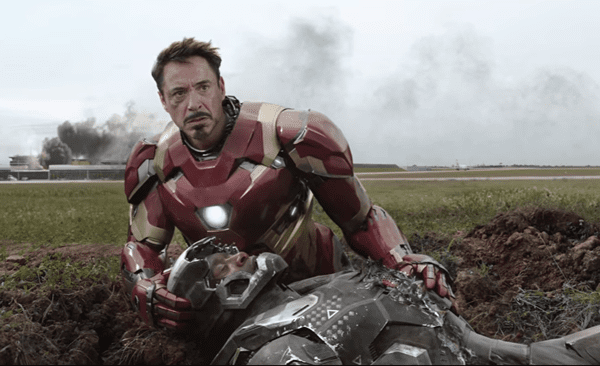
From Captain America: Civil War. Photo courtesy Disney trailer
Disney and Marvel, masters of the multi-movie story arc, have given us a couple of do-gooders who might not agree with each other about much … except in their desire to do good. And that’s more than enough to make them more than allies, but friends too.
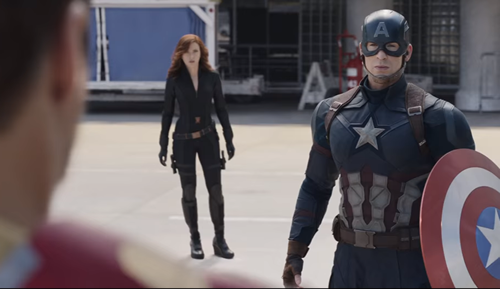
And so when the central conflict comes into play—whether superheroes should place themselves under the authority of the United Nations, courtesy the Sokovia Accords—there’s no misunderstanding. Captain America, by refusing to sign the Accords (and, eventually, openly defying them to save his onetime BFF, Bucky Barnes), is doing what he thinks is right. Iron Man, as the most vocal supporter of the Accords, is following his conscience, too. In fact, I’d argue that Tony Stark is at his most principled here: A character who has been defined largely by his flaws—his ego, his alcoholism, his womanizing—is here standing up for something he feels is critically important, to both the future of The Avengers and, perhaps, to the future of the world.
I go into the more spiritual aspects of that disagreement in my conclusion over at Plugged In, by the way, but in this space, let’s just think about what that does to our story—and how satisfying that story ultimately is. In Batman v Superman, we in the audience know the whole conflict between superheroes could be solved with just a heart-to-heart over coffee. If they would just talk to each other, they could work it out. The fact that they don’t makes them feel petty. Small. Less heroic.
In Civil War, there’s no lack of communication. There’s no lack of affection. These are two guys who simply disagree—and each of them have really, really good reasons for why they do. They’re each standing on principle. They’re both making what they believe to be the moral choice. Neither they nor their fellow superheroes are being brainwashed or blackmailed. Everyone has their eyes wide open. And as such, they feel principled, not petty. They are, in a sense, more heroic in their differences, not less.
There’s a beauty in how Marvel sets up this conflict—allowing these superheroes to fight for what they believe is “right” … and yet still fight. It’s a mirror of what often happens in our world, too: Just because we may disagree with each other doesn’t necessarily make one or the other of us evil. (If only our politicians could remember that more often.) And as the movie moves into its gripping conclusion, we feel the rupture of these bonds of affection all the more deeply.
Disney and Marvel understands their heroes. They respect them and fit the movies to the characters, not the other way ’round. Most importantly, they understand why we moviegoers love them so. Here’s to hoping that DC and Warner Bros. come to that same understanding.
Previous Post

May 3, 2016
Are Miracles Real? Just Look Around.
Next Post

May 11, 2016 Director Rodrigo Garcia Talks Last Days in the Desert
Browse Our Archives
Select a Category books celebrities Editor's Choice games movies music news sports superheroes television Uncategorized
Select a Month May 2026 April 2026 March 2026 December 2025 October 2025 July 2025 June 2025 May 2025 February 2025 January 2025 December 2024 July 2024 June 2024 May 2024 April 2024 March 2024 February 2024 January 2024 December 2023 September 2023 March 2023 February 2023 December 2022 November 2022 October 2022 September 2022 August 2022 July 2022 June 2022 May 2022 April 2022 March 2022 February 2022 December 2021 October 2021 August 2021 July 2021 June 2021 May 2021 April 2021 March 2021 October 2020 August 2020 July 2020 June 2020 May 2020 April 2020 March 2020 February 2020 January 2020 December 2019 November 2019 October 2019 September 2019 August 2019 July 2019 June 2019 May 2019 April 2019 March 2019 February 2019 January 2019 December 2018 November 2018 October 2018 September 2018 August 2018 July 2018 June 2018 May 2018 April 2018 March 2018 February 2018 January 2018 December 2017 November 2017 October 2017 September 2017 August 2017 July 2017 June 2017 May 2017 April 2017 March 2017 February 2017 January 2017 December 2016 November 2016 October 2016 September 2016 August 2016 July 2016 June 2016 May 2016 April 2016 March 2016 February 2016 January 2016 December 2015 November 2015 October 2015 September 2015 August 2015 July 2015 June 2015 May 2015 April 2015 March 2015 February 2015 January 2015 December 2014 November 2014 October 2014 September 2014
Follow Us!
TAKE THE
Religious Wisdom Quiz
Who played cymbals in Temple worship?
Select your answer to see how you score.
Solomon Moses Asaph David
Books by This Author Books by Paul Asay
Related posts from Watching God

Finding Forgiveness in the Great Horror Film ‘Hokum’

What makes a hero? These 7 Cinematic Characters...

Finding God's Grace in ‘Project Hail Mary’

Watching God’s Top 10 Movies of 2025
TRENDING AT PATHEOS Religious Music & Entertainment

"Les Diabolique" and Transgression
Alongside something like Arrival, Vertigo, or Charade, Les Diaboliques is a...

"The Plague Dogs" and Mortality
So, flashback to the late 70s, early 80s. Walt Disney Studios is...

With the recent and highly successful release of Christopher Nolan’s epic film,...

"L'avventura" and Human Weakness
Today's piece is going to be a little different for a few...

I first want to apologize for not posting or writing anything. I'm...

I've engaged in the multi-year project of reading through the Church Fathers,...
view all Religious Music & Entertainment blogs
Ad-Free & Subscriber Log-In Subscription Support
- About Us
- 2026 Calendar
- Videos
- Podcasts
- Library of World Religions
- Faith In Media Tracker
- Advertise With Us
- Write for Us
- Privacy Policy
- Terms of Service
- Do Not Sell My Data
- Contact Us
- Radiant Digital
- Manage Newsletter Subscriptions
- Unsubscribe From Notifications
- Sitemap
Copyright 2008-2026, Patheos. All rights reserved.
Subscription Support Ad-Free & Subscriber Log-In
Follow Patheos