
BuddhistCatholicContemplativeEvangelicalGeneral ChristianHinduJewishLatter-day SaintMuslimNew VisionsProgressive Christian
Beliefs
- Buddhist
- Catholic
- Contemplative
- Evangelical
- General Christian
- Hindu
- Jewish
- Latter-day Saint
- More Voices
- Muslim
- New Visions
- Pagan
- Progressive Christian
Topics
- Religion News
- Food and Religion
- Sports and Religion
- Religious Art
- Religious Music and Entertainment
- Religious Events
- History and Religion
- Style and Religion
- Politics and Religion
- Women in Religion
- Recreation Outdoors and Religion
- Business Finance and Religion
- Careers Workplace and Religion
- Education and Religion
- Family Parenting and Religion
- Health Fitness and Religion
- Home and Religion
- Relationships and Religion
- Technology and Religion
- Travel and Religion
Columnists
- Buddhist Columnists
- Business Finance and Religion Columnists
- Careers Workplace and Religion Columnists
- Catholic Columnists
- Contemplative Columnists
- Education and Religion Columnists
- Evangelists Columnists
- Family Parenting and Religion Columnists
- General Christian Columnists
- Health Fitness and Religion Columnists
- Hindu Columnists
- History and Religion Columnists
- Home and Religion Columnists
- Jewish Columnists
- More Voices Columnists
- Latter Day Columnists
- Muslim Columnists
- New Visions Columnists
- Nonreligious Columnists
- Pagan Columnists
- Politics and Religion Columnists
- Progressive Columnists
- Recreation Outdoors and Religion Columnists
- Relationships and Religion Columnists
- Religion News Columnists
- Religious Art Columnists
- Religious Events Columnists
- Religious Music and Entertainment Columnists
- Sports and Religion Columnists
- Style and Religion Columnists
- Technology and Religion Columnists
- Travel and Religion Columnists
- Women in Religion Columnists
Resource Library
- 2026 Calendar
- Library of World Religions
- The 100 Most Holy Places on Earth
- Patheos Answers
- Podcasts
- Videos
- Faith Leaders Database
- Anglican Episcopalian
- Bahai
- Baptist
- Buddhism
- Christianity
- Confucianism
- Eastern Orthodoxy
- Hinduism
- Holiness and Pentecostal
- ISKCON
- Islam
- Judaism
- Lutheran
- Methodist
- The Church of Jesus Christ of Latter-day Saints
- New Age
- Paganism
- Presbytarian and Reformed
- Protestantism
- Religion Behind the Scenes
- Roman Catholic
- Scientology
- Shia Islam
- Sikhism
- Sufism
- Sunni Islam
- Taoism
- Zen
- See all religions
Research Tools
 Ad-Free & Subscriber Log-In Subscription Support
Ad-Free & Subscriber Log-In Subscription Support
Follow Patheos 

- Trending:
- Forgiveness
- |
- Marriage
- |
- Consciousness
- |
- Death Penalty
- |
- Election
- |
- Halloween

- Home
- Religious Music & Entertainment
- Selma: The Fearsome Power of Faith
Selma: The Fearsome Power of Faith
Last updated on: January 12, 2015 at 7:36 am by Paul Asay
Selma: The Fearsome Power of Faith 2015-01-12T07:36:02-06:00 Paul Asay
Patheos Explore the world's faith through different perspectives on religion and spirituality! Patheos has the views of the prevalent religions and spiritualities of the world.
The late Christopher Hitchens once wrote a book called God is Not Great: How Religion Poisons Everything. He was quite serious about it.
Hitchens was a smart man and, often, a brilliant writer. But on this matter, he was blind. His overreach here is obvious. Yes, religion does have sins to answer for. But when someone insists that “religion poisons everything,” I don’t even need to have a rebuttal ready. I’d just need to point to the movie marquee of Selma.
Selma examines the 1965 Civil Rights marches in Selma, Ala., organized by Martin Luther King Jr. It’s a fantastic movie—my personal pick for the year’s best. David Oyelowo and Carmen Ejogo are stellar as Dr. and Coretta Scott King, and the story it unspools is an unflinching look at the days in which it took place. Much of the focus is naturally on King, but this is no fawning biopic. It’s a healthy examination of an imperfect man who, through the power of his voice and convictions, became the country’s greatest champion of civil rights.
Those convictions were informed, in large part, by King’s Christian faith.
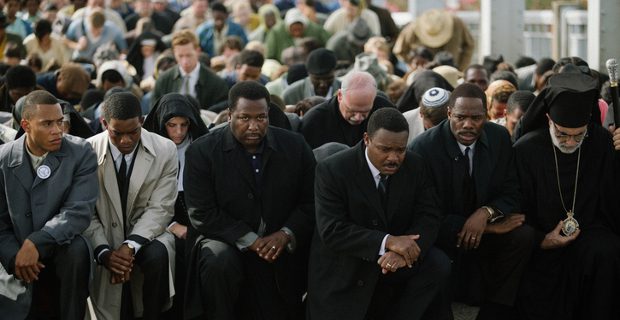 King tells us that he’s a simple pastor from Alabama, and his organization was called the Southern Christian Leadership Conference. They bolster each other with Bible verses, rally marchers from pulpits, and when King prepares to travel down to Selma, he calls a famous gospel singer.
“I need to hear the Lord’s voice,” he tells her, and the singer—though it’s the middle of the night and the FBI’s listening in—sings a spiritual to him.
King was not a man who used religion as a tool for civil rights. He saw himself as that tool—held by the hand of the Almighty. “I’ll not be focusing on what I want today,” he says, preparing for the climactic march from Selma to Montgomery. “I’ll be focusing on what God wants.”
Selma suggests that many of the demonstrators were following what they thought was God’s call. After “Bloody Sunday,” when Alabama state troopers and Dallas County volunteers attacked protestors on March 7, 1965, thousands of civil rights reinforcements came from all over the country—many motivated by their faith. The film makes it a point to show the protestors’ racial and religious diversity, with King warmly welcoming members of a Greek Orthodox Church to the marches. Pastors are shown leaving their parishes and congregations to take part in the demonstrations. And not all made it back.
Pastor James Reeb was killed March 11, 1965, for taking part in the marches. “Now you know what being a n—er down here feels like, boy,” his attacker tells him in the movie. But just minutes before the attack, he was talking with a friend about the mysterious motivating power of God. There are times, Reeb admits, that he feels the Lord moving his spirit, even his actions. “You’re tapped into what’s higher,” he says. “What’s true.”
Religion is not a poison. According to Selma, it’s a medicine—an antidote to combat some of the world’s worst evils, capable of inspiring men to set aside their own sins and anger to seek, and achieve, something higher. Through faith, we seek our more perfect selves and try to tap into what is true.
Religion has been, of course, misused throughout history. Sometimes, when we say we seek the truth of God, we’re really simply looking to justify our own self-made predilections. We may truly believe we’ve tapped into what’s higher, when in reality we’ve only tapped our own sinful souls.
But Selma suggests that, when we truly and selflessly seek the face of God—when we’re willing to go wherever His finger points—there’s nothing that can’t be accomplished.
Previous Post

January 6, 2015
Stuart Scott Won His Battle
Next Post

January 16, 2015 Oscars Missed a Good One in Calvary
Browse Our Archives
Select a Category books celebrities Editor's Choice games movies music news sports superheroes television Uncategorized
Select a Month May 2026 April 2026 March 2026 December 2025 October 2025 July 2025 June 2025 May 2025 February 2025 January 2025 December 2024 July 2024 June 2024 May 2024 April 2024 March 2024 February 2024 January 2024 December 2023 September 2023 March 2023 February 2023 December 2022 November 2022 October 2022 September 2022 August 2022 July 2022 June 2022 May 2022 April 2022 March 2022 February 2022 December 2021 October 2021 August 2021 July 2021 June 2021 May 2021 April 2021 March 2021 October 2020 August 2020 July 2020 June 2020 May 2020 April 2020 March 2020 February 2020 January 2020 December 2019 November 2019 October 2019 September 2019 August 2019 July 2019 June 2019 May 2019 April 2019 March 2019 February 2019 January 2019 December 2018 November 2018 October 2018 September 2018 August 2018 July 2018 June 2018 May 2018 April 2018 March 2018 February 2018 January 2018 December 2017 November 2017 October 2017 September 2017 August 2017 July 2017 June 2017 May 2017 April 2017 March 2017 February 2017 January 2017 December 2016 November 2016 October 2016 September 2016 August 2016 July 2016 June 2016 May 2016 April 2016 March 2016 February 2016 January 2016 December 2015 November 2015 October 2015 September 2015 August 2015 July 2015 June 2015 May 2015 April 2015 March 2015 February 2015 January 2015 December 2014 November 2014 October 2014 September 2014
Follow Us!
TAKE THE
Religious Wisdom Quiz
After healing a leper, Jesus sternly warned him to tell no one but show himself to the priest. Did the man obey?
Select your answer to see how you score.
Yes, he told only the priest Yes, he remained silent Partially, he told his family only No, he spread the news widely
Books by This Author Books by Paul Asay
Related posts from Watching God

Finding Forgiveness in the Great Horror Film ‘Hokum’

What makes a hero? These 7 Cinematic Characters...

Finding God's Grace in ‘Project Hail Mary’

Watching God’s Top 10 Movies of 2025
TRENDING AT PATHEOS Religious Music & Entertainment

"Les Diabolique" and Transgression
Alongside something like Arrival, Vertigo, or Charade, Les Diaboliques is a...

"The Plague Dogs" and Mortality
So, flashback to the late 70s, early 80s. Walt Disney Studios is...

With the recent and highly successful release of Christopher Nolan’s epic film,...

"L'avventura" and Human Weakness
Today's piece is going to be a little different for a few...

I first want to apologize for not posting or writing anything. I'm...

I've engaged in the multi-year project of reading through the Church Fathers,...
view all Religious Music & Entertainment blogs
Ad-Free & Subscriber Log-In Subscription Support
- About Us
- 2026 Calendar
- Videos
- Podcasts
- Library of World Religions
- Faith In Media Tracker
- Advertise With Us
- Write for Us
- Privacy Policy
- Terms of Service
- Do Not Sell My Data
- Contact Us
- Radiant Digital
- Manage Newsletter Subscriptions
- Unsubscribe From Notifications
- Sitemap
Copyright 2008-2026, Patheos. All rights reserved.
Subscription Support Ad-Free & Subscriber Log-In
Follow Patheos