
BuddhistCatholicContemplativeEvangelicalGeneral ChristianHinduJewishLatter-day SaintMuslimNew VisionsProgressive Christian
Beliefs
- Buddhist
- Catholic
- Contemplative
- Evangelical
- General Christian
- Hindu
- Jewish
- Latter-day Saint
- More Voices
- Muslim
- New Visions
- Pagan
- Progressive Christian
Topics
- Religion News
- Food and Religion
- Sports and Religion
- Religious Art
- Religious Music and Entertainment
- Religious Events
- History and Religion
- Style and Religion
- Politics and Religion
- Women in Religion
- Recreation Outdoors and Religion
- Business Finance and Religion
- Careers Workplace and Religion
- Education and Religion
- Family Parenting and Religion
- Health Fitness and Religion
- Home and Religion
- Relationships and Religion
- Technology and Religion
- Travel and Religion
Columnists
- Buddhist Columnists
- Business Finance and Religion Columnists
- Careers Workplace and Religion Columnists
- Catholic Columnists
- Contemplative Columnists
- Education and Religion Columnists
- Evangelists Columnists
- Family Parenting and Religion Columnists
- General Christian Columnists
- Health Fitness and Religion Columnists
- Hindu Columnists
- History and Religion Columnists
- Home and Religion Columnists
- Jewish Columnists
- More Voices Columnists
- Latter Day Columnists
- Muslim Columnists
- New Visions Columnists
- Nonreligious Columnists
- Pagan Columnists
- Politics and Religion Columnists
- Progressive Columnists
- Recreation Outdoors and Religion Columnists
- Relationships and Religion Columnists
- Religion News Columnists
- Religious Art Columnists
- Religious Events Columnists
- Religious Music and Entertainment Columnists
- Sports and Religion Columnists
- Style and Religion Columnists
- Technology and Religion Columnists
- Travel and Religion Columnists
- Women in Religion Columnists
Resource Library
- 2026 Calendar
- Library of World Religions
- The 100 Most Holy Places on Earth
- Patheos Answers
- Podcasts
- Videos
- Faith Leaders Database
- Anglican Episcopalian
- Bahai
- Baptist
- Buddhism
- Christianity
- Confucianism
- Eastern Orthodoxy
- Hinduism
- Holiness and Pentecostal
- ISKCON
- Islam
- Judaism
- Lutheran
- Methodist
- The Church of Jesus Christ of Latter-day Saints
- New Age
- Paganism
- Presbytarian and Reformed
- Protestantism
- Religion Behind the Scenes
- Roman Catholic
- Scientology
- Shia Islam
- Sikhism
- Sufism
- Sunni Islam
- Taoism
- Zen
- See all religions
Research Tools
 Ad-Free & Subscriber Log-In Subscription Support
Ad-Free & Subscriber Log-In Subscription Support
Follow Patheos 

- Trending:
- Forgiveness
- |
- Marriage
- |
- Consciousness
- |
- Death Penalty
- |
- Election
- |
- Halloween

- Home
- Religious Music & Entertainment
- The Science and Spirituality of Interstellar
The Science and Spirituality of Interstellar
Last updated on: November 17, 2014 at 6:41 am by Paul Asay
The Science and Spirituality of Interstellar 2014-11-16T22:49:15-06:00 Paul Asay
Patheos Explore the world's faith through different perspectives on religion and spirituality! Patheos has the views of the prevalent religions and spiritualities of the world.
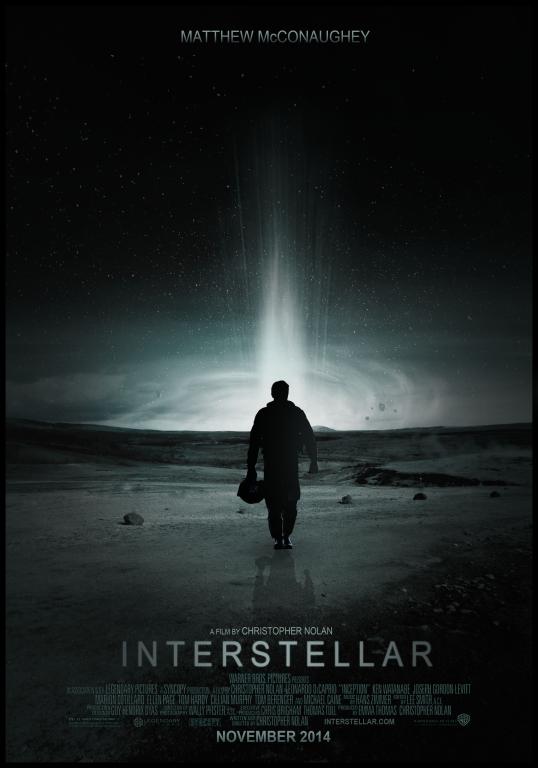 First, let’s talk about the organ.
It’s inescapable in Interstellar. At the movie’s most critical moments, the theater will shake with a massive, filling-bursting organ chord that sounds like Bach just dropped an ACME anvil on his favorite instrument. The chord is huge—so big that it’s causing a bit of a media buzz, too.
It’s a fascinating use of sound by Director Christopher Nolan and Composer Hans Zimmer—at once a cacophony and an intricate, sprawling harmony of meaning, cascading over octave and key. There’s design here, the chord says. Pattern. You’re awed by the chord’s muscular bluster, then intrigued by the intention behind its noisy wind.
And I think it reflects the dissonant harmony of the film itself—a film that both embraces strict scientific humanism and a transcendent truth beyond it.
The organ is, according to The Atlantic, a four-manual Harrison & Harrison, made in 1926 and housed in London’s Temple Church. Zimmer says the organ was chosen for how science-y it was. And big church organs are, without question, amazing technological achievements. For a newspaper story, I once spent a day with a local organist poking around his instrument—one that was made up of 4,000 pipes and filled four rooms.
But those technological marvels are typically, of course, located in churches. Organs are inexorably linked to religion and their sound to hymn. We can’t hear Zimmer’s chord without images of flying buttresses and stained glass seeping into part of our minds. Folks might not appreciate the organ’s technical beauty understand how spiritual they can be. And that, in a way, is sort of a reflection of the dual marvel that music itself is—inescapably mathematical, filled with precise measure and time, and inherently artistic, used to give literal voice to the deepest longings of our souls.
The organ is, in a way, a metaphor for Interstellar itself—Nolan’s meditation of science and spirit.
First off, Interstellar is a very science-driven movie. It takes its science so seriously, in fact, that that lauded physicist Kip Thorne was one of the movie’s executive producers. And throughout the movie, we see humanity using science to deal with the universe’s cold but logically inescapable sense of destiny.
We’re told that humankind nearly obliterated itself through excess, and what’s left of humanity is using agricultural science to get the planet back on its feet again. Cooper (Matthew McConaughey), a one-time NASA pilot-turned-farmer, uses all his scientific and technological know-how to grow a healthy crop of corn—the only crop that seems to grow on the planet anymore. But despite all those best efforts, the planet seems doomed. And, in a super-secret facility in the middle of nowhere, a different sort of science is at work, struggling to save a remnant of humanity: Led by the sage Dr. Brand (Michael Caine), a group of physicists and engineers labor to utilize a mysterious wormhole near Saturn—a wormhole that leads to another galaxy and, incredibly, other inhabitable planets. In fact, they’ve already sent a dozen scientists led by the impressive Dr. Mann, through, and they’ve sent back some promising results.
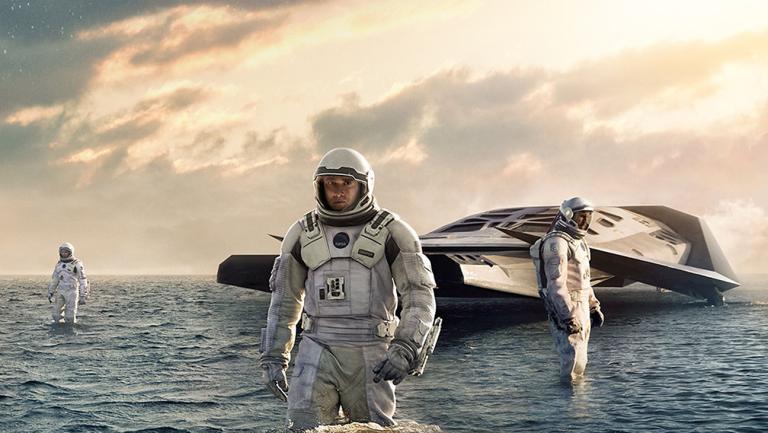 Sure, there are some technological hurdles to overcome: It’s hard to figure out how to rescue a good chunk of humanity, for instance, when dealing with Earth’s pesky gravitational pull. But Brand and his cohorts mean to try. But in the meantime, he wants Cooper to fly another scientist-laden craft through the wormhole to gather data and fly home with a planetary target—a new home—in mind.
(Caution: Massive Spoilers Ahead.)
Now, throughout this desperate scientific inquiry, we hear talk of a mysterious “they.” We’re given to understand that “they” are fifth-dimensional beings trying to help us find a new home. They opened the wormhole. They may have sent cryptic messages to Coop and his daughter, Murphy (played by Jessica Chastain when Murph gets older). And when Coop and his scientists get their craft underway, “they” even seem to physically reach out and touch Amelia Brand (Anne Hathaway).
If you’ve seen the movie, you know how this ends—at least if Cooper’s own musings on the subject can be trusted. There is no “they,” only “we.” Humanity saved itself.
But before and after and even (especially?) in the midst of this humanist conclusion, there’s a sense of something else at work here, something even perhaps divine—and a skepticism of both the power of science and the power of man to save us.
Consider: We hear often about how the scientists that went ahead were “the best of us.” The bravest. The smartest. The most coolly logical. And the three scientists aboard with Cooper are an extension of humanity’s very best. They understand that this trip is a long shot: They might not be able to save the people on earth. But they’re taking along some fertilized eggs that might serve to jump-start the human race somewhere else. They are single-minded in their commitment to the mission. Except for Cooper, they have no spouses or lovers back home, no sons or daughters, no emotional distractions from the job that lies before them.
Cooper, in contrast, seems almost selfish. While the other scientists understand that they might not make it back (and might not be able to save the folks on earth even if they do), Cooper desperately wants to return to see his kids again. It’s a point of tension: “You might have to decide between seeing your children again and the future of the human race,” Amelia tells him. “You can’t just think about your family,” another scientist harps. “You have to think bigger than that.”
Of all the people involved in this mission, Dr. Mann, we’re led to believe, is the best of them all. Amelia herself says so. He’s the smartest, the bravest, the most capable.
But as it turns out “the best of us” fails. He betrays Cooper, Amelia and the rest of humanity, desiring only to escape the cold planet on which he’s been marooned for so long.
It’s not by mere happenstance that the guy was named “Dr. Mann,” of course. Perhaps he represents the pinnacle of purely human achievement—a fully evolved, perfectly bright, coldly efficient scientist who follows his evolutionary instinct for self-preservation and does what millions of years of pure biological programming have conditioned him to do: Survive and thrive. He can’t admit to the world that he fabricated his data to draw a rescue. He must cover his misdeeds and fly away unscathed—and that apparently means killing or marooning anyone who might get in his way. And yet, he clings to the notion of self-sacrifice even so. “This is not about saving my life, it’s about saving the human race!” he says.
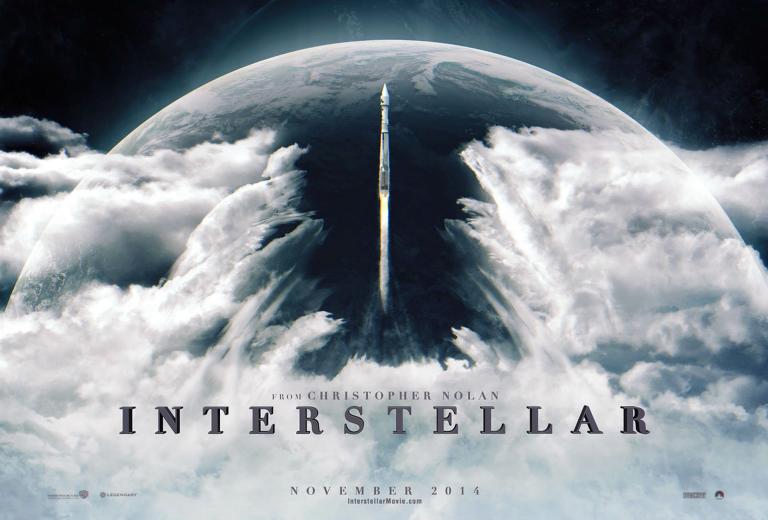 What eventually separates Mann from Cooper and Amelia is a very deep (and Christians believe very divine) emotion: Love.
It is love that drives Cooper home—his desperate desire to see his daughter again. It is love that drives Amelia forward—to the only truly habitable planet to be found through the wormhole. It is love that keeps Cooper’s daughter Murphy working for a solution … and allowing her father to somehow transcend unimaginable distances and time … to help give her the answer.
“Murph, I love you forever,” Cooper tells his 10-year-old daughter before he leaves. And when Cooper comes back home to see Murph—now impossibly old—one last time, she says she had faith she’d see him again.
“Nobody believed me, but I knew you’d come back,” she says.
“How?” Cooper says.
“Because my dad promised me.”
Love. We hear Amelia talk about how people still love their relatives, long gone, suggesting the emotion goes beyond mere chemistry or biology. “Love is the one thing that transcends time and space,” she says. It is, the movie suggests, the most powerful force in the universe, able to bend even physics to its will. It’s a strange, sci-fi postulation of what the Apostle Paul told us all nearly 2,000 years earlier: “Love never fails.”
God never makes a cameo in Interstellar. And yet, He does—at least, He does for us Christians. “Dear friends, let us love one another, for love comes from God,” John writes in 1 John 4:7-8. “Everyone who loves has been born of God and knows God. Whoever does not love does not know God, because God is love.”
God is love. As steeped in science as Interstellar is, as humanistic as it can appear to be, I’ve never seen a movie that so clearly, so emphatically illustrated how this might be so. It is a powerful message, and as loud as a booming organ chord.
Previous Post

November 14, 2014
The Little Mermaid: Like the Garden of Eden, Only Wetter
Next Post
November 19, 2014 Batman Doc Swings Onto Video
Browse Our Archives
Select a Category books celebrities Editor's Choice games movies music news sports superheroes television Uncategorized
Select a Month May 2026 April 2026 March 2026 December 2025 October 2025 July 2025 June 2025 May 2025 February 2025 January 2025 December 2024 July 2024 June 2024 May 2024 April 2024 March 2024 February 2024 January 2024 December 2023 September 2023 March 2023 February 2023 December 2022 November 2022 October 2022 September 2022 August 2022 July 2022 June 2022 May 2022 April 2022 March 2022 February 2022 December 2021 October 2021 August 2021 July 2021 June 2021 May 2021 April 2021 March 2021 October 2020 August 2020 July 2020 June 2020 May 2020 April 2020 March 2020 February 2020 January 2020 December 2019 November 2019 October 2019 September 2019 August 2019 July 2019 June 2019 May 2019 April 2019 March 2019 February 2019 January 2019 December 2018 November 2018 October 2018 September 2018 August 2018 July 2018 June 2018 May 2018 April 2018 March 2018 February 2018 January 2018 December 2017 November 2017 October 2017 September 2017 August 2017 July 2017 June 2017 May 2017 April 2017 March 2017 February 2017 January 2017 December 2016 November 2016 October 2016 September 2016 August 2016 July 2016 June 2016 May 2016 April 2016 March 2016 February 2016 January 2016 December 2015 November 2015 October 2015 September 2015 August 2015 July 2015 June 2015 May 2015 April 2015 March 2015 February 2015 January 2015 December 2014 November 2014 October 2014 September 2014
Follow Us!
TAKE THE
Religious Wisdom Quiz
What practice did Ezra enforce upon discovering intermarriage with pagans?
Select your answer to see how you score.
Fast for months Divorce foreign wives Worship at home Ignore the issue
Books by This Author Books by Paul Asay
Related posts from Watching God

Finding Forgiveness in the Great Horror Film ‘Hokum’

What makes a hero? These 7 Cinematic Characters...

Finding God's Grace in ‘Project Hail Mary’

Watching God’s Top 10 Movies of 2025
TRENDING AT PATHEOS Religious Music & Entertainment

"Les Diabolique" and Transgression
Alongside something like Arrival, Vertigo, or Charade, Les Diaboliques is a...

"The Plague Dogs" and Mortality
So, flashback to the late 70s, early 80s. Walt Disney Studios is...

With the recent and highly successful release of Christopher Nolan’s epic film,...

"L'avventura" and Human Weakness
Today's piece is going to be a little different for a few...

I first want to apologize for not posting or writing anything. I'm...

I've engaged in the multi-year project of reading through the Church Fathers,...
view all Religious Music & Entertainment blogs
Ad-Free & Subscriber Log-In Subscription Support
- About Us
- 2026 Calendar
- Videos
- Podcasts
- Library of World Religions
- Faith In Media Tracker
- Advertise With Us
- Write for Us
- Privacy Policy
- Terms of Service
- Do Not Sell My Data
- Contact Us
- Radiant Digital
- Manage Newsletter Subscriptions
- Unsubscribe From Notifications
- Sitemap
Copyright 2008-2026, Patheos. All rights reserved.
Subscription Support Ad-Free & Subscriber Log-In
Follow Patheos