
BuddhistCatholicContemplativeEvangelicalGeneral ChristianHinduJewishLatter-day SaintMuslimNew VisionsProgressive Christian
Beliefs
- Buddhist
- Catholic
- Contemplative
- Evangelical
- General Christian
- Hindu
- Jewish
- Latter-day Saint
- More Voices
- Muslim
- New Visions
- Pagan
- Progressive Christian
Topics
- Religion News
- Food and Religion
- Sports and Religion
- Religious Art
- Religious Music and Entertainment
- Religious Events
- History and Religion
- Style and Religion
- Politics and Religion
- Women in Religion
- Recreation Outdoors and Religion
- Business Finance and Religion
- Careers Workplace and Religion
- Education and Religion
- Family Parenting and Religion
- Health Fitness and Religion
- Home and Religion
- Relationships and Religion
- Technology and Religion
- Travel and Religion
Columnists
- Buddhist Columnists
- Business Finance and Religion Columnists
- Careers Workplace and Religion Columnists
- Catholic Columnists
- Contemplative Columnists
- Education and Religion Columnists
- Evangelists Columnists
- Family Parenting and Religion Columnists
- General Christian Columnists
- Health Fitness and Religion Columnists
- Hindu Columnists
- History and Religion Columnists
- Home and Religion Columnists
- Jewish Columnists
- More Voices Columnists
- Latter Day Columnists
- Muslim Columnists
- New Visions Columnists
- Nonreligious Columnists
- Pagan Columnists
- Politics and Religion Columnists
- Progressive Columnists
- Recreation Outdoors and Religion Columnists
- Relationships and Religion Columnists
- Religion News Columnists
- Religious Art Columnists
- Religious Events Columnists
- Religious Music and Entertainment Columnists
- Sports and Religion Columnists
- Style and Religion Columnists
- Technology and Religion Columnists
- Travel and Religion Columnists
- Women in Religion Columnists
Resource Library
- 2026 Calendar
- Library of World Religions
- The 100 Most Holy Places on Earth
- Patheos Answers
- Podcasts
- Videos
- Faith Leaders Database
- Anglican Episcopalian
- Bahai
- Baptist
- Buddhism
- Christianity
- Confucianism
- Eastern Orthodoxy
- Hinduism
- Holiness and Pentecostal
- ISKCON
- Islam
- Judaism
- Lutheran
- Methodist
- The Church of Jesus Christ of Latter-day Saints
- New Age
- Paganism
- Presbytarian and Reformed
- Protestantism
- Religion Behind the Scenes
- Roman Catholic
- Scientology
- Shia Islam
- Sikhism
- Sufism
- Sunni Islam
- Taoism
- Zen
- See all religions
Research Tools
 Ad-Free & Subscriber Log-In Subscription Support
Ad-Free & Subscriber Log-In Subscription Support
Follow Patheos 

- Trending:
- Forgiveness
- |
- Marriage
- |
- Consciousness
- |
- Death Penalty
- |
- Election
- |
- Halloween

- Home
- Religious Music & Entertainment
- Spiritual Space: Finding Faith in the Sci-Fi Stars
Spiritual Space: Finding Faith in the Sci-Fi Stars
Last updated on: November 10, 2014 at 7:03 am by Paul Asay
Spiritual Space: Finding Faith in the Sci-Fi Stars 2014-11-09T22:11:43-06:00 Paul Asay
Patheos Explore the world's faith through different perspectives on religion and spirituality! Patheos has the views of the prevalent religions and spiritualities of the world.
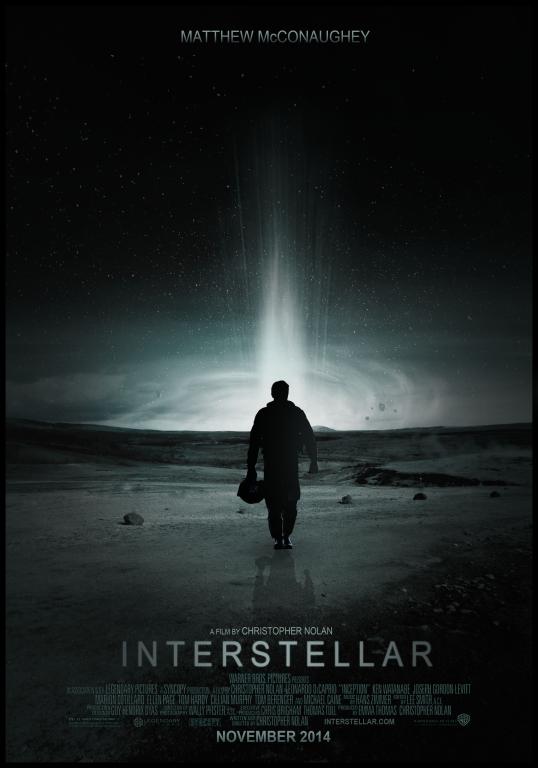 There is something in the stars that stirs us. We see the infinite space crease and fold and stretch and twist, the sky both so empty and so full. We see its inky depth set with legions of light, and it turns our minds to higher thoughts—who we are and why we’re here and what’s out there—and if something in all that space might care for us. Even nonbelievers can feel a hint of the transcendent when stargazing. It’s in the stars where science and faith blur, where even the most skeptical of us can be overwhelmed with awe.
“I might botch the quote, but I just kept thinking about Einstein saying, ‘Science without religion is lame; religion without science is blind,’” said actress Anne Hathaway in *Time’*s cover piece on Interstellar. The skies are where we first pondered both. Ancient scientists set our calendars by them, ancient storytellers created strange and marvelous tales about them. The Greeks set their gods among the stars. The ancient Celts are thought to have worshipped them. And, of course, we Christians believe that the stars played a central role around Bethlehem a couple millennia back.
So maybe it’s not so surprising that so many star-hopping, physics-twisting, sci-fi movies have also been so imbued with spirituality. In fact, Time’s cover treatment of the new film Interstellar is initially steeped in the language of faith.
Big cosmology has become our secular religion, a church that even atheists can join. It addresses man of the same questions religion does: Why are we here? How did it all begin? What comes next? And even if you can barely understand the answers when you get them, well, you’ve heart of a thing called faith, right?
Interstellar is both a hard-core humanist and deeply spiritual tale. But honestly, the movie’s been out only a few days and I don’t really want to spoil it for everyone by getting into too many specifics yet. So instead of diving deeply into Interstellar right now, let’s take a look back at some of my favorite space-centric sci-fi movies and the spiritual kernels they contained.
 The Day the Earth Stood Still (1951): A spaceship lands in the heart of Washington D.C. A humanoid visitor disembarks … and is immediately shot by a nervous soldier. Whoops! The visitor, Klaatu, is actually a pretty nice guy just trying to save the world from destroying itself, and is eventually killed for his trouble. Sound familiar? It should. Screenwriter Edmund North meant Klaatu to be a Christ-like figure, and indicated as much in ways subtle (such as when he stole the clothing of a “Major Carpenter,” a nod to Jesus’ profession) and obvious (as when he apparently rose from the dead and was spirited up to the sky).
Invasion of the Body Snatchers (1956): Strange pods start showing up in a small community. The citizens are slow to grasp their meaning at first, but the pods are up to no good: Each one can give birth to an almost exact doppelganger of a nearby human, switching places with them and furthering the strange, alien race. This is one of the creepiest movies the 1950s produced and asks its audience what it means to be human: The pods can reproduce their human victims almost exactly—from what they look to how they act to even what they remember. So why do they seem so … off? They lack human emotion, it seems. A human soul.
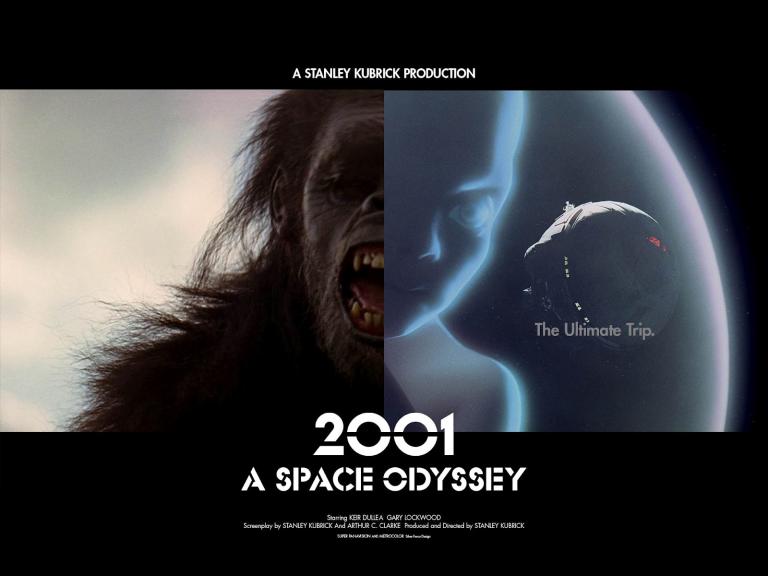 2001: A Space Odyssey (1968): Considered by many to be the best science fiction film of all time, 2001 is a truly unique work filled with mysterious obelisks, bone-using ape-men and a seriously disturbed computer. The movie, particularly its psychedelic conclusion, has sparked much debate and a whole “Interpretations of 2001: A Space Odyssey” article on Wikipedia. But according to director Stanley Kubrick, the core of the movie is inherently religious. “On the deepest psychological level the film’s plot symbolizes the search for God, and it finally postulates what is little less than a scientific definition of God,” he told Rolling Stone magazine.
Star Wars (1977): Luke Skywalker, a kid from a backwater planet, is thrust into a massive galactic conflict between the evil Empire and the plucky rebellion … and he’s told by a strange, old hermit that the key to the whole war might be something called “The Force.” The original Star Wars (Episode IV: A New Hope) was soaked in eastern religious (mainly Taoist) sensibilities, what with its mystical Force and its emphasis on the balance between good and evil. But the series turns out to have some Christian overtones, too. Indeed, the saga is essentially the story of the corruption and eventual redemption of Anakin Skywalker—a man twisted by sin and saved by grace.
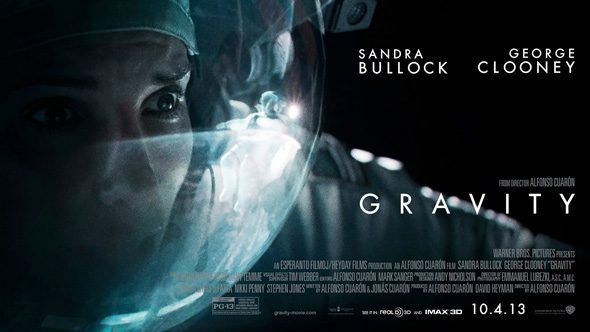 Gravity (2013): This was one of my favorite films last year. It essentially tells the story of Dr. Ryan Stone and her struggle to get home. In a piece I wrote for The Washington Post last year (and now sitting on faithstreet.com), I suggested that Stone’s trip home was a trip out of her own spiritual hell. She’s at the coldest circle of that hell when she seems ready to freeze to death—and she begins to contemplate how sad it is that she never learned to pray. In that moment, she’s visited by an almost angelic-like visitor and finds a new will to live. She is reborn. I wrote that, “In Christianity, we all believe that we ‘live’ in death—even when we’re still physically very much alive—until our belief in Jesus, and his love for us, pulls us out of it. It’s one of the central paradoxes of our faith: In life, death. In death, life.”
We’ll talk more specifically about Interstellar next Monday, I think, when more folks have had a chance to see it. Until then, it might be fun to think about your own favorite sci-fi flicks. What do you see in their stars that stirs you?
Previous Post

November 7, 2014
Christian Bale and Acting in Good Faith
Next Post

November 12, 2014 Seeing God (In Bill Murray's Banana Peels)
Browse Our Archives
Select a Category books celebrities Editor's Choice games movies music news sports superheroes television Uncategorized
Select a Month May 2026 April 2026 March 2026 December 2025 October 2025 July 2025 June 2025 May 2025 February 2025 January 2025 December 2024 July 2024 June 2024 May 2024 April 2024 March 2024 February 2024 January 2024 December 2023 September 2023 March 2023 February 2023 December 2022 November 2022 October 2022 September 2022 August 2022 July 2022 June 2022 May 2022 April 2022 March 2022 February 2022 December 2021 October 2021 August 2021 July 2021 June 2021 May 2021 April 2021 March 2021 October 2020 August 2020 July 2020 June 2020 May 2020 April 2020 March 2020 February 2020 January 2020 December 2019 November 2019 October 2019 September 2019 August 2019 July 2019 June 2019 May 2019 April 2019 March 2019 February 2019 January 2019 December 2018 November 2018 October 2018 September 2018 August 2018 July 2018 June 2018 May 2018 April 2018 March 2018 February 2018 January 2018 December 2017 November 2017 October 2017 September 2017 August 2017 July 2017 June 2017 May 2017 April 2017 March 2017 February 2017 January 2017 December 2016 November 2016 October 2016 September 2016 August 2016 July 2016 June 2016 May 2016 April 2016 March 2016 February 2016 January 2016 December 2015 November 2015 October 2015 September 2015 August 2015 July 2015 June 2015 May 2015 April 2015 March 2015 February 2015 January 2015 December 2014 November 2014 October 2014 September 2014
Follow Us!
TAKE THE
Religious Wisdom Quiz
What year was the first complete English Bible printed?
Select your answer to see how you score.
1382 1535 1450 1611
Books by This Author Books by Paul Asay
Related posts from Watching God

Finding Forgiveness in the Great Horror Film ‘Hokum’

What makes a hero? These 7 Cinematic Characters...

Finding God's Grace in ‘Project Hail Mary’

Watching God’s Top 10 Movies of 2025
TRENDING AT PATHEOS Religious Music & Entertainment

"Les Diabolique" and Transgression
Alongside something like Arrival, Vertigo, or Charade, Les Diaboliques is a...

"The Plague Dogs" and Mortality
So, flashback to the late 70s, early 80s. Walt Disney Studios is...

With the recent and highly successful release of Christopher Nolan’s epic film,...

"L'avventura" and Human Weakness
Today's piece is going to be a little different for a few...

I first want to apologize for not posting or writing anything. I'm...

I've engaged in the multi-year project of reading through the Church Fathers,...
view all Religious Music & Entertainment blogs
Ad-Free & Subscriber Log-In Subscription Support
- About Us
- 2026 Calendar
- Videos
- Podcasts
- Library of World Religions
- Faith In Media Tracker
- Advertise With Us
- Write for Us
- Privacy Policy
- Terms of Service
- Do Not Sell My Data
- Contact Us
- Radiant Digital
- Manage Newsletter Subscriptions
- Unsubscribe From Notifications
- Sitemap
Copyright 2008-2026, Patheos. All rights reserved.
Subscription Support Ad-Free & Subscriber Log-In
Follow Patheos