
BuddhistCatholicContemplativeEvangelicalGeneral ChristianHinduJewishLatter-day SaintMuslimNew VisionsProgressive Christian
Beliefs
- Buddhist
- Catholic
- Contemplative
- Evangelical
- General Christian
- Hindu
- Jewish
- Latter-day Saint
- More Voices
- Muslim
- New Visions
- Pagan
- Progressive Christian
Topics
- Religion News
- Food and Religion
- Sports and Religion
- Religious Art
- Religious Music and Entertainment
- Religious Events
- History and Religion
- Style and Religion
- Politics and Religion
- Women in Religion
- Recreation Outdoors and Religion
- Business Finance and Religion
- Careers Workplace and Religion
- Education and Religion
- Family Parenting and Religion
- Health Fitness and Religion
- Home and Religion
- Relationships and Religion
- Technology and Religion
- Travel and Religion
Columnists
- Buddhist Columnists
- Business Finance and Religion Columnists
- Careers Workplace and Religion Columnists
- Catholic Columnists
- Contemplative Columnists
- Education and Religion Columnists
- Evangelists Columnists
- Family Parenting and Religion Columnists
- General Christian Columnists
- Health Fitness and Religion Columnists
- Hindu Columnists
- History and Religion Columnists
- Home and Religion Columnists
- Jewish Columnists
- More Voices Columnists
- Latter Day Columnists
- Muslim Columnists
- New Visions Columnists
- Nonreligious Columnists
- Pagan Columnists
- Politics and Religion Columnists
- Progressive Columnists
- Recreation Outdoors and Religion Columnists
- Relationships and Religion Columnists
- Religion News Columnists
- Religious Art Columnists
- Religious Events Columnists
- Religious Music and Entertainment Columnists
- Sports and Religion Columnists
- Style and Religion Columnists
- Technology and Religion Columnists
- Travel and Religion Columnists
- Women in Religion Columnists
Resource Library
- 2026 Calendar
- Library of World Religions
- The 100 Most Holy Places on Earth
- Patheos Answers
- Podcasts
- Videos
- Faith Leaders Database
- Anglican Episcopalian
- Bahai
- Baptist
- Buddhism
- Christianity
- Confucianism
- Eastern Orthodoxy
- Hinduism
- Holiness and Pentecostal
- ISKCON
- Islam
- Judaism
- Lutheran
- Methodist
- The Church of Jesus Christ of Latter-day Saints
- New Age
- Paganism
- Presbytarian and Reformed
- Protestantism
- Religion Behind the Scenes
- Roman Catholic
- Scientology
- Shia Islam
- Sikhism
- Sufism
- Sunni Islam
- Taoism
- Zen
- See all religions
Research Tools
 Ad-Free & Subscriber Log-In Subscription Support
Ad-Free & Subscriber Log-In Subscription Support
Follow Patheos 

- Trending:
- Forgiveness
- |
- Marriage
- |
- Consciousness
- |
- Death Penalty
- |
- Election
- |
- Halloween

- Home
- General Christian
- Relationships and Religion
- Why Spiritual Growth is Important
Why Spiritual Growth is Important
Last updated on: June 24, 2023 at 4:19 pm by Martin Thomas Johnson
Why Spiritual Growth is Important 2023-06-24T16:19:27-04:00 Martin Thomas Johnson
Patheos Explore the world's faith through different perspectives on religion and spirituality! Patheos has the views of the prevalent religions and spiritualities of the world.
Recently, headlines in America have focused on declining test scores. However, I have been saddened by the tragic news of the Oceangate submersible. Because the founder was warned. I believe we as the people of God can learn from each of these news headlines.
- Don’t be prideful
- Heed the warnings
- Be educated
- Apply knowledge

Image by Wikipedia
Ironically the Oceangate founder didn’t learn from the mistakes of the Titanic. The builders of the Titanic notoriously believed the ship was unsinkable. The Oceangate founder believed the same about his submersible; neither listened to their peers.
These same principles apply spiritually as well. Our Jewish stepfathers placed a high emphasis on the need for spiritual growth. Reading Scripture is a very Jewish practice because it leads to spiritual growth.
Spiritual Growth
In Judaism Scripture memorization is critical to spiritual growth and is a key part of being God’s people. From the time Jewish children are little, they are taught Scripture. This process continues far beyond just the youth of the Jewish people.
Jewish parents are told to bring their children up in the ways of God (Deuteronomy 6:6 -7, Proverbs 22:6). Continuing to grow spiritually is a process of getting to know and growing closer to God. The Jewish education system had different phases as the children grew in their faith.
- Bet Sefer (age five or six).
- Bet Talmud (ages 10 to 14).
- Bet Midrash (age 15 and older).

Image by Yedidyarashi via Wikipedia Commons
Few made it to Bet Midrash because only the best got to study, serve, and live next to the synagogue. These were the brightest students of Scripture.
The Church!
This emphasis on spiritual growth doesn’t end with the Jewish people in the Old Testament; Jesus Himself was a Rabbi with His own students (Disciples). When He called His disciples, they were no longer studying, because they weren’t the “Best of the best.”
For three years Jesus taught His Disciples and then commanded them to go and make more disciples ( Matthew 28:18-20). The Great Commission isn’t about just getting people saved it’s about teaching them the ways of God (Mark 16:15).
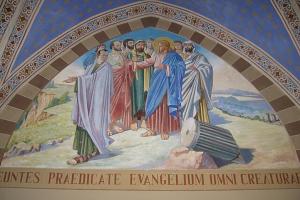
Image by Ignazio Lucibello via Wikipedia Commons
The Jewish Pharisee named Saul turned apostle Paul joined the Disciples in teaching the early church. He grew frustrated with the leaders of the early church because they couldn’t get beyond fundamental spiritual teachings (1 Corinthians 3:4, Hebrews 3:3). He pushed them toward spiritual maturity (Ephesians 4:13-16).
Maturity?
If we fail to learn from the past, we are destined to repeat it. If the church fails to learn from the mistakes of our Jewish stepfathers, we too won’t reach spiritual maturity and the danger will be catastrophic for the church.
The Apostle Paul’s transformation wasn’t about gaining more knowledge, because God had humbled him, he learned the need to apply Scripture.

Image by Pixaby
He learned to put his knowledge to use for something beyond his desire to be the greatest among the Pharisees. In contrast to the other Pharisees, the Apostle Paul learned true greatness doesn’t come from gaining a bunch of knowledge, but actually using it to further God’s kingdom.
The Apostle Paul warned his protégé Timothy to not forget his teachings and to use them (2 Timothy 1: 13-17). Paul knew spiritual maturity meant using what we learn:
- Head knowledge
- Heart knowledge
One of the basic Jewish teachings is the Jewish Shema to love God with all of our mind-body and hearts (Deuteronomy 6:4-9). We are to apply Scripture and our love of God to every aspect of our lives.
Later Jesus taught His disciples this very teaching was the greatest command (Mark 12:30-31), we shouldn’t strive for comfort, but spiritual growth!
Jewish
Previous Post

June 21, 2023
The Danger of A Comfortable and Untested Faith
Next Post

June 28, 2023 True Greatness and What it Means for God's People
Recent Comments
"If a perfect God chooses to show mercy, then imperfect and unrighteous man should also. ..."
How Does ‘Avval Connect FlyDubai & ..."
"It would be nice if the Evangelical Dominionists (Former Christians who converted to Trumpism) listened ..."
What Does Yᵊšûʿâ Mean For The ..."
"Dispensationalism. gets many things wrong, including the future place for Israel. The promise to Israel ..."
How Does Gôy Connect NATO & ..."
"The ammendment that supposedly gives any foreign child born here citizenship was intended for slaves ..."
How Does Yeleḏ Connect Birthright Citizenship ..."
Browse Our Archives
Select a Category #Faith Uncategorized
Select a Month October 2026 September 2026 August 2026 July 2026 June 2026 May 2026 April 2026 March 2026 February 2026 January 2026 December 2025 November 2025 October 2025 September 2025 August 2025 July 2025 June 2025 May 2025 April 2025 March 2025 February 2025 January 2025 December 2024 November 2024 October 2024 September 2024 August 2024 July 2024 June 2024 May 2024 April 2024 March 2024 February 2024 January 2024 December 2023 November 2023 October 2023 September 2023 August 2023 July 2023 June 2023
Follow Us!
TAKE THE
Religious Wisdom Quiz
Why was Moses placed in a basket in the Nile?
Select your answer to see how you score.
To send him to another land As part of a religious ritual To save him from Pharaoh’s decree To hide him from Egyptian soldiers
Related posts from Walk Humbly

Family
How Does Bìn Connect Fort Hood & Isaias?

Family
What Does Šāp̄āṭ Mean For Caleb Flynn &...

Family
How Does ‘Avval Connect FlyDubai & Christa Pike?

Family
What Does Tsᵉdâqâh Mean For Cornell University &...
TRENDING AT PATHEOS General Christian

Swimfan: Forgotten Aughts Pleasures
This is a recovery effort. In 2002, My Big Fat Greek Wedding...

Top Three Anti-Catholic Lies About Catholicism
This is my initial transcript for the video, "THE 3 WORST...

Pope Leo Celebrates Mass for Nurses & Docs...
I don't have any idea how he did it, but Pope Leo...

The Sermon on the Mount, Part I: Matthew...
The Sermon on the Mount, Part I (Matthew 4:12-5:12) St. Matthew moves...

What's up from Crossway: Reviewing some of their latest A few weeks...

Janie Learns the Way of the Cross: A...
Teaching children about Jesus' Passion can be challenging. Many parents and educators...
view all General Christian blogs
What Are Your Thoughts?leave a comment
Ad-Free & Subscriber Log-In Subscription Support
- About Us
- 2026 Calendar
- Videos
- Podcasts
- Library of World Religions
- Faith In Media Tracker
- Advertise With Us
- Write for Us
- Privacy Policy
- Terms of Service
- Do Not Sell My Data
- Contact Us
- Radiant Digital
- Manage Newsletter Subscriptions
- Unsubscribe From Notifications
- Sitemap
Copyright 2008-2026, Patheos. All rights reserved.
Subscription Support Ad-Free & Subscriber Log-In
Follow Patheos