
BuddhistCatholicContemplativeEvangelicalGeneral ChristianHinduJewishLatter-day SaintMuslimNew VisionsProgressive Christian
Beliefs
- Buddhist
- Catholic
- Contemplative
- Evangelical
- General Christian
- Hindu
- Jewish
- Latter-day Saint
- More Voices
- Muslim
- New Visions
- Pagan
- Progressive Christian
Topics
- Religion News
- Food and Religion
- Sports and Religion
- Religious Art
- Religious Music and Entertainment
- Religious Events
- History and Religion
- Style and Religion
- Politics and Religion
- Women in Religion
- Recreation Outdoors and Religion
- Business Finance and Religion
- Careers Workplace and Religion
- Education and Religion
- Family Parenting and Religion
- Health Fitness and Religion
- Home and Religion
- Relationships and Religion
- Technology and Religion
- Travel and Religion
Columnists
- Buddhist Columnists
- Business Finance and Religion Columnists
- Careers Workplace and Religion Columnists
- Catholic Columnists
- Contemplative Columnists
- Education and Religion Columnists
- Evangelists Columnists
- Family Parenting and Religion Columnists
- General Christian Columnists
- Health Fitness and Religion Columnists
- Hindu Columnists
- History and Religion Columnists
- Home and Religion Columnists
- Jewish Columnists
- More Voices Columnists
- Latter Day Columnists
- Muslim Columnists
- New Visions Columnists
- Nonreligious Columnists
- Pagan Columnists
- Politics and Religion Columnists
- Progressive Columnists
- Recreation Outdoors and Religion Columnists
- Relationships and Religion Columnists
- Religion News Columnists
- Religious Art Columnists
- Religious Events Columnists
- Religious Music and Entertainment Columnists
- Sports and Religion Columnists
- Style and Religion Columnists
- Technology and Religion Columnists
- Travel and Religion Columnists
- Women in Religion Columnists
Resource Library
- 2026 Calendar
- Library of World Religions
- The 100 Most Holy Places on Earth
- Patheos Answers
- Podcasts
- Videos
- Faith Leaders Database
- Anglican Episcopalian
- Bahai
- Baptist
- Buddhism
- Christianity
- Confucianism
- Eastern Orthodoxy
- Hinduism
- Holiness and Pentecostal
- ISKCON
- Islam
- Judaism
- Lutheran
- Methodist
- The Church of Jesus Christ of Latter-day Saints
- New Age
- Paganism
- Presbytarian and Reformed
- Protestantism
- Religion Behind the Scenes
- Roman Catholic
- Scientology
- Shia Islam
- Sikhism
- Sufism
- Sunni Islam
- Taoism
- Zen
- See all religions
Research Tools
 Ad-Free & Subscriber Log-In Subscription Support
Ad-Free & Subscriber Log-In Subscription Support
Follow Patheos 

- Trending:
- Forgiveness
- |
- Marriage
- |
- Consciousness
- |
- Death Penalty
- |
- Election
- |
- Halloween
 Walk and Word
- Home
- Evangelical
- Villains and Genesis 3
Villains and Genesis 3
Last updated on: September 12, 2019 at 10:26 pm by John C. Nugent
Villains and Genesis 3 2019-09-12T22:26:32-05:00 John C. Nugent
Patheos Explore the world's faith through different perspectives on religion and spirituality! Patheos has the views of the prevalent religions and spiritualities of the world.

Rahul Pariharacodu – Unsplash
by Natasha Smith (who also wrote Antique Testament)
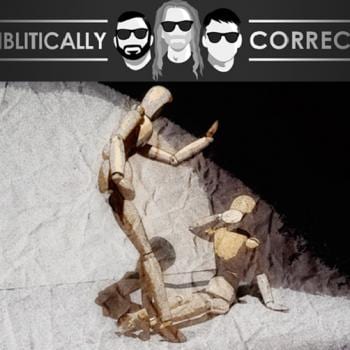
Who are some memorable villains and what sparked their turning to the dark side? Of course, Darth Vader stands out, fueled by fear and vengeance. Similarly, Thanos believes he has the right to take vengeance into his own hands. Loki’s action results from his search for belonging, identity, and love. Voldemort and Gollum both desire a power too great for them. All these examples shared a similar theme: they covet something and choose to play god for themselves. Their drive for approval, power, and vengeance fueled by fear, destroys them. Ultimately, each character becomes less than human as they trade their dignity for desire.
How super villains tie in with Genesis 3
In most of our favorite stories from galaxies far away, middle earth, or Hogwarts—peace, harmony and goodness once existed. Then something goes terribly wrong.
Similarly, Genesis 2 ends with a world where humans have purpose, prosperity, and peace. All creation agrees with God’s will, and he rests in the joy of his completed work.
One shrewd voice then echoes in the beautiful garden. Its single question proves more devastating than the first hearers ever imagined.
“Did God really say…?”
The serpent questions the one boundary God put in place for humans and actually extends the command to appear utterly unreasonable. “Did God really say you must not eat from any tree in the garden?”
(Fun fact: The ancient cultures surrounding Israel viewed snakes as sources of life and wisdom. Israel recognized snakes as unclean and unsafe animals to be avoided.)
Eve corrects the snake in part, but even she doesn’t completely remember God’s word. “We may eat fruit from the trees in the garden, but God did say, “You must not eat fruit from the tree that is in the middle of the garden, and you must not touch it, or you die.”
(FYI, God never said anything about “touching” the tree. Eve adds that part and also generalizes about the trees in the middle of the garden rather than upholding the boundary around a specific tree—the tree of the knowledge of good and evil.)
“You will not die… For God knows that when you eat from it your eyes will be opened and you will be like God, knowing good and evil.”
Direct contradiction and irony
First, the serpent contradicts God’s statement of certain death that would accompany eating the forbidden fruit in Genesis 2:17. Perhaps the snake didn’t hear God’s decree since God never really speaks to animals other than to bestow the generic blessing to fill the earth. Perhaps the serpent recognizes that no matter how crafty he may be, he will never hold the status given to humans. So he invites the humans to disregard their responsibility as the caretakers of creation by taking direction from a fellow creature rather than the creator.
Second, the serpent draws the humans in by enticing them to become like God. Ironically, humans are already created in the image of God. What more could be done for them to be like God? God placed them on earth with authority, purpose, promise, and blessing.
Through this perverse proposition, Eve and Adam second guess the goodness and provision of God.
They begin to think that God is keeping something good from them. Why shouldn’t they know the parameters of good and evil? Why shouldn’t they know.
Skepticism overruns the heart and prompts disobedience
As questions began swirling around in Eve’s mind, they disturb her peace of mind.
- Is God lying to us about death?
- Is he actually providing enough?
- Who is actually the deceiver?
- Is God wrong?
- Can we really trust God?
- Is God really good?
Rapid activity reveals a lack of thoughtful consideration as Eve grasps to be like God. She sees the fruit as good, delightful, and desirable despite God’s warning. She redefines God’s boundary by her own standard and ignores what he declared “off limits.”
She takes the definition of good and evil into her own hands. Together, Adam and Eve listen to a voice other than their creator for direction on how to live and behave. They become the fool by heeding a voice closer to the dirt and farther from the Father. Likewise, they yield part of their identity as rulers of creation by succumbing to the questions of a cocky animal.
We’d rather be a god
Like Eve and Adam, we often ignore God’s prohibition, protection, and provision. Too often we follow after the examples of our favorite villains and think of ourselves as a god. We search for value, meaning, purpose, love, and acceptance like Loki—and destruction follows. We cannot even be our true selves, but constantly shapeshift simply to find acceptance. We want something that is not ours to have. So lust, pride, and power destroy us like it did Gollum. We are hurt and we want vengeance like Darth Vader or Thanos, and we completely lose control of our identity in the process. We lose our humanity.
Our culture constantly asks us, “Did God really say…?” How will we respond?
Will we trust God’s standard of good and evil no matter what other voices may whisper?

About Natasha Smith
Natasha Smith lives in Colorado where she works at Save the Storks and studies Old Testament at Denver Seminary. You can read more about the author here.
Previous Post

August 23, 2019
The Kingdom of God is like... a Triathlon
Next Post

August 30, 2019 Time for Courage
Browse Our Archives
Select a Category Biblitically Correct Christian Practices Church Discipleship Entertainment New Testament Old Testament Scripture Uncategorized Witness to World
Select a Month October 2019 September 2019 August 2019 July 2019 June 2019 May 2019 April 2019
Follow Us!
TAKE THE
Religious Wisdom Quiz
How many years did Solomon reign?
Select your answer to see how you score.
50 years 35 years 30 years 40 years
Related posts from Walk and Word


Star Wars and the Book of Ruth

TRENDING AT PATHEOS Evangelical

Indigenous Peoples’ Day and the Church
Indigenous' Peoples Day or Columbus Day? Depending on where you live...

When Spiritual Growth Looks Like Losing Ground
Four Passive Spiritual Disciplines: An Introduction When I was a college freshman,...

Faith and Finding Your Current Season
“To everything there is a season,” Ecclesiastes tells us, “and a time...

Did Jesus Fear God's Wrath in Gethsemane?
That Time Jesus Was Terrified Before we begin, let me say at...

A Generation Searching for God in All the...
Revival Begins With God’s People! Holidays Are Upon Us! Welcome to October!...

Faith and End of Life Planning
The Psalmist's prayer to “teach us to number our days, that we...
view all Evangelical blogs
Ad-Free & Subscriber Log-In Subscription Support
- About Us
- 2026 Calendar
- Videos
- Podcasts
- Library of World Religions
- Faith In Media Tracker
- Advertise With Us
- Write for Us
- Privacy Policy
- Terms of Service
- Do Not Sell My Data
- Contact Us
- Radiant Digital
- Manage Newsletter Subscriptions
- Unsubscribe From Notifications
- Sitemap
Copyright 2008-2026, Patheos. All rights reserved.
Subscription Support Ad-Free & Subscriber Log-In
Follow Patheos