
BuddhistCatholicContemplativeEvangelicalGeneral ChristianHinduJewishLatter-day SaintMuslimNew VisionsProgressive Christian
Beliefs
- Buddhist
- Catholic
- Contemplative
- Evangelical
- General Christian
- Hindu
- Jewish
- Latter-day Saint
- More Voices
- Muslim
- New Visions
- Pagan
- Progressive Christian
Topics
- Religion News
- Food and Religion
- Sports and Religion
- Religious Art
- Religious Music and Entertainment
- Religious Events
- History and Religion
- Style and Religion
- Politics and Religion
- Women in Religion
- Recreation Outdoors and Religion
- Business Finance and Religion
- Careers Workplace and Religion
- Education and Religion
- Family Parenting and Religion
- Health Fitness and Religion
- Home and Religion
- Relationships and Religion
- Technology and Religion
- Travel and Religion
Columnists
- Buddhist Columnists
- Business Finance and Religion Columnists
- Careers Workplace and Religion Columnists
- Catholic Columnists
- Contemplative Columnists
- Education and Religion Columnists
- Evangelists Columnists
- Family Parenting and Religion Columnists
- General Christian Columnists
- Health Fitness and Religion Columnists
- Hindu Columnists
- History and Religion Columnists
- Home and Religion Columnists
- Jewish Columnists
- More Voices Columnists
- Latter Day Columnists
- Muslim Columnists
- New Visions Columnists
- Nonreligious Columnists
- Pagan Columnists
- Politics and Religion Columnists
- Progressive Columnists
- Recreation Outdoors and Religion Columnists
- Relationships and Religion Columnists
- Religion News Columnists
- Religious Art Columnists
- Religious Events Columnists
- Religious Music and Entertainment Columnists
- Sports and Religion Columnists
- Style and Religion Columnists
- Technology and Religion Columnists
- Travel and Religion Columnists
- Women in Religion Columnists
Resource Library
- 2026 Calendar
- Library of World Religions
- The 100 Most Holy Places on Earth
- Patheos Answers
- Podcasts
- Videos
- Faith Leaders Database
- Anglican Episcopalian
- Bahai
- Baptist
- Buddhism
- Christianity
- Confucianism
- Eastern Orthodoxy
- Hinduism
- Holiness and Pentecostal
- ISKCON
- Islam
- Judaism
- Lutheran
- Methodist
- The Church of Jesus Christ of Latter-day Saints
- New Age
- Paganism
- Presbytarian and Reformed
- Protestantism
- Religion Behind the Scenes
- Roman Catholic
- Scientology
- Shia Islam
- Sikhism
- Sufism
- Sunni Islam
- Taoism
- Zen
- See all religions
Research Tools
 Ad-Free & Subscriber Log-In Subscription Support
Ad-Free & Subscriber Log-In Subscription Support
Follow Patheos 

- Trending:
- Forgiveness
- |
- Marriage
- |
- Consciousness
- |
- Death Penalty
- |
- Election
- |
- Halloween
 Walk and Word
- Home
- Evangelical
- Rediscovering the Biblical Church
Rediscovering the Biblical Church
Last updated on: September 12, 2019 at 10:28 pm by Ronald D. Peters
Rediscovering the Biblical Church 2019-09-12T22:28:35-05:00 Ronald D. Peters
Patheos Explore the world's faith through different perspectives on religion and spirituality! Patheos has the views of the prevalent religions and spiritualities of the world.
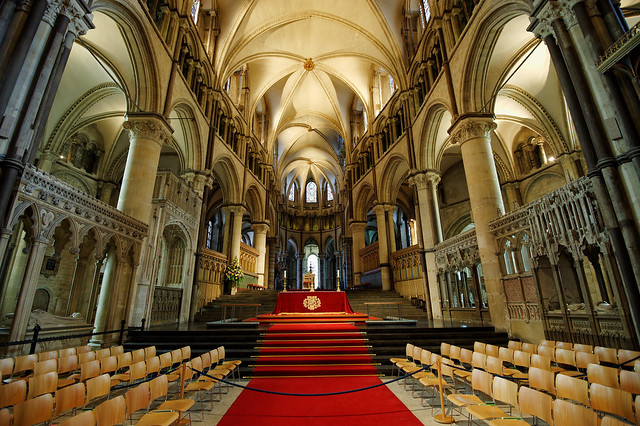
knowledge59 / flickr
As archeologists dig through layers of dirt, they often rediscover long lost and forgotten treasures. Likewise, when we dig deep into the history recorded in the Bible, we can discover lost or forgotten truth. In today’s blog, I want to dig into the biblical history of the term “church.” What some will find surprising (but not those who regularly read our blog or listen to our podcast), is that the NT use of the term is grounded in Israel’s history. In fact, by calling themselves the church, NT followers of Jesus were staking claim to their inclusion and participation in God’s plan for Israel.
By the end of your reading you will see that contemporary usage of the word “church” has drifted significantly from its biblical meaning. It was certainly never meant to refer to buildings, whether simple or extravagant. Even the expression “going to church” reflects this drift.
Let me explain.
Defining the Term
The Greek word we translate “church” is ekklesia. According to the Louw & Nida Lexicon, the term designated a group of citizens assembled for socio-political activities. Likewise, the Liddell-Scott lexicon defines an ekklesia as an assembly of the citizens regularly summoned.
As you can see, the term has social and political implications. A group of people who were an ekklesia had certain things in common, both social and politically. These things set them apart as an identifiable national group. Simultaneously, this identification distinguished them from their neighboring nations.
Old Testament Usage
In the Old Testament, we frequently observe the phrase “assembly of Israel” or “congregation of Israel,” depending on your translation. In the Greek translation of the Old Testament, two different words were used in the phrase. One is ekklesia, which occurs approximately 100 times. The other is synagoge, which has a similar meaning to ekklesia. However, synagoge is a more generic term for “assembly.” It lacks the political implications. Synagoge is used over 200 hundred times for the “assembly of Israel.”
Second Temple Usage
At some point in the centuries before Jesus’ birth, Jews living in exile began to form synagogues. Unfortunately, we don’t have any direct evidence that explains the origins of the synagogues. In all likelihood, they arose out of the need for exiled Jews to assemble and worship together. Local synagogues were places of worship and teaching. Scripture was read every Sabbath, which helped them maintain their religious and cultural identity while living on foreign soil.
It’s possible that the term synagogue was adopted at least in part based on its OT use. In may have been short hand for “assembly of Israel.” Not only was it the more common OT term, it was also more generic. It lacked the political implications of ekklesia. Since these local assemblies had no political power, ekklesia may have seemed inappropriate.
New Testament Usage
Christian usage of ekklesia has its origins in Jesus himself. When Jesus says to Peter, “Upon this rock I will build my church,” he uses ekklesia (Matt 16:18). Jesus again uses the term in Matt 18:17. Throughout the rest of the NT, this is the go to term for local congregations of Christians. So why did they go with this self-identification?
First, it was a Bible term. The early church was originally made up of Jews. These Jews never disavowed their heritage. On the contrary, they saw themselves as the faithful remnant of Israel. Using the term ekklesia could have been their shorthand for “congregation of Israel.”
Second, ekklesia would distinguish Christians from non-believing Jews, who used the term synagoge. These early disciples of Christ grieved over the fact that their brothers and sisters had rejected their messiah (see Romans 9-11). Nevertheless, they also saw themselves as a people apart because of their faith in Christ.
Third, the political implications made sense in light of their sense of identity. Christians then and now are citizens of the Kingdom of God (or Kingdom of Heaven in the Gospel According to Matthew). Jesus went around preaching the Gospel of the Kingdom. His followers were those who embraced his kingdom vision. Thus, they were and continue to be an ekklesia, an assembly of citizens.
Implications
We live in an exciting time. More and more preachers, Bible scholars, and theologians are rediscovering the full biblical gospel, the gospel of the kingdom. The gospel is more than the message of individual salvation. It’s the gospel of God and his kingdom. It’s the gospel that calls individuals to confess allegiance to Jesus as lord and king.
The church is the assembly of citizens of God’s kingdom. Then and now, the church is the faithful remnant of God’s people. On the one hand, it is the continuation of the project God began in the OT. His plan was to have a set apart people who lived according to his instructions. In so doing, they would be a light to the nations.
On the other hand, these people are no longer defined by descent from Abraham. Gentiles who confess allegiance to Jesus have been grafted into this community. We get to be participants in the Israel program. We follow God’s instructions to Israel so that we can also be a light to the nations.
Conclusion
“Church” is not a building. “Church” is not a weekly worship service, though this is closer to the meaning. It is much, much more. When one confesses Christ as lord, he or she enters into an assembly of citizens. This is a 24/7/365 reality. It brings with it rights and privileges, as well as responsibilities and expectations. Citizens live according to their national laws. As Christians, ours are the laws of the God’s kingdom.
When we “go to church” we’re going to a gathering of the church. That is, we are meeting together as the local assembly of citizens. In fact, any time Christians gather together, formally or informally, in small groups or large, they have “gone to church.” We do this for the same reason exiled Jews did in their synagogues. It is so that we can learn God’s instructions through scripture reading. It is also a time to worship God together. We are like the ancient Jews. We are exiles living on foreign soil. Therefore, gathering together for worship and instruction is key to maintaining our religious and cultural identity.
My prayer is that our local assemblies of citizens (i.e. churches) embrace and display this kingdom vision. It is the vision God began with Israel and brought to completion through Jesus Christ our lord.

About Ron Peters
Ron Peters is Professor of New Testament at Great Lakes Christian College. He has numerous publications on the New Testament and the field of Greek Language and Linguistics. He is also co-host of the After Class Podcast. You can read more about the author here.
Previous Post

July 26, 2019
Repetition is Indeed the Mother of Learning
Next Post

July 31, 2019 Who is Jesus?
Browse Our Archives
Select a Category Biblitically Correct Christian Practices Church Discipleship Entertainment New Testament Old Testament Scripture Uncategorized Witness to World
Select a Month October 2019 September 2019 August 2019 July 2019 June 2019 May 2019 April 2019
Follow Us!
TAKE THE
Religious Wisdom Quiz
What did the devil tempt Jesus to turn into bread?
Select your answer to see how you score.
Fish Stones Wood Sand
Related posts from Walk and Word

When Sabbath Ceases to be Sabbath



TRENDING AT PATHEOS Evangelical

Indigenous Peoples’ Day and the Church
Indigenous' Peoples Day or Columbus Day? Depending on where you live...

When Spiritual Growth Looks Like Losing Ground
Four Passive Spiritual Disciplines: An Introduction When I was a college freshman,...

Faith and Finding Your Current Season
“To everything there is a season,” Ecclesiastes tells us, “and a time...

Did Jesus Fear God's Wrath in Gethsemane?
That Time Jesus Was Terrified Before we begin, let me say at...

A Generation Searching for God in All the...
Revival Begins With God’s People! Holidays Are Upon Us! Welcome to October!...

Faith and End of Life Planning
The Psalmist's prayer to “teach us to number our days, that we...
view all Evangelical blogs
Ad-Free & Subscriber Log-In Subscription Support
- About Us
- 2026 Calendar
- Videos
- Podcasts
- Library of World Religions
- Faith In Media Tracker
- Advertise With Us
- Write for Us
- Privacy Policy
- Terms of Service
- Do Not Sell My Data
- Contact Us
- Radiant Digital
- Manage Newsletter Subscriptions
- Unsubscribe From Notifications
- Sitemap
Copyright 2008-2026, Patheos. All rights reserved.
Subscription Support Ad-Free & Subscriber Log-In
Follow Patheos