
BuddhistCatholicContemplativeEvangelicalGeneral ChristianHinduJewishLatter-day SaintMuslimNew VisionsProgressive Christian
Beliefs
- Buddhist
- Catholic
- Contemplative
- Evangelical
- General Christian
- Hindu
- Jewish
- Latter-day Saint
- More Voices
- Muslim
- New Visions
- Pagan
- Progressive Christian
Topics
- Religion News
- Food and Religion
- Sports and Religion
- Religious Art
- Religious Music and Entertainment
- Religious Events
- History and Religion
- Style and Religion
- Politics and Religion
- Women in Religion
- Recreation Outdoors and Religion
- Business Finance and Religion
- Careers Workplace and Religion
- Education and Religion
- Family Parenting and Religion
- Health Fitness and Religion
- Home and Religion
- Relationships and Religion
- Technology and Religion
- Travel and Religion
Columnists
- Buddhist Columnists
- Business Finance and Religion Columnists
- Careers Workplace and Religion Columnists
- Catholic Columnists
- Contemplative Columnists
- Education and Religion Columnists
- Evangelists Columnists
- Family Parenting and Religion Columnists
- General Christian Columnists
- Health Fitness and Religion Columnists
- Hindu Columnists
- History and Religion Columnists
- Home and Religion Columnists
- Jewish Columnists
- More Voices Columnists
- Latter Day Columnists
- Muslim Columnists
- New Visions Columnists
- Nonreligious Columnists
- Pagan Columnists
- Politics and Religion Columnists
- Progressive Columnists
- Recreation Outdoors and Religion Columnists
- Relationships and Religion Columnists
- Religion News Columnists
- Religious Art Columnists
- Religious Events Columnists
- Religious Music and Entertainment Columnists
- Sports and Religion Columnists
- Style and Religion Columnists
- Technology and Religion Columnists
- Travel and Religion Columnists
- Women in Religion Columnists
Resource Library
- 2026 Calendar
- Library of World Religions
- The 100 Most Holy Places on Earth
- Patheos Answers
- Podcasts
- Videos
- Faith Leaders Database
- Anglican Episcopalian
- Bahai
- Baptist
- Buddhism
- Christianity
- Confucianism
- Eastern Orthodoxy
- Hinduism
- Holiness and Pentecostal
- ISKCON
- Islam
- Judaism
- Lutheran
- Methodist
- The Church of Jesus Christ of Latter-day Saints
- New Age
- Paganism
- Presbytarian and Reformed
- Protestantism
- Religion Behind the Scenes
- Roman Catholic
- Scientology
- Shia Islam
- Sikhism
- Sufism
- Sunni Islam
- Taoism
- Zen
- See all religions
Research Tools
 Ad-Free & Subscriber Log-In Subscription Support
Ad-Free & Subscriber Log-In Subscription Support
Follow Patheos 

- Trending:
- Forgiveness
- |
- Marriage
- |
- Consciousness
- |
- Death Penalty
- |
- Election
- |
- Halloween
 Walk and Word
- Home
- Evangelical
- Racist Tweeting & Bible Bashing
Racist Tweeting & Bible Bashing
Last updated on: September 12, 2019 at 10:31 pm by John C. Nugent
Racist Tweeting & Bible Bashing 2019-09-12T22:31:28-05:00 John C. Nugent
Patheos Explore the world's faith through different perspectives on religion and spirituality! Patheos has the views of the prevalent religions and spiritualities of the world.
Joshua Yospyn / Flickr
First Impressions
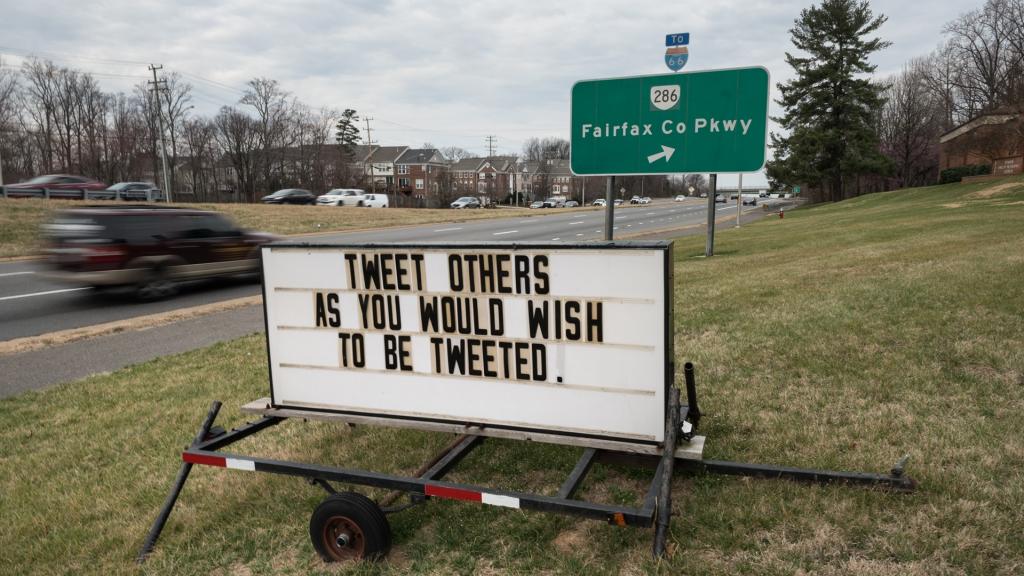
Trump’s tweeting thumbs set the agenda for the news cycle again this week. My first exposure was a headline that read “GO BACK! Trump’s Racist Tweet.”
I don’t generally read news articles. I’m leery of the clickbait that comes with them and the bias that envelopes them. So, instead, I listen to the CBS World News roundup podcsast. Since it strives to be concise, it tends to convey less bias and ads than most news sources.
Having seen the headline about Trump’s tweet, I was curious how my news podcast would frame the story. As usual, it highlighted a few key details. It echoed the racist nature of Trump’s tweet, named the nonwhite congresswomen he targeted, and pointed out that the women he told to “go back” were actually born in America. So in addition to trumpeting racism, the president showcased his ignorance of their origins.
Facebook posts rounded out my exposure to this story. For the most part, they touted Trump’s racism and implored readers to do something about it, whether in a voting booth, local march, or some sort of community forum.
My mind was made up. Trump remains delusional, and this Twitter tirade simply confirms it.
A Second Look
But then something happened that prompted me to write this blog. I stumbled across Trump’s actual tweet. I was surprised by what I read. Trump told certain unnamed congresswomen to “go back and help fix the totally broken and crime-infested places from which they came” and “then come back and show us how.”
To me, this sounds a bit different. It still wreaks of bigotry, but perhaps in a different way. My initial media impressions portrayed the president as saying, “If nonwhites don’t like it here, they can leave.” In reality, however, he didn’t implore them to leave on account of their ethnic origins. Rather, he asked them to go and do something about the places from which they came and then come back to tell us how to do it.
Again, this is still a horrible thing to say—not only because only one of the women he targeted hailed from a different country—but also because he portrayed other countries in the worst possible light. Yet having read the entire tweet I would say that his statements are not as much racist as they are nationalistic and xenophobic. He presumes that America is great and other countries are not. In so doing, he displays in exaggerated form the bias of most members of congress and a good number of Americans on the political right and left.
That should be enough to turn the stomachs of Christians whose messiah was born in pre-modern-democratic Bethlehem. But that is not my point. My point concerns how easy it is to make the story about what the story is not really about. My point is that carefully reading Trump’s actual statements paints a much more nuanced picture than simply feeding off of soundbites. Left-leaning media portrays Trump’s statement as racist and not nationalist because the former serves their agenda of discrediting them and the latter does not.
Christian Concern
If this were only happening with presidential tweets, I wouldn’t be all that concerned. Washington politics as usual. Bickering parties always interpret their rivals in the least charitable way. It’s part and parcel of the fallennes of the powers and principalities of this world—both on the left and the right. Christians have seen far worse. The powers beheaded John the Baptist, crucified Jesus, persecuted the early church, and continue to silence and kill Christians around the world.
What alarms me most is how the tendency to quickly spot offensive undertones in political banter has conditioned us to read the Bible poorly. Our eyes and ears are being trained to expose sexism and racism in all times and places, and the Bible is not immune.
This skews our reading of Scripture in ways we should acknowledge. The Old Testament, in particular, has fallen upon hard times. Even Bible loving evangelicals have given up trying to defend it. Apparently, it’s too much work. They tire of having to explain why this or that passage isn’t as racist or sexist as it seems to be. So it’s easier for them to say, “Well that was in the Old Testament, but we’re New Testament people.” Or “That was under the old covenant of Moses, but we subscribe to the new covenant of Jesus.”
Are we so far from Auschwitz that we don’t realize how racist those cop-outs are? Such statements themselves implicate in racism both ancient Israelites and modern day Jews for whom the Old Testament alone is Scripture.
Racism in Scripture
Israel’s conquest of Canaan has been particularly susceptible to soundbite Bible bashing. I cannot tell you how many times I’ve heard people portray this event as genocide or some sort of ethnic cleansing–the most extreme form of racism. Yet such a soundbite ignores just about every detail in the story.
For instance, it ignores the highly relevant detail that God asks Israel to drive multiple ethnic groups out of the land. Scripture clearly and repeatedly names these groups in all of their plurality: Hivites, Canaanites, Hittites, Amorites, Perizzites, Jebusites (Exod 23:8; 33:2). The only criterion for whom Israel should drive from the land is that they currently live there. The reasons for this are complex and would require their own post, but ethnicity is not one of them.
Sexism in Scripture
Consider also the so-called trial of an accused wife. The soundbite version of this legislation in Numbers 5 is horrifying. Israel is apparently so sexist that when a husband even suspects his wife of cheating on him, he is entitled to publicly humiliate her. He does this by forcing her to drink some sort of priestly potion that exposes her guilt if her uterus drops. That sounds awful. But, again, closer inspection tells a different story.
In the ancient Near East, men were typically given the benefit of the doubt in the courts. So if a husband tired of his wife for whatever reason, he could simply accuse her of infidelity and divorce her. He could then go about his life, remarry, and start afresh.
The woman had little recourse. She could only accept the divorce, move back in with her parents, and likely spend the rest of her life in disgrace. She would be considered “damaged goods” and would struggle to find a man willing to marry her. If her parents were not wealthy, she might experience abject poverty and turn to prostitution in order to avoid enslavement.
God’s holy nation could not tolerate such injustice. Their laws forbade both prostitution and enslavement (for the most part, cf. Lev 25). So they needed a way to protect accused women. This law served that purpose.
It’s important to note that dirty water over which a curse has been pronounced does not naturally cause a woman’s uterus to drop. It takes an act of God for dirty water to produce such a result. This meant that the accusing husband must count on God intervening in world history to legitimate his claim. The man would have no reason to think God would do this unless the woman was, in fact, guilty.
A false accusation would have disastrous consequences for the lying man. He must remain with his wife, and he must continue to live in his relatively small community in the company of bitter in-laws and disappointed neighbors. It would take a while for him to recover from the shame that he brought upon himself and his household.
The net effect of this law is that men would be less inclined to falsely accuse their wives. This was good news for women. The process would be terribly demeaning, there is no mistake about that. But it is precisely for this reason that a lying man would bear great shame and this law would function as a deterrent.
Why, you might ask, do we find no such law for a wife who suspects her husband of adultery? Because men were not vulnerable in the same way. Wives did not routinely throw their husbands out on the streets, so men did not need the same sort of protection. This only underscores that this law functioned to protect women, not discriminate against them.
The Main Point
To be clear, I have no desire to defend Donald Trump. To paraphrase a good friend of mine, no instrument has been invented that can measure my indifference toward American political partisanship. Rather, I hope to shine some light on how constant exposure to decontextualized media soundbites from the left and the right appears to be rubbing off on the church. We’ve become lackadaisical with Scripture. We’ve acquired a taste for tantalizing hyperbolic morsels of truth.
This lazy approach cannot help but spill over into our Bible reading. If we are not careful, it will slowly erode our confidence in Scripture. And an insecure church struggles to proclaim God’s living and active word to a world that desperately needs to hear it.

About John C. Nugent
John C. Nugent is the author of "Endangered Gospel," professor of theology, and co-host of the After Class Podcast. You can read more about the author here.
Previous Post

July 14, 2019
Still Living & Active
Next Post

July 19, 2019 Killing in the Name of...
Browse Our Archives
Select a Category Biblitically Correct Christian Practices Church Discipleship Entertainment New Testament Old Testament Scripture Uncategorized Witness to World
Select a Month October 2019 September 2019 August 2019 July 2019 June 2019 May 2019 April 2019
Follow Us!
TAKE THE
Religious Wisdom Quiz
How many years did Solomon reign?
Select your answer to see how you score.
50 years 35 years 30 years 40 years
Related posts from Walk and Word

When Sabbath Ceases to be Sabbath



TRENDING AT PATHEOS Evangelical

Indigenous Peoples’ Day and the Church
Indigenous' Peoples Day or Columbus Day? Depending on where you live...

When Spiritual Growth Looks Like Losing Ground
Four Passive Spiritual Disciplines: An Introduction When I was a college freshman,...

Faith and Finding Your Current Season
“To everything there is a season,” Ecclesiastes tells us, “and a time...

Did Jesus Fear God's Wrath in Gethsemane?
That Time Jesus Was Terrified Before we begin, let me say at...

A Generation Searching for God in All the...
Revival Begins With God’s People! Holidays Are Upon Us! Welcome to October!...

Faith and End of Life Planning
The Psalmist's prayer to “teach us to number our days, that we...
view all Evangelical blogs
Ad-Free & Subscriber Log-In Subscription Support
- About Us
- 2026 Calendar
- Videos
- Podcasts
- Library of World Religions
- Faith In Media Tracker
- Advertise With Us
- Write for Us
- Privacy Policy
- Terms of Service
- Do Not Sell My Data
- Contact Us
- Radiant Digital
- Manage Newsletter Subscriptions
- Unsubscribe From Notifications
- Sitemap
Copyright 2008-2026, Patheos. All rights reserved.
Subscription Support Ad-Free & Subscriber Log-In
Follow Patheos