
BuddhistCatholicContemplativeEvangelicalGeneral ChristianHinduJewishLatter-day SaintMuslimNew VisionsProgressive Christian
Beliefs
- Buddhist
- Catholic
- Contemplative
- Evangelical
- General Christian
- Hindu
- Jewish
- Latter-day Saint
- More Voices
- Muslim
- New Visions
- Pagan
- Progressive Christian
Topics
- Religion News
- Food and Religion
- Sports and Religion
- Religious Art
- Religious Music and Entertainment
- Religious Events
- History and Religion
- Style and Religion
- Politics and Religion
- Women in Religion
- Recreation Outdoors and Religion
- Business Finance and Religion
- Careers Workplace and Religion
- Education and Religion
- Family Parenting and Religion
- Health Fitness and Religion
- Home and Religion
- Relationships and Religion
- Technology and Religion
- Travel and Religion
Columnists
- Buddhist Columnists
- Business Finance and Religion Columnists
- Careers Workplace and Religion Columnists
- Catholic Columnists
- Contemplative Columnists
- Education and Religion Columnists
- Evangelists Columnists
- Family Parenting and Religion Columnists
- General Christian Columnists
- Health Fitness and Religion Columnists
- Hindu Columnists
- History and Religion Columnists
- Home and Religion Columnists
- Jewish Columnists
- More Voices Columnists
- Latter Day Columnists
- Muslim Columnists
- New Visions Columnists
- Nonreligious Columnists
- Pagan Columnists
- Politics and Religion Columnists
- Progressive Columnists
- Recreation Outdoors and Religion Columnists
- Relationships and Religion Columnists
- Religion News Columnists
- Religious Art Columnists
- Religious Events Columnists
- Religious Music and Entertainment Columnists
- Sports and Religion Columnists
- Style and Religion Columnists
- Technology and Religion Columnists
- Travel and Religion Columnists
- Women in Religion Columnists
Resource Library
- 2026 Calendar
- Library of World Religions
- The 100 Most Holy Places on Earth
- Patheos Answers
- Podcasts
- Videos
- Faith Leaders Database
- Anglican Episcopalian
- Bahai
- Baptist
- Buddhism
- Christianity
- Confucianism
- Eastern Orthodoxy
- Hinduism
- Holiness and Pentecostal
- ISKCON
- Islam
- Judaism
- Lutheran
- Methodist
- The Church of Jesus Christ of Latter-day Saints
- New Age
- Paganism
- Presbytarian and Reformed
- Protestantism
- Religion Behind the Scenes
- Roman Catholic
- Scientology
- Shia Islam
- Sikhism
- Sufism
- Sunni Islam
- Taoism
- Zen
- See all religions
Research Tools
 Ad-Free & Subscriber Log-In Subscription Support
Ad-Free & Subscriber Log-In Subscription Support
Follow Patheos 

- Trending:
- Forgiveness
- |
- Marriage
- |
- Consciousness
- |
- Death Penalty
- |
- Election
- |
- Halloween
 Walk and Word
- Home
- Evangelical
- Lead us not into… What?
Lead us not into… What?
Last updated on: September 12, 2019 at 10:34 pm by Ronald D. Peters
Lead us not into… What? 2019-09-12T22:34:37-05:00 Ronald D. Peters
Patheos Explore the world's faith through different perspectives on religion and spirituality! Patheos has the views of the prevalent religions and spiritualities of the world.
Lead us not into times of trial / Ron Peters
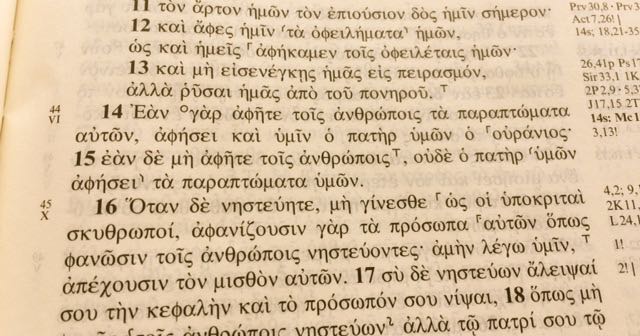
Recently, news broke that the Pope has approved a change to the wording of one section of the Lord’s Prayer. Specifically, the part that is traditionally worded, “Lead us not into temptation, but deliver us from the evil one.” The new rendering the Pope approved is “Do not let us fall into temptation.” The guys and I recently addressed this in our podcast. Today, I’d like to summarize a portion of our response. In addition, I’d like to present my own suggestion for how we should understand this section. I will argue that it doesn’t refer to personal temptation. Instead, it is a reference to trials during times of persecution. In this case, the evil one is not Satan. Instead, it refers to human agents who cause Christians to suffer.
A Note on Translation
First, I want to say that the Pope is not out of line by suggesting a new translation of the Lord’s Prayer. I understand that many people have strong connection to the traditional wording. However, language changes over time. This means that we will need to routinely update our translations to reflect those changes and avoid misunderstanding (check out our podcast episode where we discuss this).
Second, it is important to remember that all translation is interpretation, at least to some degree. It’s impossible to translation from one language to another in an exact word-for-word manner. Therefore, some degree of interpretation is necessary in order to formulate the correct rendering in the target language. The amount of interpretation is a matter of degree. Some translations, like the NRSV, overtly strive to keep this to a minimum. Others, like the Message, employ an extremely high degree of interpretation. The Pope’s proposal is merely the product of his interpretation.
Lead us not into… What?
Since all translation is a matter of interpretation, we can subject the Pope’s translation to scrutiny. We can ask a simple question: is it a good interpretation? The Pope has defended his interpretation on theological grounds. However, from a textual point of view, I think that he may have misunderstood Jesus. Let me explain.
The first question has to do with temptation. This is a word that can be translated a number of ways, depending on the context. The first is temptation in the generally understood sense. However, another meaning is trials. In 1 Peter 4:12 the author refers to the fiery trial his audience is experiencing. Rev 3:10 identifies an upcoming hour of trial the Christians in Philadelphia are about to experience.
The obvious question is then, how should we interpret this term? I believe the second option, trial, is correct. The next sections will explain why.
Who is the Evil One?
The next question involves the identification of the evil one. Traditionally, the assumption is that the evil one is Satan. This is certainly a possibility. However, there are numerous passages in the NT in which the evil one clearly refers to a human (Matt 5:38, 13:49, Luke 6:45, 2 Thess 3:3, 1 Cor 5:13, et al). How will we determine which meaning is correct? Is there any evidence that will help us decide? Thankfully, there is.
A Critical Conjunction
This section of the Lord’s Prayer is followed by a brief explanatory aside. Jesus says, “For if you forgive people their transgressions, God will forgive you.” The key word here is for. This is a critical conjunction. It sends a signal to the listener that the speaker is pausing to explain what he just said. For me, this is key to our interpretation.
Jesus says, “For, if you forgive people…” This means forgiving people explains the previous statement. It is therefore logical to conclude that the previous statement must also be about people. This means that the evil one is best understood as a person, not the Devil.
Bringing it all Together
There is one final piece of evidence that I think helps our interpretation. In 2 Thess 3:1-3, Paul asks the Christians in Thessalonica for prayer. Specifically, he asks for prayer so that they will be “delivered from wicked and evil men.” Paul’s wording is very similar to Jesus’ wording, “deliver us from the evil one.” I strongly suspect that Paul’s prayer and Jesus’ prayer express a similar sentiment. In both, we pray that God will deliver us from human persecution.
If I am correct in my interpretation of the evil one, then this helps us identify trials. It is most likely a reference to the kinds of trials we face when wicked and evil people persecute us.
So to bring it all together, this part of the Lord’s Prayer should read, “Do not bring us into times of trials, but deliver us from the evil person.” I might smooth it a little more and suggest it read, “Do not bring us into times of trial, but rescue us from wicked people.” This would be my recommended interpretation and translation of this passage.
Previous Post

June 28, 2019
The Power of Pruning
Next Post

July 3, 2019 Practical Peace Part 1
Browse Our Archives
Select a Category Biblitically Correct Christian Practices Church Discipleship Entertainment New Testament Old Testament Scripture Uncategorized Witness to World
Select a Month October 2019 September 2019 August 2019 July 2019 June 2019 May 2019 April 2019
Follow Us!
TAKE THE
Religious Wisdom Quiz
In which Psalm do we find "Your word is a lamp to my feet..."?
Select your answer to see how you score.
Psalm 23 Psalm 27 Psalm 119 Psalm 90
Related posts from Walk and Word

When Sabbath Ceases to be Sabbath



TRENDING AT PATHEOS Evangelical

Indigenous Peoples’ Day and the Church
Indigenous' Peoples Day or Columbus Day? Depending on where you live...

When Spiritual Growth Looks Like Losing Ground
Four Passive Spiritual Disciplines: An Introduction When I was a college freshman,...

Faith and Finding Your Current Season
“To everything there is a season,” Ecclesiastes tells us, “and a time...

Did Jesus Fear God's Wrath in Gethsemane?
That Time Jesus Was Terrified Before we begin, let me say at...

A Generation Searching for God in All the...
Revival Begins With God’s People! Holidays Are Upon Us! Welcome to October!...

Faith and End of Life Planning
The Psalmist's prayer to “teach us to number our days, that we...
view all Evangelical blogs
Ad-Free & Subscriber Log-In Subscription Support
- About Us
- 2026 Calendar
- Videos
- Podcasts
- Library of World Religions
- Faith In Media Tracker
- Advertise With Us
- Write for Us
- Privacy Policy
- Terms of Service
- Do Not Sell My Data
- Contact Us
- Radiant Digital
- Manage Newsletter Subscriptions
- Unsubscribe From Notifications
- Sitemap
Copyright 2008-2026, Patheos. All rights reserved.
Subscription Support Ad-Free & Subscriber Log-In
Follow Patheos