
BuddhistCatholicContemplativeEvangelicalGeneral ChristianHinduJewishLatter-day SaintMuslimNew VisionsProgressive Christian
Beliefs
- Buddhist
- Catholic
- Contemplative
- Evangelical
- General Christian
- Hindu
- Jewish
- Latter-day Saint
- More Voices
- Muslim
- New Visions
- Pagan
- Progressive Christian
Topics
- Religion News
- Food and Religion
- Sports and Religion
- Religious Art
- Religious Music and Entertainment
- Religious Events
- History and Religion
- Style and Religion
- Politics and Religion
- Women in Religion
- Recreation Outdoors and Religion
- Business Finance and Religion
- Careers Workplace and Religion
- Education and Religion
- Family Parenting and Religion
- Health Fitness and Religion
- Home and Religion
- Relationships and Religion
- Technology and Religion
- Travel and Religion
Columnists
- Buddhist Columnists
- Business Finance and Religion Columnists
- Careers Workplace and Religion Columnists
- Catholic Columnists
- Contemplative Columnists
- Education and Religion Columnists
- Evangelists Columnists
- Family Parenting and Religion Columnists
- General Christian Columnists
- Health Fitness and Religion Columnists
- Hindu Columnists
- History and Religion Columnists
- Home and Religion Columnists
- Jewish Columnists
- More Voices Columnists
- Latter Day Columnists
- Muslim Columnists
- New Visions Columnists
- Nonreligious Columnists
- Pagan Columnists
- Politics and Religion Columnists
- Progressive Columnists
- Recreation Outdoors and Religion Columnists
- Relationships and Religion Columnists
- Religion News Columnists
- Religious Art Columnists
- Religious Events Columnists
- Religious Music and Entertainment Columnists
- Sports and Religion Columnists
- Style and Religion Columnists
- Technology and Religion Columnists
- Travel and Religion Columnists
- Women in Religion Columnists
Resource Library
- 2026 Calendar
- Library of World Religions
- The 100 Most Holy Places on Earth
- Patheos Answers
- Podcasts
- Videos
- Faith Leaders Database
- Anglican Episcopalian
- Bahai
- Baptist
- Buddhism
- Christianity
- Confucianism
- Eastern Orthodoxy
- Hinduism
- Holiness and Pentecostal
- ISKCON
- Islam
- Judaism
- Lutheran
- Methodist
- The Church of Jesus Christ of Latter-day Saints
- New Age
- Paganism
- Presbytarian and Reformed
- Protestantism
- Religion Behind the Scenes
- Roman Catholic
- Scientology
- Shia Islam
- Sikhism
- Sufism
- Sunni Islam
- Taoism
- Zen
- See all religions
Research Tools
 Ad-Free & Subscriber Log-In Subscription Support
Ad-Free & Subscriber Log-In Subscription Support
Follow Patheos 

- Trending:
- Forgiveness
- |
- Marriage
- |
- Consciousness
- |
- Death Penalty
- |
- Election
- |
- Halloween
 Walk and Word
- Home
- Evangelical
- Pondering the Spade
Pondering the Spade
Last updated on: September 12, 2019 at 10:36 pm by Samuel C. Long
Pondering the Spade 2019-09-12T22:36:14-05:00 Samuel C. Long
Patheos Explore the world's faith through different perspectives on religion and spirituality! Patheos has the views of the prevalent religions and spiritualities of the world.
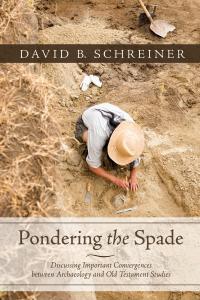
Wipf and Stock Publishers
Today we have a guest blogger from my good friend David Schreiner. Dave has just released a new book entitled, Pondering the Spade: Discussing Important Convergences between Archaeology and Old Testament Studies. I highly recommend picking it up. As a bonus, if you read the recommendations on the back page you might see a familiar name.
What inspired or challenged you to write this book?
I wrote this book largely because of an annoyance that I have been experiencing when developing my Old Testament classes. If one takes seriously the notion that God’s revelation largely (but not absolutely) came through a particular culture living in a particular region and time—Israel (and I do take this seriously)—then it stands to reason that the discipline best suited to comment on that culture (Archaeology) needs to be utilized effectively. However, archaeology is a discipline separate from Biblical Studies. Its concerns are anthropological and historical, not theological or apologetic. This means that we can’t just assume that Archaeology is a sub-discipline within Biblical Studies—as if it serves Biblical Studies. Applying archaeological conclusions to issues of Biblical Studies requires critical thought, nuance, creativity (in some cases). It’s my conviction that such an understanding about Archaeology’s relationship to Biblical Studies is lacking among many in the Church, and even by a significant number of educators in centers of Christian higher education.
And this is another reason why I wrote the book. It was my experience that the necessary discussions got too technical too quickly. I wanted something that was accessible, not to mention to put several important examples in one location. For example, to discuss Israelite religion you would have to one place for Kuntillet Ajrud and then over to another for Mt. Ebal. Or, to discuss the process of literary development, the Gilgamesh Epic was discussed in Book A but Qumran in Book B. So, again, it was kind of annoying.
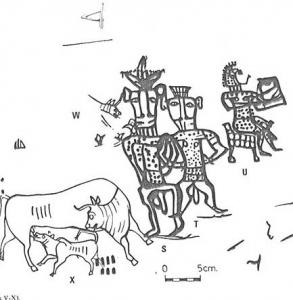
wikipedia.com
How is the book laid out?
As for the framework to present all this, I used William Dever’s idea of convergence. I’ve always appreciated his methodological discussions. He’s never been shy to call people out for inappropriately applying the results of Archaeology. And I came across this idea of convergence, which is really nothing novel. Yet for whatever reason the idea that, under the right conditions, the results of Archaeology and Biblical Studies converge, and thus inform each other, struck a chord with me. So, I chose to use this concept, but to develop it. I came up with this idea of broad and narrow convergences.
Narrow convergences are instances where Archaeology directly informs a particular passage or issue in the Bible. For example, Sennacherib’s annals speak to 2 Kings 18–19. Mount Ebal speaks to Joshua 8:30–35 and Deuteronomy.
Broad convergences are the instances where Archaeology informs macro-level issues, such as social institutions or elements of the ancient Near Eastern culture. For instance, the textual archives of Mari help us understand dimorphic societies (occurring in two distinct forms) and the prophetic institution. The Gilgamesh Epic gives us insight into large scale literary production. And of course, there’s Ugarit that sheds light on the waning years of the Late Bronze Age and the Canaanite pantheon.
Who is your intended audience?
Anyone who is interested in issues of Old Testament history, culture, and deeper theological issues will hopefully gain some insight. Moreover, seminary students and college students majoring in the religion of Israel or Bible will have a nice resource that puts several discussions in one location at the same discussing issues critical to a deep understanding of Scripture and Ancient Israel.
Previous Post

June 16, 2019
Broken Healer
Next Post

June 21, 2019 Godzilla: King of the Monsters - A Christian's Review
Browse Our Archives
Select a Category Biblitically Correct Christian Practices Church Discipleship Entertainment New Testament Old Testament Scripture Uncategorized Witness to World
Select a Month October 2019 September 2019 August 2019 July 2019 June 2019 May 2019 April 2019
Follow Us!
TAKE THE
Religious Wisdom Quiz
What year did Martin Luther post his 95 Theses?
Select your answer to see how you score.
1492 1401 1600 1517
Related posts from Walk and Word


Star Wars and the Book of Ruth


TRENDING AT PATHEOS Evangelical

Indigenous Peoples’ Day and the Church
Indigenous' Peoples Day or Columbus Day? Depending on where you live...

When Spiritual Growth Looks Like Losing Ground
Four Passive Spiritual Disciplines: An Introduction When I was a college freshman,...

Faith and Finding Your Current Season
“To everything there is a season,” Ecclesiastes tells us, “and a time...

Did Jesus Fear God's Wrath in Gethsemane?
That Time Jesus Was Terrified Before we begin, let me say at...

A Generation Searching for God in All the...
Revival Begins With God’s People! Holidays Are Upon Us! Welcome to October!...

Faith and End of Life Planning
The Psalmist's prayer to “teach us to number our days, that we...
view all Evangelical blogs
Ad-Free & Subscriber Log-In Subscription Support
- About Us
- 2026 Calendar
- Videos
- Podcasts
- Library of World Religions
- Faith In Media Tracker
- Advertise With Us
- Write for Us
- Privacy Policy
- Terms of Service
- Do Not Sell My Data
- Contact Us
- Radiant Digital
- Manage Newsletter Subscriptions
- Unsubscribe From Notifications
- Sitemap
Copyright 2008-2026, Patheos. All rights reserved.
Subscription Support Ad-Free & Subscriber Log-In
Follow Patheos