
BuddhistCatholicContemplativeEvangelicalGeneral ChristianHinduJewishLatter-day SaintMuslimNew VisionsProgressive Christian
Beliefs
- Buddhist
- Catholic
- Contemplative
- Evangelical
- General Christian
- Hindu
- Jewish
- Latter-day Saint
- More Voices
- Muslim
- New Visions
- Pagan
- Progressive Christian
Topics
- Religion News
- Food and Religion
- Sports and Religion
- Religious Art
- Religious Music and Entertainment
- Religious Events
- History and Religion
- Style and Religion
- Politics and Religion
- Women in Religion
- Recreation Outdoors and Religion
- Business Finance and Religion
- Careers Workplace and Religion
- Education and Religion
- Family Parenting and Religion
- Health Fitness and Religion
- Home and Religion
- Relationships and Religion
- Technology and Religion
- Travel and Religion
Columnists
- Buddhist Columnists
- Business Finance and Religion Columnists
- Careers Workplace and Religion Columnists
- Catholic Columnists
- Contemplative Columnists
- Education and Religion Columnists
- Evangelists Columnists
- Family Parenting and Religion Columnists
- General Christian Columnists
- Health Fitness and Religion Columnists
- Hindu Columnists
- History and Religion Columnists
- Home and Religion Columnists
- Jewish Columnists
- More Voices Columnists
- Latter Day Columnists
- Muslim Columnists
- New Visions Columnists
- Nonreligious Columnists
- Pagan Columnists
- Politics and Religion Columnists
- Progressive Columnists
- Recreation Outdoors and Religion Columnists
- Relationships and Religion Columnists
- Religion News Columnists
- Religious Art Columnists
- Religious Events Columnists
- Religious Music and Entertainment Columnists
- Sports and Religion Columnists
- Style and Religion Columnists
- Technology and Religion Columnists
- Travel and Religion Columnists
- Women in Religion Columnists
Resource Library
- 2026 Calendar
- Library of World Religions
- The 100 Most Holy Places on Earth
- Patheos Answers
- Podcasts
- Videos
- Faith Leaders Database
- Anglican Episcopalian
- Bahai
- Baptist
- Buddhism
- Christianity
- Confucianism
- Eastern Orthodoxy
- Hinduism
- Holiness and Pentecostal
- ISKCON
- Islam
- Judaism
- Lutheran
- Methodist
- The Church of Jesus Christ of Latter-day Saints
- New Age
- Paganism
- Presbytarian and Reformed
- Protestantism
- Religion Behind the Scenes
- Roman Catholic
- Scientology
- Shia Islam
- Sikhism
- Sufism
- Sunni Islam
- Taoism
- Zen
- See all religions
Research Tools
 Ad-Free & Subscriber Log-In Subscription Support
Ad-Free & Subscriber Log-In Subscription Support
Follow Patheos 

- Trending:
- Forgiveness
- |
- Marriage
- |
- Consciousness
- |
- Death Penalty
- |
- Election
- |
- Halloween
 Walk and Word
- Home
- Evangelical
- You’re Not the Judge of Me
You’re Not the Judge of Me
Last updated on: September 12, 2019 at 10:44 pm by Ronald D. Peters
You’re Not the Judge of Me 2019-09-12T22:44:12-05:00 Ronald D. Peters
Patheos Explore the world's faith through different perspectives on religion and spirituality! Patheos has the views of the prevalent religions and spiritualities of the world.
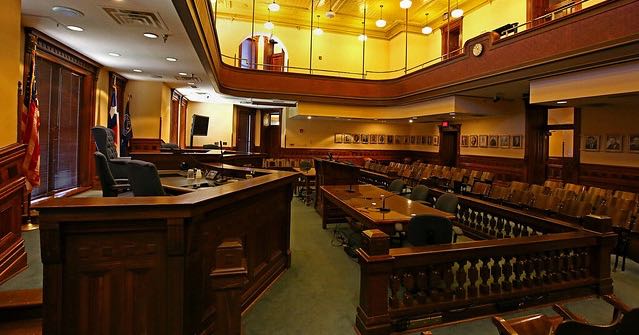
Do not judge, so that you will not be judged (photo courtesy of Victor Hamberlin / flickr)
Have you ever tried to have a conversation about sin only to have someone say, “Hey, Jesus told us not to judge!” For this person, any attempt to classify an act as sinful is a judgment that Jesus expressly prohibited. This is based on Jesus’ words in Matt 7:1, “Do not judge, so that you will not be judged.” Is Jesus’ statement really a sweeping prohibition against making judgments? If you answered “no,” you are correct. Instead, Jesus is actually explaining the best practices for making good judgments. In today’s blog, we’ll unpack this entire section of the Sermon on the Mount (Matt 7:1-6). By doing so, we’ll learn how to be the kind of judges Jesus taught us to be.
There’s Judging and There’s Judging
In both the Old Testament and the New Testament, it’s plain to see that God’s people were, in fact, supposed to make judgments. In the Old Testament, God gave his people instructions by which they were to live, i.e. Torah. Once they were settled in the Promised Land, members of the local communities were required to make judgments when people didn’t follow these instructions. Torah even included instructions about the penalties the people were to impose on the disobedient.
This is continued in the New Testament. In Matt 18:15-20, Jesus provided instructions for how the community of believers should handle the problem of a sinning brother (or sister). Likewise, in 1 Cor 5, Paul also provides instructions for the community regarding a brother who is living in sin. Later in NT, Jesus tells the church in Thyatira that their failure to deal with a false prophetess in their midst is something he holds against them (Rev 2:20). Thus, it is clear that God wants his people to make judgments and even impose consequences.
It should be noted that these judgments are about participation in the community of believers. For God’s people, there are behaviors that disqualify someone from full participation in the community. God has charged his people with making these judgments and acting upon them. Judging disobedience has two functions. First, it is meant to train people in righteousness. In order for people to grow, we have to help them see the areas in which they need to grow. We can’t do this without judging. Second, it is to protect the body. Those who refuse to live obediently to Christ represent a threat to the health and strength of the body.
By contrast, the one judgment that God’s people don’t make is what we might call final judgment or condemnation. This judgment is God’s alone. When God’s people make a judgment, it is not condemnation. Restoration and reintegration into the community is always a possibility (see 2 Cor 2:5-11). By contrast, scripture states that there will be a final judgment that, for the disobedient, will result in condemnation. That judgment is for a later time and Jesus will be the judge (Acts 17:31).
Judging Rightly
God didn’t just instruct us to judge and then leave us to figure it out by ourselves. That would be a recipe for disaster. Through Jesus, God has given us instructions for making righteous judgments.
First, we need to make sure we’re not guilty of the sins we’re calling out in others (Matt 7:1). If we declare that someone else is guilty when we are doing the same thing, we are declaring our own guilt. The apostle Paul echoes this in Rom 2:1-3. If we don’t want to experience the same judgment, we need to take care of our own business first.
Second, we should use the standard of judgment we would want used with ourselves (Matt 7:2). Personally, I want my brothers and sisters in Christ to show me grace and patience. Transformation and growth into maturity take time. I hope that those around me will note my transformation and growth. Even though I haven’t arrived at full maturity, I hope they will see that I am more mature than I was earlier in my Christian life. If this is the judgment I wish to receive, I must practice it with others.
Third, if we want to make righteous judgments, we need to get in some practice. No one would go to a doctor who hadn’t done a period of residency. In the same way, we need to develop our judging ability before putting it into practice. The best way to do this is to first practice on ourselves. This is what Jesus meant when he said to remove the board from your own eye before trying to help someone else get the speck out of his (Matt 7:3-5). If we can’t make good judgments on ourselves, how can we help someone else? We’re more likely to do harm than good. Once we’ve demonstrated our competency to make good judgments in our own lives, then we can move on to help others.
Don’t Give Pigs Margaritas
This sub-title is a little joke. The Greek word for pearl is margarita. The thought of a pig sipping a margarita on a beach makes me smile.
Jesus’ final instruction is “don’t give what is holy to dogs and don’t throw your pearls before swine,” (Matt 7:6). I think this is a fitting addition to the issue of making right judgments. The saying itself is somewhat cryptic. Nor is its connection to judging obvious. However, there are some clues that may help us decipher its meaning.
In the New Testament, the word “dog” is often used for those outside of the community of God’s people. They are people who aren’t obedient to God’s instructions. For example, in Phil 3:2 Paul writes, “Beware of the dogs, beware of the evil workers, beware of those who mutilate the flesh.” Similarly, we read in Rev 22:15, “Outside are the dogs and sorcerers and fornicators and murderers and idolaters, and everyone who loves and practices falsehood.” Like dogs, pigs also symbolize the disobedient. Since pigs were unclean animals for the Jews, they also represent those outside of the community of God’s people.
What Jesus means is that we aren’t to judge those outside of the community. Those on the outside haven’t committed to obeying God. Therefore, we have no common ground for judging their obedience or lack thereof. Paul states this clearly in 1 Cor 5:12, “What have I to do with judging those outside? Is it not those who are inside that you are to judge?” If we try to judge such people by kingdom standards, they will probably unleash their wrath on us. Therefore, judgment is solely an in-house responsibility.
Summary
As we’ve seen, God’s people are, in fact, supposed to make judgments. Thankfully, Jesus gave us instructions about how to do it rightly. We can summarize them thusly:
- If you do the things you’re judging others for doing, you condemn yourself.
- Judge others the way you want to be judged.
- Practice judging yourself before you judge others.
- God’s people only judge God’s people, not outsiders.
Jesus didn’t prohibit judging. On the contrary, he taught us how to be righteous judges. Let’s commit to becoming the kind of judges Jesus taught us to be.


About Ron Peters
Ron Peters is Professor of New Testament at Great Lakes Christian College. He has numerous publications on New Testament and Greek Language & Linguistics. He is also cohost of the After Class Podcast. You can read more about the author here.
Previous Post

May 15, 2019
Sucking the Life Out of People
Next Post

May 20, 2019 There is No Hostility
Browse Our Archives
Select a Category Biblitically Correct Christian Practices Church Discipleship Entertainment New Testament Old Testament Scripture Uncategorized Witness to World
Select a Month October 2019 September 2019 August 2019 July 2019 June 2019 May 2019 April 2019
Follow Us!
TAKE THE
Religious Wisdom Quiz
True or False: Nehemiah rebuilt the walls of Jerusalem in 52 days.
Select your answer to see how you score.
FALSE TRUE
Related posts from Walk and Word

When Sabbath Ceases to be Sabbath



TRENDING AT PATHEOS Evangelical

Indigenous Peoples’ Day and the Church
Indigenous' Peoples Day or Columbus Day? Depending on where you live...

When Spiritual Growth Looks Like Losing Ground
Four Passive Spiritual Disciplines: An Introduction When I was a college freshman,...

Faith and Finding Your Current Season
“To everything there is a season,” Ecclesiastes tells us, “and a time...

Did Jesus Fear God's Wrath in Gethsemane?
That Time Jesus Was Terrified Before we begin, let me say at...

A Generation Searching for God in All the...
Revival Begins With God’s People! Holidays Are Upon Us! Welcome to October!...

Faith and End of Life Planning
The Psalmist's prayer to “teach us to number our days, that we...
view all Evangelical blogs
Ad-Free & Subscriber Log-In Subscription Support
- About Us
- 2026 Calendar
- Videos
- Podcasts
- Library of World Religions
- Faith In Media Tracker
- Advertise With Us
- Write for Us
- Privacy Policy
- Terms of Service
- Do Not Sell My Data
- Contact Us
- Radiant Digital
- Manage Newsletter Subscriptions
- Unsubscribe From Notifications
- Sitemap
Copyright 2008-2026, Patheos. All rights reserved.
Subscription Support Ad-Free & Subscriber Log-In
Follow Patheos