
BuddhistCatholicContemplativeEvangelicalGeneral ChristianHinduJewishLatter-day SaintMuslimNew VisionsProgressive Christian
Beliefs
- Buddhist
- Catholic
- Contemplative
- Evangelical
- General Christian
- Hindu
- Jewish
- Latter-day Saint
- More Voices
- Muslim
- New Visions
- Pagan
- Progressive Christian
Topics
- Religion News
- Food and Religion
- Sports and Religion
- Religious Art
- Religious Music and Entertainment
- Religious Events
- History and Religion
- Style and Religion
- Politics and Religion
- Women in Religion
- Recreation Outdoors and Religion
- Business Finance and Religion
- Careers Workplace and Religion
- Education and Religion
- Family Parenting and Religion
- Health Fitness and Religion
- Home and Religion
- Relationships and Religion
- Technology and Religion
- Travel and Religion
Columnists
- Buddhist Columnists
- Business Finance and Religion Columnists
- Careers Workplace and Religion Columnists
- Catholic Columnists
- Contemplative Columnists
- Education and Religion Columnists
- Evangelists Columnists
- Family Parenting and Religion Columnists
- General Christian Columnists
- Health Fitness and Religion Columnists
- Hindu Columnists
- History and Religion Columnists
- Home and Religion Columnists
- Jewish Columnists
- More Voices Columnists
- Latter Day Columnists
- Muslim Columnists
- New Visions Columnists
- Nonreligious Columnists
- Pagan Columnists
- Politics and Religion Columnists
- Progressive Columnists
- Recreation Outdoors and Religion Columnists
- Relationships and Religion Columnists
- Religion News Columnists
- Religious Art Columnists
- Religious Events Columnists
- Religious Music and Entertainment Columnists
- Sports and Religion Columnists
- Style and Religion Columnists
- Technology and Religion Columnists
- Travel and Religion Columnists
- Women in Religion Columnists
Resource Library
- 2026 Calendar
- Library of World Religions
- The 100 Most Holy Places on Earth
- Patheos Answers
- Podcasts
- Videos
- Faith Leaders Database
- Anglican Episcopalian
- Bahai
- Baptist
- Buddhism
- Christianity
- Confucianism
- Eastern Orthodoxy
- Hinduism
- Holiness and Pentecostal
- ISKCON
- Islam
- Judaism
- Lutheran
- Methodist
- The Church of Jesus Christ of Latter-day Saints
- New Age
- Paganism
- Presbytarian and Reformed
- Protestantism
- Religion Behind the Scenes
- Roman Catholic
- Scientology
- Shia Islam
- Sikhism
- Sufism
- Sunni Islam
- Taoism
- Zen
- See all religions
Research Tools
 Ad-Free & Subscriber Log-In Subscription Support
Ad-Free & Subscriber Log-In Subscription Support
Follow Patheos 

- Trending:
- Forgiveness
- |
- Marriage
- |
- Consciousness
- |
- Death Penalty
- |
- Election
- |
- Halloween

- Home
- New Visions
- Jesus is Dead. Now What? (Christian Life 0-200 AD)
Jesus is Dead. Now What? (Christian Life 0-200 AD)
Last updated on: March 2, 2022 at 3:36 pm by Tom Rapsas
Jesus is Dead. Now What? (Christian Life 0-200 AD) 2022-03-02T15:36:36-07:00 Tom Rapsas
Patheos Explore the world's faith through different perspectives on religion and spirituality! Patheos has the views of the prevalent religions and spiritualities of the world.
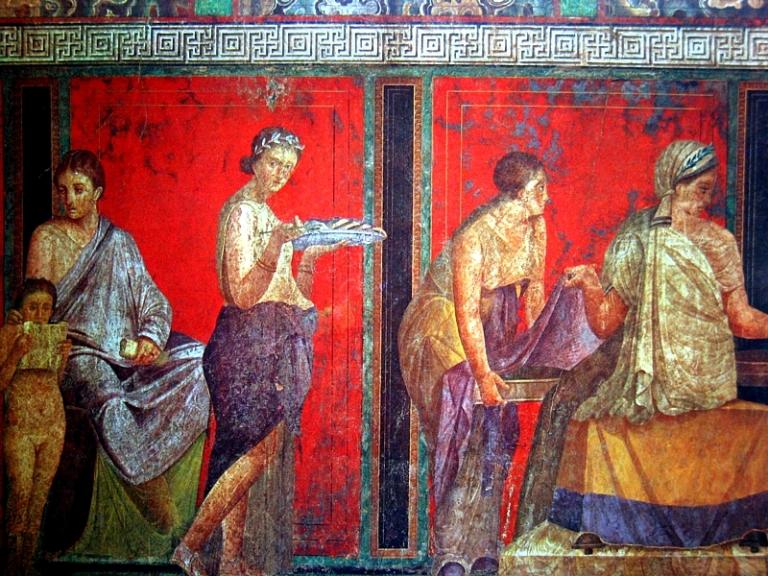
Roman fresco, circa 60 CE, via Wikimedia Commons
What took place in the years after the death of Jesus? Did his followers immediately begin setting up churches? What religious texts did they use? Did they share a cohesive set of beliefs about Jesus and his message? Was there one leader or many?
As it turns out, the early years of Christianity were a wee bit chaotic. Nothing resembling the church or New Testament would exist for hundreds of years. Religious “practices” varied from community to community. There was no central figure in charge. These a few of the facts that emerge from the new book After Jesus Before Christianity, A Historical Exploration of the First Two Centuries of Jesus Movements, via the Christian research group The Westar Institute.
There’s not one story but many that emerge from the early years of Christianity. Here are a few of the more interesting findings in the book, many of which may change the way you view the religion named for Jesus and how we practice it today. Exact quotes from After Jesus Before Christianity are indicated. I also reference Elaine Pagels’ book Beyond Religion.
What Happened After The Death of Jesus
There was no church or new religion. The early followers of Jesus had not yet broken away from the Jewish faith. There was “an intermingling of Jesus peoples and Israel” and “a great variety of clubs, families, movements, schools, communities and groups associated with Jesus the teacher, the Anointed, Lord and Savior.” But nothing resembling a church and no movement to form a new religion.
The early Christians were persecuted by the Romans. Their lives were “unrelentingly filled with risk, pain and death.” It wasn’t uncommon for Jesus followers to be hauled in front of a local magistrate and be asked once, twice, three times if they were Christians. If they persisted in saying yes, they were led away to execution. “Suffering and death were central to their understanding of who they were and what made their association with Jesus meaningful.”
Women played a major role in these early groups. It was common for women to serve as local leaders. In the face of constant Roman oppression, followers were taught they should not be afraid but be confident. There were many stories shared within the groups, that featured women facing sickness, death and danger, who nevertheless persevered. Their trust in themselves, and in God, was rewarded and they were seldom harmed.
Followers of Jesus enjoyed regular communal meals. They usually met in groups of 6 to 15, though sometimes larger. They would engage in “exuberant and jubilant meals,” drinking wine and engaging in spirited conversation. “Writings from these communities present Jesus as host, guest, and chief honoree of the meal.” The topics of conversation might include Jesus’s teachings, but also explored kindness, joy and compassion.
They had differing views of Jesus. Some viewed the “crucified and resurrected Jesus as the one divinity to be revered.” But others simply “respected him as a teacher and healer.” Not everyone thought he was the most important figure of their time, let alone God incarnate.
Paul is a pivotal figure—but not for everyone. Elaine Pagels explains that many of the early Christians disagreed on the core teachings and would follow different teachers. Some would say, “I belong to Peter’s group, others saying I belong to Paul’s, some to groups that others led.” Paul would go on to become the most prominent figure in the New Testament, but in those days, many questioned his legitimacy. The reason, as After Jesus Before Christianity reports, was “he had never known Jesus in the flesh.” Some believed he was “a dangerous corruptor trying to lead the faithful astray” and “many communities resisted his attempt to unify the movement under a consistent set of beliefs and practices.”
There was no official holy book. From the first century to the fourth century, and even centuries beyond, church leaders argued about which books should be added to the Jewish Bible. The New Testament, in the form we know it today, would not arrive for a few hundred more years. But for many of the early Jesus followers, books were meaningless anyway, as “few could read or write.” Instead, they relied on the spoken word to share Jesus’s teachings.
What mattered most to the early Christians wasn’t dogma. Texts that did exist in the early years of Christianity were far-ranging in their ideas. Take this passage from a popular mid second-century text called The Gospel of Truth which talks to moral principles around “goodness”:
Say then from the heart that you are the perfect day and within you dwells the light that never ends.
Speak of the truth with those who seek it.
Strengthen the feet of those who stumble and stretch your hands to those who are weak.
Feed those who are hungry and give rest to the weary.
Raise those who wish to arise and awaken those who sleep.
Elaine Pagels tells us that the texts that have survived from the times of early Christianity show a spirituality not confined by boundaries. In her words:
They weren’t judging the value of sacred writings by whether or not they conform to Christian doctrine. The creeds by which later bishops defined who or what was Christian had not yet been invented. Apparently, they were less concerned with what to believe than with deepening their spiritual practice.
It was a Christianity that appears to be richer and deeper than what exists today. It was a world where the word of Jesus was just one element of what it meant to be a Christian, where a wide range of teachings, a sense of community, and living a good and righteous life, were all part of the equation.
After Jesus Before Christianity
Previous Post

February 23, 2022
How to Deal with Grief
Next Post

March 9, 2022 How to Soothe the Soul During Trying Times
Browse Our Archives
Select a Category 50+ Spirituality 60 Second Inspiration Activism Adversity Afterlife agape aging Aliens Angels Angels and aliens anger animism Astrology Atheists Attention Attitude Authenticity Awareness Awe Ayahuasca Balance Beginnings Being Present Belief Bhagavad Gita Bible birth of Jesus Blessings Bliss Bono Breathing Buddha Buddhism Calling cats Centered Centering Prayer Chakras Change Character Character and Aging Christ consciousness Christianity Christmas Church Civility commencement speeches commitments compassion Connecting with God Consciousness Contemplation Contemplative Prayer Contentment Conversations with God Coping Coping mechanisms Corinthians Coronavirus Covid creativity Daily practice Dalai Lama David Brooks David Frenette Death Deathbed visions Decisions determinism Discernment disconnecting Donald Shimoda Dreaming of the Dead dreams Drinking Easter Eastern religion Eckhart Tolle ego Elders Emerson Engagement Enlightenment everyday magic Everyday Spirituality Evil Spirits Expectations experience Faith fate Fatima Fear Feel Finding God Fitness Fulfillment Gandhi Gary Zukav Generosity Giving Gnostic gospels Gnostics God God's will Golden Rule Good & Evil Gospel of Thomas Gospels Grace Gratitude Grief Growing Older Guardian Angels gumption Gurus Halloween Happiness health health and happiness Heaven Helping others High Strangeness Hinduism Holiday Season honesty Honor Hope Humility impostor syndrome inner music Inner Work Insights insomnia Inspiration Inspirational intuition Investing Jeff Bridges Jesus Jesus Christ John Templeton joy joy of life Justin Bieber Kaballah Kabbalah Karma Kindness koans Law of Attraction Life Life after Death Life and death Life Balance Life Hacks Life Lessons Life Path Life Philosophy Life Plan life purpose Life Rules Life Tips Life's Big Questions Lindsay Lohan Listening Living Intentionally Loneliness Love Magic Mark Twain Marriage Meaning of Life Meditation mentor Mentors Mid-Life Crisis Mindful Mindfulness Money Monks Multiverse Mysterious World mystical experience Mysticism Mystics Mythology Napoleon Hill Near Death Experience (NDE) New Thought New Year New Year's resolutions Noise Oprah out-of-body experience Parables Peace of mind philosophy Plant Intelligence Pope Francis Positive Thinking Prayer prayers for the spiritual Preachers Premonitions presence Prophecies Prophecy Prophets Psalms Purpose Purpose of Life quietude Quotes Ralph Waldo Emerson Ralph Waldo Trine Reconnect Recovery reincarnation Relaxation Religion resolutions Resurrection Ritual Rituals Rules to Live By sadness Sam Harris Sandy Second Act Seeking self Self Mastery self-help self-improvement Seneca sermon sex shamans Sickness Silence Silence of God sleep small voice Smiling Social Activism solitude Soul Soul and Spirit Soul Awakening Spiritual Awakening spiritual beliefs spiritual guidance spiritual journey spiritual living spiritual path Spiritual philosophy Spiritual Practice Spirituality Spirituality and work Spooky Spirituality Stillness stoicism stoics Storytelling Stress Relief Success Suffering Suicide Surrender tao Thanks Thanksgiving the afterlife the bardo the Bible the Blues The Election the Kingdom the secret the self The Soul Thomas Keating Thomas Merton Thomas Moore Time Tony Robbins tradition UFOs Uncategorized Universe Values visualization Voice of God Wake Up Call Wake Up Call book Walls Walt Whitman Well-being Winter Blues Wisdom words to live by Work work/life balance worry Yogananda Zen
Select a Month October 2026 September 2026 August 2026 July 2026 June 2026 May 2026 April 2026 March 2026 February 2026 January 2026 December 2025 November 2025 October 2025 September 2025 August 2025 July 2025 June 2025 May 2025 April 2025 March 2025 February 2025 January 2025 December 2024 November 2024 October 2024 September 2024 August 2024 July 2024 June 2024 May 2024 April 2024 March 2024 February 2024 January 2024 December 2023 November 2023 October 2023 September 2023 August 2023 July 2023 June 2023 May 2023 April 2023 March 2023 February 2023 January 2023 December 2022 November 2022 October 2022 September 2022 August 2022 July 2022 June 2022 May 2022 April 2022 March 2022 February 2022 January 2022 December 2021 November 2021 October 2021 September 2021 August 2021 July 2021 June 2021 May 2021 April 2021 March 2021 February 2021 January 2021 December 2020 November 2020 October 2020 September 2020 August 2020 July 2020 June 2020 May 2020 April 2020 March 2020 February 2020 January 2020 December 2019 November 2019 October 2019 September 2019 August 2019 July 2019 June 2019 May 2019 April 2019 March 2019 February 2019 January 2019 December 2018 November 2018 October 2018 September 2018 August 2018 July 2018 June 2018 May 2018 April 2018 March 2018 February 2018 January 2018 December 2017 November 2017 October 2017 September 2017 August 2017 July 2017 June 2017 May 2017 April 2017 March 2017 February 2017 January 2017 December 2016 November 2016 October 2016 September 2016 August 2016 July 2016 June 2016 May 2016 April 2016 March 2016 February 2016 January 2016 December 2015 November 2015 October 2015 September 2015 August 2015 July 2015 June 2015 May 2015 April 2015 March 2015 February 2015 January 2015 December 2014 November 2014 October 2014 September 2014 August 2014 July 2014 June 2014 May 2014 April 2014 March 2014 February 2014 January 2014 December 2013 November 2013 October 2013 September 2013 August 2013 July 2013 June 2013 May 2013 April 2013 March 2013 February 2013 January 2013 December 2012 November 2012 October 2012 September 2012 July 2012 April 2012 March 2012 January 2012 November 2011 October 2011 September 2011 August 2011 July 2011 May 2011 April 2011 March 2011 February 2011 January 2011 November 2010 October 2010 September 2010 August 2010 July 2010 June 2010 May 2010 April 2010 March 2010 February 2010 December 2009 November 2009
Follow Us!
TAKE THE
Religious Wisdom Quiz
Who wrote the words on the tables of stone for the 10 Commandments?
Select your answer to see how you score.
Abraham Jesus Moses God
Books by This Author Books by Wake Up Call
Related posts from Wake Up Call
Beyond Narnia: Did C.S. Lewis get a few...

What Side is Jesus on in Minneapolis?
The Unofficial Second Coming: Jesus Sets the Record...
Matthew vs. Luke: Which Christmas Story Got It...
TRENDING AT PATHEOS New Visions

Emotion in Early Christianity by Andrew Crislip
Andrew Crislip’s Emotion in Early Christianity examines an often overlooked dimension of...

16 Spiritual Touchstones for a More Grounded Life
After decades of spiritual study, here are 16 principles I try...

Catholic Evangelization: Sharing Your Faith Every Day
Welcome back to the Graceful Awakening mini-series called, “From Faith to Mission.” ...

The Pillar of the Boatmen: the Ancient Monument...
The Pillar of the Boatmen is a Romano-Gaulish sculpture that dates from...

In one sense walking into Westminster Abbey is like walking down the...

'Super Scam Me' Exposes AI Jon Bon Jovi...
Leslie Pickett believed she was in a relationship with Jon Bon Jovi....
view all New Visions blogs
Ad-Free & Subscriber Log-In Subscription Support
- About Us
- 2026 Calendar
- Videos
- Podcasts
- Library of World Religions
- Faith In Media Tracker
- Advertise With Us
- Write for Us
- Privacy Policy
- Terms of Service
- Do Not Sell My Data
- Contact Us
- Radiant Digital
- Manage Newsletter Subscriptions
- Unsubscribe From Notifications
- Sitemap
Copyright 2008-2026, Patheos. All rights reserved.
Subscription Support Ad-Free & Subscriber Log-In
Follow Patheos