
BuddhistCatholicContemplativeEvangelicalGeneral ChristianHinduJewishLatter-day SaintMuslimNew VisionsProgressive Christian
Beliefs
- Buddhist
- Catholic
- Contemplative
- Evangelical
- General Christian
- Hindu
- Jewish
- Latter-day Saint
- More Voices
- Muslim
- New Visions
- Pagan
- Progressive Christian
Topics
- Religion News
- Food and Religion
- Sports and Religion
- Religious Art
- Religious Music and Entertainment
- Religious Events
- History and Religion
- Style and Religion
- Politics and Religion
- Women in Religion
- Recreation Outdoors and Religion
- Business Finance and Religion
- Careers Workplace and Religion
- Education and Religion
- Family Parenting and Religion
- Health Fitness and Religion
- Home and Religion
- Relationships and Religion
- Technology and Religion
- Travel and Religion
Columnists
- Buddhist Columnists
- Business Finance and Religion Columnists
- Careers Workplace and Religion Columnists
- Catholic Columnists
- Contemplative Columnists
- Education and Religion Columnists
- Evangelists Columnists
- Family Parenting and Religion Columnists
- General Christian Columnists
- Health Fitness and Religion Columnists
- Hindu Columnists
- History and Religion Columnists
- Home and Religion Columnists
- Jewish Columnists
- More Voices Columnists
- Latter Day Columnists
- Muslim Columnists
- New Visions Columnists
- Nonreligious Columnists
- Pagan Columnists
- Politics and Religion Columnists
- Progressive Columnists
- Recreation Outdoors and Religion Columnists
- Relationships and Religion Columnists
- Religion News Columnists
- Religious Art Columnists
- Religious Events Columnists
- Religious Music and Entertainment Columnists
- Sports and Religion Columnists
- Style and Religion Columnists
- Technology and Religion Columnists
- Travel and Religion Columnists
- Women in Religion Columnists
Resource Library
- 2026 Calendar
- Library of World Religions
- The 100 Most Holy Places on Earth
- Patheos Answers
- Podcasts
- Videos
- Faith Leaders Database
- Anglican Episcopalian
- Bahai
- Baptist
- Buddhism
- Christianity
- Confucianism
- Eastern Orthodoxy
- Hinduism
- Holiness and Pentecostal
- ISKCON
- Islam
- Judaism
- Lutheran
- Methodist
- The Church of Jesus Christ of Latter-day Saints
- New Age
- Paganism
- Presbytarian and Reformed
- Protestantism
- Religion Behind the Scenes
- Roman Catholic
- Scientology
- Shia Islam
- Sikhism
- Sufism
- Sunni Islam
- Taoism
- Zen
- See all religions
Research Tools
 Ad-Free & Subscriber Log-In Subscription Support
Ad-Free & Subscriber Log-In Subscription Support
Follow Patheos 

- Trending:
- Forgiveness
- |
- Marriage
- |
- Consciousness
- |
- Death Penalty
- |
- Election
- |
- Halloween

- Home
- Catholic
- The Politics of Infallibility at Vatican I (Part 1)
The Politics of Infallibility at Vatican I (Part 1)
Last updated on: June 14, 2008 at 10:00 am by Policraticus
The Politics of Infallibility at Vatican I (Part 1) 2008-06-14T10:00:34-05:00 Policraticus
Patheos Explore the world's faith through different perspectives on religion and spirituality! Patheos has the views of the prevalent religions and spiritualities of the world.
In honor of the imminent beatification of John Henry Newman, and in light of the so-called “Acton University,” whose namesake became a dissident in the Catholic Church because of his ideas on liberty, I am posting here the first graduate theology paper I ever wrote. It was not until I researched Vatican I that I realized how cataclysmic and capricious ecumenical councils could be. Compared to Vatican II, Vatican I was far more chaotic and divisive, and I marvel at how individuals such as Lord Acton are celebrated by Catholic organizations grappling with a poor historical memory.
The bishop of Orléans soberly made his way to the last meeting with his fellow Minority prelates in Rome. What was left to determine was just how the Minority would represent themselves at tomorrow’s Public Session. The Holy Father would be present, so the stakes were much higher. The sun had already set on this evening of July 17th, 1870. He was late. No matter; the fire in his soul had long been extinguished. This evening’s gathering would not bequeath the fury and motive that previous gatherings had. The only opposition left would stem from within: like Jacob, his conscience would be forced to wrestle with an adversary too powerful to overcome, and blessing would only be given through surrender. Perhaps his only solace was an impending return to France; the unrelenting heat of the Roman summer would no doubt force the Holy Father to suspend the proceedings until November. Ironically, neither he nor Pius knew that only two days later, war would be declared between France and Prussia, and the Council would be forced into indefinite suspension.
The morning of July 18th was typically warm but unpredictably violent. Rain mercilessly besieged the Basilica of St. Peter’s. Cardinal Barili began the divine Liturgy at 9:00, a low Mass for all present at the Public Session. By the conclusion of Mass, clouds of hard gray had eclipsed the light of the sun, and it felt as though dusk had arrived within the adorned walls of the Basilica. Pope Pius IX, at the robust age of seventy-eight, assumed his throne amidst the venerable prelates. He led the assembly in the singing of the Litany of the Saints followed by Veni Creator Spiritus in his usual deep intonation. Every corner of the earth—from Melbourne to Bombay, from Baltimore to Antioch, from Jerusalem to London—proclaimed the glory of Christ’s servants and invoked the Holy Spirit through their representatives in Rome.
Later that morning, voting commenced on the fourth chapter of the First Dogmatic Constitution on the Church of Christ. The power of the thunderstorms outside had reached its full ascendancy, and each bishop’s vote was barely audible under the rage of the sky’s lightning waltz. By an overwhelming margin, the bishops of the Catholic Church voted to officially adopt the conciliar text. The Pope himself ratified their decision and promulgated the Dogmatic Constitution. Bishop Ullathorne of Birmingham described it as such: “The decree was voted by 533 ‘placets’ to 2 ‘non placets’ amidst a great storm. The lightening flashed into the aula, the thunder rolled over the roof, and glass was broken by the tempest in a window nearly over the pontifical throne and came rattling down.”[1]
After the confirmation by the pope, two shadowy figures, hardly visible in the darkened church, approached the papal throne. The two bold souls who had uttered “non placet” looked directly into the pope’s shrouded eyes, and each proclaimed, “Holy Father, now I believe.” Some of the prelates present viewed the tumult as divine confirmation and approval of the outcome of the Council. Regardless of any hidden meaning lurking behind that storm, what truly rocked the Church was the fact that papal infallibility, after much debate and alienation, had become an official teaching of the Church and a necessary doctrine for all believers to confess.
The purpose of this essay is to describe the events that composed the politics of infallibility at the First Vatican Council. What is offered is a brief sketch of the thoughts and actions of the major figures within the Catholic Church that shaped and influenced the Council’s decree on papal infallibility. While the sheer historical breadth of such a project extends from the second century to the nineteenth, this essay is concerned with the events during the pontificate of Pope Pius IX that propelled the doctrine of papal infallibility out of the obscurity of devotional practice and theological speculation and into to its prime stature as a matter of utmost concern for the Church and, eventually, the First Vatican Council. Therefore, this essay shall center upon three stages of the drama of papal infallibility: 1. the debates that ensued from the 1850’s until the eve of the council; 2. the actions and measures taken during the Council in light of a possible and probable definition; 3. the ramifications of the Council’s decree on infallibility.
Preliminary Measures
The idea for the convocation of an ecumenical council was first suggested to Pius by Luigi Cardinal Lambruschini, a member of the Roman Curia, in 1849. Lambruschini relayed to the pope that he thought a council should be convoked “for the condemnation of recent errors and to revive the faith of the Christian people” and “to restore and reaffirm ecclesiastical discipline.”[2] Pius had only been pope for roughly three years, but was well acquainted with the general liberalism was making sharp inroads into Christian Europe, and naturally sympathized with Lambruschini’s concerns. He was convinced himself that the general principles of the Revolution in 1789 France were fueling the deconstruction of religious, social and moral values of his day. However, it took the idea of convoking a council almost twenty years of fermentation before it could become a reality.
Three events of 1863 particularly alarmed the Bishop of Rome and forced him to tighten his grip on the Church in the modern age: 1. the June publication of Ernest Renan’s enormously successful work Vie de Jésus in 1863, which praised Jesus as a spiritual man of great moral teaching, and not the Son of God; 2. the August congress at Malines where the Count of Montalembert rejected the union of Church and state and proclaimed religious liberty; 3. the academic congress at Munich where theologians, headed by Fr. Ignaz von Döllinger, declared freedom of research and critique of all religious matters not officially defined by the Church.[3] To Pius, these measures appeared to undermine the Church’s authority, and consequently, his own prerogatives. On December 8, 1864, in a desperate act to reinforce and buttress the power of the Church, Pius issued the encyclical Quanta cura with the appended “Syllabus of Errors”, exactly ten years after the proclamation of the dogma of the Immaculate Conception. However, Pius had not forgotten Lambruschini’s advise, and was planning a further and grander comfort for the Church’s woes.
Two days before the publication of Quanta cura, Pius attended a meeting with the Pontifical Congregation of Rites at the Vatican. The Pope requested that each of the cardinals provide a written response indicating their opinion on the advisability of convoking an ecumenical council that would address the extraordinary needs of all Christians. Twenty-one in all replied to the pope: two unequivocally rejected the idea, six expressed grave doubts, and thirteen responded in favor.[4] Those in favor desired an explicitly clear statement on Catholic doctrines that had been challenged by the prevailing trends of the time. Of these thirteen, only two mentioned papal infallibility as a possible topic of discussion. Delighted at such affirmation, Pius constituted a secret “Directing Congregation” of five cardinals to study the preliminary questions that the council would debate, affirm or renounce. The topic of papal infallibility was given little importance and attention by the commission.[5]
Encouraged by the cardinals’ generally favorable response, Pius dispatched a confidential letter to thirty-four bishops of the Latin Rite at the end of April 1865, and soon after, to a certain number of Eastern Rite bishops. It stated the Pope’s desire to hold an ecumenical council in Rome and requested a summary from each bishop as to which subjects would be appropriate to discuss. The responses from the various bishops conveyed the general sense that the Church needed to attend to errors of the age, declare the prerogatives of the Church at Rome, and fine-tune ecclesiastical discipline (i.e. canon law, religious orders, catechisms).[6] Only eight of the total responses specifically included papal infallibility among the recommendations of subjects to be handled at the council.[7] A bit later, Pius sent a questionnaire to several hundred bishops from all over the world in a hope to gather subject matter for the council. Summarizing their general concern, Domenico Cardinal Jacobini wrote, “Consequently the church faces a general lack of faith, the pernicious outcome of modern rationalism.”[8] Despite the expedient responses and Pius’ incessant enthusiasm, the Council preparations were stalled for two years due to dire political events, particularly in those in Rome, Austria and Prussia.
Never disinclined to celebrate the pomp of the papacy and exhibit the glory of the Catholic Church, Pius invited his fellow bishops to Rome during the summer of 1867 to celebrate the eighteenth centenary of the martyrdom of the Apostles Peter and Paul. In days leading up to the centenary, Pius had uncharacteristically begun to loose confidence in his idea to convoke a council. Some of the cardinals in the Curia possessed grave hesitations in holding a council, most prominent among them the Secretary of State, Giacomo Cardinal Antonelli, and Pius greatly valued their collective opinion. In response, Msgr. Felix Dupanloup, Bishop of Orléans, France, “put forth all his powers of influence to win them over to the idea of the Council.”[9] He succeeded in converting many of the doubters, which promptly restored surety to an otherwise stoic pope. Thus, during the Public Consistory on June 26, Pius delivered his Allocution to the bishops of the Church, the first public announcement of the approaching ecumenical council, the first of its kind since the Council of Trent more than 300 years earlier. The assembly, some 500 strong, erupted in applause.
A congratulatory address for the Pope was to be drafted by the assembled bishops thanking Pius for his paternal benevolence and for the Allocution, as well as expressing their approval of the council. At a general meeting of bishops, Henry Edward Cardinal Manning, who had been installed as the Archbishop of Westminster only in 1865 and was already a vehement defender of the temporal power of the papacy, took the lead and demanded a “fighting manifesto”. [10] Fortunately, the presiding cardinal decided that a letter of moderation would be most appropriate so as to not offend outside parties. But Bishop Jacques-Marie Ginoulhiac of Grenoble was enraged over this overtly audacious move by Manning, and in fury exclaimed to the Archbishop’s fellow-countryman, Bishop William Ullathorne, “Ce n’est pas le temps de casser les vitraux!”[11] Thus, by the summer of 1867, the politics of the council had already commenced.
Seven bishops were appointed to a committee to compose the congratulatory letter, among them Manning, Dupanloup, and Louis Haynald, Archbishop of Kalocsa–Bács. The original draft flowed from the pen of Haynald, a master Latinist and later a member of the Minority. The term “infallible” with reference to the papacy occurred no less than three times,[12] and no objection came from the committee. However, Dupanloup suggested the draft be reworked by another bishop, and the term “infallibility” was absent from the revision. Not to be outdone, Manning forcefully persuaded the committee to insert the decree from the Council of Florence on the primacy of the Bishop of Rome into the letter.[13] The final text was presented to Pius on July 1, 1867. However, it was not until June 29, 1868 that Pius issued the official Bull of Convocation, Aeternis Patris, which solemnly announced the council and set December 8, 1869 as the date of inauguration. It is important to note that the Bull, which also outlined Pius’ intentions for the Council, had no explicit or implicit reference to papal infallibility.
Preparations for the council were being conducted since 1865 by the Directing Commission. Immediately after the Allocution, it was decided that various theologians and canonists would be invited to Rome in order to study the suggestions of the bishops and concretize an agenda for the council. The hierarchies of principal countries were invited by the Directing Commission to nominate their most learned countrymen for participation in the preliminary measures. The selections were then made by the Directing Commission, and by early 1869, ninety-seven experts had arrived in the Eternal City ready for assignment. Each of these consulters was appointed to one of five subsidiary commissions: 1. faith and dogma; 2. ecclesiastical discipline; 3. religious orders and regulars; 4. the Eastern churches and foreign missions; 5. politico-ecclesiastical affairs. These commissions produced a total of fifty-one drafts of decrees to be laid before the Council, twenty-three on matters of faith and twenty-eight on various ecclesial practices.[14]
Pius himself desperately desired the reunion of all Christendom as Odo Russell, the British diplomatic agent in Rome, indicated in a letter to Lord Stanly: “Before closing this report I may as well explain that the Pope believes his Oecumenical Council to be the result of divine inspiration and that he is chosen to become the shepherd of the one single united Christian flock of the future.”[15] On September 8, 1868, the pope wrote an Apostolic Letter, Arcano divinae Providentiae consilio, to the Eastern Orthodox patriarchs, which demanded fidelity to the commitment they made to reunion at the Council of Lyons in 1274 and again at the Council of Florence in 1439. Pius expressed his desire for their participation at the Council. However, before the letter could be delivered, it was prematurely released to the press where the Patriarch of Constantinople first read it. When the Roman delegate reached him, the Patriarch sent a letter back to Pius rejecting the offer, and also returned the pope’s letter unopened. Pius addressed a separate letter, Jam vos omnes, five days later “to the protestants, Anglicans and other dissidents,”[17] inviting their full submission to Rome so that the Vatican Council could address their needs. This measure was also to no avail. Thus, the hope for the reunion of Christendom was struck from the Council’s agenda, and the subsidiary committees diligently prepared the way until the eve of the Council.
——-
[1] Cuthbert Butler, The Vatican Council: The Story Told From Inside in Bishop Ullathorne’s Letters, volume 2 (London: Longmans, Green and Company, 1930), 166.
[2] Quoted in Paul Christophe, Le Concile Vatican I (Paris: Les Éditions du Cerf, 2000), 9. Translation mine.
[3] Ibid., 9-10.
[4] The response of each cardinal is recorded in J. D. Mansi, ed. Sacrorum Conciliorum, nova et amplissima collectio. (Graz: Academische Druck-U. Verlagsanstalt, 1960-1961), 49:9-94.
[5] John R. Page, What Will Dr. Newman Do?: John Henry Newman and Papal Infallibility, 1865-1875 (Collegeville, MN: The Liturgical Press, 1994), 18.
[6] The responses of thirty-two of the Latin Rite bishops are recorded in Mansi, 49:107-178, and of the Eastern Rite bishops in Mansi, 49:182-202.
[7] John Tracy Ellis. “The Church Faces the Modern World: The First Vatican Council.” The General Council: Special Studies in Doctrinal and Historical Background, ed. William K. McDonald (Washington, D.C.: Catholic University of America Press, 1962), 124.
[8] Quoted in Emiliana P. Noether, “Vatican I: Its Political and Religious Setting,” The Journal of Modern History 40 (1968), 226.
[9] Butler, Vatican Council, 85.
[10] Ibid.
[11] Ellis, 124.
[12] Butler, 86.
[13] “That the Roman Pontiff is the Vicar of Christ and Head of the whole Church, and Father and Teacher of all Christians, and to him in Blessed Peter has been given by Jesus Christ full power of feeding, ruling, and governing the universal Church.”
[14] Phillip Hughes, “The First General Council of the Vatican, 1869-1870,” The Church in Crisis: A History of the General Councils 325-1870 (Garden City, NY: Hanover House, 1961) 339.
[15] Letter of October 25, 1868 to Lord Stanley. Noel Blakiston, ed., The Roman Question: Extracts From the Depatches of Odo Russell from Rome (London: Chapman and Hall, 1962), 352.
[16] Christophe, 27. Fernand Hayward gives a variant account of this event, asserting that the reason the Patriarchs of Constantinople and Jerusalem rejected Pius’ offer was because they were under the “despotic authority of the civil power”. The Vatican Council: A Short History, trans. Earl of Wicklow (Dublin: Clonmore and Reynolds Ltd., 1951), 46.
[17] Christophe, 28.
Previous Post

June 14, 2008
Senate Privatizes Lunch
Next Post
June 14, 2008 Ireland, the Lisbon Treaty, and the Church
Browse Our Archives
Select a Category 2019 A Consistent Ethic of Life Aaron Weldon Abortion absurdity Abuse Scandal Academics Adoption Advent Africa agreement/disagreement with Church teaching Alexander Schmemann Alexham Alterity America Amnesty International Anarchism angels Anglicanism Animals Annual Statistics Anthony Anxietas Apocalyptic Apophatic Appalachia Aquinas Art Atheism Atonement Augustine Authority Baptism Beauty Bible biblical criticism biblical scholarship Bioethics Bishops Black Catholics Black Theology Blackadder Blogs Books Breastfeeding Brett Salkeld Buddhism Bush administration Byzantine Catholic Calvinism Canada Canon Law Capital Punishment Capitalism Caryll Houselander Catholic Blog Awards Catholic Blogging Catholic League Catholic Social Teaching Catholic Worker Movement Catholicity CFL Charity Children Chris West Christ and Culture Christian Democracy Christian Unity Christmas Christology Church Church Doctrine Church History Climate Change Cohabitation Colbert Collegiality Communion Communism Comparative Theology Competition Conferences conscience conscience rights Consequentialism Consistent Life Ethics Consumerism Contraception Contrition Conversion Converts Coptic COVID-19 Creation Critical Thinking Cross Cuba Culture Culture of Death Culture of Life Darfur David Cruz-Uribe David Wheeler-Reed Death Death Penalty Democracy Demons Desert Fathers Devil Dialogue dignity Disability Disarmament discernment Discipleship discrimination Dissent Distributism Division Doctrine Domestic Church Dorothy Day Double Effect Doubt Down syndrome Driving Early Church Easter Eastern Churches Ecclesiology Economics Economy Ecumenism Education El Salvador Election Election 2020 Ellul Embryonic Stem Cell Research Empire Energy Enlighenment Environmentalism Ephraim Radner Episcopal Church epistemology Equality Eschatology Ethics Eucharist Europe Euthanasia Evangelization Evil Evolution Excommunication F.X. Durrwell Facism Facts Fair Trade Faith Family Fashion Feddie Feminism Feminist theology Fertility Fetal Rights Fiction Film Finances First Things flags Folk Religion Food Foreign Affairs Forgiveness Frank Sheed Free Speech Freedom gay & lesbian persons Genocide George W. Bush George Weigel Gerald L. Campbell Girard/Mimetic Theory Global Warming Globalization Gnosticism Good Friday Grace Gratitude Greed Grey Cup 2009 Guadalupe Guest Post Guest Posts Gun Control Gustave Martelet Habitat for Humanity Hans Urs von Balthasar Harry Potter Hate Speech Health Health Care Healthcare Heather King Hebrew Bible Henri de Lubac Henry Karlson Herbert McCabe Heresy HHS Mandate Controversy History Holidays Holiness Holy Spirit Homiletics Homily Homosexuality Hope Hospitality How Far Can We Go? How Far Can We Go? Human Person Human Rights Humanae Vitae Humility Humor Hunger Hunting Identity Idolatry Ignacio Ellacuría Imagination Immigration In Memoriam Income Inequality Inculturation Indigenous People Individualism Inklings Intellect Interdependence Internet Interpretation Interviews Introduction Iraq War Islam Israel Jain James Alison James Martin Jazz Jesus Christ Jews Joe Biden Joe Hargrave Johann Baptist Metz John Allen John Henry Newman John Paul II John the Baptist John XXIII Jonathan Josef Pieper Joseph (the husband of Mary) Joseph Bernardin Joseph Ratzinger Josh Brumfield Journals Joy Judgment Just War Justice Kari Lundgren Karl Rahner Katerina Ivanovna Kenya Keynes Kingdom of God Kyle R. Cupp Labor Language Latin America Law Leanne Ogasawara Legion of Christ Leisure Lent Liberalism Liberation Theology Libertarianism Libya Lies Life life & dignity & responsibility of the human person Literature Little Way Liturgical music Liturgical Year Liturgy Living Simply Living Wage Local Church Lombard Lord of the Rings Louis Dupre Love M.Z. Magic Magisterium Mark DeFrancisis Mark Gordon Marriage Martin Luther Martin Luther King Jr. Martyrdom Marxism Mary Masculinity Matt Talbot Matthew Fish Matthew Levering McCain Media Memorial Day Mennonites Mental Illness mercy Michael Iafrate Middle East militarism Miroslav Volf Mitt Romney Modesty Moral Theology Morality Mormonism Morning's Minion Mother Teresa Music Muslims Natalie Nate Wildermuth Nationalism Native Americans Nature Nazis Neuhaus New Evangelization New York City News NFP nihilism Nonviolence Not Abortion Nova's Ordo Nuclear weapons Nuns Obama Occult Old Age Opus Dei Ordination ordination of women original sin Orthodoxy Oscar Romero Other Voices Pacifism Palestine Palin Papacy Papal Peace Messages Papal Social Encyclicals Particular Affections Partisanship Patriotism Paul Paul Ryan Paul VI Peace Pentimento persecution Personalism Phantastes Philosophy PKD Planned Parenthood Pluralism Poetry Policraticus Politcal Apathy Politics Poll Pope Benedict XVI Pope Francis Pope John Paul II Pope Leo XIV Population Postcolonialsim Poverty Power Prayer Preaching Predictions Predictions for 2012 President Barack Obama priestly formation & discernment Pro-Life Progress Prophetic Witness Proportionalism Public Diplomacy Public Policy Question Quotes Rachel Maddow Racism Radical Catholic Mom Radical Catholicism Raymund Schwager Real Catholic TV Real Presence Reconciliation Reginald Garrigou-Lagrange Religion religious freedom Responsibility Ressourcement Resurrection Rick Garnett Ridiculous Crap You Never Thought You'd See Robert Barron Roe v. Wade Roman Curia Rome Russia Sacraments Saints Salvation History Sam Harris Sam Rocha Same-sex Marriage Saskatchewan Roughriders Satire School of the Americas Science Scripture Seamless Garment Second Vatican Council Seeing Sex sexual violence Sexuality Sia Sin social justice Social Security Socialism Society of Jesus Sofia Loves Wisdom Solidarity Sophia soteriology Soutenus Spirituality Sports St. Dismas St. Joseph Stanley Hauerwas Statistics Stimulus Suffering Sunday Reflections Supernatural Supreme Court Symbolism Syria Taxing Technology Terrorism The State The Tea Party The Trump Administration Theological Anthropology Theology Theotokos Thomas Merton Throwaway Culture Tim Muldoon Tim Riley Tim Tebow Time Titian Tolkien Torture Toys Trade Traditionalism Transgender Transportation Transubstantiation Trinity Truth TV U.S. Affairs Uncategorized Unions unity among people who disagree US Catholicism USCCB Usury Utilitarianism Utopia Valentine's Day Vatican Vatican II Veterans Vicarious Suffering Video Violence Virgin Mary Vocations Voluntary Associations Voluntary Poverty Voting Vox Nova vox nova blog war War and Peace War Strategy Wealth Weirdness Welfare state Women Women Priests Work Woundedness Youth
Select a Month June 2026 May 2025 February 2025 January 2025 July 2024 May 2024 April 2024 March 2024 February 2024 January 2024 December 2023 July 2023 March 2023 January 2023 December 2022 November 2022 October 2022 September 2022 August 2022 July 2022 June 2022 November 2021 September 2021 July 2021 June 2021 May 2021 April 2021 February 2021 January 2021 December 2020 November 2020 October 2020 September 2020 August 2020 July 2020 June 2020 May 2020 April 2020 March 2020 February 2020 January 2020 December 2019 November 2019 September 2019 August 2019 July 2019 June 2019 April 2019 March 2019 February 2019 January 2019 December 2018 November 2018 October 2018 September 2018 August 2018 July 2018 June 2018 May 2018 April 2018 March 2018 February 2018 January 2018 December 2017 November 2017 October 2017 September 2017 August 2017 July 2017 June 2017 May 2017 April 2017 March 2017 February 2017 January 2017 December 2016 November 2016 October 2016 September 2016 August 2016 July 2016 June 2016 May 2016 April 2016 March 2016 February 2016 January 2016 December 2015 November 2015 October 2015 September 2015 August 2015 July 2015 June 2015 May 2015 April 2015 March 2015 February 2015 January 2015 December 2014 November 2014 October 2014 September 2014 August 2014 July 2014 June 2014 May 2014 April 2014 March 2014 February 2014 January 2014 December 2013 November 2013 October 2013 September 2013 August 2013 July 2013 June 2013 May 2013 April 2013 March 2013 February 2013 January 2013 December 2012 November 2012 October 2012 September 2012 August 2012 July 2012 June 2012 May 2012 April 2012 March 2012 February 2012 January 2012 December 2011 November 2011 October 2011 September 2011 August 2011 July 2011 June 2011 May 2011 April 2011 March 2011 February 2011 January 2011 December 2010 November 2010 October 2010 September 2010 August 2010 July 2010 June 2010 May 2010 April 2010 March 2010 February 2010 January 2010 December 2009 November 2009 October 2009 September 2009 August 2009 July 2009 June 2009 May 2009 April 2009 March 2009 February 2009 January 2009 December 2008 November 2008 October 2008 September 2008 August 2008 July 2008 June 2008 May 2008 April 2008 March 2008 February 2008 January 2008 December 2007 November 2007 October 2007 September 2007 August 2007 July 2007 June 2007 May 2007
Follow Us!
TAKE THE
Religious Wisdom Quiz
What city was the Apostle Paul imprisoned in for two years?
Select your answer to see how you score.
Rome Corinth Ephesus Jerusalem
Related posts from Vox Nova
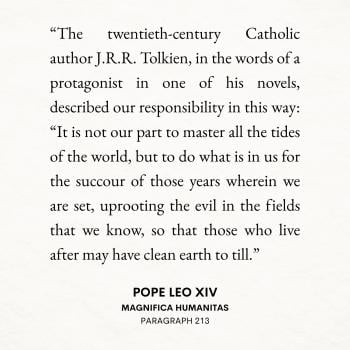
Letting Go of Libido Dominandi: Tolkien and Niebuhr...

A Petition to the American Bishops
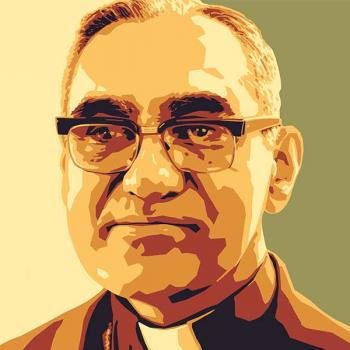

To Treat the Cancer of Clerical Sex Abuse
TRENDING AT PATHEOS Catholic

Creation, Preservation, and Teleology in Catholic Theology
As I write this, it is very early Monday morning. Like millions...

The Parable Of The Sower And The Word...
One of Christ’s most famous parables is that of the sower who...

Rejecting Doom: Christian Hope And Human Action
Christianity is a religion of hope. We are to have hope and...

Why I Choose the Eucharist Over the Sermon
Choose the Eucharist, Not the Sermon What are we supposed to get...

5 Design Elements Found in Spiritually Rooted Homes
Putting Spirituality Into Home Decor Our homes are more than our living...

Credo: A Story of God Told with the...
About 10 years ago, I began to imagine a personal "Credo" that...
view all Catholic blogs
Ad-Free & Subscriber Log-In Subscription Support
- About Us
- 2026 Calendar
- Videos
- Podcasts
- Library of World Religions
- Faith In Media Tracker
- Advertise With Us
- Write for Us
- Privacy Policy
- Terms of Service
- Do Not Sell My Data
- Contact Us
- Radiant Digital
- Manage Newsletter Subscriptions
- Unsubscribe From Notifications
- Sitemap
Copyright 2008-2026, Patheos. All rights reserved.
Subscription Support Ad-Free & Subscriber Log-In
Follow Patheos