
BuddhistCatholicContemplativeEvangelicalGeneral ChristianHinduJewishLatter-day SaintMuslimNew VisionsProgressive Christian
Beliefs
- Buddhist
- Catholic
- Contemplative
- Evangelical
- General Christian
- Hindu
- Jewish
- Latter-day Saint
- More Voices
- Muslim
- New Visions
- Pagan
- Progressive Christian
Topics
- Religion News
- Food and Religion
- Sports and Religion
- Religious Art
- Religious Music and Entertainment
- Religious Events
- History and Religion
- Style and Religion
- Politics and Religion
- Women in Religion
- Recreation Outdoors and Religion
- Business Finance and Religion
- Careers Workplace and Religion
- Education and Religion
- Family Parenting and Religion
- Health Fitness and Religion
- Home and Religion
- Relationships and Religion
- Technology and Religion
- Travel and Religion
Columnists
- Buddhist Columnists
- Business Finance and Religion Columnists
- Careers Workplace and Religion Columnists
- Catholic Columnists
- Contemplative Columnists
- Education and Religion Columnists
- Evangelists Columnists
- Family Parenting and Religion Columnists
- General Christian Columnists
- Health Fitness and Religion Columnists
- Hindu Columnists
- History and Religion Columnists
- Home and Religion Columnists
- Jewish Columnists
- More Voices Columnists
- Latter Day Columnists
- Muslim Columnists
- New Visions Columnists
- Nonreligious Columnists
- Pagan Columnists
- Politics and Religion Columnists
- Progressive Columnists
- Recreation Outdoors and Religion Columnists
- Relationships and Religion Columnists
- Religion News Columnists
- Religious Art Columnists
- Religious Events Columnists
- Religious Music and Entertainment Columnists
- Sports and Religion Columnists
- Style and Religion Columnists
- Technology and Religion Columnists
- Travel and Religion Columnists
- Women in Religion Columnists
Resource Library
- 2026 Calendar
- Library of World Religions
- The 100 Most Holy Places on Earth
- Patheos Answers
- Podcasts
- Videos
- Faith Leaders Database
- Anglican Episcopalian
- Bahai
- Baptist
- Buddhism
- Christianity
- Confucianism
- Eastern Orthodoxy
- Hinduism
- Holiness and Pentecostal
- ISKCON
- Islam
- Judaism
- Lutheran
- Methodist
- The Church of Jesus Christ of Latter-day Saints
- New Age
- Paganism
- Presbytarian and Reformed
- Protestantism
- Religion Behind the Scenes
- Roman Catholic
- Scientology
- Shia Islam
- Sikhism
- Sufism
- Sunni Islam
- Taoism
- Zen
- See all religions
Research Tools
 Ad-Free & Subscriber Log-In Subscription Support
Follow Patheos 

- Trending:
- Advent
- |
- Forgiveness
- |
- Thanksgiving
- |
- Election
- |
- Seasonal Holidays
- |
- Marriage

- Home
- Pagan
- Announcing Voodoo and African Traditional Religion Release !
Announcing Voodoo and African Traditional Religion Release !
Last updated on: July 7, 2021 at 10:45 am by Lilith Dorsey
Announcing Voodoo and African Traditional Religion Release ! 2021-07-07T10:45:15-05:00 Lilith Dorsey
Patheos Explore the world's faith through different perspectives on religion and spirituality! Patheos has the views of the prevalent religions and spiritualities of the world.
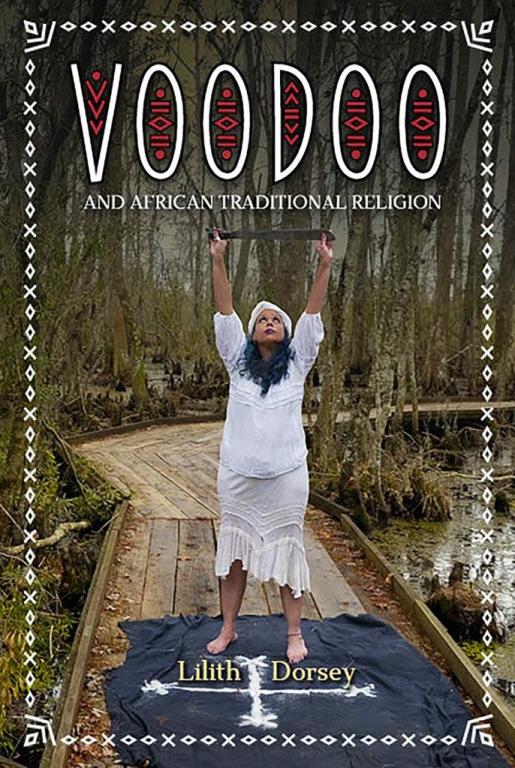
Voodoo and African Traditional Religion by Lilith Dorsey cover. All rights reserved.
The long-awaited re-release of my book Voodoo and African Traditional Religion is here. For over a decade this book was virtually unavailable, with some used copies costing almost a thousand dollars. It hurt my heart that this knowledge has been out of print for so long, and I longed for it to see the light of day again. The following is an excerpt from the Introduction, so you can get an important little taste of what it contains. I hope you check it out.
Introduction- A Time To Talk
As a longtime scholar and practitioner of Voodoo, Vodou, Santería, Candomblé, and even occasionally Palo Mayombe, I have long recognized the need for a book like this one. The African Diasporic religious traditions are both strikingly similar and vastly different. Dependent on a number of factors, the traditional mainstays from West African practice make up the sacred tapestry of these religions. This book gives a cursory examination of each of these traditions, the most common dos and don’ts in the religions, eventually leading up to rituals and offerings you can perform yourself. Hopefully, it will provide you with a springboard for further spiritual and academic study. You could spend the rest of your life just trying to fully comprehend even one small aspect of these ancient traditions. To that end I have included at the close of this book a short description of recommended books and music relating to them.
It is also to be remembered that each temple, house, ile, or hounfor has its own specific set of rules and practices. One may offer a certain Orisha (Santería divinity) one type of food in one area and the exact opposite in another. So if you are provided with information in these pages that goes against what you may have been taught, please follow the teachings you were given. I offer this information only as a guide for those wishing to explore some of the basic tenets of these divine systems of life and thought. In my graduate work with film, television studies, and anthropology at New York University, I did a lot of theorizing about meaning and truth. Ultimately, anyone living in our odd postmodern universe realizes that he or she has to discover his or her own beliefs based on a variety of factors such as culture and environment. This book stands as a survey of meaning and veracity in a set of religious worlds where secrets are often best kept secret and meaning is almost always oral and ethereal.
One basic tenet of these religions is that every being and object is imbued with its own ashé. Ashé (pronounced ah- shay or ah say) is a complex concept to understand; it operates like a universal life force energy permeating all things. It is a divine current that means life, grace, blood, kingship, growth, power, force, and energy. It represents the essence of something, its being, and its intrinsic power. Everything contains its own ashé: people, gods, animals, places, trees, sounds, and even rocks. Ashé stands in opposition to chaos and disorder; it is the supreme being as a sacred power. Ashé is the ultimate absolute that defies definition.
In Voodoo and Santería, training is only based in part on factual knowledge, with the bulk of the learning concerning experiential and devotional knowledge. The teacher-student relationship is like a lifelong parent-child bond for followers of Voodoo and Santería.
Finding a Spiritual Teacher
It would be wonderful if there were an easy set of rules that people could follow to determine the validity of one spiritual practice and practitioner or another, but that is just not the case. The truth of the matter is that practices and practitioners completely run the gamut.
Fortunately, most of the African Traditional Religions have their own internal ranking system based on lineage. Each spiritual family is judged on the reputation of its members. The drawback to this system is obviously that a person must be familiar with someone in the practices to research someone’s background and reputation.
When two Lucumí or Santería initiates meet, one of the first things that they do is exchange lineages. Many times in certain cities of the United States, like New York and Miami, common spiritual ties are discovered. It is like finding a long lost relative, or discovering that you know someone’s brother or sister. The people of the African Diaspora were forcibly scattered across the globe. This utilization of what anthropologists term fictive kin, or creating family relationships where blood ties do not exist, provides individuals with a strong support structure to replace conventional family bonds that were unfortunately destroyed. Some people think that you can judge a practitioner’s validity, meaning his or her ability to teach you and confer the proper initiations, by who is charging the lowest price. Trust me, bargain shopping for initiations is not always a preferred method where your spiritual growth is concerned. In fact it is highly discouraged. An expensive store is often thought to be more exclusive, so why shouldn’t an expensive spiritual initiation be afforded the same prestige. One practitioner explained it to me thusly: Traditionally, in Nigeria a person was required to give long-term service to his or her priestess, priest, and spiritual house. This frequently required moving to the location of the temple and remaining there for a year or longer. When this traditional tribute is considered, the substitution of money in lieu of an amount of time makes much more sense in the modern world. Often, the money required for these ceremonies is used to pay for food, alcohol, flowers, clothing, herbs, candles, incense, offerings, and payment to the drummers and additional priests and priestesses to complete the tasks at hand.
As I have mentioned, once an individual goes through the process of initiation with an ile, he or she becomes part of the spiritual family and is expected to provide not only monetary support but also help with cooking, cleaning, herbal preparations, and the other daily tasks. Ultimately, I believe one should have the utmost faith in one’s spiritual leaders. If you doubt them, then eventually you will end up doubting yourself. I was at a bembe (Lucumí drum ceremony) once where someone became possessed by Oshún (the goddess of love and dance), who was quite taken with one of the young men there. She told him he possessed a great musical talent and he was just wasting it at his current job. Instead of following her advice, he took it as an insult to his chosen life. He did not quit his job, and he missed out on the special advice and blessings Oshún was trying to bestow on him. He is still struggling almost twenty years after these events occurred. Your spiritual teachers should always be your trusted confidants, friends, and mentors. In many ways, it is like choosing a physician, because this person holds your spiritual life and health in his or her hands.
I belabor this point because as a Voodoo and Santería practitioner, lecturer, and author I constantly meet people who describe unpleasant experiences with one ATR house or another. Once you attach yourself to a group that you are not happy with, there is very little, if anything, you can do about it. Not only is your money gone, you can’t recoup the spiritual energy you have given out. I have heard stories of people taking their ritual items and either giving them away or throwing them into the ocean. I’ve seen people lock them away in closets or basements and try to ignore them. This may seem like a way to sever or lessen your ties, but rarely have I seen it be successful. Most often people just end up continuing their practices on a less formal basis. So please choose wisely the first time. Pick someone you trust and respect, who also has the same moral and ethical ideas as you do.
Signed copies of Voodoo and African Traditional Religion are available from Warlock Press here, or if you wish you can order from Barnes and Noble, Amazon, or check out Indiebound which will direct you to a local bookseller in your neighborhood.
As always if you have enjoyed this post do me a favor and please remember to like, comment and share !
Voodoo and African Traditional Religion

About Lilith Dorsey
Lilith Dorsey M.A., hails from many magickal traditions, including Afro-Caribbean, Celtic, and Indigenous American spirituality. Their traditional education focused on Plant Science, Anthropology, and Film at the University of R.I, New York University, and the University of London, and their magickal training includes numerous initiations in Santeria also known as Lucumi, Haitian Vodoun, and New Orleans Voodoo. Lilith Dorsey is also a Voodoo Priestess and in that capacity has been doing successful magick since 1991 for patrons, is editor/publisher of Oshun-African Magickal Quarterly, filmmaker of the experimental documentary Bodies of Water :Voodoo Identity and Tranceformation,’ and choreographer/performer for jazz legend Dr. John’s “Night Tripper” Voodoo Show. They have long been committed to providing accurate and respectful information about the African Traditional Religions and are proud to be a published Black author of such titles as 55 Ways to Connect to Goddess, The African-American Ritual Cookbook, Love Magic, Orishas, Goddesses and Voodoo Queens, Water Magic and the newly re-released Voodoo and African Traditional Religion. You can read more about the author here.

Next Post
July 26, 2021 Tarot Tools For Transformation: Mind, Body, & Soul
Browse Our Archives
Select a Category Ancestors astrology Candomble Crystals Divination Entertainment Goddess Herbs Hoodoo Ifa Pagan Ritual Recipes Santeria Spells Uncategorized Vodou Voodoo Witchcraft
Select a Month May 2025 January 2025 September 2024 August 2024 April 2024 March 2024 January 2024 December 2023 November 2023 September 2023 June 2023 March 2023 December 2022 November 2022 October 2022 September 2022 August 2022 July 2022 June 2022 May 2022 April 2022 March 2022 January 2022 November 2021 October 2021 August 2021 July 2021 June 2021 May 2021 April 2021 March 2021 February 2021 January 2021 December 2020 November 2020 October 2020 September 2020 August 2020 July 2020 June 2020 April 2020 March 2020 February 2020 January 2020 December 2019 November 2019 October 2019 September 2019 August 2019 July 2019 June 2019 May 2019 April 2019 March 2019 February 2019 January 2019 December 2018 November 2018 October 2018 September 2018 August 2018 July 2018 June 2018 May 2018 April 2018 March 2018 February 2018 January 2018 December 2017 November 2017 October 2017 September 2017 August 2017 July 2017 June 2017 May 2017 April 2017 March 2017 February 2017 January 2017 December 2016 November 2016 October 2016 September 2016 August 2016 July 2016 June 2016 May 2016 April 2016 March 2016 February 2016 January 2016 December 2015 November 2015 October 2015 September 2015 August 2015 July 2015 June 2015 May 2015 April 2015 March 2015 February 2015 January 2015 December 2014 November 2014 October 2014 September 2014 August 2014 July 2014 June 2014 May 2014 April 2014 March 2014 February 2014 January 2014 December 2013 November 2013 October 2013 September 2013
Follow Us!
TAKE THE
Religious Wisdom Quiz
How many days between resurrection and Pentecost?
Select your answer to see how you score.
60 days 40 days 50 days 30 days
Related posts from Voodoo Universe

New Orleans National Vodou Day - Spotlight Elder...
1st New Orleans National Vodou Day

Ostara Recipe: Lavender Pistachio Shortbread
TRENDING AT PATHEOS Pagan

To help with the upcoming holiday season, I'm introducing the Holiday Helper...

10 years of the Power Sigil & Moving...
Last week while reorganizing my studio space, I found the sketchbook that...

Why are younger seekers drawn to Paganism and...
One of the things I've noticed the most is that I'm far...

When we talk about Greek religion, we often begin with the dodekatheion—the...

I was recently chatting with someone on Instagram. She asked me what...

On July 23, I saw Christopher Nolan's The Odyssey which is Homer’s...
view all Pagan blogs
Ad-Free & Subscriber Log-In Subscription Support
- About Us
- 2026 Calendar
- Videos
- Podcasts
- Library of World Religions
- Faith In Media Tracker
- Advertise With Us
- Write for Us
- Privacy Policy
- Terms of Service
- Do Not Sell My Data
- Contact Us
- Radiant Digital
- Manage Newsletter Subscriptions
- Unsubscribe From Notifications
- Sitemap
Copyright 2008-2026, Patheos, part of the Radiant Digital network of media brands. All rights reserved.
Subscription Support Ad-Free & Subscriber Log-In
Follow Patheos