
BuddhistCatholicContemplativeEvangelicalGeneral ChristianHinduJewishLatter-day SaintMuslimNew VisionsProgressive Christian
Beliefs
- Buddhist
- Catholic
- Contemplative
- Evangelical
- General Christian
- Hindu
- Jewish
- Latter-day Saint
- More Voices
- Muslim
- New Visions
- Pagan
- Progressive Christian
Topics
- Religion News
- Food and Religion
- Sports and Religion
- Religious Art
- Religious Music and Entertainment
- Religious Events
- History and Religion
- Style and Religion
- Politics and Religion
- Women in Religion
- Recreation Outdoors and Religion
- Business Finance and Religion
- Careers Workplace and Religion
- Education and Religion
- Family Parenting and Religion
- Health Fitness and Religion
- Home and Religion
- Relationships and Religion
- Technology and Religion
- Travel and Religion
Columnists
- Buddhist Columnists
- Business Finance and Religion Columnists
- Careers Workplace and Religion Columnists
- Catholic Columnists
- Contemplative Columnists
- Education and Religion Columnists
- Evangelists Columnists
- Family Parenting and Religion Columnists
- General Christian Columnists
- Health Fitness and Religion Columnists
- Hindu Columnists
- History and Religion Columnists
- Home and Religion Columnists
- Jewish Columnists
- More Voices Columnists
- Latter Day Columnists
- Muslim Columnists
- New Visions Columnists
- Nonreligious Columnists
- Pagan Columnists
- Politics and Religion Columnists
- Progressive Columnists
- Recreation Outdoors and Religion Columnists
- Relationships and Religion Columnists
- Religion News Columnists
- Religious Art Columnists
- Religious Events Columnists
- Religious Music and Entertainment Columnists
- Sports and Religion Columnists
- Style and Religion Columnists
- Technology and Religion Columnists
- Travel and Religion Columnists
- Women in Religion Columnists
Resource Library
- 2026 Calendar
- Library of World Religions
- The 100 Most Holy Places on Earth
- Patheos Answers
- Podcasts
- Videos
- Faith Leaders Database
- Anglican Episcopalian
- Bahai
- Baptist
- Buddhism
- Christianity
- Confucianism
- Eastern Orthodoxy
- Hinduism
- Holiness and Pentecostal
- ISKCON
- Islam
- Judaism
- Lutheran
- Methodist
- The Church of Jesus Christ of Latter-day Saints
- New Age
- Paganism
- Presbytarian and Reformed
- Protestantism
- Religion Behind the Scenes
- Roman Catholic
- Scientology
- Shia Islam
- Sikhism
- Sufism
- Sunni Islam
- Taoism
- Zen
- See all religions
Research Tools
 Ad-Free & Subscriber Log-In Subscription Support
Ad-Free & Subscriber Log-In Subscription Support
Follow Patheos 

- Trending:
- Forgiveness
- |
- Marriage
- |
- Consciousness
- |
- Death Penalty
- |
- Election
- |
- Halloween

- Home
- Contemplative
- Sitting Bull’s Prophetic Dreams
Sitting Bull’s Prophetic Dreams
Last updated on: August 4, 2021 at 12:29 am by Guest Contributor
Sitting Bull’s Prophetic Dreams 2021-08-04T00:29:23-04:00 Guest Contributor
Patheos Explore the world's faith through different perspectives on religion and spirituality! Patheos has the views of the prevalent religions and spiritualities of the world.

By Daniel J. Taylor
The Destruction of the Andes
Before Europeans arrived to the continent en masse, many Native Americans prophesied that strange white men would arrive to their lands. These prophecies were often recorded in the diaries and logs of European travelers to the region. In one salient Sauk tribal story, the grandfather of Black Hawk prophesied meeting white men who would act as a father in four years’ time, spurring tribesman in the waking world to travel “Eastward to a certain spot,” where they indeed met French soldiers and formed an alliance. The leader of the foreign soldiers was none other than the son of the French King, and he claimed to have also had similar dreams over those four years in which he’d met a tribe who had never seen white men before, and who would see him as a father. Such stories raise the questions: have we forgotten how to dream and can dreams help us improve the world and fight injustice?
Native American Dreaming
When Christopher Columbus arrived in the Bahamas and beyond, North America, otherwise known as Turtle Island to many inhabitants, contained over 300 distinct cultures and spoke over 200 dialects. These numbers dropped dramatically due to diseases such as smallpox, influenza and measles, as well as warfare, genocide and terrorism; with estimates suggesting that in the Americas as a whole 10% of the total world population were extinguished.
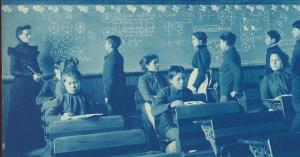
School in Pennsylvania, 1900
Dreams and visions in Native American tribal societies were considered especially important but their prevalence was seen as a threat to these colonial powers. The beliefs and practices surrounding them were oftentimes equated with the work of the devil by white ‘settlers’ and they were commonly banned or overridden using assimilation practices such as through the boarding school system run by the Bureau of Indian Affairs. Most tribes include the existence of Wakan Tanka, also known as the Great Spirit, or Great Mystery, as well as some form of animist and supernatural belief structure about the world around them that entwines itself with the dream world.
To a lot of these groupings, the soul exists and can travel to other realms in our dreams and in trance-like states. In some tribes the soul is perceived to act in a dualistic way, with one part acting as a site for emotions and human consciousness in the heart, and another which can leave the body and interact with guides in dreams or the waking world.
It is thought too by some such as the Zuni and Hopi tribes that it is our breath that leaves the body to travel when we dream, and that it can move to upper and lower dimensions – to the realms of the god(s) and the dead, and to visit ancestors and manitos. Manitos are powerful spirit guides who are common throughout Native American thinking. These spirit animals and guides are often seen during vision quests, and help dreamers heal and develop aspects of the psyche or soul through dreaming. Some dreamers even see their past lives in their sleeping or waking-state visions, and such healing dreams can be viewed as a continuation of other dreams from before they were even born!
Ceremonies were used to receive dreams and visions. These were called vision quests. Visions were often received away from others, usually in isolation or upon a high place such as a hill. Men would carry out dance routines, they would fast, pray, and conduct other rituals to help cleanse themselves before they hoped to receive these visions in trance-like states or in their dreams. The young especially hoped to gain life guidance, healing, protection and spiritual insight through more formal vision quests.
It is additionally claimed they can receive a spirit to take them to another realm and pass them the gift of longevity, psychic powers such as clairvoyance, and knowledge of herbal medicine. Tribes such as the Blackfoot and Hopi see dreams as helping solve everyday problems in the waking world, like passing on healing and hunting instructions that may even relate to the future. Dreams are also crucial for creativity, to inspire paintings and receive songs. Groups like the Mojave, Maricopa and Klamath sing songs that are also used to heal the sick and preserve their languages, myths, and cultures.
Using Dreams to Fight Injustice
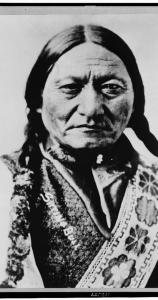
Sitting Bull, a Lakotan Warrior and Oracle
Sitting Bull was known as a Wichasa Wakan, a holy man who could receive insights about the future. Dream societies brought together men who shared similar visions. Sitting Bull was a member of several, and it was through Wakan Tanka that many of his visions were received.
Born in 1830, Sitting Bull was first known as Jumping Badger and grew up amongst the Hunkpapa tribe, a group that makes up one of the seven Lakota tribes in the Dakotas. Otherwise known as the Sioux, they were collectively known as the Seven Council Fires.
Before one of his most famous visions prior to the Battle of Little Bighorn, Sitting Bull carried out the Sun Dance along with over 2000 Lakota warriors. Immediately prior to this he made offerings by going without food and water for 2 days and cutting flesh from his arms. After dancing for hours, he put himself into a trance. He then had a vision where he saw white troops and their hats falling from the sky into their camp “like grasshoppers.” He interpreted this to mean he would gain victory against the US forces.
On the 25th of June 1876, an alliance between the confederated Lakota Tribes and the Northern Cheyenne defeated the American forces of Colonel George Custer along the Little Bighorn River, Montana. Custer’s 7th Cavalry were surrounded and all 225 of them including Custer were killed by men led by Sitting Bull, Crazy Horse, and Two Moons.
Native Americans were later forced to report to tribal agencies and live in squalid and often exploitative conditions on the reservations, causing Sitting Bull to flee to Canada in 1887. In 1889/90, the Lakota tribe began conducting the Ghost Dance, which the prophet Wovoka, of the Paiute tribe had reintroduced. The ghost dance attempted to communicate with old ancestors with the aim to bring back life before the settlers arrived. Its impact was seen to be a huge threat to US central power. In 1890 Sitting Bull was shot dead as a result of fears he’d join the Ghost Dance movement when tribal police were sent to arrest him. An Oracle had passed on to the afterlife.
Crazy Horse Sees the Future
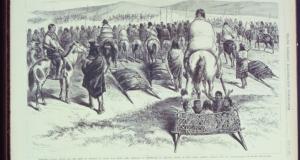
Crazy Horse
Another warrior that led the victory at the Battle of Little Bighorn was Crazy Horse from the Oglala Tribe. Born around 1842, he was the son of a shaman and the last Lakota leader to surrender to the US government. Crazy Horse was born to a family that could see the future, but he did not always follow the traditions and rituals of the Sioux.
After US military officers killed an elderly man in front of him, Crazy Horse prayed for a vision from Wakan Tanka. After three days he saw a dream where his own pony changed the color of its fur above him. He then saw a warrior who appeared invisible to enemy bullets and arrows, and later saw his people restraining him. Indeed, Crazy Horse led a raid against a group of Arapaho and his dream gave him strength to ride through the incoming arrows and bullets. Crazy Horse’s vision proved correct again as he was eventually held and handed into government authorities by his own people.
After an unspeakable massacre at Black Kettles Band, Crazy Horse asked for another vision. He foresaw a great victory where he viewed an eagle soaring high above the treeline; a damaged feather fell from the sky. On December 21st, 1866, Crazy Horse’s band inflicted the largest military defeat on US forces on the Plains at this time and destroyed their forts upon their land in what was known as The Battle of the Hundred in the Hands. This name was given because of an oracle who rode on his donkey between the camped Native Americans and the US forces; each time he came back to the camp the hermaphrodite prophet had visions of his hands overflowing with hundreds of US soldiers.
This was taken as a good omen before battle. Whereas many dreams and visions can act as propaganda tools, they proved extremely useful to Native American societies. The dreams and visions of legendary leaders such as Sitting Bull and Crazy Horse show that despite the destruction, a glimmer of hope remains in fights against injustices in this world.
The dreaming practices of many Native Americans were varied and highly influenced by the external environment around them. Culture shapes and limits our dreams as well as expands them beyond the limitations we impose on our lives. Yet, it remains clear that by looking at the varied beliefs of Native American cultures, our culture in the West can sometimes limit our understanding of both the waking and sleeping realms, as it is often forgotten that: “Sometimes dreams are wiser than waking.” (Black Elk as quoted by John G Neihardt, Black Elk Speaks: The Complete Edition)

About Daniel J. Taylor
Daniel J. Taylor is a British dreamer and researcher with an interest in social justice. He studied his degree in international journalism and masters in international relations and security in Liverpool. He previously taught American Studies at Canterbury Christ Church University and City, The University of London. He is the editor of www.dreamprophecies.com and the Elite Power Investigations Centre and is a regular contributor to The Echo World magazine and The Wire. You can contact him by email: [email protected] You can read more about the author here.
Previous Post

May 26, 2020
Practices From the Inside Out: Taking Steps Toward Awakening
Browse Our Archives
Select a Category Uncategorized
Select a Month July 2021 May 2020 January 2019 December 2018
TAKE THE
Religious Wisdom Quiz
Who was Hosea's wife, whom he redeemed from slavery?
Select your answer to see how you score.
Deborah Esther Gomer Ruth
Related posts from Voices in the Stillness

Practices From the Inside Out: Taking Steps Toward...


Could Consciousness All Come Down to the Way...
TRENDING AT PATHEOS Contemplative

Handy Contemplative Practices for Political Spaces
A Spiritually Grounded Presence In order to bring a spiritually grounded presence...

Halloween: The Holiday of Loving Your Neighbor
All Hallows Eve Is Halloween the least Christian holiday in America, or...

Can Love Be Saved? Some Thoughts on the...
Happy Valentine's Day! I recently published a post on Patreon called Can...

"This Loving, Uniting Embrace": the Holy Ordinary
Today's guest post is by Mark Longhurst, author of The Holy Ordinary:...

How Are We Called to Live?: More About...
How Are We Called to Live? Many of us struggle with discerning...

A Spiritual Practice of Reading: Join Us Online
A Spiritual Practice of Reading A healthy spiritual practice of reading is...
view all Contemplative blogs
Ad-Free & Subscriber Log-In Subscription Support
- About Us
- 2026 Calendar
- Videos
- Podcasts
- Library of World Religions
- Faith In Media Tracker
- Advertise With Us
- Write for Us
- Privacy Policy
- Terms of Service
- Do Not Sell My Data
- Contact Us
- Radiant Digital
- Manage Newsletter Subscriptions
- Unsubscribe From Notifications
- Sitemap
Copyright 2008-2026, Patheos. All rights reserved.
Subscription Support Ad-Free & Subscriber Log-In
Follow Patheos