
BuddhistCatholicContemplativeEvangelicalGeneral ChristianHinduJewishLatter-day SaintMuslimNew VisionsProgressive Christian
Beliefs
- Buddhist
- Catholic
- Contemplative
- Evangelical
- General Christian
- Hindu
- Jewish
- Latter-day Saint
- More Voices
- Muslim
- New Visions
- Pagan
- Progressive Christian
Topics
- Religion News
- Food and Religion
- Sports and Religion
- Religious Art
- Religious Music and Entertainment
- Religious Events
- History and Religion
- Style and Religion
- Politics and Religion
- Women in Religion
- Recreation Outdoors and Religion
- Business Finance and Religion
- Careers Workplace and Religion
- Education and Religion
- Family Parenting and Religion
- Health Fitness and Religion
- Home and Religion
- Relationships and Religion
- Technology and Religion
- Travel and Religion
Columnists
- Buddhist Columnists
- Business Finance and Religion Columnists
- Careers Workplace and Religion Columnists
- Catholic Columnists
- Contemplative Columnists
- Education and Religion Columnists
- Evangelists Columnists
- Family Parenting and Religion Columnists
- General Christian Columnists
- Health Fitness and Religion Columnists
- Hindu Columnists
- History and Religion Columnists
- Home and Religion Columnists
- Jewish Columnists
- More Voices Columnists
- Latter Day Columnists
- Muslim Columnists
- New Visions Columnists
- Nonreligious Columnists
- Pagan Columnists
- Politics and Religion Columnists
- Progressive Columnists
- Recreation Outdoors and Religion Columnists
- Relationships and Religion Columnists
- Religion News Columnists
- Religious Art Columnists
- Religious Events Columnists
- Religious Music and Entertainment Columnists
- Sports and Religion Columnists
- Style and Religion Columnists
- Technology and Religion Columnists
- Travel and Religion Columnists
- Women in Religion Columnists
Resource Library
- 2026 Calendar
- Library of World Religions
- The 100 Most Holy Places on Earth
- Patheos Answers
- Podcasts
- Videos
- Faith Leaders Database
- Anglican Episcopalian
- Bahai
- Baptist
- Buddhism
- Christianity
- Confucianism
- Eastern Orthodoxy
- Hinduism
- Holiness and Pentecostal
- ISKCON
- Islam
- Judaism
- Lutheran
- Methodist
- The Church of Jesus Christ of Latter-day Saints
- New Age
- Paganism
- Presbytarian and Reformed
- Protestantism
- Religion Behind the Scenes
- Roman Catholic
- Scientology
- Shia Islam
- Sikhism
- Sufism
- Sunni Islam
- Taoism
- Zen
- See all religions
Research Tools
 Ad-Free & Subscriber Log-In Subscription Support
Ad-Free & Subscriber Log-In Subscription Support
Follow Patheos 

- Trending:
- Forgiveness
- |
- Marriage
- |
- Consciousness
- |
- Death Penalty
- |
- Election
- |
- Halloween
 Greening the Spirit
- Home
- Pagan
- Equinox Greetings from Spring in the South to Fall in the North
Equinox Greetings from Spring in the South to Fall in the North
Last updated on: September 20, 2016 at 4:45 pm by Vivianne Crowley
Equinox Greetings from Spring in the South to Fall in the North 2016-09-20T16:45:53+01:00 Vivianne Crowley
Patheos Explore the world's faith through different perspectives on religion and spirituality! Patheos has the views of the prevalent religions and spiritualities of the world.
At the equinox tide,
blessings of Light and of Darkness,
may the powers of earth and sea, of sky and sun,
bless you on your journey.
May you sail joyfully upon life’s choppy waters,
may you know peace in the midst of change,
Blessed Be.
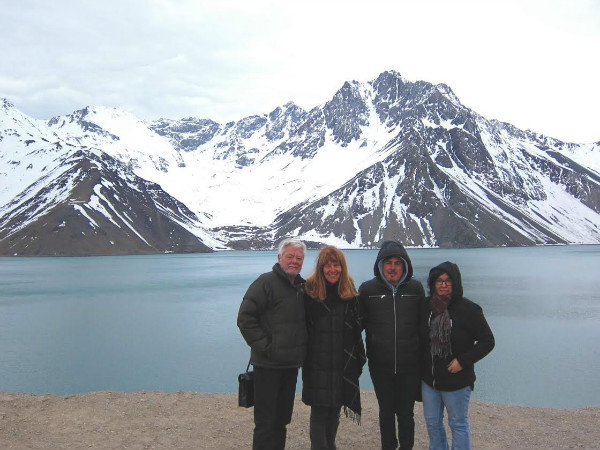
As many people will know, Chris and I are in Chile – our first ever visit to South America. Chile is a place of dramatic contrasts, of hot and cold, of searing summer temperatures in the northern deserts and the icy caress of Antarctic waters in the south. We have transitioned from Lammas in Europe to Spring Equinox and are celebrating the equinox tide from south of the equator.
An Ancient Land
Chile’s contemporary Pagan movement is relatively new, but there are remnants of earlier Paganism that are millennia old. Along the Central Andean Pacific coastline there is archaeological evidence of human habitation that goes back 13,000 to 14,000 years. In northern Chile the people of Chinchorro mummified their dead in preparation for the afterlife seven thousand years ago – two millennia before the ancient Egyptians and in a vastly different and less hierarchical society. In Chinchorro culture mummification was not just for royalty and rich elites. Children, women and men – all human bodies were treated with care and dignity.
The Serpents of Land and Sea
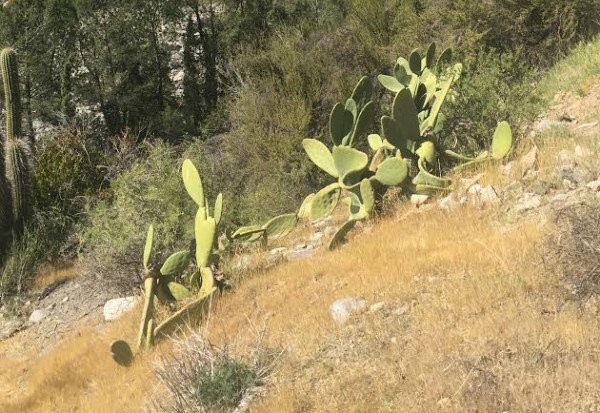
As we commune with the land here we have a sense of ancient human presence, but that presence is elusive and impinges little on the land. This is not a region of the world like Europe, where human beings have artificially cultivated and ‘tamed’ the land for eons. On the slopes of the Andes our human footprint is light and the land is not always friendly to humankind. This is a region of earthquake, volcano, and tsunami.
In the cosmology of the indigenous Mapuche peoples, Trengtreng the giant earth serpent, who is also known as Xeg-Xeg filu or Ten Ten vilu, battles with Kai-Kai or Caicai filu, the sea serpent, and from this struggle the current land mass of Chile and its two thousand islands was formed. When Kai-Kai thrashes below the surface of the waters, the great devouring tsunami waves come to devour the earth. Trengtreng brings earthquakes and volcanic eruptions, but when the tsunami comes his mountain slopes are places of safety that protect the living beings of the land. The foothills and Andean mountains are guardians who watch over humankind, offering refuge when the waves return. Their summits became sacred sites.
Fire and Earth
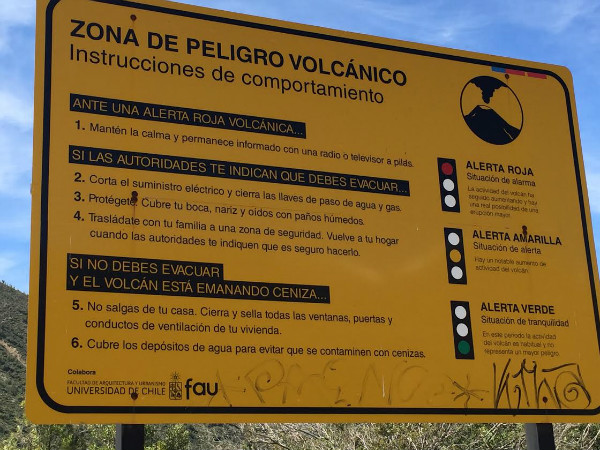
Here in this volatile land, the power of nature is obvious and strong. The most recent large, 8.8 Richter scale earthquake took place in 2010. It was one of the largest ever recorded on a seismograph and hundreds of people lost their lives in the earthquake damage and subsequent tsunami. In 2015 and 2016 there were dramatic volcanic eruptions in southern Chile. The idea of the competing earth and sea serpents makes perfect sense in this landscape, where in the short time we have been here there have already been seven earthquakes.
The power of the land is strong in other ways too.
Before our first Wiccan rite in a stone cottage in the Chilean countryside, we prayed to the spirits of the land and to any humans who had been here before us to open the ways to receive us, if they were willing. The land seemed to quicken immediately, filling us with a clear, clean surge of energy. It was different from the energies we have felt in Europe, North America, Asia, North Africa and Australia – different, but not completely different; for the energy we experience here feels as though it comes from the same root as that which we have experienced elsewhere. And like other parts of the world where human habitation has not impinged so much upon the land, there is a purity in it, a sense of being in touch with the Earth as she was thousands upon thousands of years ago.
Developing Contemporary Paganism
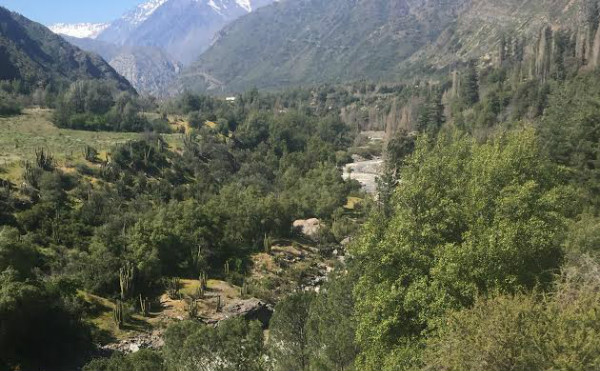
There are traces of ancient Paganism in archeological artefacts and the Earth Traditions of the indigenous peoples of Chile continue still. Contemporary Western Paganism is new here, but there are now small communities of Wiccans from the initiatory traditions and eclectic witches. There are Goddess groups deriving from the Fellowship of Isis and the Glastonbury Goddess Temple, as well as Heathens, and others. The worship of Odin might seem surprising in Chile, but from the nineteenth century onwards the south of Chile attracted German-speaking immigrants who have left their mark upon the culture.
Like all countries, Chilean Pagans face the challenge of creating a Paganism that can root in their land and flourish. We are not our ancestors. Even if we were able to reconstruct the exact form of ancient rites they would not have the same meaning to us as they did to generations before. Our lifestyles, our sense of individuality, even our climate has changed. And the challenge is much greater of course if we are a transplanted people, far geographically from where our ancestors worshipped their Gods.
The way forward seems to me to be one of humility, of engaging slowly and with respect with the energies of the land; of taking time to see, hear, and feel how tree and rock, river and sky respond when we commune with them. Our European-derived Pagan traditions have their own deities, so when we invoke our Gods we are bringing new energies to the land. Some deities will seem more at home and welcome here than others. Over time, Pagan practice will evolve as we explore with sensitivity what feels right and what does not.
Here in Chile Pagans also face the same challenge that other countries have faced in the past – a long, slow job of educating wider society about what Paganism is and is not, so that Pagans may practice freely without fear of prejudice and discrimination. There are some hopeful signs. Pagan Pride events are established and growing and there is a climate of social change. This weekend we attended the tenth year of a Vegetarian and Vegan Festival which promotes animal rights. LGBT rights are moving forward and in 2015 same sex civil unions were legalised. A social climate that respects the rights of animals and respects human difference can be a more hospitable one for developing Paganism.
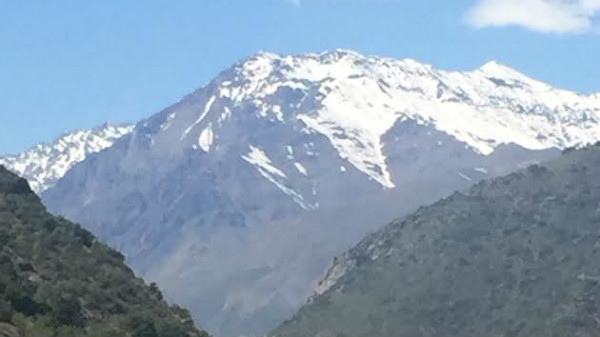
Transplanting the Vine
Different strains of European Paganism will flourish differently here – each growing in its own way. Transplanting Paganism is like transplanting vines, the flavour of the wine that results will be subtly different from that of the root stock in its homeland; but with time and patience, with adaptation and innovation, with care and cultivation, and with support from brothers and sisters in countries where Paganism has developed earlier, the crop will grow and flourish.
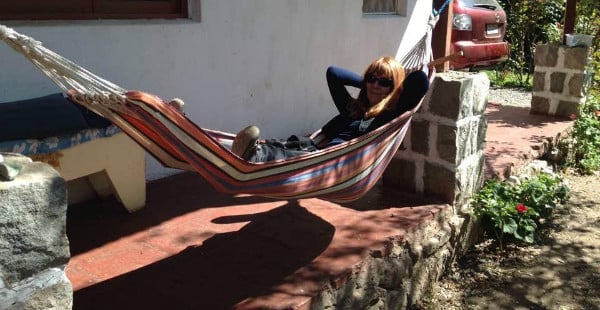
All photos copyright Vivianne Crowley
Previous Post

July 21, 2016
Eutierria – Oneness With Nature
Next Post
October 27, 2016 Samhain: Connecting to Ancestors of Blood, Spirit, Place
Browse Our Archives
Select a Category Uncategorized
Select a Month January 2017 December 2016 October 2016 September 2016 July 2016 June 2016 April 2016 February 2016 January 2016 November 2015 October 2015 September 2015 August 2015 July 2015 June 2015 May 2015 April 2015 March 2015 February 2015 January 2015 December 2014 November 2014 October 2014 September 2014 August 2014 July 2014 June 2014 May 2014 April 2014 March 2014 February 2014 January 2014 December 2013 November 2013 October 2013 September 2013 August 2013 July 2013 June 2013 May 2013 April 2013 March 2013
Follow Us!
TAKE THE
Religious Wisdom Quiz
Which prophet predicted God would pour out His Spirit on all people?
Select your answer to see how you score.
Micah Hosea Amos Joel
Related posts from Greening the Spirit
Solstice Energy With Sekhmet’s Blessings
Samhain: Connecting to Ancestors of Blood, Spirit, Place
Eutierria – Oneness With Nature

TRENDING AT PATHEOS Pagan

When we talk about Greek religion, we often begin with the dodekatheion—the...

I was recently chatting with someone on Instagram. She asked me what...

While there are many people who share their results, the end of...

On July 23, I saw Christopher Nolan's The Odyssey which is Homer’s...

As I write this two big events have just finished up. One...

Restoring the Watershed of Divine Love
Perhaps cooperation is not something we manufacture through legislation, ideology, or moral...
view all Pagan blogs
Ad-Free & Subscriber Log-In Subscription Support
- About Us
- 2026 Calendar
- Videos
- Podcasts
- Library of World Religions
- Faith In Media Tracker
- Advertise With Us
- Write for Us
- Privacy Policy
- Terms of Service
- Do Not Sell My Data
- Contact Us
- Radiant Digital
- Manage Newsletter Subscriptions
- Unsubscribe From Notifications
- Sitemap
Copyright 2008-2026, Patheos. All rights reserved.
Subscription Support Ad-Free & Subscriber Log-In
Follow Patheos