
BuddhistCatholicContemplativeEvangelicalGeneral ChristianHinduJewishLatter-day SaintMuslimNew VisionsProgressive Christian
Beliefs
- Buddhist
- Catholic
- Contemplative
- Evangelical
- General Christian
- Hindu
- Jewish
- Latter-day Saint
- More Voices
- Muslim
- New Visions
- Pagan
- Progressive Christian
Topics
- Religion News
- Food and Religion
- Sports and Religion
- Religious Art
- Religious Music and Entertainment
- Religious Events
- History and Religion
- Style and Religion
- Politics and Religion
- Women in Religion
- Recreation Outdoors and Religion
- Business Finance and Religion
- Careers Workplace and Religion
- Education and Religion
- Family Parenting and Religion
- Health Fitness and Religion
- Home and Religion
- Relationships and Religion
- Technology and Religion
- Travel and Religion
Columnists
- Buddhist Columnists
- Business Finance and Religion Columnists
- Careers Workplace and Religion Columnists
- Catholic Columnists
- Contemplative Columnists
- Education and Religion Columnists
- Evangelists Columnists
- Family Parenting and Religion Columnists
- General Christian Columnists
- Health Fitness and Religion Columnists
- Hindu Columnists
- History and Religion Columnists
- Home and Religion Columnists
- Jewish Columnists
- More Voices Columnists
- Latter Day Columnists
- Muslim Columnists
- New Visions Columnists
- Nonreligious Columnists
- Pagan Columnists
- Politics and Religion Columnists
- Progressive Columnists
- Recreation Outdoors and Religion Columnists
- Relationships and Religion Columnists
- Religion News Columnists
- Religious Art Columnists
- Religious Events Columnists
- Religious Music and Entertainment Columnists
- Sports and Religion Columnists
- Style and Religion Columnists
- Technology and Religion Columnists
- Travel and Religion Columnists
- Women in Religion Columnists
Resource Library
- 2026 Calendar
- Library of World Religions
- The 100 Most Holy Places on Earth
- Patheos Answers
- Podcasts
- Videos
- Faith Leaders Database
- Anglican Episcopalian
- Bahai
- Baptist
- Buddhism
- Christianity
- Confucianism
- Eastern Orthodoxy
- Hinduism
- Holiness and Pentecostal
- ISKCON
- Islam
- Judaism
- Lutheran
- Methodist
- The Church of Jesus Christ of Latter-day Saints
- New Age
- Paganism
- Presbytarian and Reformed
- Protestantism
- Religion Behind the Scenes
- Roman Catholic
- Scientology
- Shia Islam
- Sikhism
- Sufism
- Sunni Islam
- Taoism
- Zen
- See all religions
Research Tools
 Ad-Free & Subscriber Log-In Subscription Support
Ad-Free & Subscriber Log-In Subscription Support
Follow Patheos 

- Trending:
- Forgiveness
- |
- Marriage
- |
- Consciousness
- |
- Death Penalty
- |
- Election
- |
- Halloween
 Greening the Spirit
- Home
- Pagan
- Lammas, Season of Sacrifice
Lammas, Season of Sacrifice
Last updated on: July 30, 2017 at 7:15 pm by Vivianne Crowley
Lammas, Season of Sacrifice 2017-07-30T19:15:00+01:00 Vivianne Crowley
Patheos Explore the world's faith through different perspectives on religion and spirituality! Patheos has the views of the prevalent religions and spiritualities of the world.
Let us celebrate the mystery of Lammas,
the season of the Summer Queen and Sacrificial King.
What most we love we must give back again,
the dance of life may spiral on and on.
From death comes forth new life, and thus rebirth;
from joy to grief and sorrow, and back again to mirth.
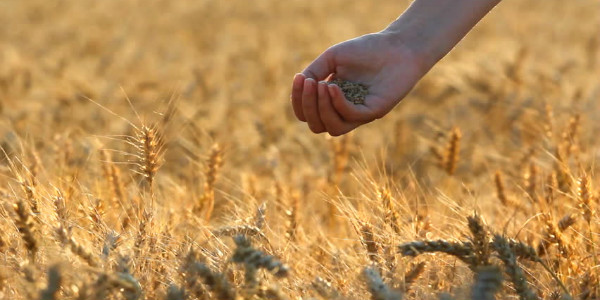
Photo by Suzanne Corbie, courtesy of Shutterstock.
We humans seem to be hard-wired for reciprocity. When we receive, we also feel the need to give. As children we are taught to say, ‘Thank you,’ when we receive a gift or when someone does something for us. This gives pleasure to the giver and encourages the giver to give again. Our ancestors saw the world as being controlled by the Gods. If the sun shone, the rain fell, the land was fertile, and the grain harvest was good, then there would be food to store through the winter, food that would make the difference between life and death. If the Gods provide, then people want to thank them, so in all our different ancestral cultures we created rites and ceremonies, actions and words, to honor the Gods who kept us fed and to thank them so they would continue to do so.
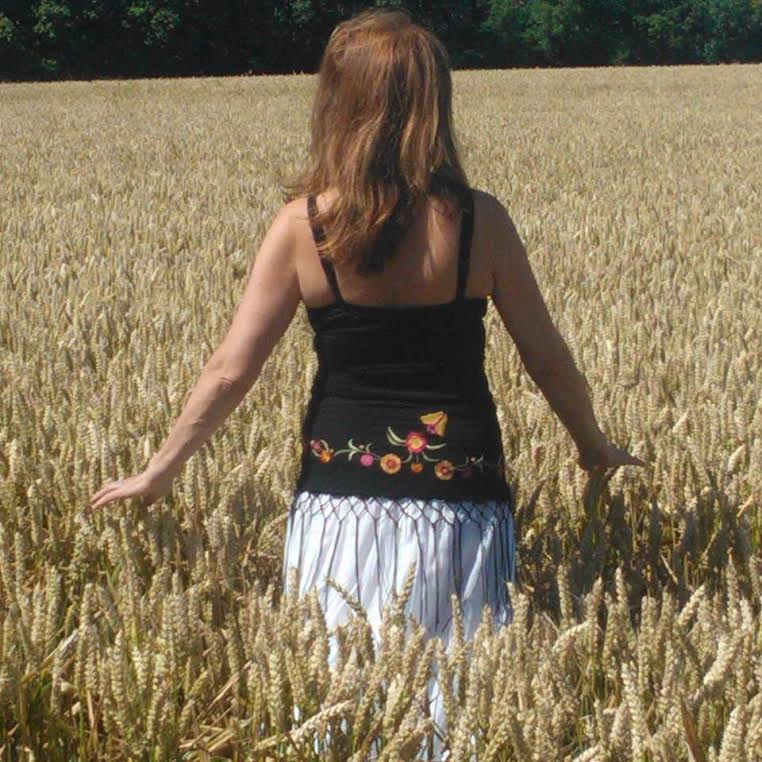
Priestess in Lammas field; photo by Suzanne Corbie
Sacrifice is an energy exchange
It is also a natural instinct to want to offer something more than thanks alone. Our ancestors offered all manner of sacrifices, depending on what was acceptable to that time and culture. It could be prisoners of war, first-born children, animals, birds, weapons, precious jewelry, fruit, or flowers. We had been given something on the material plane, so our instinct was to offer something material in return. Nowadays, most of us do not believe that our Gods spend their time trying to fix the weather pattern for us. We tend to see Nature as an interconnecting and interacting ecosystem. We may see Nature as an entity that is alive and conscious, but we do not necessarily believe that specific parts of Nature are being arranged for our benefit by our personal tribal deity. We do know instinctively, however, even if we do not consciously articulate the thought, that we are dependent on Nature.
We are an organism within Nature’s greater whole and our actions have effects, albeit small ones, on the greater system. Each of us individually has only a small effect, but collectively our species is now one of the major forces within the ecosystem, one whose actions impact on all the rest. As one of the most conscious species on our planet, and one with the greatest power to change what we do and how we live, we have a unique responsibility for assisting the ecosystem to maintain itself and to remain healthy and in balance.
How does this link to Lammas?
Lammas is the festival when we celebrate the culmination of the material cycle of the year. Nature has renewed at spring, matured at Beltane and Midsummer. Now we enter the downward part of the cycle, where growth shifts to decay and we harvest Nature before it declines and grain and fruit begin to die off for winter. It is a natural time to thank Nature for what she has given us. How can we do this? Does Nature really care whether we cast a circle and invoke the quarters, whether we invoke the Corn King as Lord of the Harvest and cut him down in symbolic sacrifice? I would think not. Does something within us care? For many of us who are Pagans, the answer is, ’Yes.’
These symbolic rites and actions provide powerful messages about what we as human beings find important. They are reminders that we are part of Nature and not ‘apart from’ Nature. They remind us that we need to be aware that our human existence is dependent on the ecosystem of the planet. They encourage us to be grateful to be part of that ecosystem and to be grateful that it maintains our bodies and consciousness and allows us to live, breathe, and experience the wonder of life in incarnation.
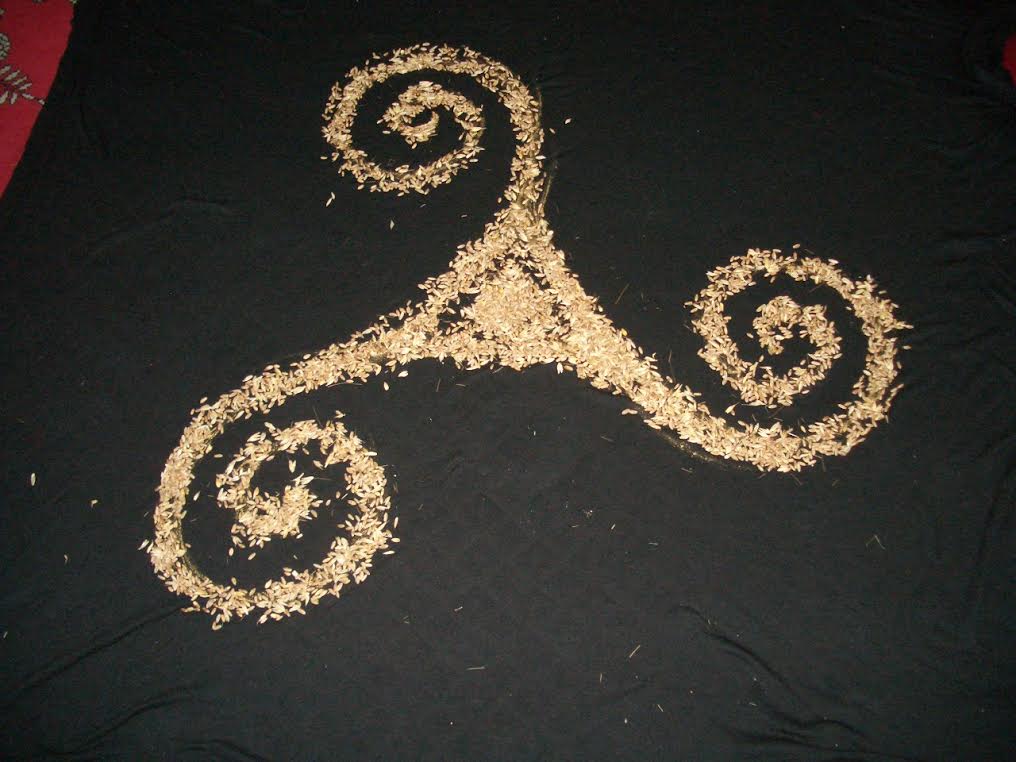
Lammas Triskell by Maurizia Merati
Being mindful of our role in the ecosystem
To be mindful of ourselves as part of Nature is important ant it is all too easy to forget. It is easy to become unmindful and to live in a mechanistic way that is out of touch with reality. When we stop off after work to buy groceries, we enter the strange neon-lit world of the supermarket, where food is processed, dyed, chopped, designed, irradiated, filled with preservative chemicals, transported thousands of miles, wrapped, tinned, frozen – a thousand and one processes to do something as simple as allowing us to eat. It is much harder to be enthusiastic about celebrating a freezer full of frozen food, compared with a field of golden wheat. And because it is harder we have to make more effort to remind ourselves to celebrate Lammas and what it means, because we are just as dependent as were our ancestors on the ecosystem and what it can provide for us. We can manipulate our food by all the different processes available to us, we can learn to grow things in better ways, but we need sun, water, and soil, just as our ancestors did, if we are to grow the food we need.
‘Nor do I demand sacrifice’
Food is not the only material thing that our planet provides for us. We have shelter, heating, lighting – all material comforts that draw on the planet and what it can provide. Lammas can be a celebration therefore of all that we have been given and a time to honor this with sacrifice. Sacrifice is a magickal act of energy exchange; a way of reminding ourselves of the interacting and reciprocal energies that is the basis of our universe. For Wiccans, this can be a form of polarity. In Wicca, the Goddess tells us, ‘Nor do I demand sacrifice.’ But although our Gods do not demand sacrifice for themselves, it does not mean that it is not worthwhile to sacrifice voluntarily in exchange for what we have been given.
We pour libations to the Earth in ritual, but what else can we give back out of what has been given to us? Food is a major theme of Lammas. We could donate to a food bank, give money to a charity that promotes sustainable agriculture, or we could give of our time and energy by starting to grow some food – even if this is just some pots of herbs on a kitchen shelf. The exchange of energy is an underlying principle of magick; another is as above so below. We honor the invisible realm of the Gods and in the material realm we sacrifice something by giving to others or to the planet. Thus is the sacrifice of Lammas made.
Previous Post
June 17, 2015
Midsummer Blessings of Belisama
Next Post

August 19, 2015 Meditating at Harvest In an Interplanetary Age
Browse Our Archives
Select a Category Uncategorized
Select a Month January 2017 December 2016 October 2016 September 2016 July 2016 June 2016 April 2016 February 2016 January 2016 November 2015 October 2015 September 2015 August 2015 July 2015 June 2015 May 2015 April 2015 March 2015 February 2015 January 2015 December 2014 November 2014 October 2014 September 2014 August 2014 July 2014 June 2014 May 2014 April 2014 March 2014 February 2014 January 2014 December 2013 November 2013 October 2013 September 2013 August 2013 July 2013 June 2013 May 2013 April 2013 March 2013
Follow Us!
TAKE THE
Religious Wisdom Quiz
How many books in the Bible are classified as poetry?
Select your answer to see how you score.
6 5 7 4
Related posts from Greening the Spirit
Solstice Energy With Sekhmet’s Blessings

Samhain: Connecting to Ancestors of Blood, Spirit, Place

Equinox Greetings from Spring in the South to...

Eutierria – Oneness With Nature
TRENDING AT PATHEOS Pagan

I was recently chatting with someone on Instagram. She asked me what...

While there are many people who share their results, the end of...

On July 23, I saw Christopher Nolan's The Odyssey which is Homer’s...

As I write this two big events have just finished up. One...

Restoring the Watershed of Divine Love
Perhaps cooperation is not something we manufacture through legislation, ideology, or moral...

Many UUs don’t pray because of bad experiences in a previous religion,...
view all Pagan blogs
Ad-Free & Subscriber Log-In Subscription Support
- About Us
- 2026 Calendar
- Videos
- Podcasts
- Library of World Religions
- Faith In Media Tracker
- Advertise With Us
- Write for Us
- Privacy Policy
- Terms of Service
- Do Not Sell My Data
- Contact Us
- Radiant Digital
- Manage Newsletter Subscriptions
- Unsubscribe From Notifications
- Sitemap
Copyright 2008-2026, Patheos. All rights reserved.
Subscription Support Ad-Free & Subscriber Log-In
Follow Patheos