
BuddhistCatholicContemplativeEvangelicalGeneral ChristianHinduJewishLatter-day SaintMuslimNew VisionsProgressive Christian
Beliefs
- Buddhist
- Catholic
- Contemplative
- Evangelical
- General Christian
- Hindu
- Jewish
- Latter-day Saint
- More Voices
- Muslim
- New Visions
- Pagan
- Progressive Christian
Topics
- Religion News
- Food and Religion
- Sports and Religion
- Religious Art
- Religious Music and Entertainment
- Religious Events
- History and Religion
- Style and Religion
- Politics and Religion
- Women in Religion
- Recreation Outdoors and Religion
- Business Finance and Religion
- Careers Workplace and Religion
- Education and Religion
- Family Parenting and Religion
- Health Fitness and Religion
- Home and Religion
- Relationships and Religion
- Technology and Religion
- Travel and Religion
Columnists
- Buddhist Columnists
- Business Finance and Religion Columnists
- Careers Workplace and Religion Columnists
- Catholic Columnists
- Contemplative Columnists
- Education and Religion Columnists
- Evangelists Columnists
- Family Parenting and Religion Columnists
- General Christian Columnists
- Health Fitness and Religion Columnists
- Hindu Columnists
- History and Religion Columnists
- Home and Religion Columnists
- Jewish Columnists
- More Voices Columnists
- Latter Day Columnists
- Muslim Columnists
- New Visions Columnists
- Nonreligious Columnists
- Pagan Columnists
- Politics and Religion Columnists
- Progressive Columnists
- Recreation Outdoors and Religion Columnists
- Relationships and Religion Columnists
- Religion News Columnists
- Religious Art Columnists
- Religious Events Columnists
- Religious Music and Entertainment Columnists
- Sports and Religion Columnists
- Style and Religion Columnists
- Technology and Religion Columnists
- Travel and Religion Columnists
- Women in Religion Columnists
Resource Library
- 2026 Calendar
- Library of World Religions
- The 100 Most Holy Places on Earth
- Patheos Answers
- Podcasts
- Videos
- Faith Leaders Database
- Anglican Episcopalian
- Bahai
- Baptist
- Buddhism
- Christianity
- Confucianism
- Eastern Orthodoxy
- Hinduism
- Holiness and Pentecostal
- ISKCON
- Islam
- Judaism
- Lutheran
- Methodist
- The Church of Jesus Christ of Latter-day Saints
- New Age
- Paganism
- Presbytarian and Reformed
- Protestantism
- Religion Behind the Scenes
- Roman Catholic
- Scientology
- Shia Islam
- Sikhism
- Sufism
- Sunni Islam
- Taoism
- Zen
- See all religions
Research Tools
 Ad-Free & Subscriber Log-In Subscription Support
Ad-Free & Subscriber Log-In Subscription Support
Follow Patheos 

- Trending:
- Forgiveness
- |
- Marriage
- |
- Consciousness
- |
- Death Penalty
- |
- Election
- |
- Halloween
 Greening the Spirit
- Home
- Pagan
- The Alchemical Marriage
The Alchemical Marriage
Last updated on: December 24, 2014 at 5:18 pm by Vivianne Crowley
The Alchemical Marriage 2014-12-24T17:18:50+00:00 Vivianne Crowley
Patheos Explore the world's faith through different perspectives on religion and spirituality! Patheos has the views of the prevalent religions and spiritualities of the world.
I call great Eros, source of sweet delight,
Holy and pure, and lovely to the sight;
Darting, and wing’d, impetuous fierce desire,
With Gods and mortals playing, wand’ring fire…–Thomas Taylor, trans. (1792) The Hymns of Orpheus, p.189.
As we enter the last part of May, we move into the astrological sign of Gemini, the Twins. Gemini is associated in the Western mystery tradition with the tarot card of The Lovers. The traditional images of the card show a couple standing beneath either an angel or the Greek God Eros, or Cupid in his Roman form, in a ceremony of marriage or betrothal.
As the sun enters Gemini, we are poised between Beltane and Midsummer, which represent two different kinds of marriage. Beltane is the season of the marriage of the Spring Goddess and God. It is a time when self reaches out to another to create a partnership of two equals. Midsummer is a celebration of the marriage of the Solar King to the land, in preparation for the sacrifice of Lammas. ‘Kingship’ in a spiritual sense is not confined to one gender or another; and it is not about power or ‘power-over’. It represents a willingness to accept responsibility for the greater whole and to serve it. It is a reaching out of the smaller self to the wider world and a willingness to engage, to create a union with a greater whole – family, land, planet, people.
Keep pure your highest ideal: strive ever towards it
The Lovers represents a basic human desire for uniting with that which is not the self; but to do so well we need to unite the disparate parts of ourselves. As well as an outer union, The Lovers can represent an inner union between the ego, that part of us that we think of as ‘me’, and the deeper self that encompasses all that we are, both good and bad.
One goal of the spiritual quest is to find ourselves and who and what we truly are, to befriend ourselves, and to seek to evolve that self towards that which we hold most dear – our highest ideal. The Lovers can represent self-acceptance – of our strengths and weaknesses, our potential and limitations, our impulses to altruistic and loving behavior, and our impulses to selfishness and destruction. Self-acceptance does not mean that we do not want to change and grow. We can accept what we are, while seeking to evolve and to grow into harmony with the Divine within us.
Scylla and Charybdis
To create the inner marriage, we must navigate the tricky passage between what psychologist Carl Jung called the Scylla and Charybdis of ego inflation – thinking we are more important and special than we are, and ego deflation – believing that we are damaged and inferior to others. Scylla and Charybdis appear in the songs of the ancient Pagan Greek poet Homer and were a rock shoal and a whirlpool on opposite sides of the Strait of Messina between Sicily and mainland Italy. It took courage and skill to navigate between them without being smashed on the rocks of Scylla or sucked down into the watery depths of Charybdis. On our spiritual journey, we too must navigate this tricky passage; a middle way, between accepting ourselves as we are, without needing to be drawn into thinking of ourselves as better or worse than others. We must ‘marry’ these two aspects of ourselves – inferiority and superiority – until at last we see ourselves as we really are.
Individuation and the alchemical marriage

The Lovers, by Pamela Coleman Smith
The inner marriage is an alchemical transformation of the base matter of the personality into spiritual gold. It is a process that Carl Jung called ‘individuation’. We let go of false images of ourselves created by our environment and by the projected visions of parents, teachers, friends and lovers. We let go of the Persona, the protective mask we put on to face the world. We face the Shadow, our own inner negativity. We accept our contra-sexual sides, Anima and Animus. We own as ours those aspects of ourselves that we have projected onto other people. This can disrupt our relationships. We may find that others are not the people we thought we were. Sometimes we find that the relationships and activities that satisfied us in the past are no longer appropriate on the next stage of our journey. We have to go back and start again.
This process can be painful and we must acknowledge the ambiguity of the card of The Lovers. The presiding deity, Eros or Cupid, holds in his hands a bow and sharp pointed arrow. Love is inevitably painful and brings with it fear of losing what we have. It is a natural human tendency to seek refuge in the security of the known. We fear the unknown and change. But if we trust to the process of inner change, if we go through and beyond it, we find that we are much greater and richer beings than we thought.
The Lovers can symbolize union between the self and another human being, between the self and humankind as a whole, between the self and the biosphere of which we are part, or between the self and the Divine. All these types of ‘marriage’ or union are important within Paganism. It is our love for something wider and deeper that takes us beyond our own desires and personal interests: lead becomes gold.
In this way there arises a consciousness which is no longer imprisoned in the petty, over sensitive, personal world of the ego, but participates freely in the wider world of objective interests. The widened consciousness is no longer that touchy, egotistical bundle of personal wishes, fears, hopes, and ambitions which always has to be compensated or corrected by unconscious counter-tendencies; instead it is a function of relationship to the world of objects bringing the individual into absolute, binding, and indissoluble communion with the world at large.
–Carl G. Jung (1916/1928/1935). The relations between the ego and the unconscious.
In C. G. Jung (1966 ed.), The collected works of C. G. Jung, vol. 7. London: Routledge & Kegan Paul. p. 178; para. 275.
In preparation for Midsummer, we can ask ourselves, ‘How can I marry the disparate parts of myself to become what I truly am? How can I let go of fear and embrace change?’ Gemini is an astrological sign that loves and embraces change; so let us be change makers – changing ourselves and changing how we interact with the world, so that we may engage with the world around us and serve it.
Previous Post
April 19, 2013
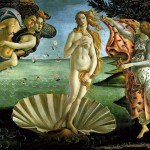
The Beauty of the Green Earth: Honoring Venus
Next Post

June 21, 2013 The Chariot and the Sun in Its Height
Browse Our Archives
Select a Category Uncategorized
Select a Month January 2017 December 2016 October 2016 September 2016 July 2016 June 2016 April 2016 February 2016 January 2016 November 2015 October 2015 September 2015 August 2015 July 2015 June 2015 May 2015 April 2015 March 2015 February 2015 January 2015 December 2014 November 2014 October 2014 September 2014 August 2014 July 2014 June 2014 May 2014 April 2014 March 2014 February 2014 January 2014 December 2013 November 2013 October 2013 September 2013 August 2013 July 2013 June 2013 May 2013 April 2013 March 2013
Follow Us!
TAKE THE
Religious Wisdom Quiz
Which Christian denomination was founded by John and Charles Wesley?
Select your answer to see how you score.
Baptist Presbyterian Methodist Catholic
Related posts from Greening the Spirit

Samhain: Connecting to Ancestors of Blood, Spirit, Place

Equinox Greetings from Spring in the South to...

Eutierria – Oneness With Nature
TRENDING AT PATHEOS Pagan

I was recently chatting with someone on Instagram. She asked me what...

While there are many people who share their results, the end of...

On July 23, I saw Christopher Nolan's The Odyssey which is Homer’s...

As I write this two big events have just finished up. One...

Restoring the Watershed of Divine Love
Perhaps cooperation is not something we manufacture through legislation, ideology, or moral...

Many UUs don’t pray because of bad experiences in a previous religion,...
view all Pagan blogs
Ad-Free & Subscriber Log-In Subscription Support
- About Us
- 2026 Calendar
- Videos
- Podcasts
- Library of World Religions
- Faith In Media Tracker
- Advertise With Us
- Write for Us
- Privacy Policy
- Terms of Service
- Do Not Sell My Data
- Contact Us
- Radiant Digital
- Manage Newsletter Subscriptions
- Unsubscribe From Notifications
- Sitemap
Copyright 2008-2026, Patheos. All rights reserved.
Subscription Support Ad-Free & Subscriber Log-In
Follow Patheos