
BuddhistCatholicContemplativeEvangelicalGeneral ChristianHinduJewishLatter-day SaintMuslimNew VisionsProgressive Christian
Beliefs
- Buddhist
- Catholic
- Contemplative
- Evangelical
- General Christian
- Hindu
- Jewish
- Latter-day Saint
- More Voices
- Muslim
- New Visions
- Pagan
- Progressive Christian
Topics
- Religion News
- Food and Religion
- Sports and Religion
- Religious Art
- Religious Music and Entertainment
- Religious Events
- History and Religion
- Style and Religion
- Politics and Religion
- Women in Religion
- Recreation Outdoors and Religion
- Business Finance and Religion
- Careers Workplace and Religion
- Education and Religion
- Family Parenting and Religion
- Health Fitness and Religion
- Home and Religion
- Relationships and Religion
- Technology and Religion
- Travel and Religion
Columnists
- Buddhist Columnists
- Business Finance and Religion Columnists
- Careers Workplace and Religion Columnists
- Catholic Columnists
- Contemplative Columnists
- Education and Religion Columnists
- Evangelists Columnists
- Family Parenting and Religion Columnists
- General Christian Columnists
- Health Fitness and Religion Columnists
- Hindu Columnists
- History and Religion Columnists
- Home and Religion Columnists
- Jewish Columnists
- More Voices Columnists
- Latter Day Columnists
- Muslim Columnists
- New Visions Columnists
- Nonreligious Columnists
- Pagan Columnists
- Politics and Religion Columnists
- Progressive Columnists
- Recreation Outdoors and Religion Columnists
- Relationships and Religion Columnists
- Religion News Columnists
- Religious Art Columnists
- Religious Events Columnists
- Religious Music and Entertainment Columnists
- Sports and Religion Columnists
- Style and Religion Columnists
- Technology and Religion Columnists
- Travel and Religion Columnists
- Women in Religion Columnists
Resource Library
- 2026 Calendar
- Library of World Religions
- The 100 Most Holy Places on Earth
- Patheos Answers
- Podcasts
- Videos
- Faith Leaders Database
- Anglican Episcopalian
- Bahai
- Baptist
- Buddhism
- Christianity
- Confucianism
- Eastern Orthodoxy
- Hinduism
- Holiness and Pentecostal
- ISKCON
- Islam
- Judaism
- Lutheran
- Methodist
- The Church of Jesus Christ of Latter-day Saints
- New Age
- Paganism
- Presbytarian and Reformed
- Protestantism
- Religion Behind the Scenes
- Roman Catholic
- Scientology
- Shia Islam
- Sikhism
- Sufism
- Sunni Islam
- Taoism
- Zen
- See all religions
Research Tools
 Ad-Free & Subscriber Log-In Subscription Support
Ad-Free & Subscriber Log-In Subscription Support
Follow Patheos 

- Trending:
- Forgiveness
- |
- Marriage
- |
- Consciousness
- |
- Death Penalty
- |
- Election
- |
- Halloween
 Visions of Vocation
- Home
- Careers, Workplace and Religion
- The Way the World’s Supposed to Be
The Way the World’s Supposed to Be
Last updated on: January 6, 2016 at 9:39 am by Dr. Steven Garber
The Way the World’s Supposed to Be 2016-01-06T09:39:04-05:00 Dr. Steven Garber
Patheos Explore the world's faith through different perspectives on religion and spirituality! Patheos has the views of the prevalent religions and spiritualities of the world.
The way the world’s supposed to be.
Is there a world like that? Do we know? How would we? What does it mean? These are the greatest questions of life, and ones that we answer very differently, given our deepest commitments about the meaning of life, our beliefs about God, the human condition, and history.
For some, it is a clear “no,” sure as we are that no one knows, and no one can; so it is arrogance to assume that we know anything like that. Others aren’t quite sure, so rather than weighing in with confidence on one side or the other, they simply step away from any presumed certainty. And others hope so, sure that something is true because everything cannot be “whatever,” that justice cannot be “just us.” More could be said, of course.
None of this can remain in the abstract for very long.
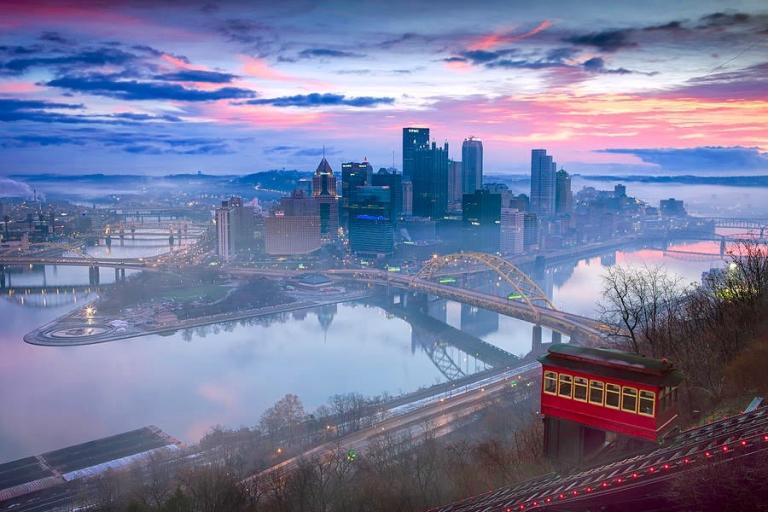
A few Saturdays ago I was with the Pittsburgh Leadership Foundation, looking out on the city from the Station Square. For a day, they convened a group of people with long commitments to Pittsburgh, going further up and further in to PLF’s decades-long engagement of the most difficult questions and concerns of the city. In the language of the prophet Jeremiah, they have longed for “the flourishing of the city,” and have kept at that for years, taking up Pittsburgh’s hopes and fears with new and renewed energy through generations. For that reason alone, their work is remarkable.
I was asked to finish the day, reflecting on what I had heard, and what it meant. Like all cities, Pittsburgh is a story-shaped community, one that runs across the centuries. The history is long and complex, but I chose to begin by remembering Robert Lavelle, the Hill District banker whose long work served the financially underserved of Pittsburgh, and Sam Shoemaker, the Episcopal rector who spent years praying for Pittsburgh, telling about their contributions to the story of the city. And after rooting this in the vision of jubilee, a window into the way the world’s supposed to be– which happens to be the name of a conference hosted in Pittsburgh for the past 40 years –I drew into the conversation the vision of Wendell Berry, not from Pittsburgh but a man who writes for all of us.
In his essay, “Two Economies,” Berry argues that everywhere we look, there are “lesser economies”— for example, the University of Pittsburgh Medical Center (UPMC) whose headquarters now towers over the city, Pittsburgh itself, the state of Pennsylvania, and finally the United States —each in their own ways creating and managing metrics which judge their effectiveness and profitability over the course of time. But then he argues that there is a “greater economy” too, one that we don’t get to decide, to choose, to prefer, or to want, because it is the world that is really there, whether we believe in it or not. Sometimes described as “the most serious essayist in America today,” Berry simply says that the greater economy is “the kingdom of God,” but “you can call it what you want to call it.” What we do not get to do is to deny it.
And over the pages of his essay he maintains that the lesser economies must eventually live within the reality of the greater economy. That will happen, because their limited, or lesser, visions of economic well-being— the common weal, or commonwealth (good word that is for the “commonwealth of Pennsylvania”) —will finally be judged by reality, by the world that is really there.
The implications cross the whole of life, of course, far beyond their meaning for economies. From sexuality to marriage, from local politics to international diplomacy, we choose, which is our dignity— as Mumford and Sons say so poetically and persuasively in the song, “Timshel” —but eventually the contours of the cosmos constrain us, because after all, reality is reality.
Because this was Pittsburgh, it was impossible not to think about the history of the city, the Steel City it was and no longer is. Books have been written, dissertations have been defended, and of course thousands of lives have been lived out through the complexity of this history, and anything I say here will be short-hand for the longer, deeper story. But this is true: the failure to see the lesser economy as necessarily written into the meaning of the greater economy brought about the implosion of the steel industry. To put it simply: robber barons cannot keep robbing, and unions cannot keep unionizing, each seeing their respective interest as a zero-sum game. When each chose to strangle the other, everyone lost. Steel is still being made, but not in Pittsburgh.
I talked about my work with the Mars Corporation, and its unusual vision of “an economics of mutuality,” a surprisingly serious effort to rethink the purpose of business by creating metrics which account for a more complex bottom line. If it is long-term profitability that we care about, making money over the long-haul, then the more complex bottom line is almost pure realeconomik, the reality of economics. Not corporate social responsibility and not green-spin, the economics of mutuality is a fundamental reworking of the very nature of our commonwealth, one that honestly accounts for profit, for people, and for the planet— not privileging one as “the real bottom line,” but honestly accounting for all three as integral to a healthy business and economy, for sustained profitability.
More was said, and still needs to be, but what was very good about the day was that there were serious people in the room who have long loves for their city, and who are asking the most important questions about what its flourishing will require of them. Born of a shared vision of vocation, they are giving themselves to being common grace for the common good, hoping their work in Pittsburgh is a signpost for the way the world could be and someday will be.
(The city of Pittsburgh as it is, and yet romanticized too. Like every city, it is much more, and much more complex, with glories and shames running through its streets and neighborhoods. One of several pics I used in a powerpoint presentation, asking “What is the city, and what is our responsibility to it and for it?”)
For more from Dr. Steven Garber, check out his Commons Blog from The Washington Institute for Faith, Vocation, and Culture.
Previous Post

December 30, 2015
Scrooge's Question to Us
Next Post
January 20, 2016 Sonship in Star Wars
Browse Our Archives
Select a Category Book Excerpts Book Reviews Community Conferences Dear Steve Economics Meaning Movie Review Uncategorized Vocation
Select a Month March 2016 February 2016 January 2016 December 2015 November 2015 October 2015 September 2015 August 2015 July 2015 June 2015 May 2015 April 2015 March 2015 February 2015 January 2015 December 2014 November 2014 October 2014 September 2014 August 2014 July 2014 June 2014 May 2014 April 2014 March 2014 February 2014 January 2014
Follow Us!
TAKE THE
Religious Wisdom Quiz
Which book contains the famous "Shepherd Psalm"?
Select your answer to see how you score.
Proverbs Isaiah Psalms Job
Related posts from Visions of Vocation

Three Words We Should Care More About

"Joy" and the Power of a Dream
TRENDING AT PATHEOS Careers, Workplace and Religion

St. Francis by Bill Droel Pope Leo XIV declares 2026 as “Year...

Catholics are schooled in the faith by memorizing dogmatic points and lots...

The Good News of Our Human Limitations -...
After another day of trying to meet deadlines and working on projects,...

Quiet Holy Attentiveness (podcast) with Sarah Clarkson
We know that quiet is an essential aspect of the spiritual life,...

Every Vocation Everywhere All At Once
What is a vocation? How does it endure through the years? Can...

I promise this is not going to become a Taylor Swift Studies...
view all Careers, Workplace and Religion blogs
Ad-Free & Subscriber Log-In Subscription Support
- About Us
- 2026 Calendar
- Videos
- Podcasts
- Library of World Religions
- Faith In Media Tracker
- Advertise With Us
- Write for Us
- Privacy Policy
- Terms of Service
- Do Not Sell My Data
- Contact Us
- Radiant Digital
- Manage Newsletter Subscriptions
- Unsubscribe From Notifications
- Sitemap
Copyright 2008-2026, Patheos. All rights reserved.
Subscription Support Ad-Free & Subscriber Log-In
Follow Patheos