
BuddhistCatholicContemplativeEvangelicalGeneral ChristianHinduJewishLatter-day SaintMuslimNew VisionsProgressive Christian
Beliefs
- Buddhist
- Catholic
- Contemplative
- Evangelical
- General Christian
- Hindu
- Jewish
- Latter-day Saint
- More Voices
- Muslim
- New Visions
- Pagan
- Progressive Christian
Topics
- Religion News
- Food and Religion
- Sports and Religion
- Religious Art
- Religious Music and Entertainment
- Religious Events
- History and Religion
- Style and Religion
- Politics and Religion
- Women in Religion
- Recreation Outdoors and Religion
- Business Finance and Religion
- Careers Workplace and Religion
- Education and Religion
- Family Parenting and Religion
- Health Fitness and Religion
- Home and Religion
- Relationships and Religion
- Technology and Religion
- Travel and Religion
Columnists
- Buddhist Columnists
- Business Finance and Religion Columnists
- Careers Workplace and Religion Columnists
- Catholic Columnists
- Contemplative Columnists
- Education and Religion Columnists
- Evangelists Columnists
- Family Parenting and Religion Columnists
- General Christian Columnists
- Health Fitness and Religion Columnists
- Hindu Columnists
- History and Religion Columnists
- Home and Religion Columnists
- Jewish Columnists
- More Voices Columnists
- Latter Day Columnists
- Muslim Columnists
- New Visions Columnists
- Nonreligious Columnists
- Pagan Columnists
- Politics and Religion Columnists
- Progressive Columnists
- Recreation Outdoors and Religion Columnists
- Relationships and Religion Columnists
- Religion News Columnists
- Religious Art Columnists
- Religious Events Columnists
- Religious Music and Entertainment Columnists
- Sports and Religion Columnists
- Style and Religion Columnists
- Technology and Religion Columnists
- Travel and Religion Columnists
- Women in Religion Columnists
Resource Library
- 2026 Calendar
- Library of World Religions
- The 100 Most Holy Places on Earth
- Patheos Answers
- Podcasts
- Videos
- Faith Leaders Database
- Anglican Episcopalian
- Bahai
- Baptist
- Buddhism
- Christianity
- Confucianism
- Eastern Orthodoxy
- Hinduism
- Holiness and Pentecostal
- ISKCON
- Islam
- Judaism
- Lutheran
- Methodist
- The Church of Jesus Christ of Latter-day Saints
- New Age
- Paganism
- Presbytarian and Reformed
- Protestantism
- Religion Behind the Scenes
- Roman Catholic
- Scientology
- Shia Islam
- Sikhism
- Sufism
- Sunni Islam
- Taoism
- Zen
- See all religions
Research Tools
 Ad-Free & Subscriber Log-In Subscription Support
Ad-Free & Subscriber Log-In Subscription Support
Follow Patheos 

- Trending:
- Forgiveness
- |
- Marriage
- |
- Consciousness
- |
- Death Penalty
- |
- Election
- |
- Halloween
 Visions of Vocation
- Home
- Careers, Workplace and Religion
- Justice Cannot Be Just Us
Justice Cannot Be Just Us
Last updated on: December 2, 2015 at 9:42 am by Dr. Steven Garber
Justice Cannot Be Just Us 2015-12-02T09:42:14-05:00 Dr. Steven Garber
Patheos Explore the world's faith through different perspectives on religion and spirituality! Patheos has the views of the prevalent religions and spiritualities of the world.
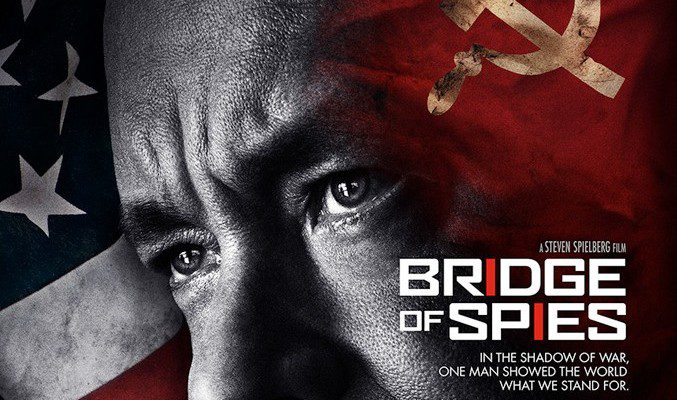
“At crucial moments of choice, most of the business of choosing is already over.”
There are some truths that are true across time, perennially true. Year after year, generation after generation, century after century, civilization after civilization. In a sentence, the Oxford moral philosopher Iris Murdoch captured the heart of our humanness. We see out of our hearts, and we hear out of our hearts— and so we choose out of our hearts, making decisions that either take us more fully into our humanity, our true humanness, or that take us away from flourishing, diminishing ourselves and the world around us.
The longer I watched “Bridge of Spies,” the new film by the master storyteller Steven Spielberg, starring one of his favorite actors, Tom Hanks, the more I thought of Murdoch’s insight into who we are and how we live. Based on the Cold War conflict between the United States and the Soviet Union, it tells the tale of the capture of the U2 spy plane with its pilot Gary Francis Powers, and the long, hard work of attorney Jim Donovan for his release, eventually trading a Russian spy for an American spy on a bridge in Berlin in 1962.
The story is Donovan’s, played by Hanks, a World War II veteran who was a central figure in the Nuremberg Trials, with brilliance bringing about the convictions of the Nazi leadership by insisting that the death camps be filmed, and that the film be shown in the courtroom, allowing the judges to see the horror of evil incarnate. Over the next 15 years he became a founding partner in a New York law firm, settling into the ordinary rhythms of a man moving from his 20s to his 40s— a family, a job, a life, unmarked by anything extraordinary.
Until the United States caught a Soviet spy, that is, and Donovan was chosen by his peers to defend the spy on behalf of America. In the height of global fears brought on by the Cold War, escalated by the “We will crush you!” rhetoric of Khrushchev— with little kids like me learning to hide under our schools desks, hoping against hope that the air raid sirens never went off, warning us of the end of life as we knew it —Donovan’s decision made him a persona non grata. Why would you defend him?! A Soviet spy?! The popular opinion was that the spy did not deserve the honor of a defense. The proverbial man-on-the-street would just as soon crucify him, than try him.
Or if try him, “Then just go through motions, Donovan,” no more. The senior partner of his firm, the one who first asked him on behalf of the bar to take the case, saw it that way. The CIA, in and out of every part of the story, saw it that way. His neighbors saw it that way. And even the Supreme Court saw it that way. But he choose differently, and the difference is the drama of the film.
Born of a truer patriotism founded on his devout Christian faith, he simply could and would do nothing other than love the spy as he himself hoped he would be loved— in and through the vocation that was his, a trial attorney who knew the whys and wherefores of the law. The heart of his moral vision was the belief that the Soviet spy, and the watching world, deserved to see America be America, living by its creed. If the Constitution promises an honest trial with honest laws, then even our enemy should be accorded a blind justice, the scales not weighted by popular opinion. Justice cannot be “just us,” but must be an equal justice under the law, as we promise ourselves and the world.
But in this frail world, any justice done is only proximate, because not all that is right and good and fair is ever fully accomplished— and it is always messy, a sausage-making affair when all is said and done. From the story on screen, and from what we can know from history beyond the film, that was true here too. Promises made were broken, horrible things were said and done, compromises made the good possible, but in the end we know that proximate justice was achieved, something that mattered for America and the world actually happened. And when the credits roll, we have met a good man who did good work, which is a story we don’t often see at the local cinema.
I won’t tell more here, but only that Spielberg holds our hearts, following the story of Donovan’s commitment to justice and mercy woven through his work as a lawyer. And when the spies finally meet on the bridge in Berlin, walking past each other back into their own worlds, the human reason is that one good man never saw the choice as a choice— do we treat our enemy as a neighbor? —because for him, the business of choosing was already over, and for a brief shining moment, his character and the character of his country were one.
For more from Dr. Steven Garber, visit his Commons Blog from The Washington Institute for Faith, Vocation and Culture.
Previous Post

November 25, 2015
Thankful for Good Neighbors
Next Post

December 16, 2015 Who Are We, Anyway?
Browse Our Archives
Select a Category Book Excerpts Book Reviews Community Conferences Dear Steve Economics Meaning Movie Review Uncategorized Vocation
Select a Month March 2016 February 2016 January 2016 December 2015 November 2015 October 2015 September 2015 August 2015 July 2015 June 2015 May 2015 April 2015 March 2015 February 2015 January 2015 December 2014 November 2014 October 2014 September 2014 August 2014 July 2014 June 2014 May 2014 April 2014 March 2014 February 2014 January 2014
Follow Us!
TAKE THE
Religious Wisdom Quiz
Who was Aquila's wife?
Select your answer to see how you score.
Mary Lydia Ruth Priscilla
Related posts from Visions of Vocation


Three Words We Should Care More About

"Joy" and the Power of a Dream
TRENDING AT PATHEOS Careers, Workplace and Religion

St. Francis by Bill Droel Pope Leo XIV declares 2026 as “Year...

Catholics are schooled in the faith by memorizing dogmatic points and lots...

The Good News of Our Human Limitations -...
After another day of trying to meet deadlines and working on projects,...

Quiet Holy Attentiveness (podcast) with Sarah Clarkson
We know that quiet is an essential aspect of the spiritual life,...

Every Vocation Everywhere All At Once
What is a vocation? How does it endure through the years? Can...

I promise this is not going to become a Taylor Swift Studies...
view all Careers, Workplace and Religion blogs
Ad-Free & Subscriber Log-In Subscription Support
- About Us
- 2026 Calendar
- Videos
- Podcasts
- Library of World Religions
- Faith In Media Tracker
- Advertise With Us
- Write for Us
- Privacy Policy
- Terms of Service
- Do Not Sell My Data
- Contact Us
- Radiant Digital
- Manage Newsletter Subscriptions
- Unsubscribe From Notifications
- Sitemap
Copyright 2008-2026, Patheos. All rights reserved.
Subscription Support Ad-Free & Subscriber Log-In
Follow Patheos