
BuddhistCatholicContemplativeEvangelicalGeneral ChristianHinduJewishLatter-day SaintMuslimNew VisionsProgressive Christian
Beliefs
- Buddhist
- Catholic
- Contemplative
- Evangelical
- General Christian
- Hindu
- Jewish
- Latter-day Saint
- More Voices
- Muslim
- New Visions
- Pagan
- Progressive Christian
Topics
- Religion News
- Food and Religion
- Sports and Religion
- Religious Art
- Religious Music and Entertainment
- Religious Events
- History and Religion
- Style and Religion
- Politics and Religion
- Women in Religion
- Recreation Outdoors and Religion
- Business Finance and Religion
- Careers Workplace and Religion
- Education and Religion
- Family Parenting and Religion
- Health Fitness and Religion
- Home and Religion
- Relationships and Religion
- Technology and Religion
- Travel and Religion
Columnists
- Buddhist Columnists
- Business Finance and Religion Columnists
- Careers Workplace and Religion Columnists
- Catholic Columnists
- Contemplative Columnists
- Education and Religion Columnists
- Evangelists Columnists
- Family Parenting and Religion Columnists
- General Christian Columnists
- Health Fitness and Religion Columnists
- Hindu Columnists
- History and Religion Columnists
- Home and Religion Columnists
- Jewish Columnists
- More Voices Columnists
- Latter Day Columnists
- Muslim Columnists
- New Visions Columnists
- Nonreligious Columnists
- Pagan Columnists
- Politics and Religion Columnists
- Progressive Columnists
- Recreation Outdoors and Religion Columnists
- Relationships and Religion Columnists
- Religion News Columnists
- Religious Art Columnists
- Religious Events Columnists
- Religious Music and Entertainment Columnists
- Sports and Religion Columnists
- Style and Religion Columnists
- Technology and Religion Columnists
- Travel and Religion Columnists
- Women in Religion Columnists
Resource Library
- 2026 Calendar
- Library of World Religions
- The 100 Most Holy Places on Earth
- Patheos Answers
- Podcasts
- Videos
- Faith Leaders Database
- Anglican Episcopalian
- Bahai
- Baptist
- Buddhism
- Christianity
- Confucianism
- Eastern Orthodoxy
- Hinduism
- Holiness and Pentecostal
- ISKCON
- Islam
- Judaism
- Lutheran
- Methodist
- The Church of Jesus Christ of Latter-day Saints
- New Age
- Paganism
- Presbytarian and Reformed
- Protestantism
- Religion Behind the Scenes
- Roman Catholic
- Scientology
- Shia Islam
- Sikhism
- Sufism
- Sunni Islam
- Taoism
- Zen
- See all religions
Research Tools
 Ad-Free & Subscriber Log-In Subscription Support
Ad-Free & Subscriber Log-In Subscription Support
Follow Patheos 

- Trending:
- Forgiveness
- |
- Marriage
- |
- Consciousness
- |
- Death Penalty
- |
- Election
- |
- Halloween
 Victorious Living
- Home
- Family, Parenting and Religion
- Think Slower
Think Slower
Last updated on: May 20, 2021 at 5:00 am by Victorious Living
Think Slower 2021-05-05T01:24:16-04:00 Victorious Living
Patheos Explore the world's faith through different perspectives on religion and spirituality! Patheos has the views of the prevalent religions and spiritualities of the world.
In the 1970’s, the popular perspective around human reason was that we are generally very reasonable creatures. When we act unreasonably, it is a product of our emotions getting in the way. This is why our culture today talks so much about “controlling our emotions”. It is the offspring of that philosophy, that our reason will shine through if our emotions don’t get in the way.
But research in the last fifty years has started to suggest that humans, emotional or not, may not be as reasonable as we think.
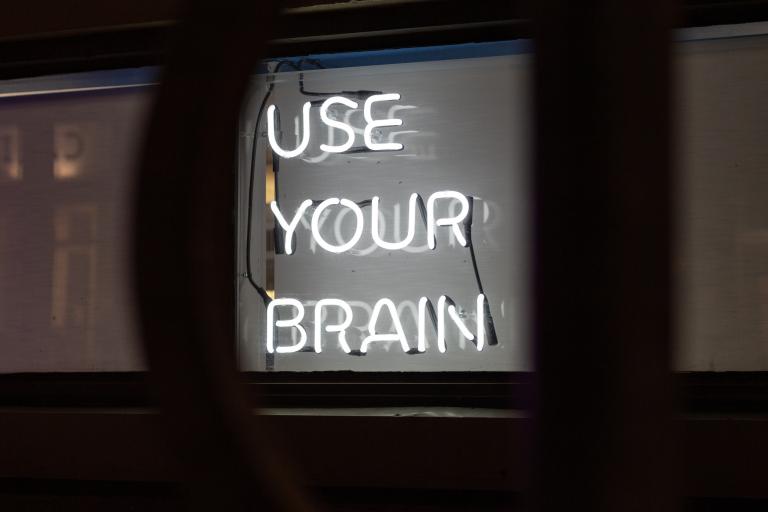
Our brains operate by patterns. Every human mind works hard to try to create a subconscious shortcut to the way things work, the way they are, etc. It takes a lot of mental energy for us to figure out new tasks and sift through nuances. If our brain can avoid it, it will. Which is why we develop certain unreasonable biases toward those we find attractive, that which is familiar to us, and a host of other things.
The Leap
It is not just an issue of emotions. It is a process of conditioning. We live in a world that is fast. There is no time to rest, to pause. Time, after all, is money. We can’t take a five second elevator ride in silence without feeling dreadfully uncomfortable.
Our patterned thinking is not completely unreasonable. But it has its moments. There are some shortcuts, some patterns we have developed, that are unreasonable. They become “blind spots” in our lives, things we are wrong about that we have forgotten to even question.
A few years ago, I spent one entire day not talking. On purpose. I decided I would just listen, all day long. It was shocking to me how much I wanted to speak. I am a quiet introvert by nature, generally pretty reserved in a crowd. But I was bursting. When a topic came up I considered myself even remotely informed on, I wanted to scream my knowledge. I wanted to leap into the conversation.
In the absence of verbal satisfaction, I found myself having my parts of the conversation in my head. It was satisfying enough.

The point here is that most of our thinking is a fast and desperate leap toward reinforcing what we already know. Or what we already believe. We give preferential treatment to evidence that validates our current position over and against those that challenge it. We take in data and remake it in our image, putting a story around it to explain why it serves the position from which we began.
We assume we have it right. We shoehorn the evidence to make it fit our rightness. And then we hurry on to the next thing.
The result of this is a lot of cognitive leaps. We are becoming more and more unreasonable, more and more detached from reality. Defending our biases has become an exercise in trench warfare. We are in a hurry to be validated. And to convert others to our side (or shame them for their unwillingness to do so). All the while, we leave our own thoughts and predispositions mostly unchecked. We continue to leap to the conclusion that we know what is best.
Slow Down

When we are thinking (or feeling), time is a key element. If we can slow down, just a second, just enough to get past our knee-jerk assumptions, we have won a great battle. You can come back to those knee-jerk reactions; maybe you are right. But if we zip past them with no scrutiny, we will never know which ones we are sailing through to our own detriment.
Most of us (me included) are not going to do this. Or at least we are going to have a hard time with it. Thinking slower takes effort. Examining ourselves does not just take humility, it takes energy. And in our fast-paced, bottom-line world, it often does not “feel productive”.
But, if we truly want to learn, to grow, to develop, we need to take the time to slow down our thinking. We can’t ask it of others and be unwilling to do it ourselves. We can’t give it a cursory attempt and then snap back to old habits when we discover (quite unbiasedly, I am sure) that we are always right all of the time. Or that slowing down does not make things more definitive, just more complicated.
Previous Post

May 18, 2021
Whose Decision Is It?
Next Post

May 25, 2021 How to Impress an Angel
Browse Our Archives
Select a Category Choices Conflict Resolution Culture Change Emotions Failure Faith Fear Freedom V Growth Healthy Communication Hope Identity Influence Leadership Learn Mistakes Mood Curve Ownership Perspective Power Relationships Self-Awareness Self-Governance Systems Thinking Three Things You Control Transformational Leadership Trust Truth Uncategorized Values Vision
Select a Month January 2022 December 2021 November 2021 October 2021 September 2021 August 2021 July 2021 June 2021 May 2021 April 2021 March 2021 February 2021 January 2021 December 2020 November 2020 October 2020 September 2020 August 2020 July 2020 June 2020 May 2020 April 2020 March 2020 February 2020 January 2020 December 2019 November 2019 October 2019 September 2019 August 2019 July 2019 June 2019 May 2019 April 2019 March 2019 February 2019 January 2019 December 2018 November 2018 October 2018 September 2018 August 2018 July 2018 June 2018 May 2018 April 2018 March 2018 February 2018 January 2018 December 2017
Follow Us!
TAKE THE
Religious Wisdom Quiz
What Christian tradition has a worldwide leader known as the Ecumenical Patriarch?
Select your answer to see how you score.
Anglican Catholic Eastern Orthodox Lutheran
Books by This Author Books by Victorious Living
Related posts from Victorious Living


TRENDING AT PATHEOS Family, Parenting and Religion

The Iron Gates and the Lion of the...
Yesterday, I didn't finish my report about, well, yesterday. So I'll...

Dolly Parton’s Last Song Wins Dove Award with...
Bluegrass band The Grascals, speaking on the red carpet at the 57th...

The Image: On the Horror of Capitalism and...
The Image Then went the Pharisees, and took counsel how they might...

We are approaching the date of our new American national holiday: October...

Letters on Living the Faith by C.S. Lewis
Most of us met C.S. Lewis as a public intellectual. Mere Christianity....

When Halloween Unmasks Married Hearts
Written by Dr. David K. Ewen from Eternal Truth Bible College Behind...
view all Family, Parenting and Religion blogs
Ad-Free & Subscriber Log-In Subscription Support
- About Us
- 2026 Calendar
- Videos
- Podcasts
- Library of World Religions
- Faith In Media Tracker
- Advertise With Us
- Write for Us
- Privacy Policy
- Terms of Service
- Do Not Sell My Data
- Contact Us
- Radiant Digital
- Manage Newsletter Subscriptions
- Unsubscribe From Notifications
- Sitemap
Copyright 2008-2026, Patheos. All rights reserved.
Subscription Support Ad-Free & Subscriber Log-In
Follow Patheos