
BuddhistCatholicContemplativeEvangelicalGeneral ChristianHinduJewishLatter-day SaintMuslimNew VisionsProgressive Christian
Beliefs
- Buddhist
- Catholic
- Contemplative
- Evangelical
- General Christian
- Hindu
- Jewish
- Latter-day Saint
- More Voices
- Muslim
- New Visions
- Pagan
- Progressive Christian
Topics
- Religion News
- Food and Religion
- Sports and Religion
- Religious Art
- Religious Music and Entertainment
- Religious Events
- History and Religion
- Style and Religion
- Politics and Religion
- Women in Religion
- Recreation Outdoors and Religion
- Business Finance and Religion
- Careers Workplace and Religion
- Education and Religion
- Family Parenting and Religion
- Health Fitness and Religion
- Home and Religion
- Relationships and Religion
- Technology and Religion
- Travel and Religion
Columnists
- Buddhist Columnists
- Business Finance and Religion Columnists
- Careers Workplace and Religion Columnists
- Catholic Columnists
- Contemplative Columnists
- Education and Religion Columnists
- Evangelists Columnists
- Family Parenting and Religion Columnists
- General Christian Columnists
- Health Fitness and Religion Columnists
- Hindu Columnists
- History and Religion Columnists
- Home and Religion Columnists
- Jewish Columnists
- More Voices Columnists
- Latter Day Columnists
- Muslim Columnists
- New Visions Columnists
- Nonreligious Columnists
- Pagan Columnists
- Politics and Religion Columnists
- Progressive Columnists
- Recreation Outdoors and Religion Columnists
- Relationships and Religion Columnists
- Religion News Columnists
- Religious Art Columnists
- Religious Events Columnists
- Religious Music and Entertainment Columnists
- Sports and Religion Columnists
- Style and Religion Columnists
- Technology and Religion Columnists
- Travel and Religion Columnists
- Women in Religion Columnists
Resource Library
- 2026 Calendar
- Library of World Religions
- The 100 Most Holy Places on Earth
- Patheos Answers
- Podcasts
- Videos
- Faith Leaders Database
- Anglican Episcopalian
- Bahai
- Baptist
- Buddhism
- Christianity
- Confucianism
- Eastern Orthodoxy
- Hinduism
- Holiness and Pentecostal
- ISKCON
- Islam
- Judaism
- Lutheran
- Methodist
- The Church of Jesus Christ of Latter-day Saints
- New Age
- Paganism
- Presbytarian and Reformed
- Protestantism
- Religion Behind the Scenes
- Roman Catholic
- Scientology
- Shia Islam
- Sikhism
- Sufism
- Sunni Islam
- Taoism
- Zen
- See all religions
Research Tools
 Ad-Free & Subscriber Log-In Subscription Support
Ad-Free & Subscriber Log-In Subscription Support
Follow Patheos 

- Trending:
- Forgiveness
- |
- Marriage
- |
- Consciousness
- |
- Death Penalty
- |
- Election
- |
- Halloween
 UU Collective
- Home
- New Visions
- An Antidote to Racial Theatre
An Antidote to Racial Theatre
Last updated on: March 23, 2017 at 7:54 am by David Breeden
An Antidote to Racial Theatre 2017-03-23T07:54:24-06:00 David Breeden
Patheos Explore the world's faith through different perspectives on religion and spirituality! Patheos has the views of the prevalent religions and spiritualities of the world.
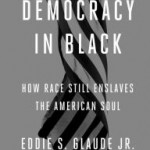
Review of Democracy in Black: How Race Still Enslaves the American Soul by Eddie S. Glaude, Jr. New York: Broadway Books, 2017.
Whatever your political leanings, Democracy in Black is an essential book. Princeton University history professor Eddie Glaude mixes the gravitas of an academic historian with the brio of a concerned citizen writing a letter to the editor of the local paper. Along the way he takes both liberals and conservatives to task for creating, prolonging, and ignoring the suffering of black America.
Perhaps the best summary of this important book is to use contemporary parlance: Dr. Glaude shows that racism is a feature of the system, not a bug.
Glaude outlines the problem of race in the United States in the starkest terms. We have “to wake up and give everything to ‘achieve our country’ or to remain asleep as America burns.” Our situation springs from three causes: “the practice of White Supremacy;” white fear of retribution or retaliation for centuries of wrongs; and black fear of the consequences of white fear. Glaude says, “White fear is the danger. Not black people.” A simple statistic says it all: “The odds of a black person killing a white person are about 0.0000212.”
As a result of the 2008 recession—which Glaude calls the “Great Black Depression”—240,000 African American homes were lost. In addition, unemployment among black Americans is consistently at twice that of white Americans, and black Americans suffer the brunt of the privatization of prisons and schools. Then there are the constant police killings.
Despite the facts, Glaude has hope. He calls for a “revolution of value” through a three-part solution: change how we view government; change how we view black people; change what matters to us as Americans.
One product of White Supremacy is the fact that organizations still presume to speak for African Americans—organizations that have little accountability to anything beyond a set of black liberal principles, the chief of which is that white people must not become fearful. This principle created the paradigm for black politics in the post-Civil Rights era, a move toward “deracialization.” In this paradigm, “Black voters would elect black politicians with the understanding that the politicians are constrained by white racism in terms of what they can address explicitly.”
Thus was created the white-washed Martin Luther King popular among white liberals. Thus developed a racial politics useful to both Ronald Reagan and Bill Clinton as the nation moved farther and farther to the right. Glaude claims that the apogee of this style of politics was the election of Barak Obama. Far from being the harbinger of a post-racial society, Obama cemented the notion that white people must never be confronted with racism and that personal responsibility—not social responsibility—is paramount.
One use of history is to show us how the present might be different; to see how we might free ourselves of seemingly intractable structures such as patriarchy, class, and racism. Professor Glaude sees a way forward in the de-centered, social-media powered movements that have developed since the shooting of Michael Brown in Ferguson, Missouri in 2014.
Unlike the personality-centered protests of the past, contemporary protest is flexible, mobile, and focused on real solutions, not compromise with white fear. These young leaders, Glaude believes, may finally have found the antidote to the racial theatre that has kept white supremacy supreme for so long: “We know what democracy can be, because we have felt viscerally what it is not.”
I received this book from Blogging for Books for this review.
#humanism #humanist #blacklivesmatter
Previous Post

March 16, 2017
Dreaming White
Next Post
March 24, 2017 Smells Like White Racism
Browse Our Archives
Select a Category #9/11 Abortion Class community conflict Digital Life Diversity Divorce Environmental issues Evangelism Faith Development Foregiveness Garden glbt Gratitude Grief Healing health care Holidays Hospitality Interfaith LGBT Issues Military Service Mortality Orlando Parenting Peace Politics Power Prayer Racism Relationships Religion Scripture Senior citizens Sermons simplicity Social Justice Spirituality Sports Sustainability Uncategorized Unitarian Universalist Values Women's Issues World Community Worship
Select a Month August 2017 July 2017 June 2017 May 2017 April 2017 March 2017 February 2017 January 2017 December 2016 November 2016 October 2016 September 2016 August 2016 July 2016 June 2016 May 2016 April 2016 March 2016 February 2016 January 2016 December 2015 November 2015 October 2015 September 2015 August 2015 July 2015 June 2015 May 2015 April 2015 March 2015 February 2015 January 2015 December 2014 November 2014 October 2014 September 2014 August 2014 July 2014 June 2014 May 2014 April 2014 March 2014 February 2014 January 2014 December 2013 November 2013 October 2013 September 2013 August 2013 July 2013 June 2013 May 2013 April 2013 March 2013 February 2013 January 2013 December 2012 November 2012 October 2012 September 2012 August 2012 July 2012 June 2012 May 2012
Follow Us!
TAKE THE
Religious Wisdom Quiz
What did God tell Moses from the burning bush?
Select your answer to see how you score.
That he would lead Israel out of Egypt That he would be king of Israel That he would build the temple That he would become Pharaoh
Related posts from UU Collective

#Charlottesville and Getting Real

On the Suppression of Knowledge

#Epicurus and Atomic Moderation

Steal Your Fire, Drink Your Tea
TRENDING AT PATHEOS New Visions

Did Prayer Cure His Cancer? Or Was It...
At 4 AM one morning, Joshua W. Brown’s wife awoke to a...

8 Ways a Near-Death Experience Rewires the Soul
Does Consciousness Survive Physical Death? After 50 Years of Research, Dr. Raymond...

Holy Longing: What Our Restlessness Is Telling Us
“One can find so many pains when the rain is falling.” -John...

What this is NOT about. This blog is definitely not about...

Who said the Israelites were God’s chosen? That’s right, they did. Who...

The Spirit World Is the Real World: God...
A Monk’s Wisdom on Body and Spirit I sit with Brother Martin...
view all New Visions blogs
Ad-Free & Subscriber Log-In Subscription Support
- About Us
- 2026 Calendar
- Videos
- Podcasts
- Library of World Religions
- Faith In Media Tracker
- Advertise With Us
- Write for Us
- Privacy Policy
- Terms of Service
- Do Not Sell My Data
- Contact Us
- Radiant Digital
- Manage Newsletter Subscriptions
- Unsubscribe From Notifications
- Sitemap
Copyright 2008-2026, Patheos. All rights reserved.
Subscription Support Ad-Free & Subscriber Log-In
Follow Patheos