
BuddhistCatholicContemplativeEvangelicalGeneral ChristianHinduJewishLatter-day SaintMuslimNew VisionsProgressive Christian
Beliefs
- Buddhist
- Catholic
- Contemplative
- Evangelical
- General Christian
- Hindu
- Jewish
- Latter-day Saint
- More Voices
- Muslim
- New Visions
- Pagan
- Progressive Christian
Topics
- Religion News
- Food and Religion
- Sports and Religion
- Religious Art
- Religious Music and Entertainment
- Religious Events
- History and Religion
- Style and Religion
- Politics and Religion
- Women in Religion
- Recreation Outdoors and Religion
- Business Finance and Religion
- Careers Workplace and Religion
- Education and Religion
- Family Parenting and Religion
- Health Fitness and Religion
- Home and Religion
- Relationships and Religion
- Technology and Religion
- Travel and Religion
Columnists
- Buddhist Columnists
- Business Finance and Religion Columnists
- Careers Workplace and Religion Columnists
- Catholic Columnists
- Contemplative Columnists
- Education and Religion Columnists
- Evangelists Columnists
- Family Parenting and Religion Columnists
- General Christian Columnists
- Health Fitness and Religion Columnists
- Hindu Columnists
- History and Religion Columnists
- Home and Religion Columnists
- Jewish Columnists
- More Voices Columnists
- Latter Day Columnists
- Muslim Columnists
- New Visions Columnists
- Nonreligious Columnists
- Pagan Columnists
- Politics and Religion Columnists
- Progressive Columnists
- Recreation Outdoors and Religion Columnists
- Relationships and Religion Columnists
- Religion News Columnists
- Religious Art Columnists
- Religious Events Columnists
- Religious Music and Entertainment Columnists
- Sports and Religion Columnists
- Style and Religion Columnists
- Technology and Religion Columnists
- Travel and Religion Columnists
- Women in Religion Columnists
Resource Library
- 2026 Calendar
- Library of World Religions
- The 100 Most Holy Places on Earth
- Patheos Answers
- Podcasts
- Videos
- Faith Leaders Database
- Anglican Episcopalian
- Bahai
- Baptist
- Buddhism
- Christianity
- Confucianism
- Eastern Orthodoxy
- Hinduism
- Holiness and Pentecostal
- ISKCON
- Islam
- Judaism
- Lutheran
- Methodist
- The Church of Jesus Christ of Latter-day Saints
- New Age
- Paganism
- Presbytarian and Reformed
- Protestantism
- Religion Behind the Scenes
- Roman Catholic
- Scientology
- Shia Islam
- Sikhism
- Sufism
- Sunni Islam
- Taoism
- Zen
- See all religions
Research Tools
 Ad-Free & Subscriber Log-In Subscription Support
Ad-Free & Subscriber Log-In Subscription Support
Follow Patheos 

- Trending:
- Forgiveness
- |
- Marriage
- |
- Consciousness
- |
- Death Penalty
- |
- Election
- |
- Halloween
 UU Collective
- Home
- New Visions
- To Whom It May Concern: the Humanist/Theist Split in Unitarian Universalism
To Whom It May Concern: the Humanist/Theist Split in Unitarian Universalism
Last updated on: February 18, 2016 at 7:31 am by David Breeden
To Whom It May Concern: the Humanist/Theist Split in Unitarian Universalism 2016-02-18T07:31:19-07:00 David Breeden
Patheos Explore the world's faith through different perspectives on religion and spirituality! Patheos has the views of the prevalent religions and spiritualities of the world.
Since I’m an out-there Humanist, I get asked fairly often how Unitarian Universalists might go about healing the theist/humanist divide. My first response is quite simple: There isn’t a theist/humanist divide. Many humanists are theists and vice versa. Fact is, “humanist” isn’t merely a nice word for “atheist.”
Rather, the “divide” is a leftover from the beginnings of humanism in midwestern Unitarian congregations back in the 1920’s. It wasn’t the real issue then either—a close look at the theology of early humanists such as Curtis Reese or John Dietrich shows that they were what nowadays we call religious naturalists—but that term did not exist in their day.
What makes humanists itchy is not a theism that theists have grappled with honestly and well. It is the unquestioned and unexamined use of Christian language and liturgy that drives humanists bonkers. This is rather of a different thing, since the Christian god is not all the gods there are. Yet, the “language of reverence” is all about one particular branch of theism, Christianity.
For humanists, the Christian god of the 19th and 20th Centuries, the one who hangs out in Christian hymns and “god language,” is not a nice deity. He oppresses women; underwrites the mass slaughter of natives; thinks slavery is A-OK; is the cause of economic inequality. And on and on. His only son is a blonde. His expectations include bowing and scraping and constant petitions for forgiveness.
The irony here is that Universalists and Unitarians in the 19th and 20th Centuries had theologies and Christologies very different from that cliche, which comes from other mainline Protestant strains. But, and again the irony—the humanist movement in the mid-20th Century buried these native U and U ideas and they never really came back.
I went to Meadville Lombard, a UU seminary. The Universalist or Unitarian theology I learned there was in a history class. Bottom line is that the theologies behind most (not all, certainly) “god language” in UU churches is mainline Protestant, not U or U. (This is partly due to the fact that most UU ministers go to Christian seminaries where they learn the liturgy of liberal mainline Protestantism.)
What I’m trying to get at here is the sad fact that the humanist/theist battle at mid-century stopped theological development in UU congregations in both the Christian and humanist traditions. There have been exceptions—Forrest Church, for instance—but you see my point. The battles did not serve either camp well. So, at present we have a humanism that is as antiquated as tail fins on cars and a theism that’s mostly muddled Methodism.
(I’m cruel only to be kind.)
Which way forward? For me, it’s a matter of bringing contemporary freethought into UUism, and I encourage all manner of theists to do the same—learn and share the latest thinking on theism. Because the fact remains for us all: we are a proudly creedless tradition. Humanism is a creed as is Christianity and Buddhism, etc. They are, at least, if we look at them and serve them seriously.
It’s tough on we ministers who find ourselves walking on a tightrope for an hour each week. And this is where I think many of us need to be spending some serious time—can we develop liturgies that are religion-neutral? Not that we ought to be stealing liturgy from the Buddhists, the Christians, or anybody else, but that we offer an authentic, thoughtful UU liturgy that lives up to our aspiration to be creedless.
So may it be!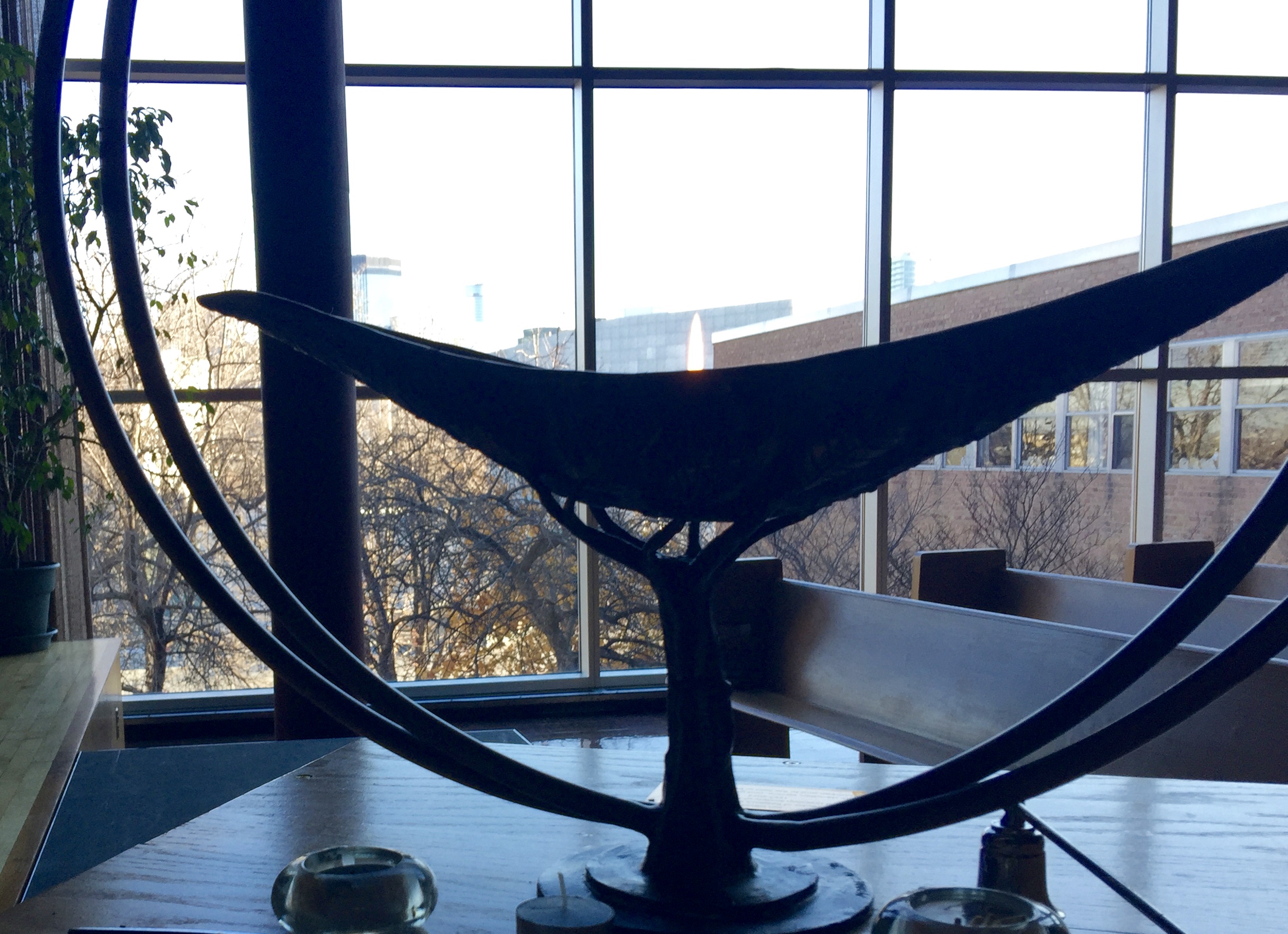
Previous Post

February 16, 2016
The heartwork of coming alive
Next Post
February 25, 2016 Humanist Jesus
Browse Our Archives
Select a Category #9/11 Abortion Class community conflict Digital Life Diversity Divorce Environmental issues Evangelism Faith Development Foregiveness Garden glbt Gratitude Grief Healing health care Holidays Hospitality Interfaith LGBT Issues Military Service Mortality Orlando Parenting Peace Politics Power Prayer Racism Relationships Religion Scripture Senior citizens Sermons simplicity Social Justice Spirituality Sports Sustainability Uncategorized Unitarian Universalist Values Women's Issues World Community Worship
Select a Month August 2017 July 2017 June 2017 May 2017 April 2017 March 2017 February 2017 January 2017 December 2016 November 2016 October 2016 September 2016 August 2016 July 2016 June 2016 May 2016 April 2016 March 2016 February 2016 January 2016 December 2015 November 2015 October 2015 September 2015 August 2015 July 2015 June 2015 May 2015 April 2015 March 2015 February 2015 January 2015 December 2014 November 2014 October 2014 September 2014 August 2014 July 2014 June 2014 May 2014 April 2014 March 2014 February 2014 January 2014 December 2013 November 2013 October 2013 September 2013 August 2013 July 2013 June 2013 May 2013 April 2013 March 2013 February 2013 January 2013 December 2012 November 2012 October 2012 September 2012 August 2012 July 2012 June 2012 May 2012
Follow Us!
TAKE THE
Religious Wisdom Quiz
What city did the Good Samaritan's story happen on the road to?
Select your answer to see how you score.
Nazareth Bethlehem Jericho Jerusalem
Related posts from UU Collective

#Charlottesville and Getting Real

On the Suppression of Knowledge

#Epicurus and Atomic Moderation

Steal Your Fire, Drink Your Tea
TRENDING AT PATHEOS New Visions

Did Prayer Cure His Cancer? Or Was It...
At 4 AM one morning, Joshua W. Brown’s wife awoke to a...

8 Ways a Near-Death Experience Rewires the Soul
Does Consciousness Survive Physical Death? After 50 Years of Research, Dr. Raymond...

Holy Longing: What Our Restlessness Is Telling Us
“One can find so many pains when the rain is falling.” -John...

What this is NOT about. This blog is definitely not about...

Who said the Israelites were God’s chosen? That’s right, they did. Who...

The Spirit World Is the Real World: God...
A Monk’s Wisdom on Body and Spirit I sit with Brother Martin...
view all New Visions blogs
Ad-Free & Subscriber Log-In Subscription Support
- About Us
- 2026 Calendar
- Videos
- Podcasts
- Library of World Religions
- Faith In Media Tracker
- Advertise With Us
- Write for Us
- Privacy Policy
- Terms of Service
- Do Not Sell My Data
- Contact Us
- Radiant Digital
- Manage Newsletter Subscriptions
- Unsubscribe From Notifications
- Sitemap
Copyright 2008-2026, Patheos. All rights reserved.
Subscription Support Ad-Free & Subscriber Log-In
Follow Patheos