
BuddhistCatholicContemplativeEvangelicalGeneral ChristianHinduJewishLatter-day SaintMuslimNew VisionsProgressive Christian
Beliefs
- Buddhist
- Catholic
- Contemplative
- Evangelical
- General Christian
- Hindu
- Jewish
- Latter-day Saint
- More Voices
- Muslim
- New Visions
- Pagan
- Progressive Christian
Topics
- Religion News
- Food and Religion
- Sports and Religion
- Religious Art
- Religious Music and Entertainment
- Religious Events
- History and Religion
- Style and Religion
- Politics and Religion
- Women in Religion
- Recreation Outdoors and Religion
- Business Finance and Religion
- Careers Workplace and Religion
- Education and Religion
- Family Parenting and Religion
- Health Fitness and Religion
- Home and Religion
- Relationships and Religion
- Technology and Religion
- Travel and Religion
Columnists
- Buddhist Columnists
- Business Finance and Religion Columnists
- Careers Workplace and Religion Columnists
- Catholic Columnists
- Contemplative Columnists
- Education and Religion Columnists
- Evangelists Columnists
- Family Parenting and Religion Columnists
- General Christian Columnists
- Health Fitness and Religion Columnists
- Hindu Columnists
- History and Religion Columnists
- Home and Religion Columnists
- Jewish Columnists
- More Voices Columnists
- Latter Day Columnists
- Muslim Columnists
- New Visions Columnists
- Nonreligious Columnists
- Pagan Columnists
- Politics and Religion Columnists
- Progressive Columnists
- Recreation Outdoors and Religion Columnists
- Relationships and Religion Columnists
- Religion News Columnists
- Religious Art Columnists
- Religious Events Columnists
- Religious Music and Entertainment Columnists
- Sports and Religion Columnists
- Style and Religion Columnists
- Technology and Religion Columnists
- Travel and Religion Columnists
- Women in Religion Columnists
Resource Library
- 2026 Calendar
- Library of World Religions
- The 100 Most Holy Places on Earth
- Patheos Answers
- Podcasts
- Videos
- Faith Leaders Database
- Anglican Episcopalian
- Bahai
- Baptist
- Buddhism
- Christianity
- Confucianism
- Eastern Orthodoxy
- Hinduism
- Holiness and Pentecostal
- ISKCON
- Islam
- Judaism
- Lutheran
- Methodist
- The Church of Jesus Christ of Latter-day Saints
- New Age
- Paganism
- Presbytarian and Reformed
- Protestantism
- Religion Behind the Scenes
- Roman Catholic
- Scientology
- Shia Islam
- Sikhism
- Sufism
- Sunni Islam
- Taoism
- Zen
- See all religions
Research Tools
 Ad-Free & Subscriber Log-In Subscription Support
Ad-Free & Subscriber Log-In Subscription Support
Follow Patheos 

- Trending:
- Forgiveness
- |
- Marriage
- |
- Consciousness
- |
- Death Penalty
- |
- Election
- |
- Halloween
 UU Collective
- Home
- New Visions
- Humanism and a Theology of Liberation (Without Strangling Priests)
Humanism and a Theology of Liberation (Without Strangling Priests)
Last updated on: March 12, 2015 at 7:24 am by David Breeden
Humanism and a Theology of Liberation (Without Strangling Priests) 2015-03-12T07:24:52-06:00 David Breeden
Patheos Explore the world's faith through different perspectives on religion and spirituality! Patheos has the views of the prevalent religions and spiritualities of the world.
Humanism does not require the death of God.
All it requires is the affirmation of human freedom.
William R. Jones
ONE OF THOSE VICIOUS CIRCLES
The French philosopher Denis Diderot, an Enlightenment era humanist, gets my vote for the most succinct summary of the connection between government, religion, and oppression: “People will never be free until the last king is strangled with the entrails of the last priest.”
Thomas Jefferson, another who spoke of violent revolution, called Diderot “among the most virtuous of men.” There’s no record that Gandhi approved of Diderot’s graphic fantasy. And, as a pacifist myself, I don’t condone violence of any kind, at any time.
Still—at least metaphorically—Diderot’s sentiment summarizes the classic humanist stance: the unholy relationship of government and religion hinders human freedom and human development. Why? Because any religion necessarily has a program; an agenda—an agenda most likely resting on unexamined prejudices. And those prejudices most likely benefit those in power. It’s one of those vicious circles, ya know.
(Keep in mind that even among oppressed groups there are those in power and those not in power.)
Take even a seemingly innocuous theological stance, such as “God is love.” First off, what does that make hate? A thing of the people? Of some demonic force? Why does hate often (usually?) win?
Secondly, consider what this means for the oppressed and the poor: why does god’s love extend at best only provisionally to them? Why does god’s love, out of the billions of people on our planet, extend to so few?
What is the connection between god’s love and material well-being?
Why does god’s love fall on particular places on the planet?
Can I somehow be so egotistical as to think that human suffering exists merely so that I may fix it?
Diderot had something to say about that as well: “Watch out for the fellow who talks about putting things in order! Putting things in order always means getting other people under your control.”
African American liberation theologian—and sometime Unitarian Universalist minister—William R. Jones had a thing or two to say about that in his groundbreaking book “Is God a White Racist: A Preamble to Black Theology,” which appeared back in 1973.
BEYOND PRIVILEGE—RIGHT, WHITE, OR OTHERWISE
The “god is love” example is a fairly benign theology, when compared with, oh, say ISIS or the prosperity gospel. And what about those theologies that place god’s imprimatur upon the actions of particular nations or tribes or sects? We know the outcome: bloodbaths.
You and me and Diderot may be beginning to perceive a pattern here . . .
Liberation theologies have a common theme: they ask us to see the reality beneath the appearance. William R. Jones changed the conversation in African American theology by pointing out the elephant in the room: black suffering is not redemptive. It’s suffering. And suffering is a bad thing.
The same is true in feminist theology. Queer theology. Any theology worth its salt: human suffering is a bad thing. Human suffering needs to stop. Human suffering is the evil in the world and it is done by . . . human beings.
Humanism is an evidence-based ethical tradition dedicated to improving the human condition. Nothing supernatural. Nothing offensive to the heart or mind.
Humanism is about facing the human condition without superstition. From this vantage point we can see that national borders do not demarcate human dignity or human rights.
We can see that the perceived differences among human beings—gender, religion, ability, race, social status, nationality, what-have-you—make no difference in our commitment to treating a person with dignity and contributing to each person’s flourishing upon this earth—that “inherent worth and dignity” thing.
From the humanist perspective, no god “sheds his grace on thee” . . . or thee or . . . that thee over there. We each are responsible to the other for shedding what grace we can.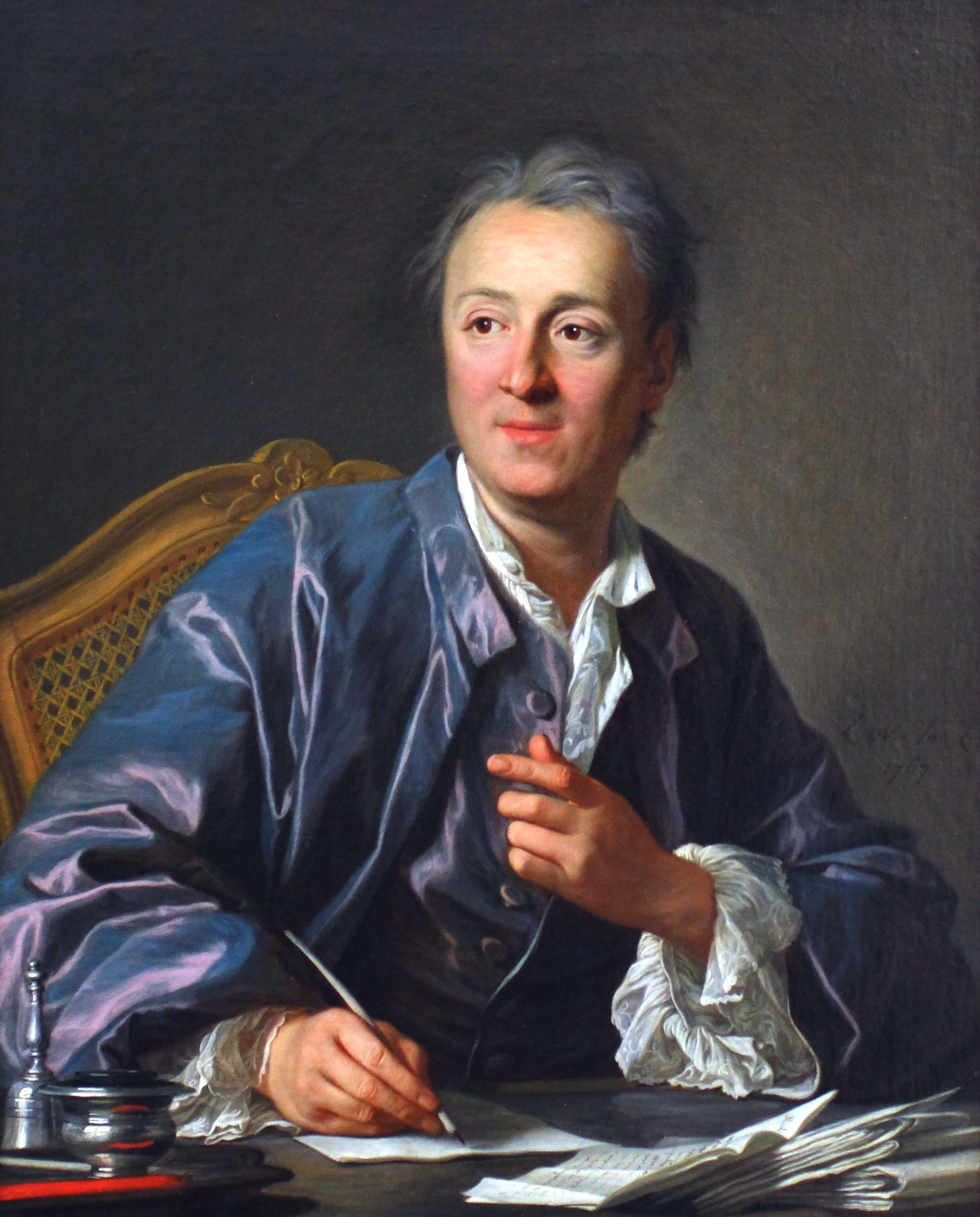
KEEPING OURSELVES TO OURSELVES, FRIENDS
No. I don’t have any dreams of strangling the last king with the entrails of the last priest. Or visa-versa. I have no god to condone or compel me to such violence.
Nor do we live upon a planet where superstition will be eradicated.
Still, those who can do that work metaphorically—in our own minds—can see that human and planetary flourishing are possible.
Here’s the truth: It’s just us, friends. It’s just us. That’s it. That’s the show. Over and out.
That’s the justice that humanists are committed to. Arguments for the social good only break out of illusion when we get outside ourselves. And the only way to get from selfishness to compassion is through reason combined with compassion.
Because—let’s fact it—many things that are good for society or the earth itself are not good for many individuals. And often not beneficial to those already privileged.
Higher taxes. Affirmative action. A livable minimum wage—these cost some people, benefit others. Fair trade costs. Carbon cap-and-trade restricts the rights of some.
Just policing and a just justice system won’t be easy. Nor do they benefit everyone. They do, however, benefit most.
We can live in delusion and believe that god is love and say (and even feel) that we are in solidarity with all “those other people”—then do nothing—or we can get out there and break down White Privilege. And American Privilege. And Human Privilege, come to that.
The way there is, as it always has been, reason and compassion.
No, it’s neither reasonable nor compassionate to strangle monarchs nor to disembowel priests. That’s their game, friends—that strangling and disemboweling thing. Let’s be the change we wish to see in the world . . . reasonably and compassionately.
Previous Post

March 10, 2015
Closing the Faith Gap - Restoring the Voting Rights Act of 1965
Browse Our Archives
Select a Category #9/11 Abortion Class community conflict Digital Life Diversity Divorce Environmental issues Evangelism Faith Development Foregiveness Garden glbt Gratitude Grief Healing health care Holidays Hospitality Interfaith LGBT Issues Military Service Mortality Orlando Parenting Peace Politics Power Prayer Racism Relationships Religion Scripture Senior citizens Sermons simplicity Social Justice Spirituality Sports Sustainability Uncategorized Unitarian Universalist Values Women's Issues World Community Worship
Select a Month August 2017 July 2017 June 2017 May 2017 April 2017 March 2017 February 2017 January 2017 December 2016 November 2016 October 2016 September 2016 August 2016 July 2016 June 2016 May 2016 April 2016 March 2016 February 2016 January 2016 December 2015 November 2015 October 2015 September 2015 August 2015 July 2015 June 2015 May 2015 April 2015 March 2015 February 2015 January 2015 December 2014 November 2014 October 2014 September 2014 August 2014 July 2014 June 2014 May 2014 April 2014 March 2014 February 2014 January 2014 December 2013 November 2013 October 2013 September 2013 August 2013 July 2013 June 2013 May 2013 April 2013 March 2013 February 2013 January 2013 December 2012 November 2012 October 2012 September 2012 August 2012 July 2012 June 2012 May 2012
Follow Us!
TAKE THE
Religious Wisdom Quiz
Who was Timothy's mother?
Select your answer to see how you score.
Eunice Lois Mary Priscilla
Related posts from UU Collective

#Charlottesville and Getting Real

On the Suppression of Knowledge

#Epicurus and Atomic Moderation

Steal Your Fire, Drink Your Tea
TRENDING AT PATHEOS New Visions

Did Prayer Cure His Cancer? Or Was It...
At 4 AM one morning, Joshua W. Brown’s wife awoke to a...

8 Ways a Near-Death Experience Rewires the Soul
Does Consciousness Survive Physical Death? After 50 Years of Research, Dr. Raymond...

Holy Longing: What Our Restlessness Is Telling Us
“One can find so many pains when the rain is falling.” -John...

What this is NOT about. This blog is definitely not about...

Who said the Israelites were God’s chosen? That’s right, they did. Who...

The Spirit World Is the Real World: God...
A Monk’s Wisdom on Body and Spirit I sit with Brother Martin...
view all New Visions blogs
Ad-Free & Subscriber Log-In Subscription Support
- About Us
- 2026 Calendar
- Videos
- Podcasts
- Library of World Religions
- Faith In Media Tracker
- Advertise With Us
- Write for Us
- Privacy Policy
- Terms of Service
- Do Not Sell My Data
- Contact Us
- Radiant Digital
- Manage Newsletter Subscriptions
- Unsubscribe From Notifications
- Sitemap
Copyright 2008-2026, Patheos. All rights reserved.
Subscription Support Ad-Free & Subscriber Log-In
Follow Patheos