
BuddhistCatholicContemplativeEvangelicalGeneral ChristianHinduJewishLatter-day SaintMuslimNew VisionsProgressive Christian
Beliefs
- Buddhist
- Catholic
- Contemplative
- Evangelical
- General Christian
- Hindu
- Jewish
- Latter-day Saint
- More Voices
- Muslim
- New Visions
- Pagan
- Progressive Christian
Topics
- Religion News
- Food and Religion
- Sports and Religion
- Religious Art
- Religious Music and Entertainment
- Religious Events
- History and Religion
- Style and Religion
- Politics and Religion
- Women in Religion
- Recreation Outdoors and Religion
- Business Finance and Religion
- Careers Workplace and Religion
- Education and Religion
- Family Parenting and Religion
- Health Fitness and Religion
- Home and Religion
- Relationships and Religion
- Technology and Religion
- Travel and Religion
Columnists
- Buddhist Columnists
- Business Finance and Religion Columnists
- Careers Workplace and Religion Columnists
- Catholic Columnists
- Contemplative Columnists
- Education and Religion Columnists
- Evangelists Columnists
- Family Parenting and Religion Columnists
- General Christian Columnists
- Health Fitness and Religion Columnists
- Hindu Columnists
- History and Religion Columnists
- Home and Religion Columnists
- Jewish Columnists
- More Voices Columnists
- Latter Day Columnists
- Muslim Columnists
- New Visions Columnists
- Nonreligious Columnists
- Pagan Columnists
- Politics and Religion Columnists
- Progressive Columnists
- Recreation Outdoors and Religion Columnists
- Relationships and Religion Columnists
- Religion News Columnists
- Religious Art Columnists
- Religious Events Columnists
- Religious Music and Entertainment Columnists
- Sports and Religion Columnists
- Style and Religion Columnists
- Technology and Religion Columnists
- Travel and Religion Columnists
- Women in Religion Columnists
Resource Library
- 2026 Calendar
- Library of World Religions
- The 100 Most Holy Places on Earth
- Patheos Answers
- Podcasts
- Videos
- Faith Leaders Database
- Anglican Episcopalian
- Bahai
- Baptist
- Buddhism
- Christianity
- Confucianism
- Eastern Orthodoxy
- Hinduism
- Holiness and Pentecostal
- ISKCON
- Islam
- Judaism
- Lutheran
- Methodist
- The Church of Jesus Christ of Latter-day Saints
- New Age
- Paganism
- Presbytarian and Reformed
- Protestantism
- Religion Behind the Scenes
- Roman Catholic
- Scientology
- Shia Islam
- Sikhism
- Sufism
- Sunni Islam
- Taoism
- Zen
- See all religions
Research Tools
 Ad-Free & Subscriber Log-In Subscription Support
Ad-Free & Subscriber Log-In Subscription Support
Follow Patheos 

- Trending:
- Forgiveness
- |
- Marriage
- |
- Consciousness
- |
- Death Penalty
- |
- Election
- |
- Halloween
 UU Collective
- Home
- New Visions
- Apocalypse Never (and what we can do about it)
Apocalypse Never (and what we can do about it)
Last updated on: February 6, 2014 at 8:41 pm by David Breeden
Apocalypse Never (and what we can do about it) 2014-02-06T20:41:48-07:00 David Breeden
Patheos Explore the world's faith through different perspectives on religion and spirituality! Patheos has the views of the prevalent religions and spiritualities of the world.
I grew up in the Pentecostal church. When I was ten, I knew just how the world would end: “the fire next time.” Tribulations. Seven seals. The four horsemen. Rainstorms of blood and fire. And what was more, this was coming any day now: the present terrible state of the world had been precisely prophesied in the book of Revelation in the bible. All you had to do was read it yourself.
Polls indicate that roughly half of Americans are waiting for some variation on this theme. For some, it’s the Rapture; for some the Second Coming; for others the Apocalypse, but roughly half of Americans are waiting for a supernatural end to human history and the earth.
Why do people think that? There a lots of conjectures—people who feel oppressed, marginalized, or poor often hope for an immediate end to their . . . tribulations. I also suspect the fear of aging and death figures in. After all, if the world ends today, I don’t have to go through the death process. And I suspect that it also has to do with the desire of human beings to live in extraordinary times—I’m special; the end of the world is special; therefore, the world will end while I am alive.
Then there is how we deal with the fact that the end never comes. Oddly enough, it appears to be that rather than giving up on predicting the end when the end doesn’t come, believers merely begin to reinterpret and believe all the more.
Odd. Human nature. Something we need to ponder a bit.
Jakob van Hoddis was a young man in the early part of the Twentieth Century. He was a poet. And a socialist. A German Jew. And he had some mental health issues. He began to ponder the end of the world and wrote this poem, “Weltende.”
Dem Bürger fliegt vom spitzen Kopf der Hut,
In allen Lüften hallt es wie Geschrei.
Dachdecker stürzen ab und gehn entzwei
Und an den Küsten – liest man – steigt die Flut.
Der Sturm ist da, die wilden Meere hupfen
An Land, um dicke Dämme zu zerdrücken.
Die meisten Menschen haben einen Schnupfen.
Die Eisenbahnen fallen von den Brücken.
The hat flies off the pointy-headed bourgeois;
in all the winds there’s an echo, like screaming.
Roof tiles fly and break in two
and on the coasts, one reads, it’s flooding.
The storm is here, the wild sea hops
onto land to crush thick dams.
Most people have runny noses.
The trains fall from the bridges.
(author translation)
Now here’s the irony: as a German Jew, as a “degenerate” poet, and as someone with mental health issues, van Hoddis had three strikes as far as the Nazis were concerned. And, indeed, in 1942, the sanitarium where van Hoddis had gone was cleared of its patients and all were killed.
End of the world, wasn’t it? But van Hoddis shows us the irony of apocalyptic literature: it’s wish fulfillment. In the book of Revelation, the bad people, who are people who persecute Christians, get what they deserve. Justice at last reigns supreme.
As a socialist, van Hoddis wanted the upper-middle class to get its comeuppance, and so in the poem, a wind blows the hat off ones pointy head.
You can see this wish-fulfillment tendency for yourself—take a peek at any apocalypse you like, and what you’ll find is the bad guys punished. Sometimes the bad guys are those who aren’t Christian. Sometimes they are warmongers. Sometimes they are the “liberal media.” Sometimes they are the “pointy-headed bourgeois.”
The upshot is always that a power greater than ourselves sets everything right.
You’ve read and heard the descriptions:
And the wolf shall dwell with the lamb, and the leopard shall lie down with the kid; and the calf and the young lion and the fatling together; and a little child shall lead them. (Isaiah 11:6 ASV)
(By the way, the lion lying down with the lamb is not in the bible. That phrase is a conflation of two verses from Isaiah, the other being:)
The wolf and the lamb will graze together, and the lion will eat straw like the ox; and dust will be the serpent’s food. They will do no evil or harm in all My holy mountain, says the Lord. (65:25)
Now wait a minute. Wolves and lambs do not get on well together. And lions don’t eat straw. But this is the problem with apocalypse: it is in its very essence magical thinking. The very nature of our world is that lions are not vegetarian.
So, back to my question: Why is apocalypse so interesting to so many?
Because long-term solutions are not interesting.
Long-term solutions are difficult. And boring. And require committees and task forces and lots and lots of charts and graphs and talking, talking, talking.
Who wants to work on a long-term solution when we can have our cake right now: the wind blows the hats from the middle class and snakes no longer do that gross thing when they digest rats. The serpents take to eating dirt. Nice world!
Unitarian Universalists are guilty too. One of our greatest hits among our hymns is “We’ll Build a Land.” I like it too but some of the lyrics go,
We’ll build a land where we’ll bind up the broken
We’ll build a land where the captives go free
Where the oil of gladness dissolves all mourning.
Oh, we’ll build a promised land that can be.
Wait a minute! No—it CAN’T be! Gladness does dissolve mourning, yes, but you can’t bottle that and pour it on everyone’s head. Gladness and mourning have to exist side by side, and wolves and lambs are just not going to “graze together.”
That hymn is a great way to buck ourselves up, but for real . . . it ain’t happenin’.
And quick-fixes in the real world turn more often into Pol Pot’s Cambodia or Pinochet’s Chile.
Lions can’t survive on grass. And we human beings are going to fix the problems that we have created . . . or not.
I’m not a prophet, but I can make a couple of predictions that I”m fairly certain of: One, lions will never eat straw . . . and some people will always choose a quick buck over the collective good; and two, “god” will not smite these people (at least in a timely manner). What those two things add up to is this: we are on our own. If anything is going to get fixed, it is up to us to do it. (And we know that our opponents are very content to have us curl up, get angry, and stare at our navels.)
Yet accepting “apocalypse never”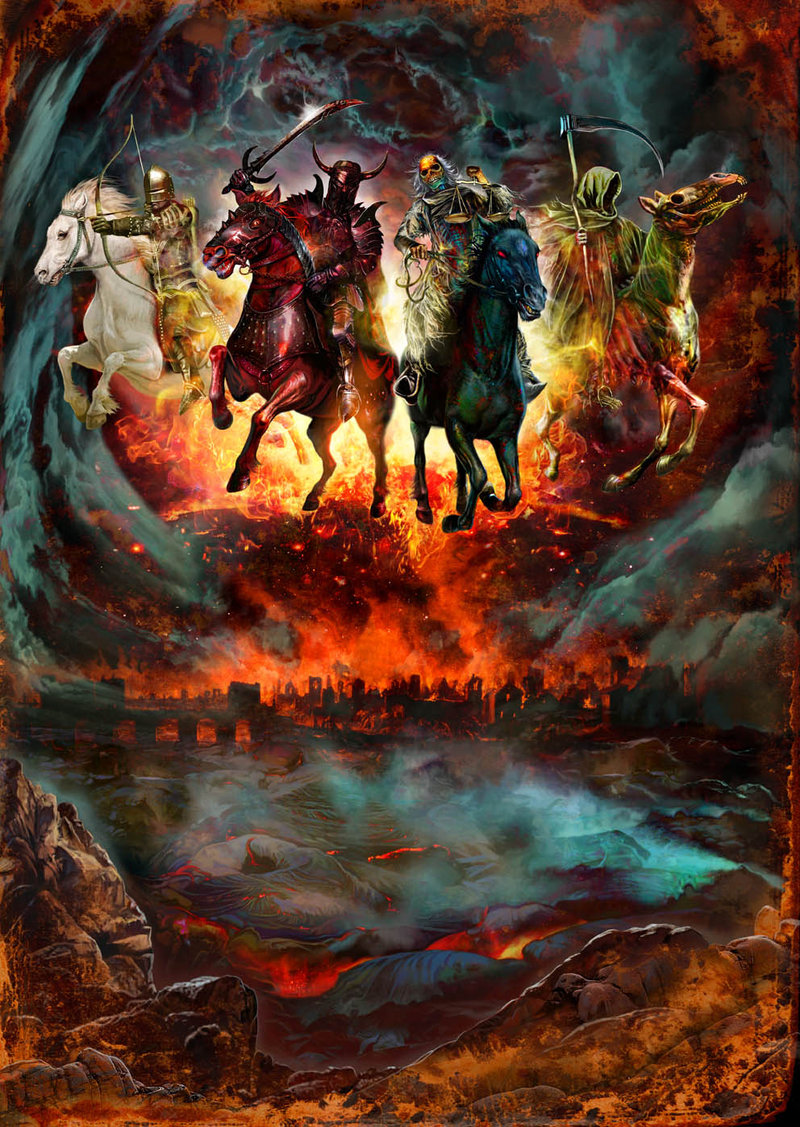 liberates us to get down to the tasks at hand.
Previous Post

February 3, 2014
There Are Many Right Ways
Next Post

February 7, 2014 Brave Love
Browse Our Archives
Select a Category #9/11 Abortion Class community conflict Digital Life Diversity Divorce Environmental issues Evangelism Faith Development Foregiveness Garden glbt Gratitude Grief Healing health care Holidays Hospitality Interfaith LGBT Issues Military Service Mortality Orlando Parenting Peace Politics Power Prayer Racism Relationships Religion Scripture Senior citizens Sermons simplicity Social Justice Spirituality Sports Sustainability Uncategorized Unitarian Universalist Values Women's Issues World Community Worship
Select a Month August 2017 July 2017 June 2017 May 2017 April 2017 March 2017 February 2017 January 2017 December 2016 November 2016 October 2016 September 2016 August 2016 July 2016 June 2016 May 2016 April 2016 March 2016 February 2016 January 2016 December 2015 November 2015 October 2015 September 2015 August 2015 July 2015 June 2015 May 2015 April 2015 March 2015 February 2015 January 2015 December 2014 November 2014 October 2014 September 2014 August 2014 July 2014 June 2014 May 2014 April 2014 March 2014 February 2014 January 2014 December 2013 November 2013 October 2013 September 2013 August 2013 July 2013 June 2013 May 2013 April 2013 March 2013 February 2013 January 2013 December 2012 November 2012 October 2012 September 2012 August 2012 July 2012 June 2012 May 2012
Follow Us!
TAKE THE
Religious Wisdom Quiz
Who built the first temple for God?
Select your answer to see how you score.
Moses David Pilate Solomon
Related posts from UU Collective

#Charlottesville and Getting Real

On the Suppression of Knowledge

#Epicurus and Atomic Moderation

Steal Your Fire, Drink Your Tea
TRENDING AT PATHEOS New Visions

Did Prayer Cure His Cancer? Or Was It...
At 4 AM one morning, Joshua W. Brown’s wife awoke to a...

8 Ways a Near-Death Experience Rewires the Soul
Does Consciousness Survive Physical Death? After 50 Years of Research, Dr. Raymond...

Holy Longing: What Our Restlessness Is Telling Us
“One can find so many pains when the rain is falling.” -John...

What this is NOT about. This blog is definitely not about...

Who said the Israelites were God’s chosen? That’s right, they did. Who...

The Spirit World Is the Real World: God...
A Monk’s Wisdom on Body and Spirit I sit with Brother Martin...
view all New Visions blogs
Ad-Free & Subscriber Log-In Subscription Support
- About Us
- 2026 Calendar
- Videos
- Podcasts
- Library of World Religions
- Faith In Media Tracker
- Advertise With Us
- Write for Us
- Privacy Policy
- Terms of Service
- Do Not Sell My Data
- Contact Us
- Radiant Digital
- Manage Newsletter Subscriptions
- Unsubscribe From Notifications
- Sitemap
Copyright 2008-2026, Patheos. All rights reserved.
Subscription Support Ad-Free & Subscriber Log-In
Follow Patheos