
BuddhistCatholicContemplativeEvangelicalGeneral ChristianHinduJewishLatter-day SaintMuslimNew VisionsProgressive Christian
Beliefs
- Buddhist
- Catholic
- Contemplative
- Evangelical
- General Christian
- Hindu
- Jewish
- Latter-day Saint
- More Voices
- Muslim
- New Visions
- Pagan
- Progressive Christian
Topics
- Religion News
- Food and Religion
- Sports and Religion
- Religious Art
- Religious Music and Entertainment
- Religious Events
- History and Religion
- Style and Religion
- Politics and Religion
- Women in Religion
- Recreation Outdoors and Religion
- Business Finance and Religion
- Careers Workplace and Religion
- Education and Religion
- Family Parenting and Religion
- Health Fitness and Religion
- Home and Religion
- Relationships and Religion
- Technology and Religion
- Travel and Religion
Columnists
- Buddhist Columnists
- Business Finance and Religion Columnists
- Careers Workplace and Religion Columnists
- Catholic Columnists
- Contemplative Columnists
- Education and Religion Columnists
- Evangelists Columnists
- Family Parenting and Religion Columnists
- General Christian Columnists
- Health Fitness and Religion Columnists
- Hindu Columnists
- History and Religion Columnists
- Home and Religion Columnists
- Jewish Columnists
- More Voices Columnists
- Latter Day Columnists
- Muslim Columnists
- New Visions Columnists
- Nonreligious Columnists
- Pagan Columnists
- Politics and Religion Columnists
- Progressive Columnists
- Recreation Outdoors and Religion Columnists
- Relationships and Religion Columnists
- Religion News Columnists
- Religious Art Columnists
- Religious Events Columnists
- Religious Music and Entertainment Columnists
- Sports and Religion Columnists
- Style and Religion Columnists
- Technology and Religion Columnists
- Travel and Religion Columnists
- Women in Religion Columnists
Resource Library
- 2026 Calendar
- Library of World Religions
- The 100 Most Holy Places on Earth
- Patheos Answers
- Podcasts
- Videos
- Faith Leaders Database
- Anglican Episcopalian
- Bahai
- Baptist
- Buddhism
- Christianity
- Confucianism
- Eastern Orthodoxy
- Hinduism
- Holiness and Pentecostal
- ISKCON
- Islam
- Judaism
- Lutheran
- Methodist
- The Church of Jesus Christ of Latter-day Saints
- New Age
- Paganism
- Presbytarian and Reformed
- Protestantism
- Religion Behind the Scenes
- Roman Catholic
- Scientology
- Shia Islam
- Sikhism
- Sufism
- Sunni Islam
- Taoism
- Zen
- See all religions
Research Tools
 Ad-Free & Subscriber Log-In Subscription Support
Ad-Free & Subscriber Log-In Subscription Support
Follow Patheos 

- Trending:
- Forgiveness
- |
- Marriage
- |
- Consciousness
- |
- Death Penalty
- |
- Election
- |
- Halloween

- Home
- Hindu
- History and Religion
- Do Hindus Really Worship Idols?
Do Hindus Really Worship Idols?
Last updated on: August 23, 2024 at 1:20 pm by Ananda
Do Hindus Really Worship Idols? 2024-08-23T13:20:34-07:00 Ananda
Patheos Explore the world's faith through different perspectives on religion and spirituality! Patheos has the views of the prevalent religions and spiritualities of the world.
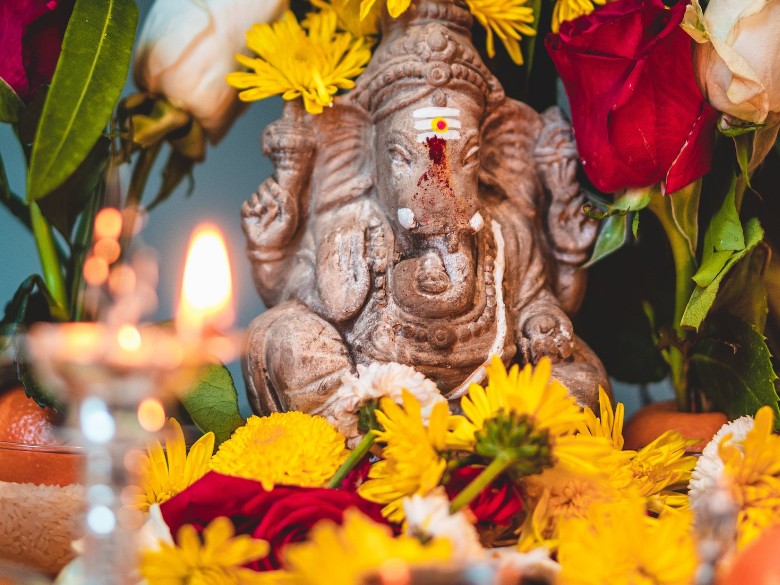
pexels.com
One of the most common misconceptions when people look at Hinduism is that all Hindus are “idol worshippers.” In this article, I will explain why idol worship (seen from the traditional outsider view) is not actually practiced within any Hindu sect, and I will elaborate on the deeper insights into some of the conventional practices like puja(worship).
Is it an Idol, Bimba, or Murti?
The word idol is traditionally used to denigrate ancient Hindu practices as “superstitious.” The correct terms to use are Bimba, Murti, or Vigraha. Bimba means “reflection,” so in the Hindu tradition, the bimba is seen as the reflection of God and not God itself. Similar to how a bucket of water, when still, can reflect the moon. We all know the reflection is not the moon, but it is an image of it. In this way, we can say that bimba is nothing but worshiping the idea of God within a physical image made from any number of substances.
A Murti is essentially the embodiment of God and is a symbolic representation of the highest reality known as Brahman or Divine Consciousness. Some murtis, such as those in temples, go through a series of intense and esoteric processes in which “prana pratishta” is done, which brings in all the Divine energies into the sacred form and ensures those sacred energies are retained for at least 12 years.
A vigraha, like a murti, is another similar term that means a transcendental form of Brahman or Satchitananda.
It is Not Worship of the Murti but Worship Through the Murti
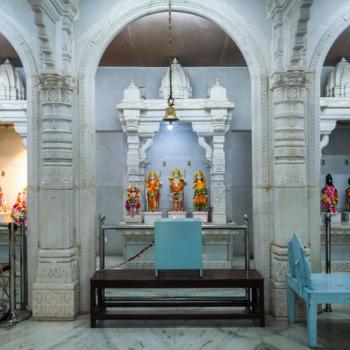
When a Hindu is seen praying before their favorite God or Goddess in the temple or performing their daily puja practice within the home, it might look like they worship a stone or metal image. However, this practice is about connecting through the image rather than believing the image itself is God. The murtis are viewed as physical representations to help them focus their prayers. A similar style of prayer can be seen even in some Christian or Catholic churches today, where the faithful are seen kneeling in front of a statue of Christ on the cross and reverently praying to it. They don’t believe the statue is Jesus, but they are using it as a focus to pray to Jesus whom they believe in. Similarly, Hindus use these outward murtis to connect with the Divine Consciousness that resides within everything.
Hindus Believe Everything is God, so Everything is Worthy of Worship
One of Hinduism’s most beautiful and profound aspects is the understanding that everything is ultimately Brahman or Universal Consciousness. For a Hindu, nature is God, and, as such, all the plants, trees, and mountains are worthy of worship. Every animal and human being on this planet also manifests that Divine Consciousness and is worthy of worship. There are even special auspicious days each year where tools and even books are worshiped because they are also considered a manifestation of God and worthy to be worshiped. There is a story from the life of Swami Chinmayananda that perfectly illustrates this point. One evening, after giving a discourse, a person approached him and said, “My religion is the greatest because we only have one God, so we are great!” Swami replied, “You may have one God, but in the India Tradition, there is ONLY God! There is nothing which is not God.”
Murti’s Contain Deep Spiritual Truths Within Beautiful Forms
When Hindus perform their daily puja within the home or if they are watching a more elaborate puja within the temple, the image of the Deity contains many profound truths that reveal wisdom for seekers. For instance, the image of Ganesha is filled with spiritual insight. His small eyes remind us to maintain a single-minded focus. His big ears symbolize the ability to truly listen and not just hear. His big head reminds us to have strength and courage. His four arms represent the mind, intellect, ego, and Self. Like this, all the various forms of God within the Hindu pantheon hold many profound secrets within their physical form, and these are the traits that the Hindu tries to imbibe.
In conclusion, one must understand the deeper layers of Hindu practices to understand its tradition’s depth and beauty fully.
History and Religion
Family, Parenting and Religion
Previous Post
August 21, 2024
Demystifying Hindu Temple Architecture
Next Post
December 28, 2023 Are Hindus Really Polytheistic?
Recent Comments
Browse Our Archives
Select a Category Religion News
Select a Month August 2024 December 2023
Follow Us!
TAKE THE
Religious Wisdom Quiz
How old was Abraham when Isaac was born?
Select your answer to see how you score.
80 years old 90 years old 100 years old 110 years old
Related posts from Unveiling Hindu Wisdom
Demystifying Hindu Temple Architecture
Are Hindus Really Polytheistic?
TRENDING AT PATHEOS Hindu

Indian Hindu pilot’s valor in line of duty...
There is a hoary maritime tradition that the captain of the...

Movie on Neem Karoli Baba’s life is a...
Neem Karoli Baba’s life (1900-1973) is associated with miracles he made in...

20 Questions to Ask Before an Interfaith Marriage,...
Four questions every interfaith couple should discuss before marriage: Conversion. Will either...

Avadhānam: The Art of Concentration and Intellectual Mastery
What is Avadhānam? In the summer of 2015, during a three-day Sanskrit...

Jesus in the Dharma: Where Christ Fits in...
Where Does Jesus Fit in Hinduism? That’s a question I get often...

Hormuz: A Shared Hindu and Zoroastrian Heritage
Every evening, somewhere in the world, a newsreader utters the words: "The...
view all Hindu blogs
Ad-Free & Subscriber Log-In Subscription Support
- About Us
- 2026 Calendar
- Videos
- Podcasts
- Library of World Religions
- Faith In Media Tracker
- Advertise With Us
- Write for Us
- Privacy Policy
- Terms of Service
- Do Not Sell My Data
- Contact Us
- Radiant Digital
- Manage Newsletter Subscriptions
- Unsubscribe From Notifications
- Sitemap
Copyright 2008-2026, Patheos. All rights reserved.
Subscription Support Ad-Free & Subscriber Log-In
Follow Patheos